

📝 About the Author: Matthias


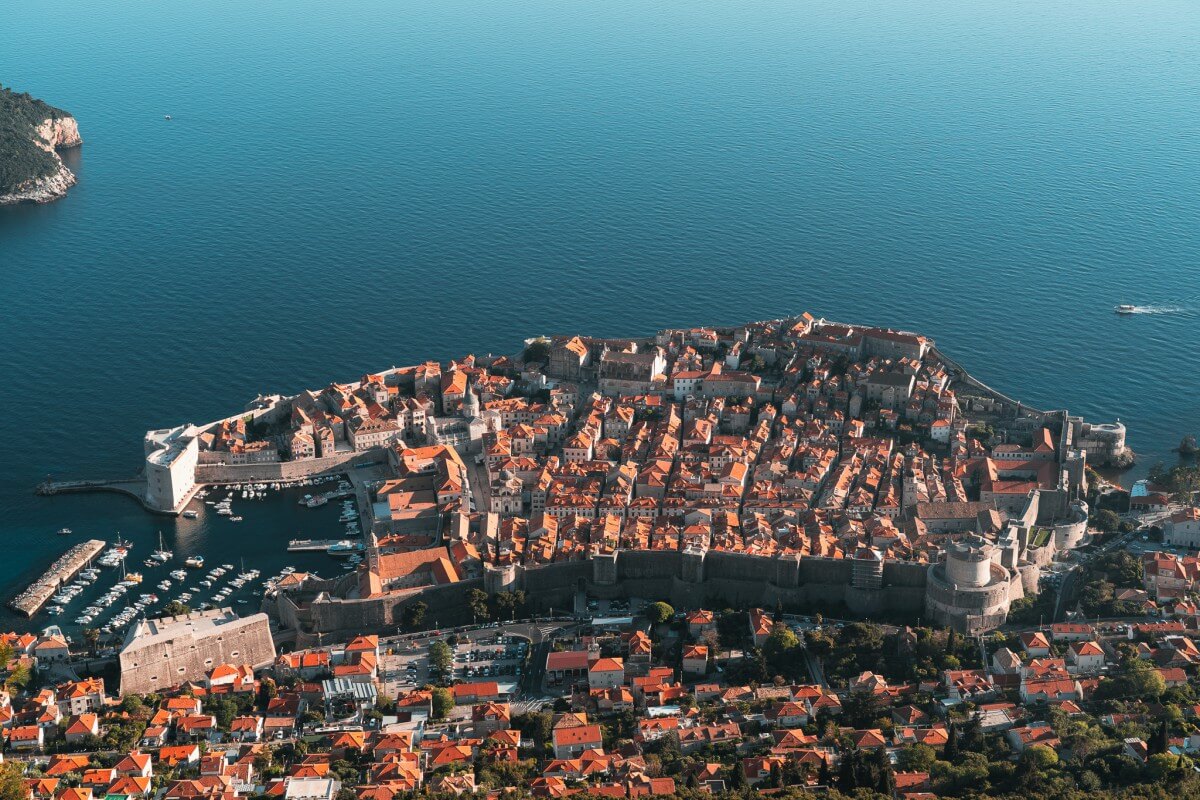
Dubrovnik – terracotta-colored roofs, white limestone facades, a brilliant blue sea, and, of course, that breathtaking Old Town with its medieval city walls – a UNESCO World Heritage Site that is now inextricably linked to the famous TV series “Game of Thrones”.
No other city on the Adriatic Sea is quite as picture-perfect as Dubrovnik, Croatia. However, its splendor also makes it extremely popular and, as a result, often crowded with tourists. In this article, you’ll learn why a visit is still worth it, what you should keep in mind, and which sights in Dubrovnik are truly worth seeing.
- ⭐⭐⭐⭐ Grand Hotel Park 8.6 – Lapad Peninsula, a 4-minute walk to the beach, free parking
- ⭐⭐⭐⭐⭐ Hotel Sumatrin 9.4 – also on the Lapad Peninsula, no on-site parking
- Destination airport Dubrovnik: Compare flights to Dubrovnik
- Game of Thrones walking tour – King’s Landing filming locations, 2–3 hours, from €22
- Cruise to the Elaphiti Islands – Koločep, Lopud, Šipan, approx. 8 hours
- Sunset kayaking and snorkelling tour – along the city walls, from €31
- What & Where: A city break to the UNESCO-listed Old Town on Croatia’s Adriatic coast, the former Republic of Ragusa (1358–1808), with around 40,000 residents and 1.5 million tourists a year.
- How long should you stay? A minimum of 1 day for the highlights; ideally 2 full days with 3 nights, or 3 days if you add a boat trip.
- Best time to visit: Outside the peak season; summer brings temperatures of up to 40 °C and cruise-ship crowds, so it’s best to be out early in the morning or in the evening.
- What should you know? City walls €40 including Lovrijenac Fortress, but only one entry per ticket (1.5–3 hours); cable car €30, Rector’s Palace €15; the Dubrovnik Pass (€40/1 day, €50/3 days, €60/7 days) covers 12 sights plus buses and is almost always worth it.
The first time I looked out from Lovrijenac Fortress at the medieval walls and the Old Town of Dubrovnik, I was quite speechless—that’s how beautiful the Old Town really is, and I’ve seen many of them. It’s no wonder it was added to the UNESCO World Heritage List as early as 1979.
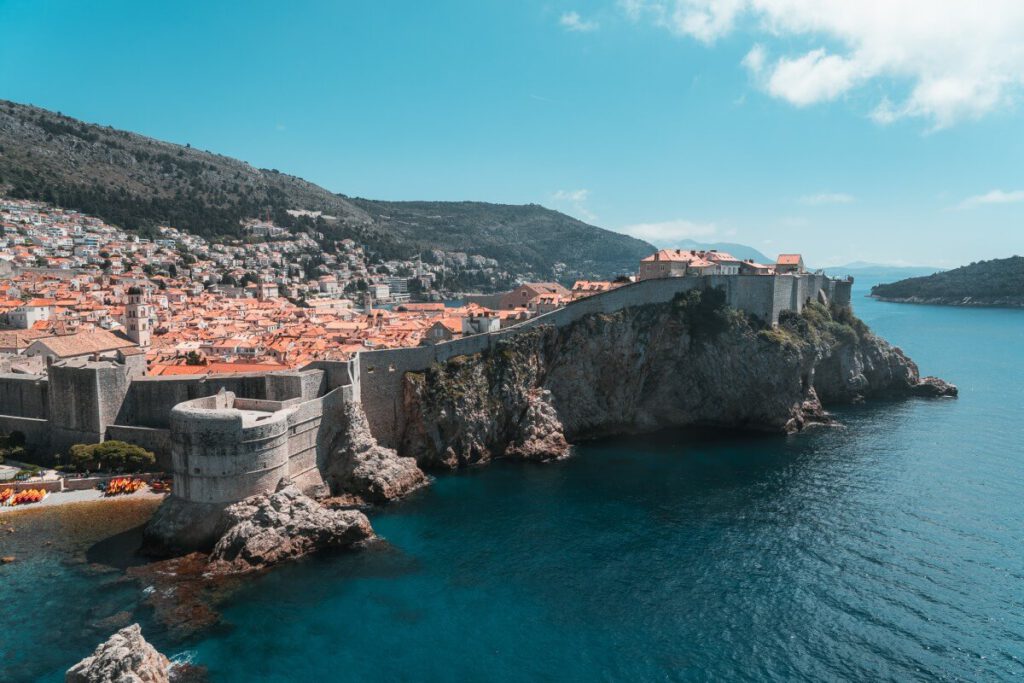
But the truth is also that Dubrovnik is one of the most crowded tourist destinations in Europe and is considered one of the cities with the highest number of tourists per resident. With a population of only about 40,000, the city welcomes nearly 1.5 million tourists annually. At its peak, that works out to about 37 tourists per resident.
There are several reasons why so many visitors come to Dubrovnik:
- Dubrovnik is simply a stunningly beautiful city on the Mediterranean and also very interesting from a historical perspective.
- Ever since Dubrovnik served as a filming location for *Game of Thrones*, its international fame has grown even more—and with it, tourism.
- On top of that, there are plenty of tourists arriving on cruise ships.
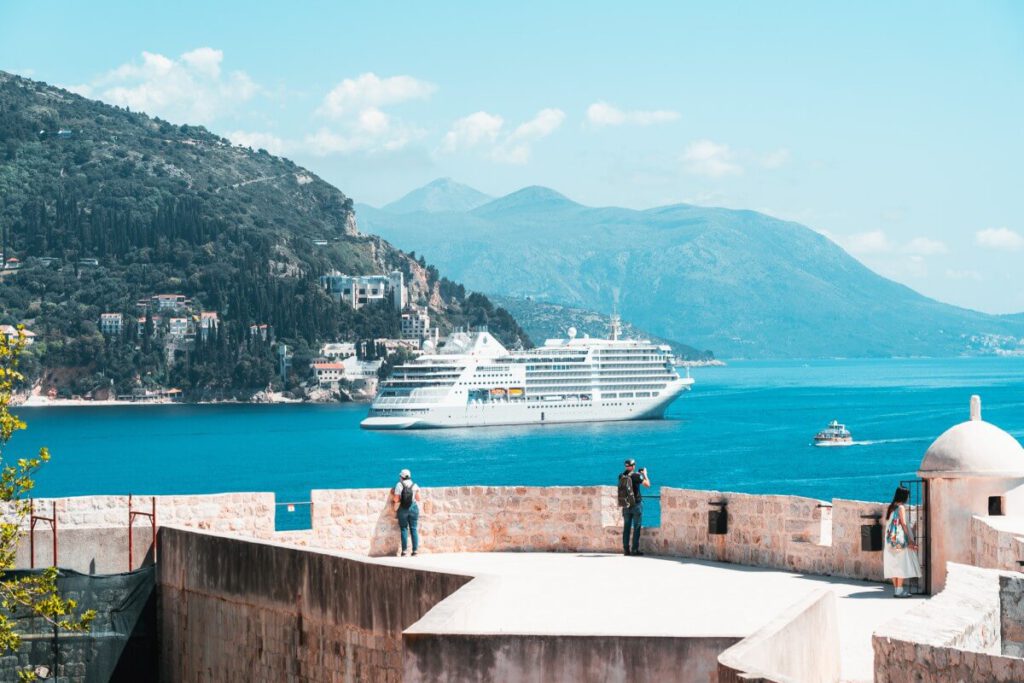
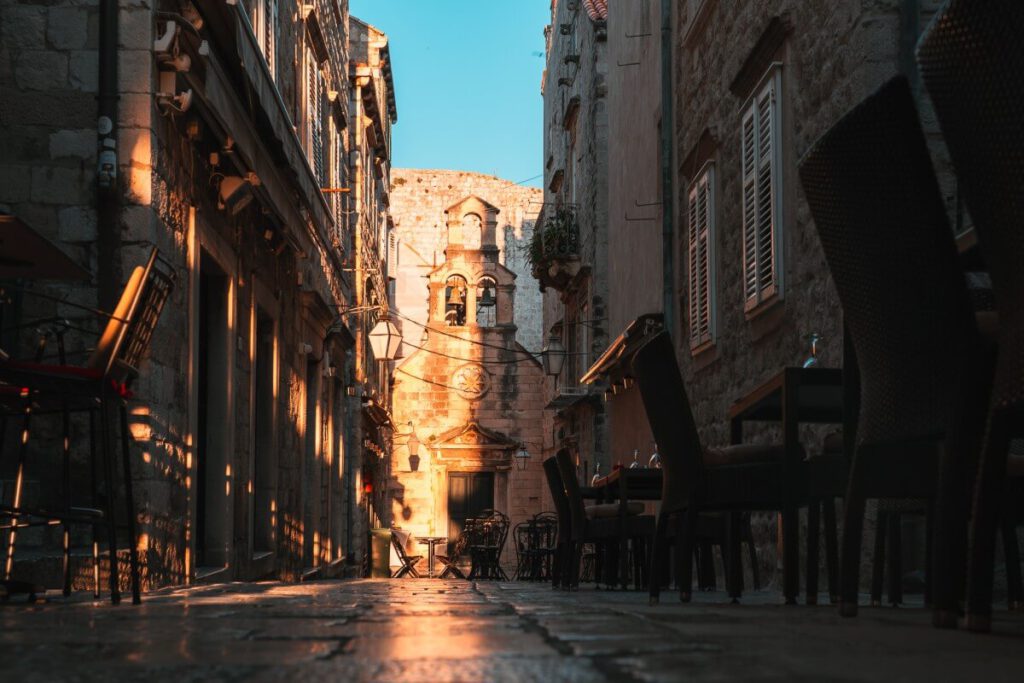
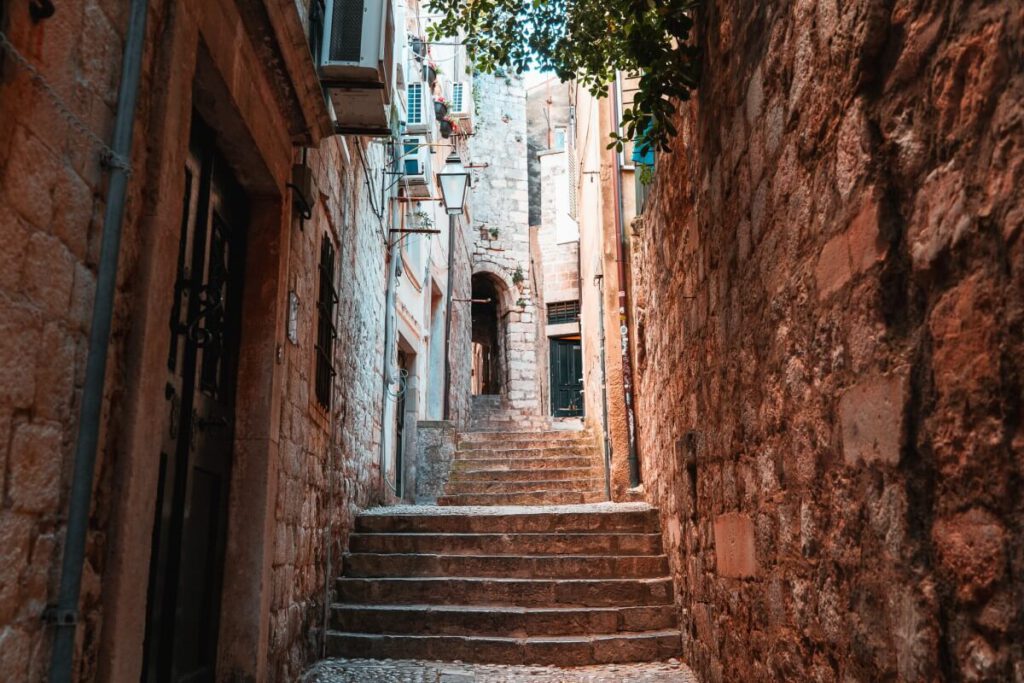
So if you’re sensitive to large crowds, Dubrovnik probably isn’t the place for you. And in general, Dubrovnik’s Old Town, in particular, is completely geared toward tourists. Many locals have moved away from the inner core of Dubrovnik. So you won’t find the authentic Croatia here.
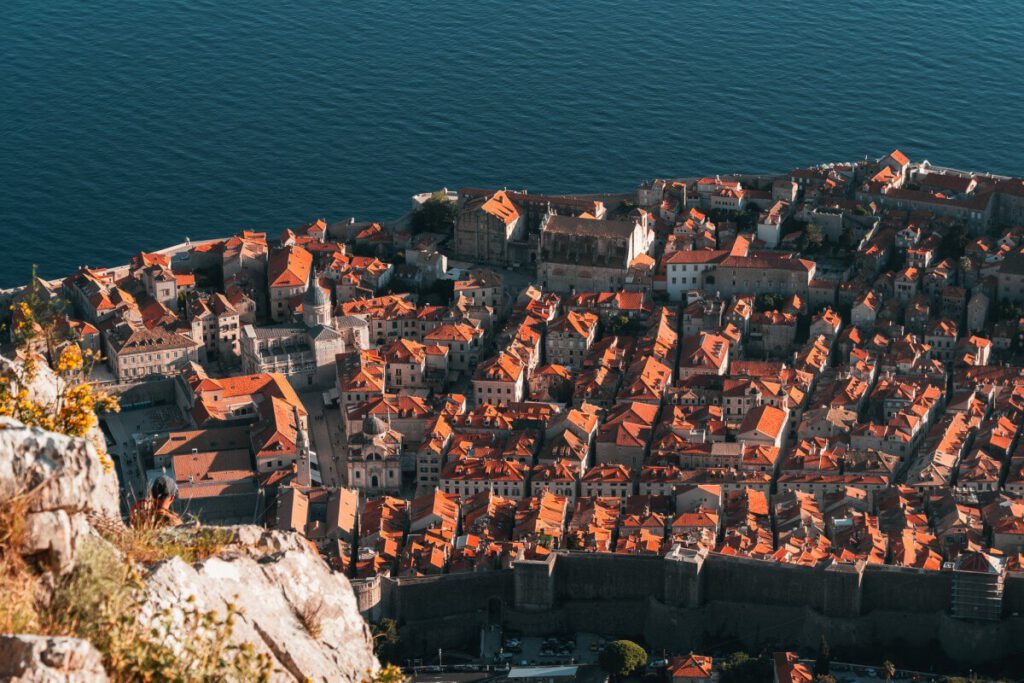
Should you skip Dubrovnik because of that?
No. In my opinion, it’s still worth a visit. You should see Dubrovnik at least once in your life. People still live in the Old Town; there’s a rich history (especially that of the Republic of Ragusa), churches, monasteries, and everyday life off the main thoroughfare (Stradun). Especially if you’re out and about early in the morning or in the evening outside of peak season, after the day-trippers have left, you’ll experience a much quieter, more authentic city.
Save Money in Dubrovnik with the Dubrovnik Pass
Because of the large number of visitors, everything in Dubrovnik is more expensive than in other places: accommodations, restaurants, and drinks. That’s exactly why the Dubrovnik Pass is worth it.
The Dubrovnik Pass is the official tourist card issued by the city, which gives you free admission to several attractions and allows you to use public transportation as much as you like during its validity period. It also offers discounts at select partner locations. It is automatically activated the first time you use it. It is available in three versions:
- 1 day for 40 €
- 3 days for 50 €
- 7 days for 60 €
It’s best to buy the Dubrovnik Pass through the official website.
During my visit, I had the 3-day pass, so I did the math to figure out how much all the attractions I visited would have cost and then compared that to the price of the pass:
- City Wall + Fortress: 40 €
- Rector’s Palace: 15 €
- Franciscan Monastery: 8 €
- Dominican Monastery: costs 5 € instead of 6 €
- Ethnographic Museum: 8 €
- Maritime Museum: 8 €
- Lokrum Ferry: Saved 6 € (24 instead of 30 €)
- Total: 86 €
The 3-day Dubrovnik Pass costs €50. That means you’ll save €36 in this example alone. But even if you only visit the city walls and the Rector’s Palace, you’ll easily make up the cost.
Dubrovnik and Game of Thrones
I’ve watched every season of *Game of Thrones* myself and have even visited some of the locations where parts of the series were filmed (especially in Spain). But that was more by chance. For Game of Thrones fans, Dubrovnik is practically the Holy Grail. It served as the backdrop for many scenes set in King’s Landing, and throughout the city there are a great many filming locations packed into a small area.
These days, when you take a city trip to Dubrovnik, it’s simply impossible to avoid coming across the show. And even though I’m not one to seek out filming locations and was much more interested in the historic part of the city, I have to admit that after my trip to Dubrovnik, I felt like rewatching all the seasons of the show again.

If you’re also a fan of the series, then a Game of Thrones city tour is definitely worth it. You’ll explore the most famous filming locations with a guide who explains each spot, shows a picture of the actual scene, and shares additional information and anecdotes. I didn’t take one of these tours myself, since I found it more exciting to discover all the locations on my own, but the tours are very popular with tourists and have received excellent reviews.
How long should I plan for Dubrovnik?
There’s so much to see and do in Dubrovnik that you can’t possibly see it all in one day. But since Dubrovnik is also very crowded, three full days would have been too much for me.
In 2 full days (i.e., with 3 overnight stays), you can discover all of Dubrovnik’s highlights and still have enough time to explore a few of the spots in more depth (e.g., Lokrum Island).
I recommend spending two full days there, but in this article I’ll also give you some tips on what you can do in one, two, or three full days.
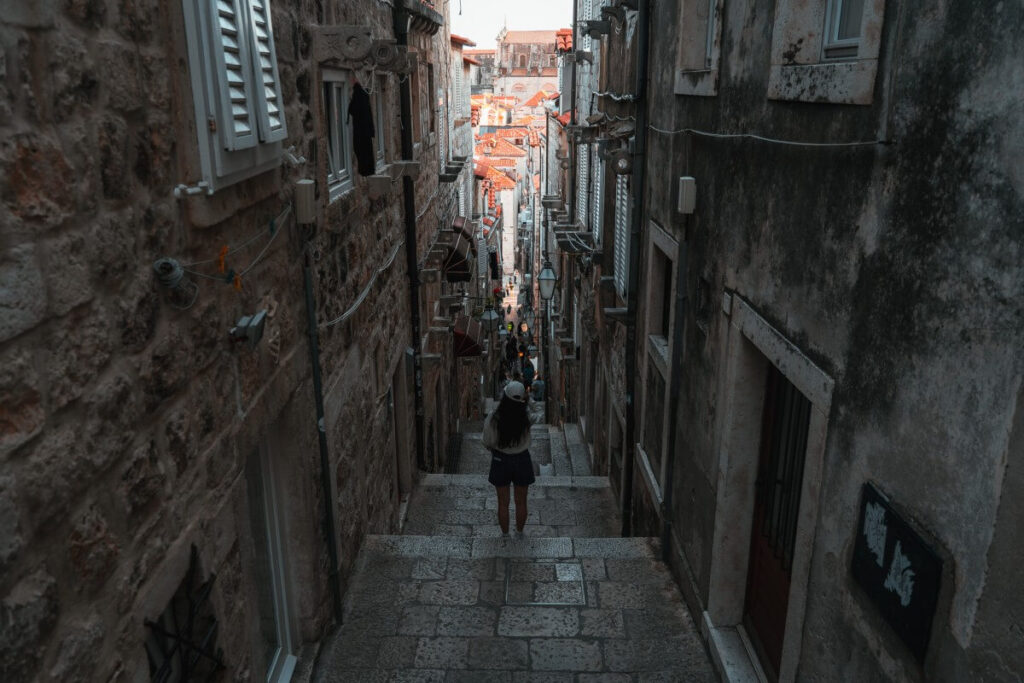
Hotel Recommendations for Dubrovnik
There are several ways you can spend your time in Dubrovnik:
- A hotel or apartment in the Old Town.
- Advantage: You can get to the sights quickly and visit the most popular spots early in the morning, before all the other tourists arrive.
- Downside: It’s usually pretty expensive, and you’ll be stuck in the middle of a crowd of tourists almost all day long. It’s also tricky if you’re renting a car, because there are really only hotels in the city center that don’t have parking.
- A hotel located a little further outside the Old Town.
- Advantage: You’re in quieter areas and can relax every now and then; plus, it’s usually a little cheaper outside the city.
- Downside: You’ll have to find a way to get to the Old Town first, and you’ll have to get up even earlier to avoid the crowds of tourists.
I personally chose Option 2, especially since I was traveling by rental car and had chosen a hotel with parking. Getting into the city was no problem because I could ride all the buses for free with the Dubrovnik Pass. All you have to do is show the bus driver your ticket, and they’ll wave you through.
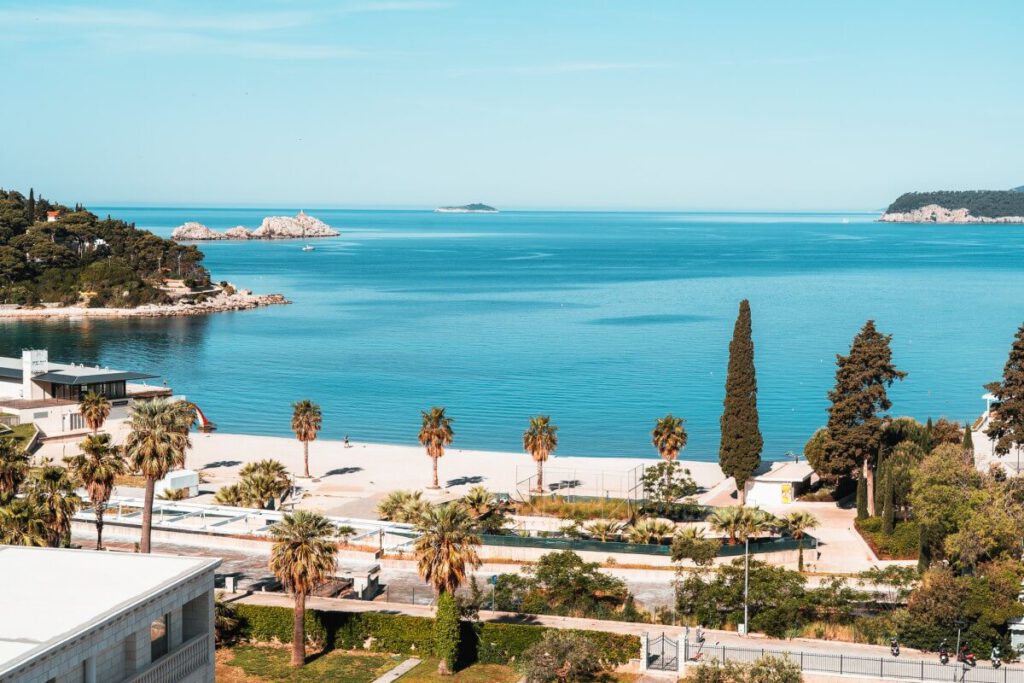
I stayed at the Grand Hotel Park, which offers a great view of Lapad Beach and even extends all the way to the island of Koločep.
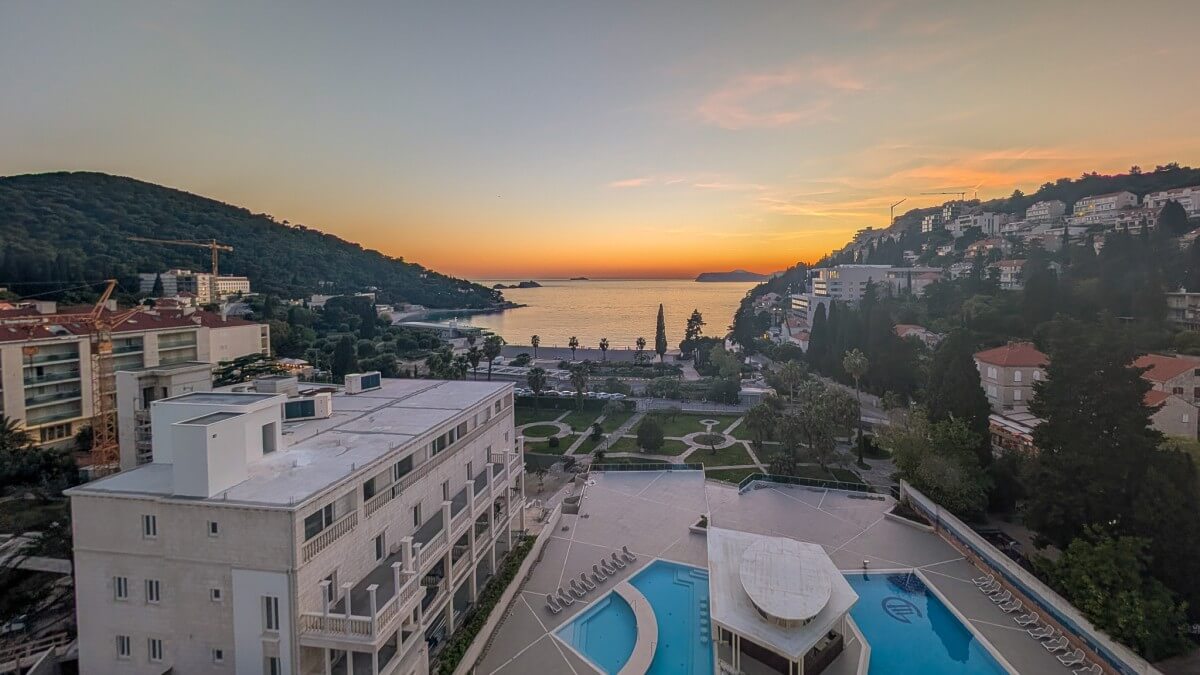
The Grand Hotel Park is located in the heart of the lush Lapad Peninsula—just a few steps from the pebble beach and the car-free beach promenade. With 244 rooms, Mediterranean gardens, indoor and outdoor pools, and a spacious wellness and spa area, it offers a relaxing alternative to the hustle and bustle of the Old Town.
- Lapad: The beach and promenade are a 4-minute walk away. You can reach the Old Town in about 15 minutes by taking Bus 6.
- Indoor and outdoor pools, wellness and spa area with sauna, fitness center, three restaurants, pool and beach bars, as well as free parking and Wi-Fi.
Another great hotel in the area is the Hotel Sumatrin. It doesn’t have free parking, but it does have a 5-star rating.
If Dubrovnik is the starting point of your trip, or if you’re just taking a city break, there are also great hotel options in the city center.
Dubrovnik Attractions
The Dubrovnik attractions listed in this article are arranged so that you can visit all the attractions that are close to each other one after another.
You can also find them all here on the map:
You are currently viewing a placeholder content from Google Maps. To access the actual content, click the button below. Please note that doing so will share data with third-party providers.
More Information1. Dubrovnik City Walls
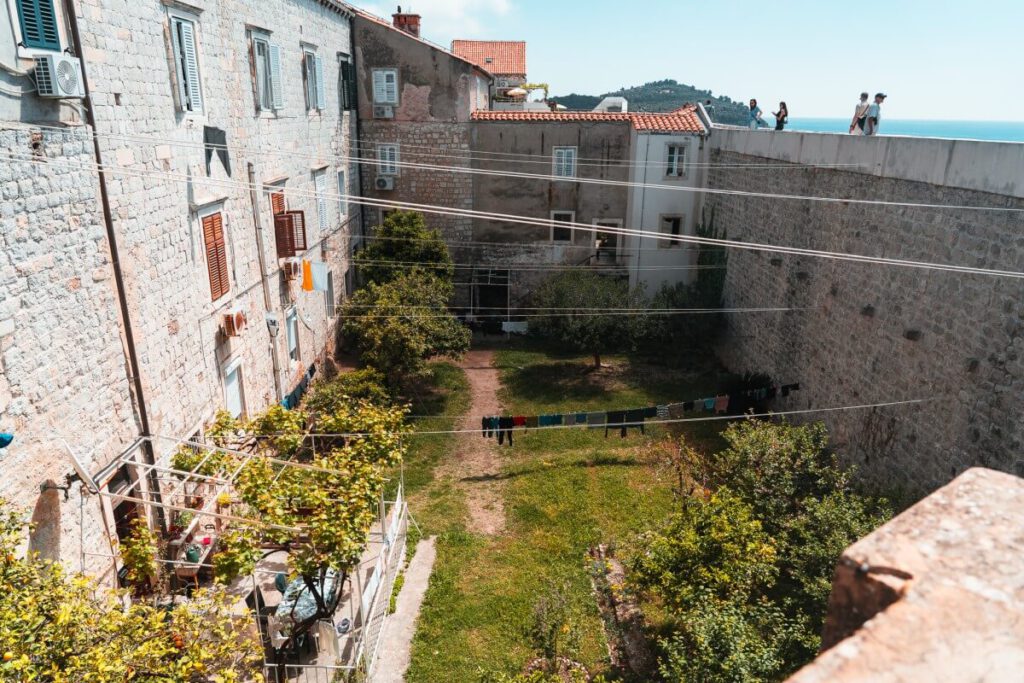
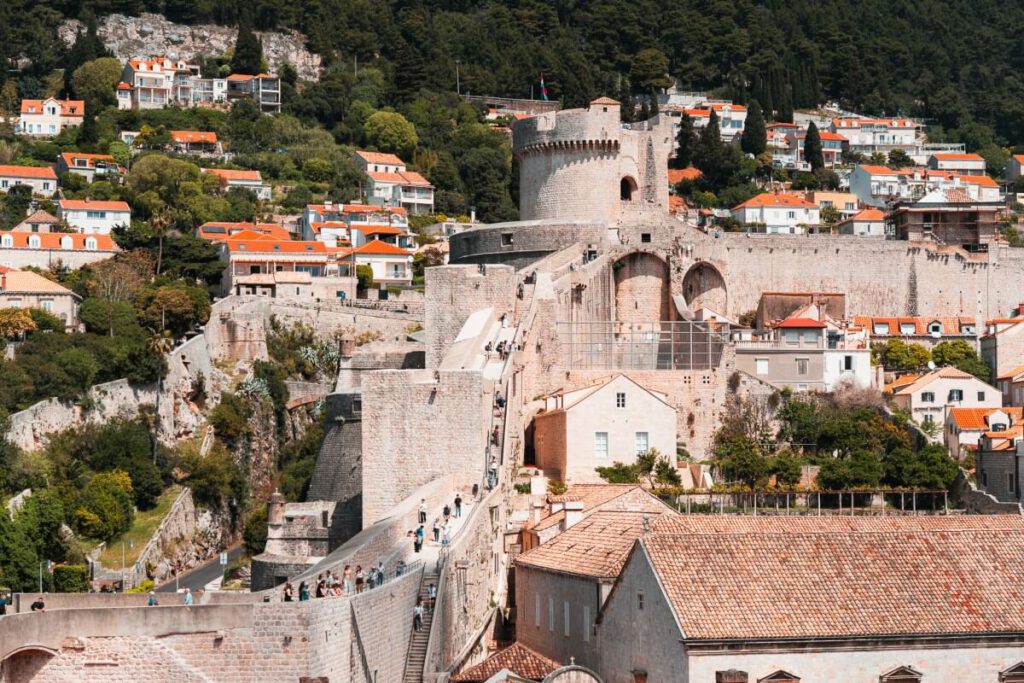
The city wall is the absolute highlight of Dubrovnik. It almost completely encircles the Old Town over a length of 1.9 km and is also exceptionally well-preserved. In some places, the wall is up to 6 meters thick. From the wall, you can see the red-tiled roofs and narrow alleys of the Old Town on one side and the sea and the coast on the other—an unbeatable combination.
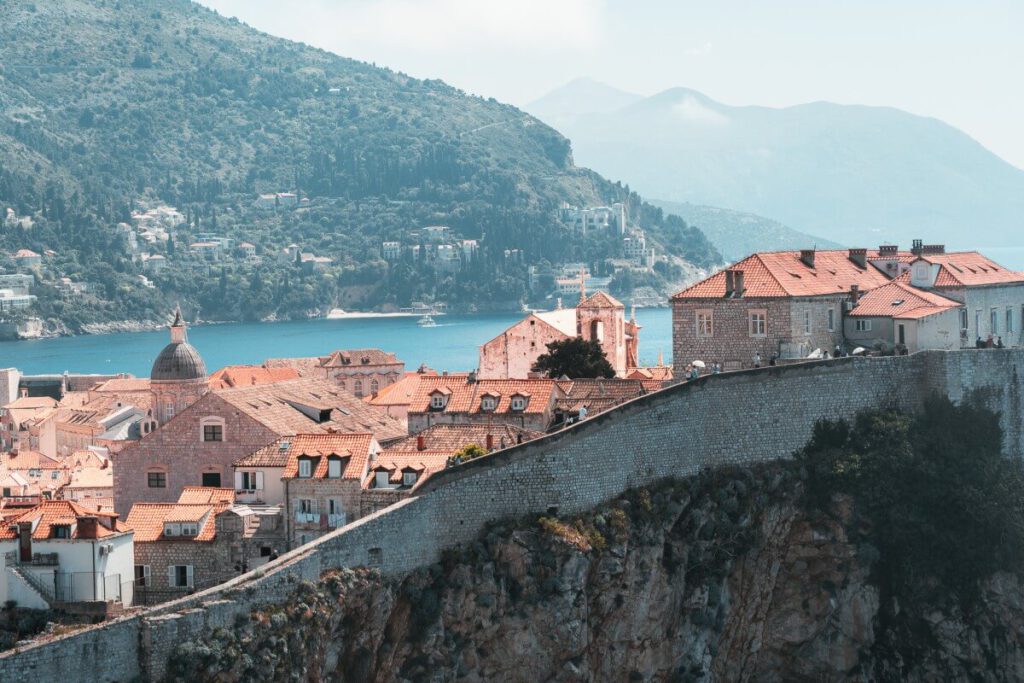
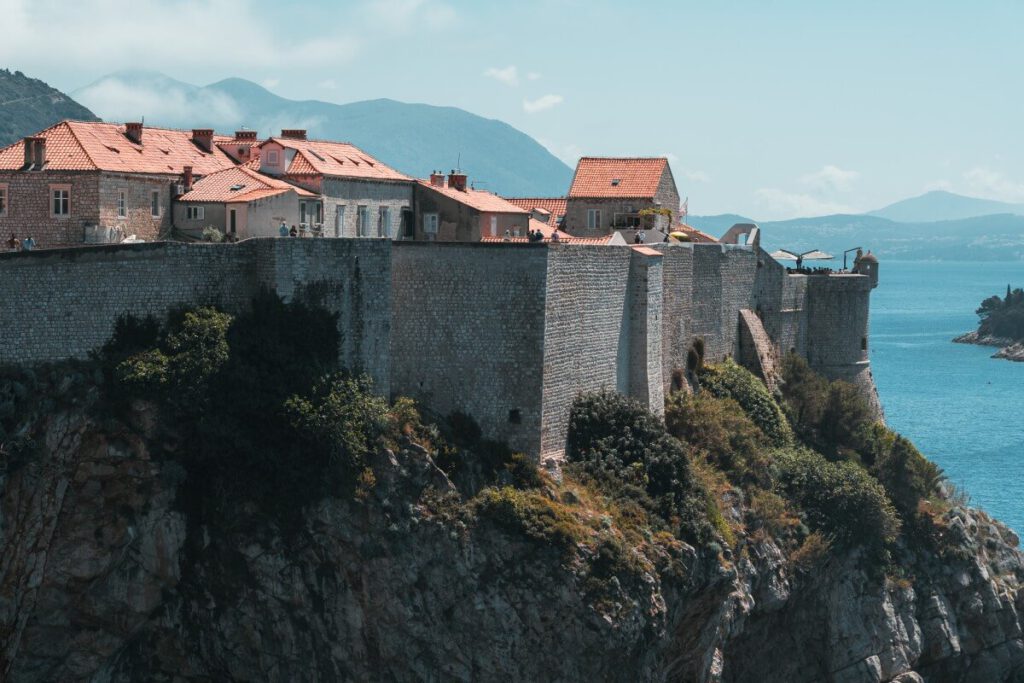
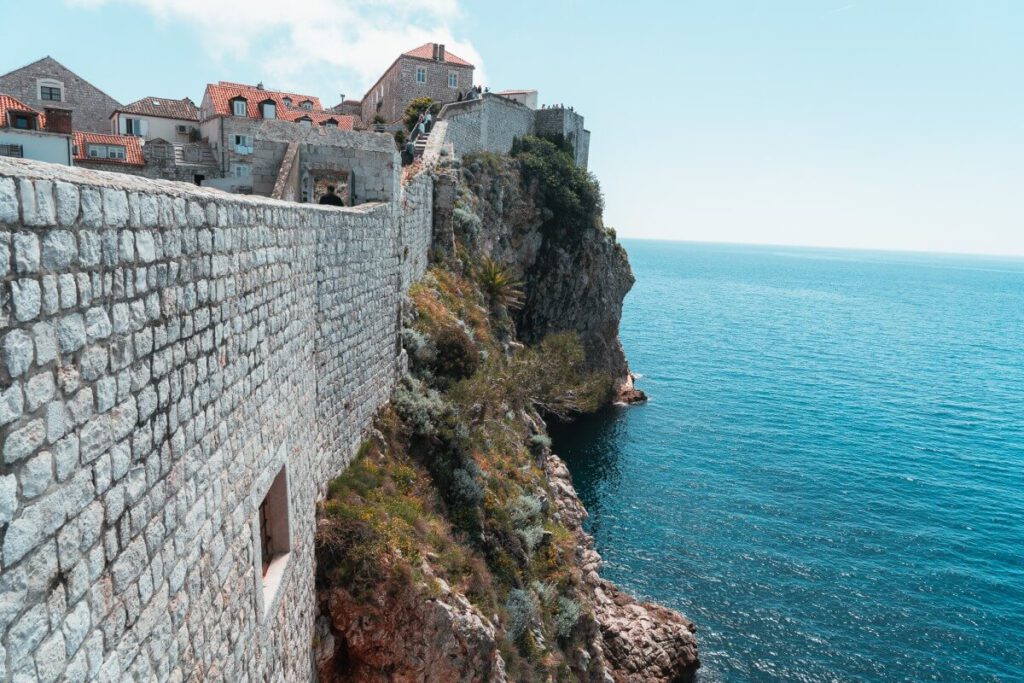
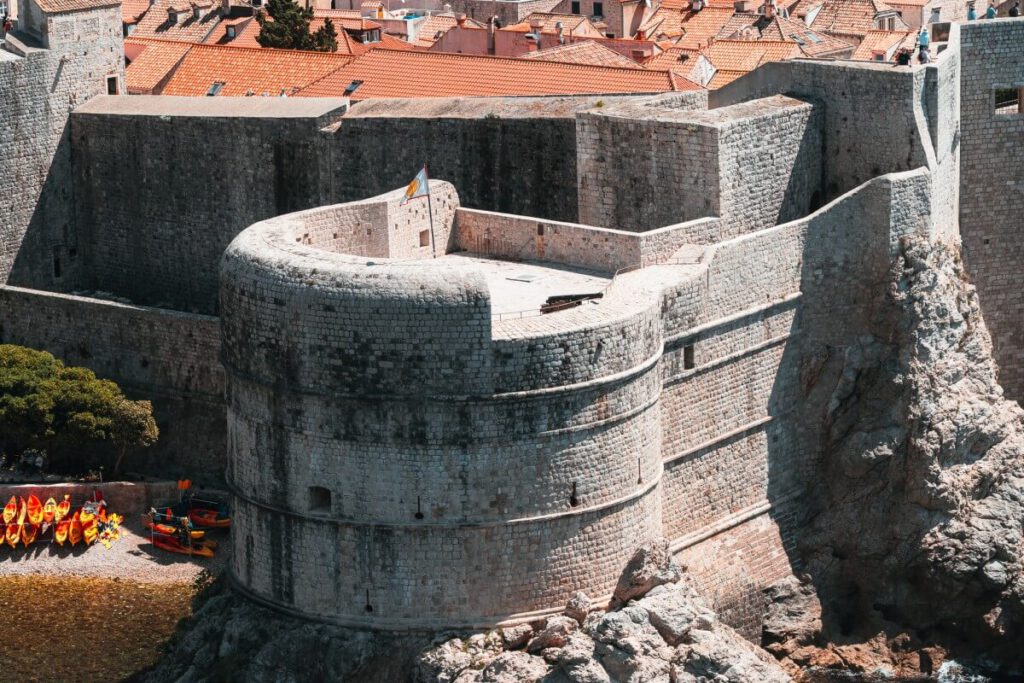
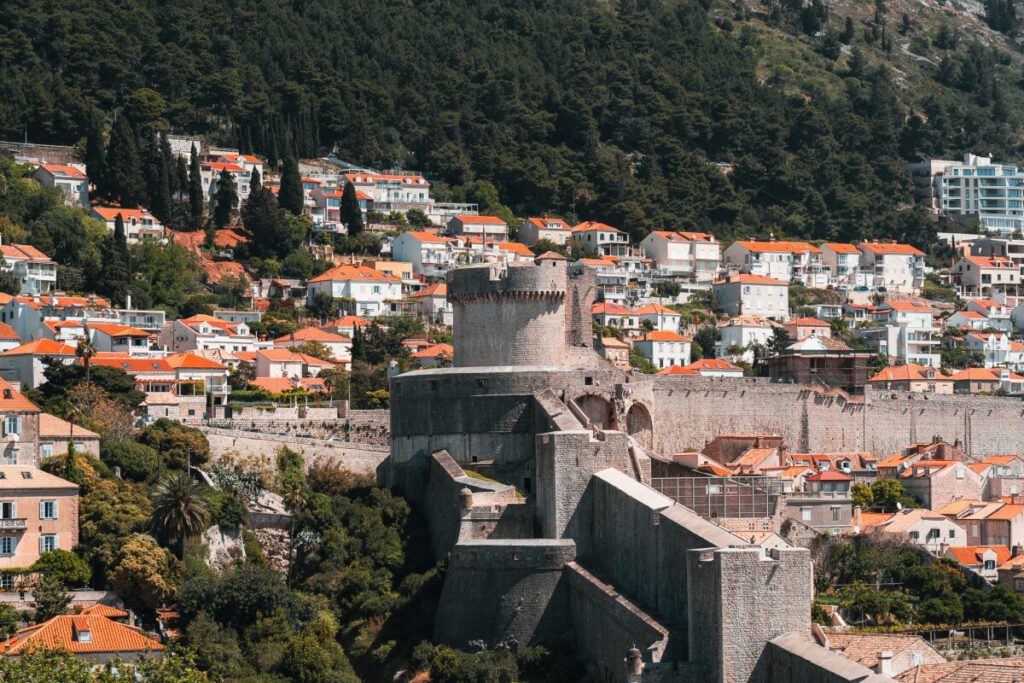
There’s no better way to experience Dubrovnik’s unique atmosphere than by taking a walk along this wall. The admission fee of 40 € is quite steep, though. However, it also includes entry to Lovrijenac Fortress.
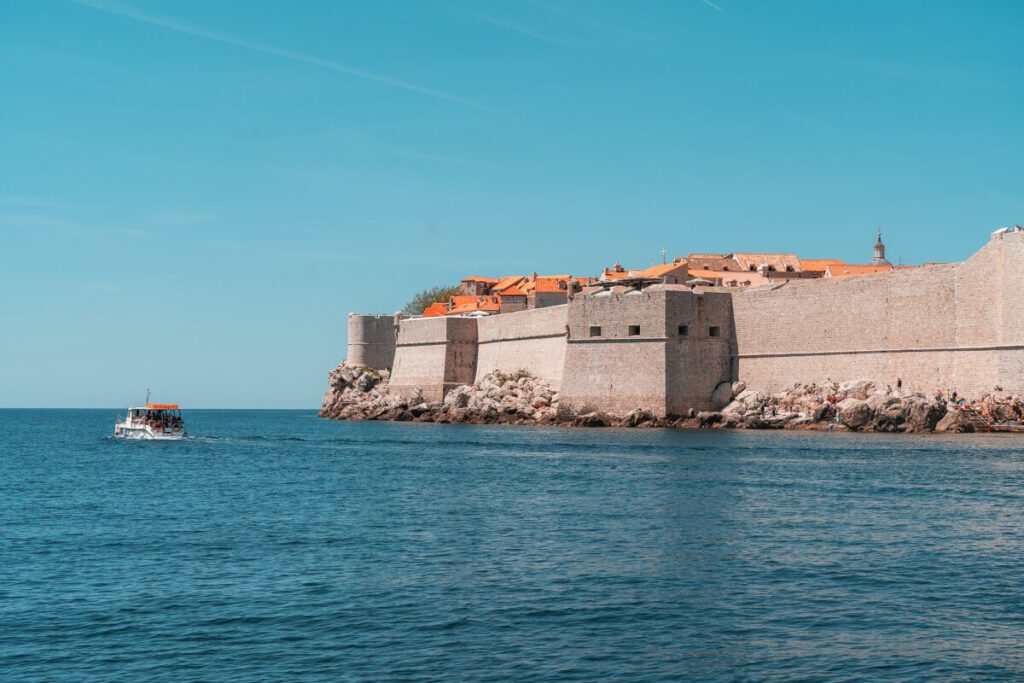
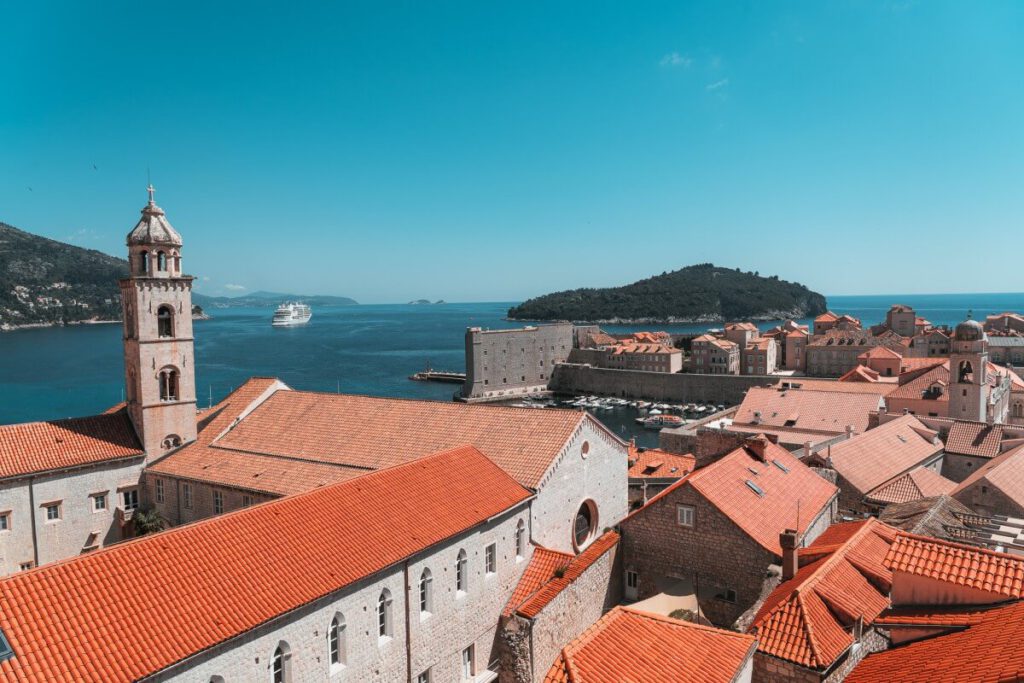
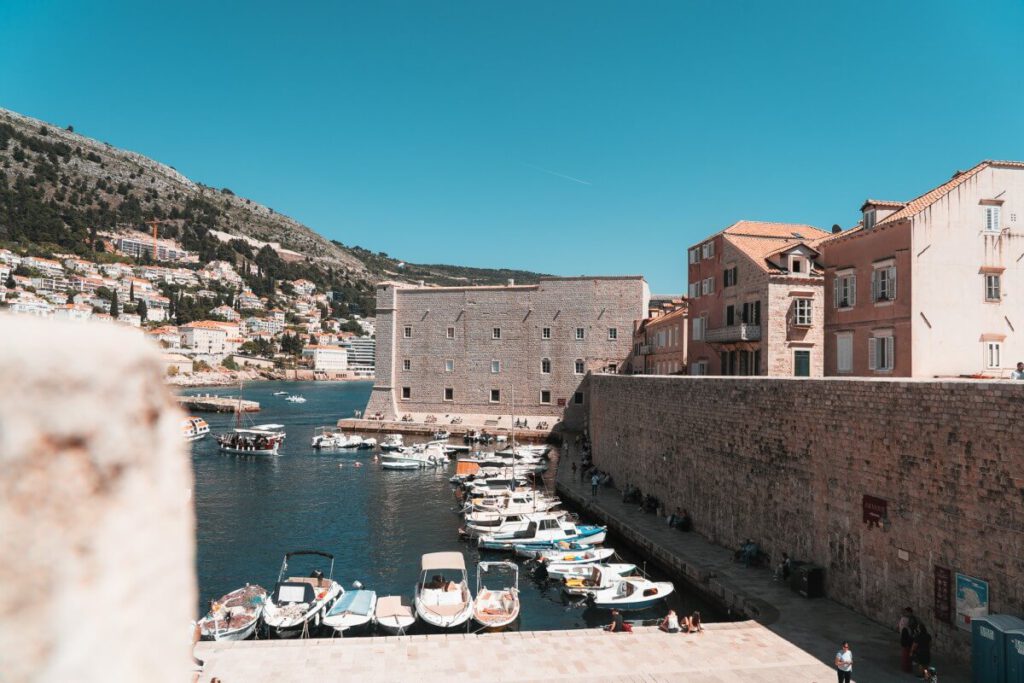
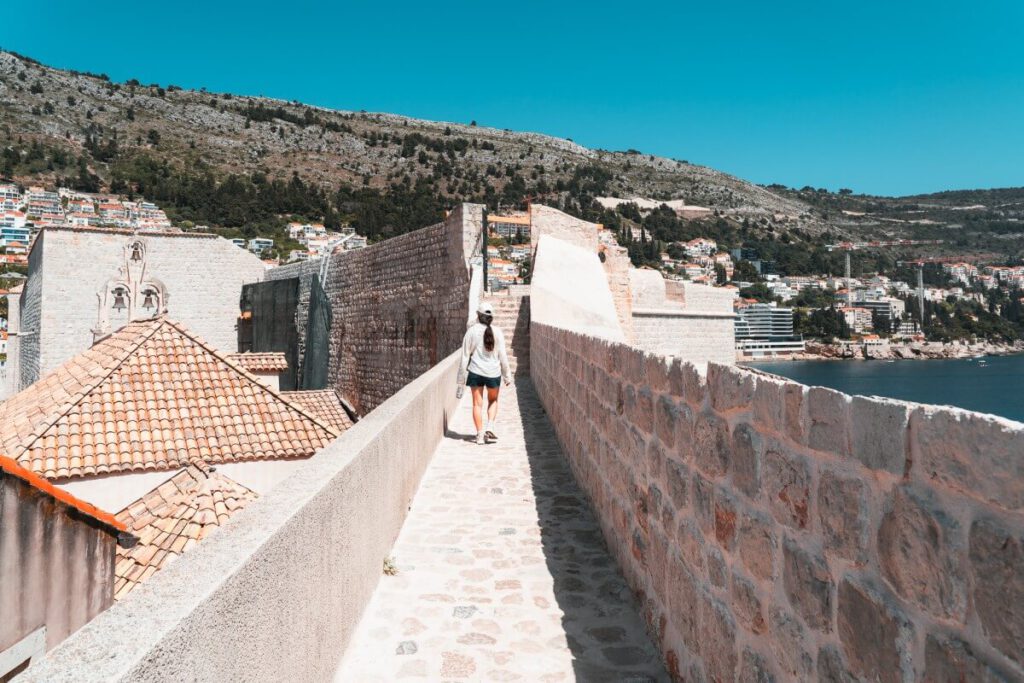
There are 3 entrances to the wall
- The main entrance is at the Pile City Gate in the west. This is the easiest to find, and it’s also the best place to start the tour. This is where most visitors begin.
- There is another entrance at the Ploče Gate to the east. It is less crowded.
- There is a third entrance at the fortress near the old harbor, close to the Maritime Museum. A small, somewhat hidden staircase leads there.
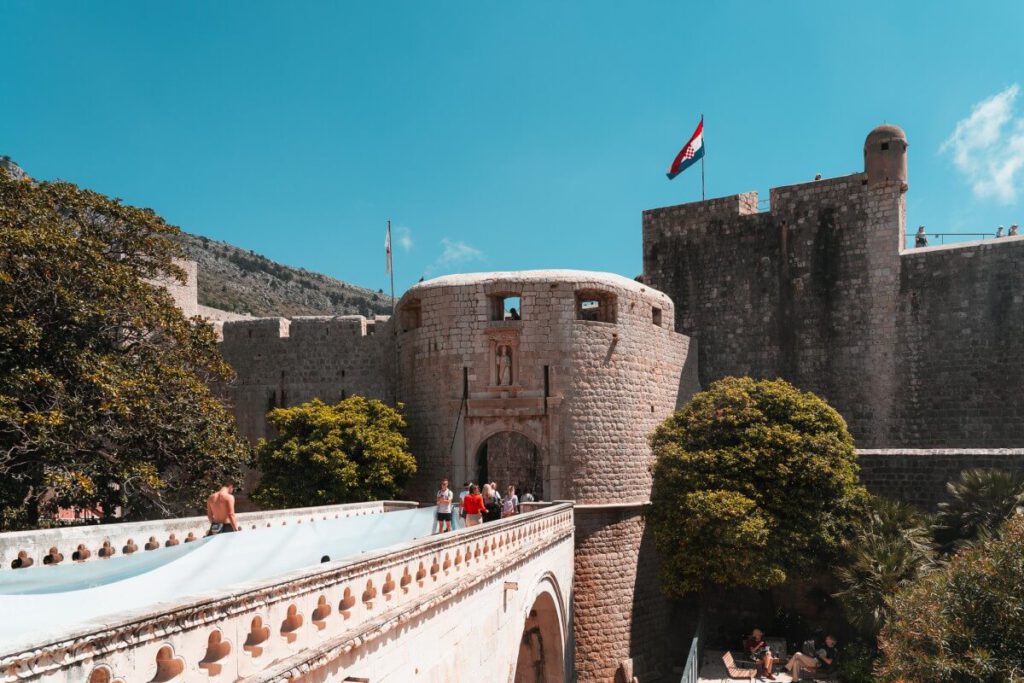
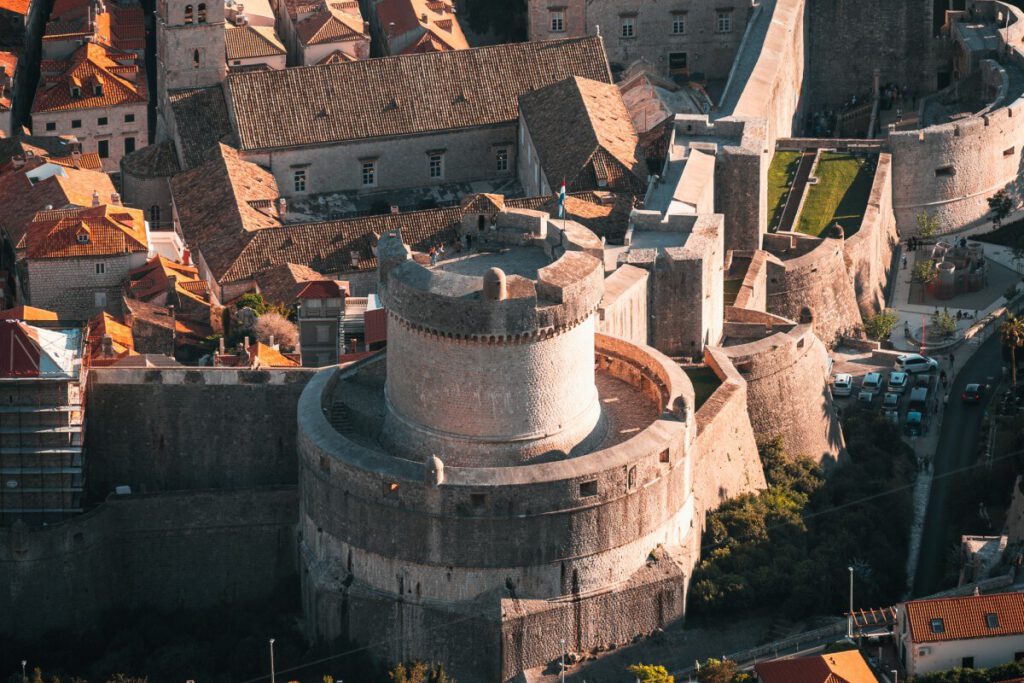
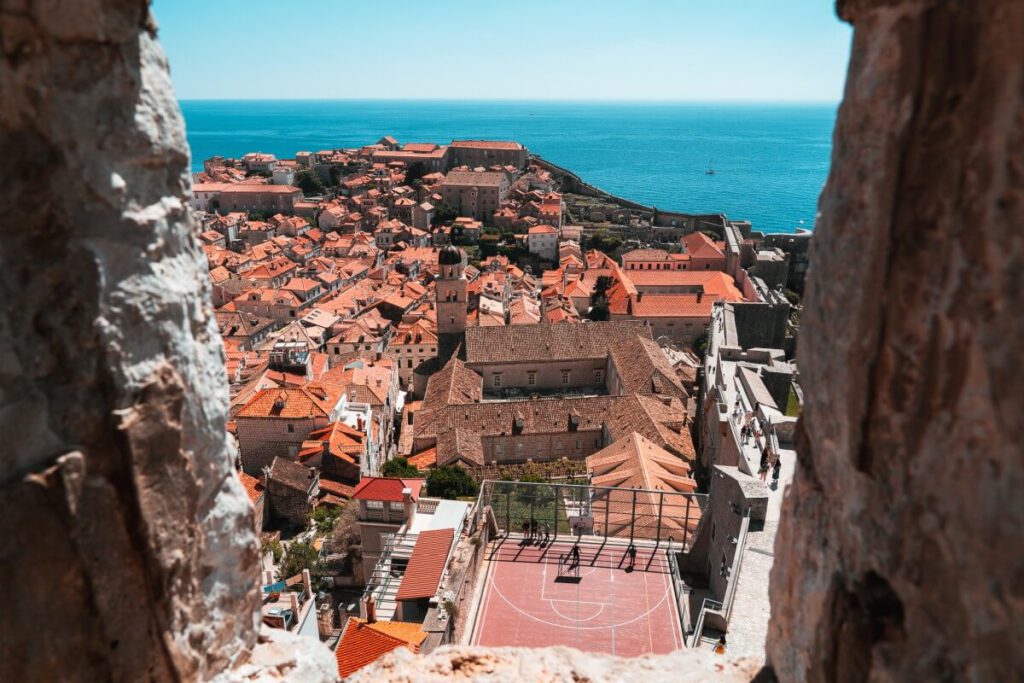
The path along the wall always goes in one direction (counterclockwise). You really can’t go wrong.
I have no idea who counted them, but apparently there are a total of 1,080 steps that you have to climb along the 1.9 km stretch. It’s a good thing there are three cafés/bars right on the wall where you can relax in the shade:
- Caffe on the Wall: It’s the first bar past the main entrance. I thought it was the nicest one, with a great view of the sea. The prices are pretty steep, though. You’ll pay €9 for a beer and €5 for a latte here.
- Caffe Bar Salvatore: The easternmost bar at St. Saviour’s Tower, with a great view of the neighboring island of Lokrum.
- Minčeta Bar: In the north, near the Minčeta Fortress.
Otherwise, though, there isn’t much shade.
2. Lovrijenac Fortress
This striking fortress stands a little further west, outside the city walls, on a rock about 37 meters high. It is nevertheless part of Dubrovnik’s fortifications.
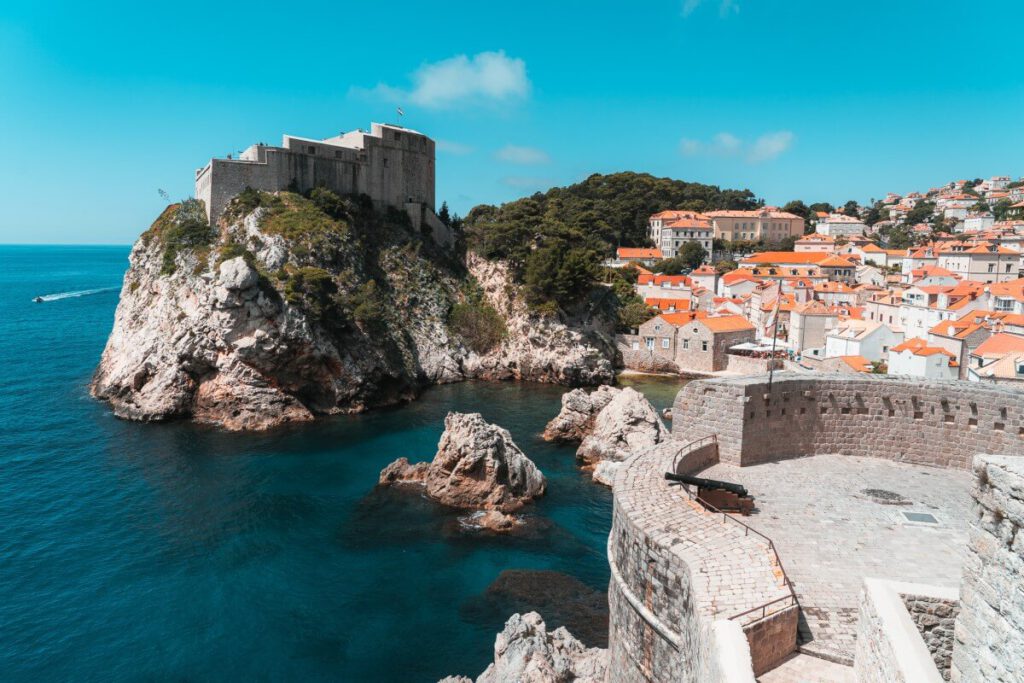
Freedom should not be sold for gold at any price
Inscription above the entrance to Lovrijenac Fortress, meaning “Freedom cannot be bought with all the gold in the world”
From the upper parts of the fortress, you have one of the best views of the Old Town and its city walls. In the summer, the fortress serves as the venue for the Dubrovnik Summer Festival.
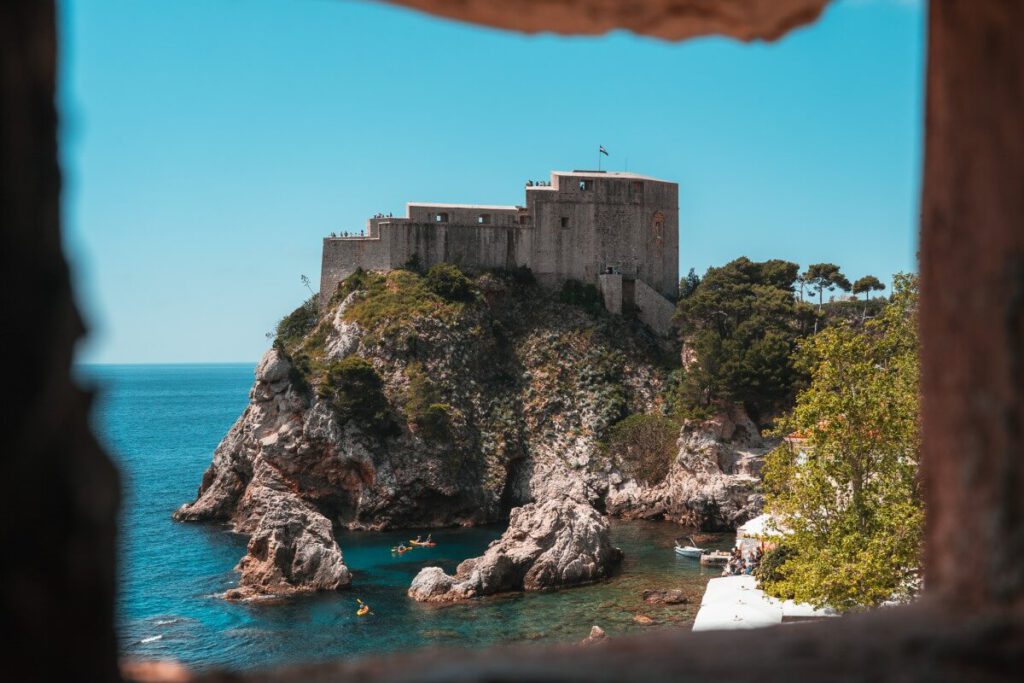
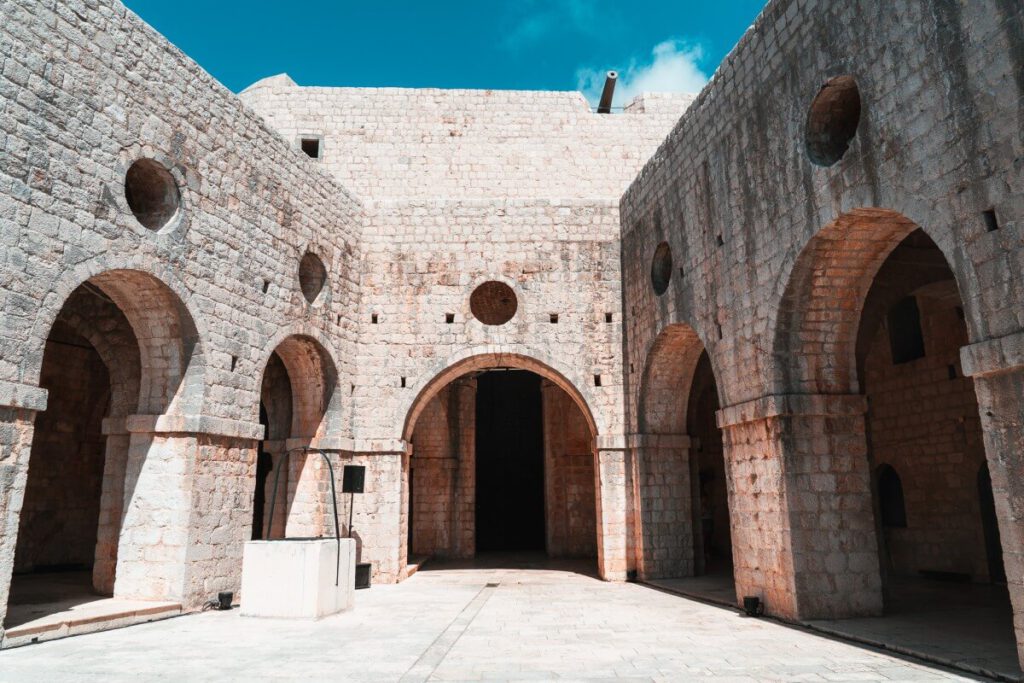
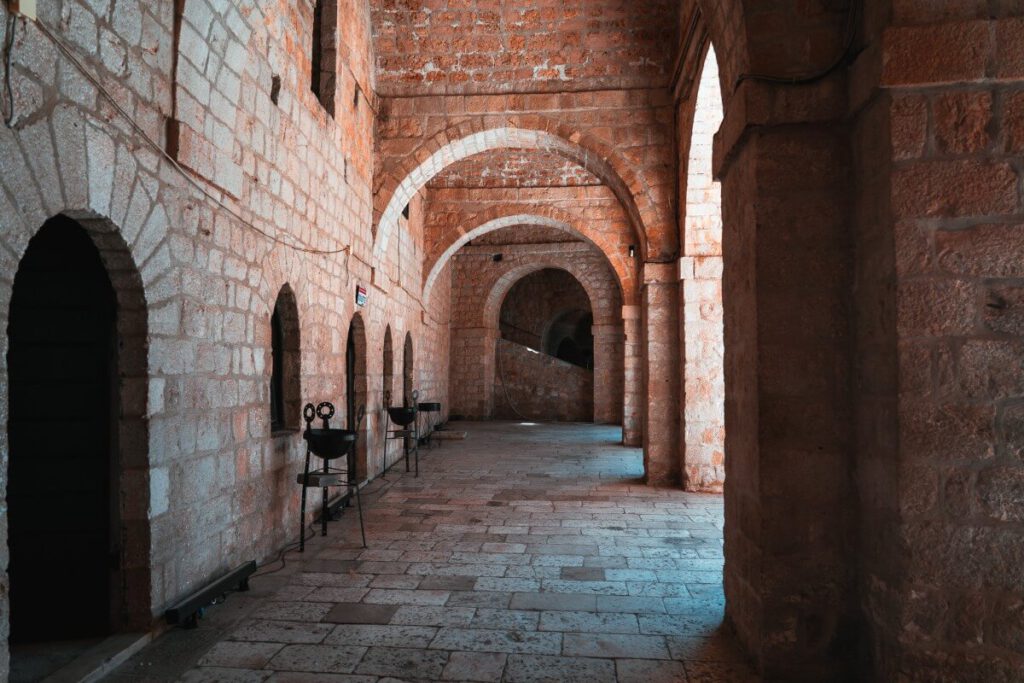
By the way: Admission to Lovrijenac Fortress is included in the ticket price for the city walls.
3. West Harbor (Pile Bay)
Directly below Lovrijenac Fortress lies the West Harbor—an idyllic little cove with a dock, surrounded by restaurants. Near Kolorina, there’s also a small pebble beach where you can swim against the backdrop of this fantastic scenery. However, kayaks from various rental companies are often parked here as well.
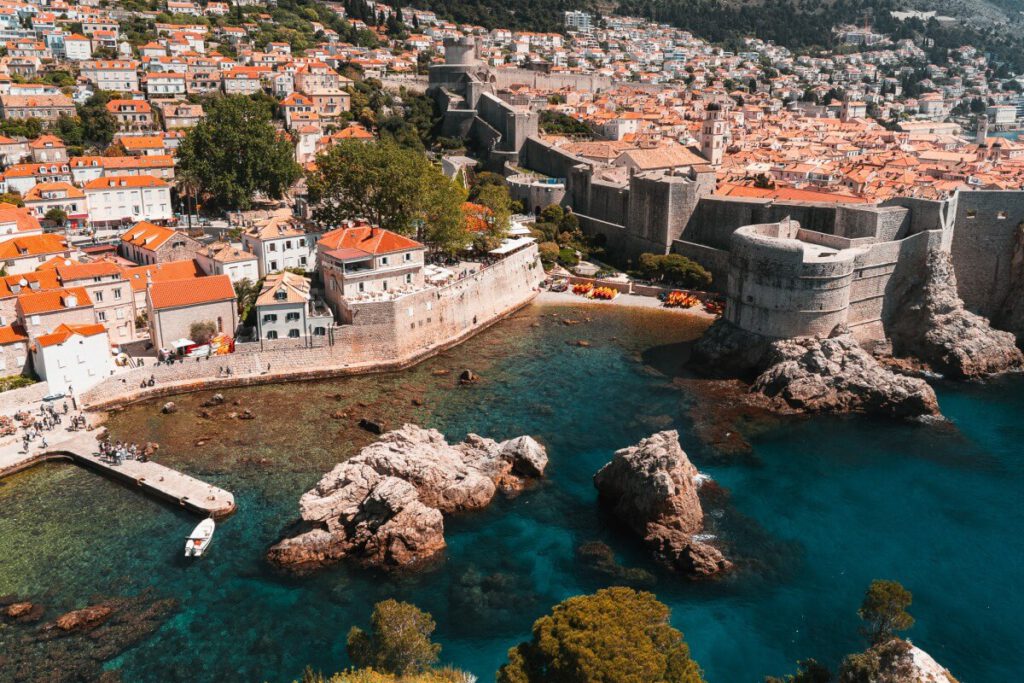
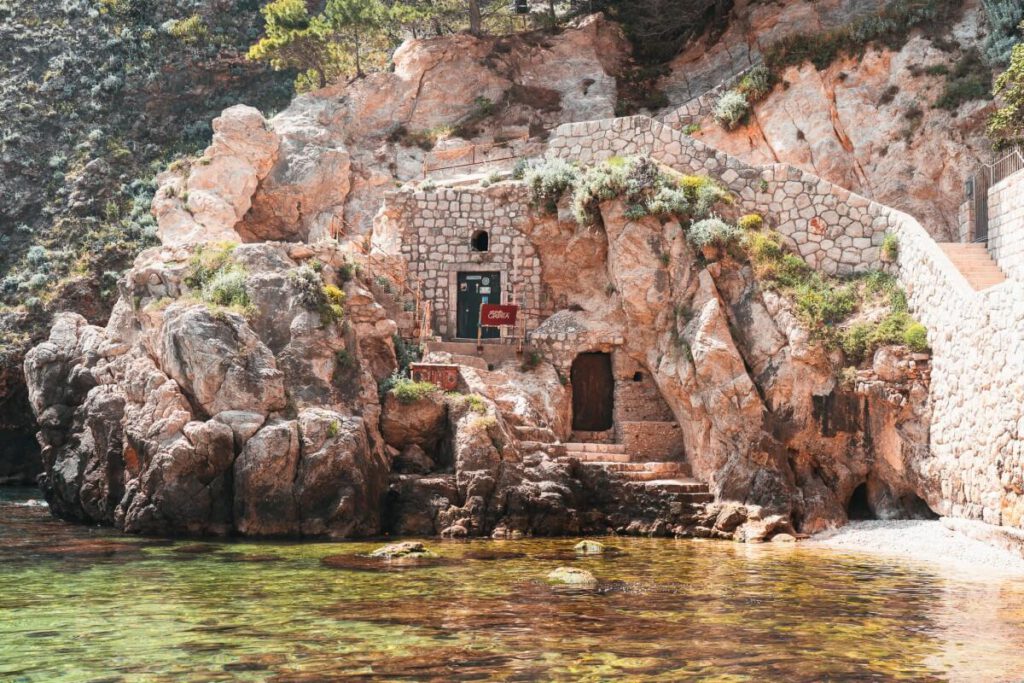
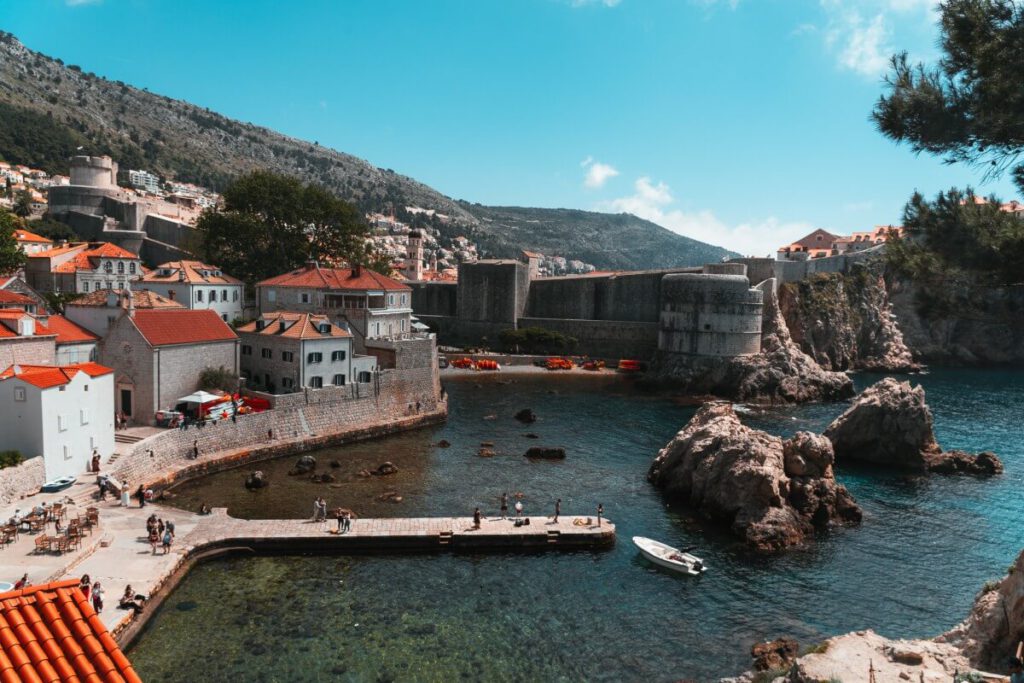
4. Stradun
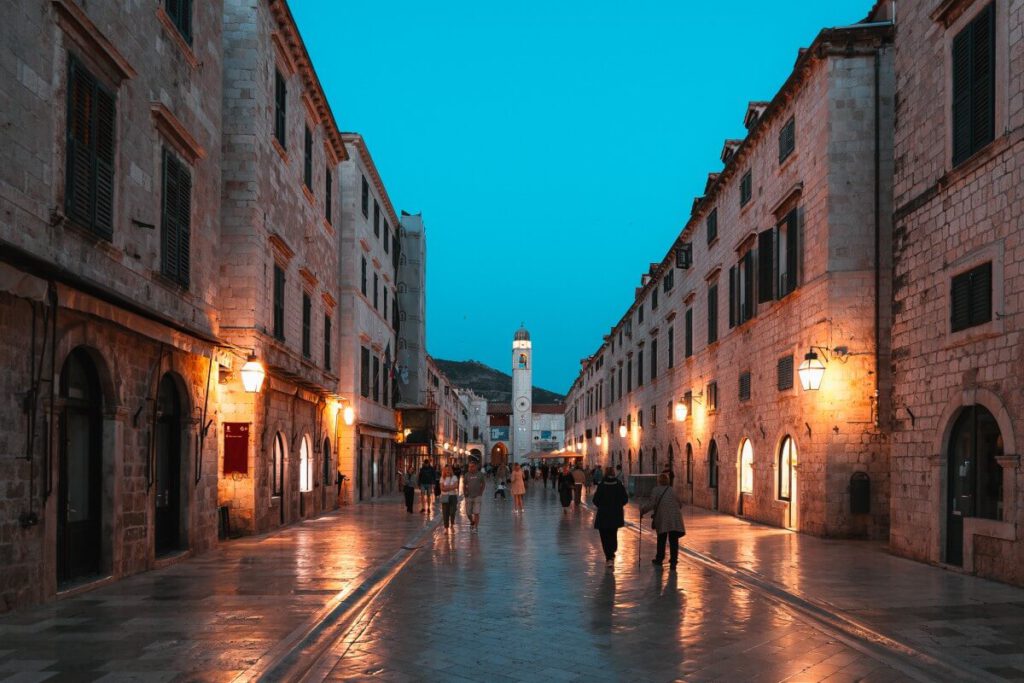
The Stradun is Dubrovnik’s main street and, at the same time, its vibrant heart. It runs 300 meters in a straight line through the Old Town, from the Pile Gate in the west to the Ploče Gate in the east. As you walk along it, you’ll find yourself on smooth, polished light-colored limestone, with shops lining both sides of the street. There are also many bars and restaurants.
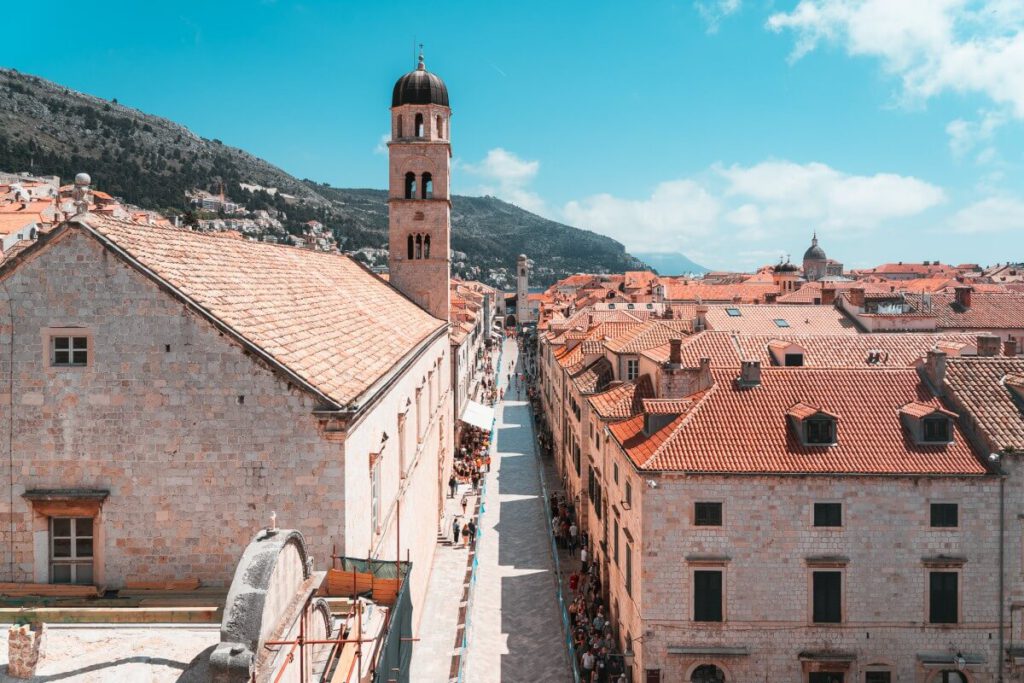
Long ago, a small canal ran through here, separating the original rocky island of Ragusa from the Slavic mainland.
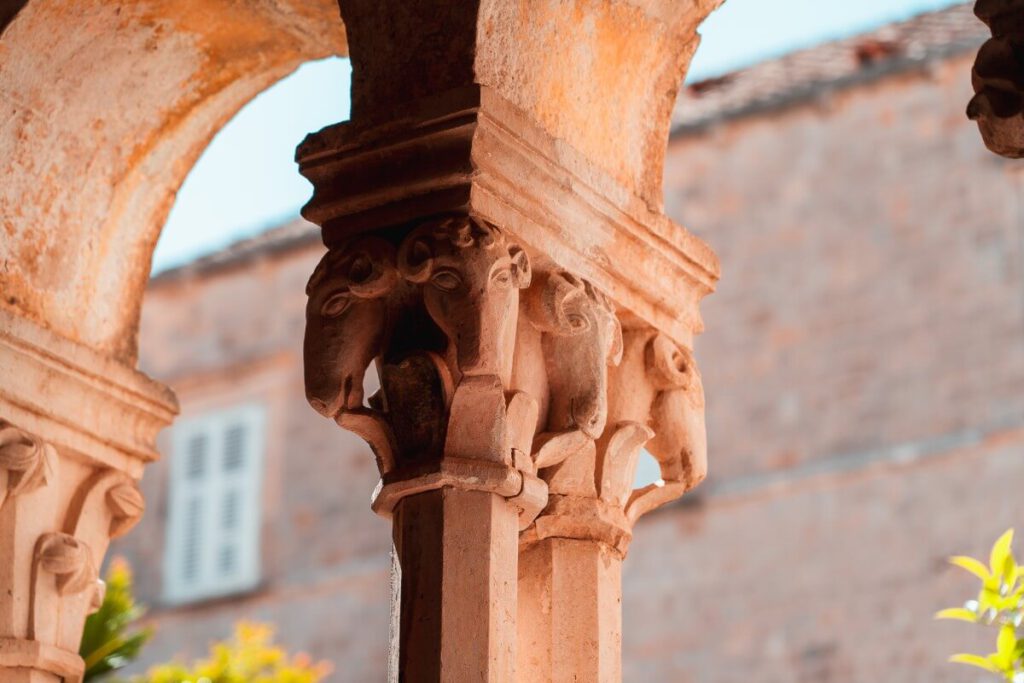
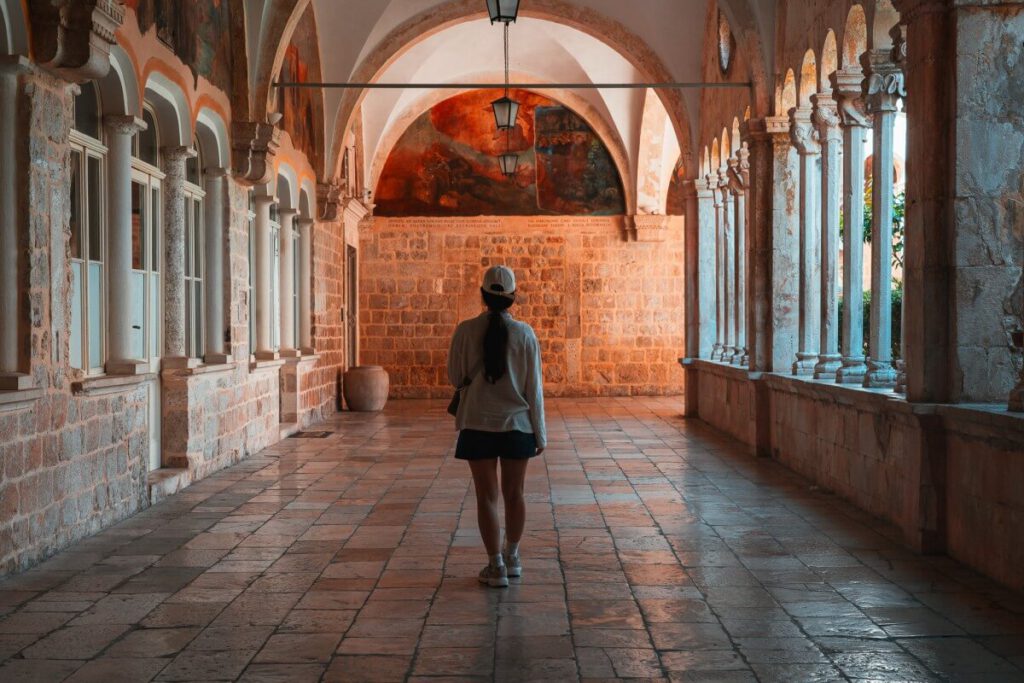
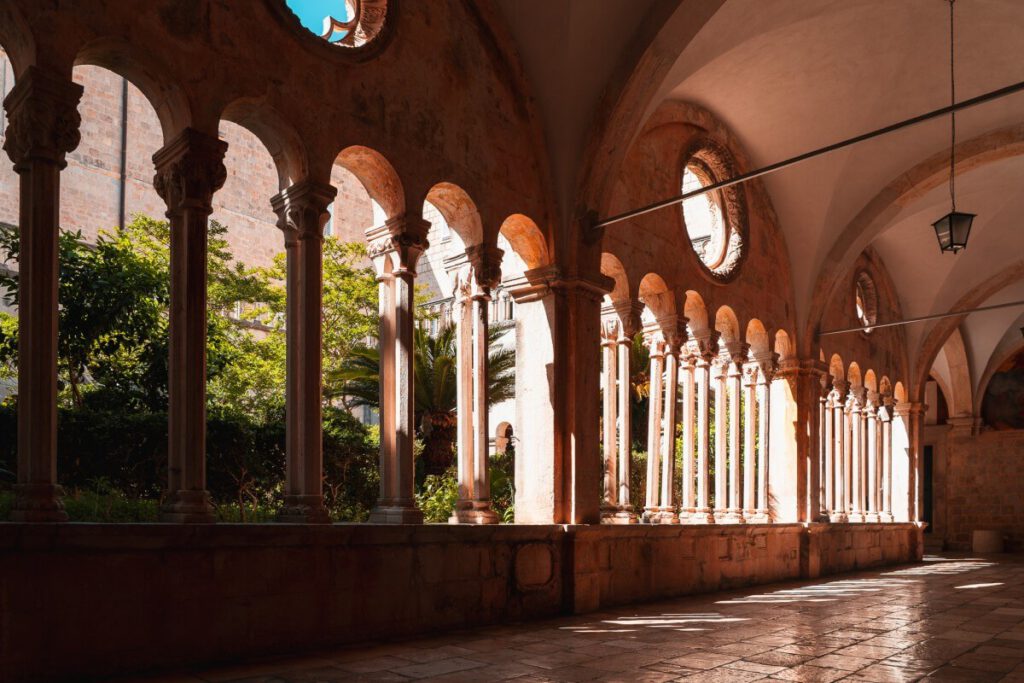
5. Franciscan Monastery in Dubrovnik
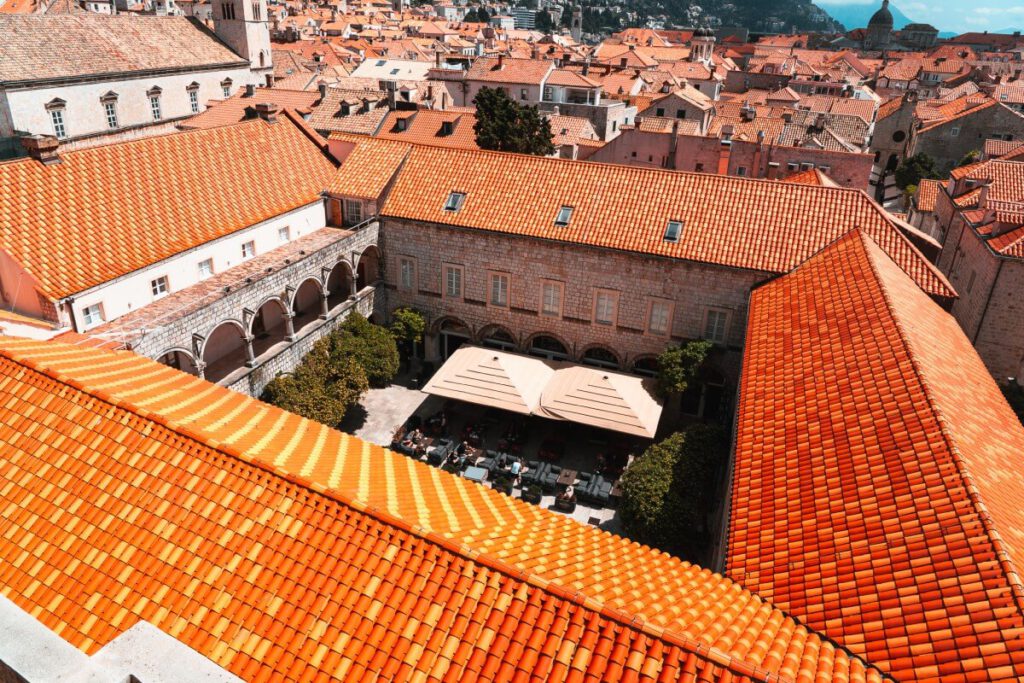
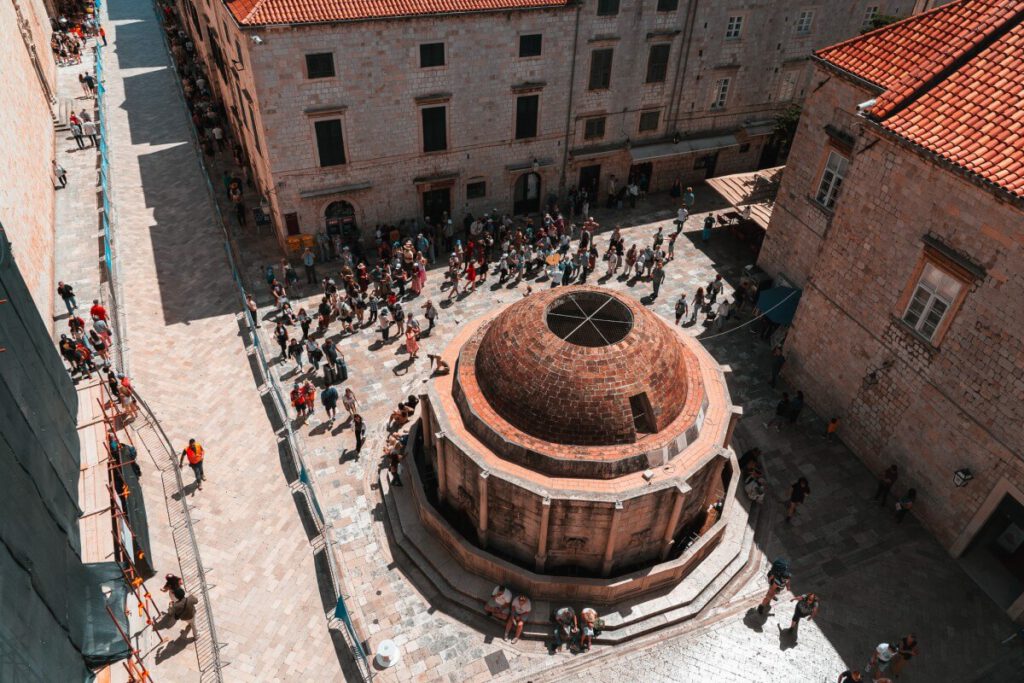
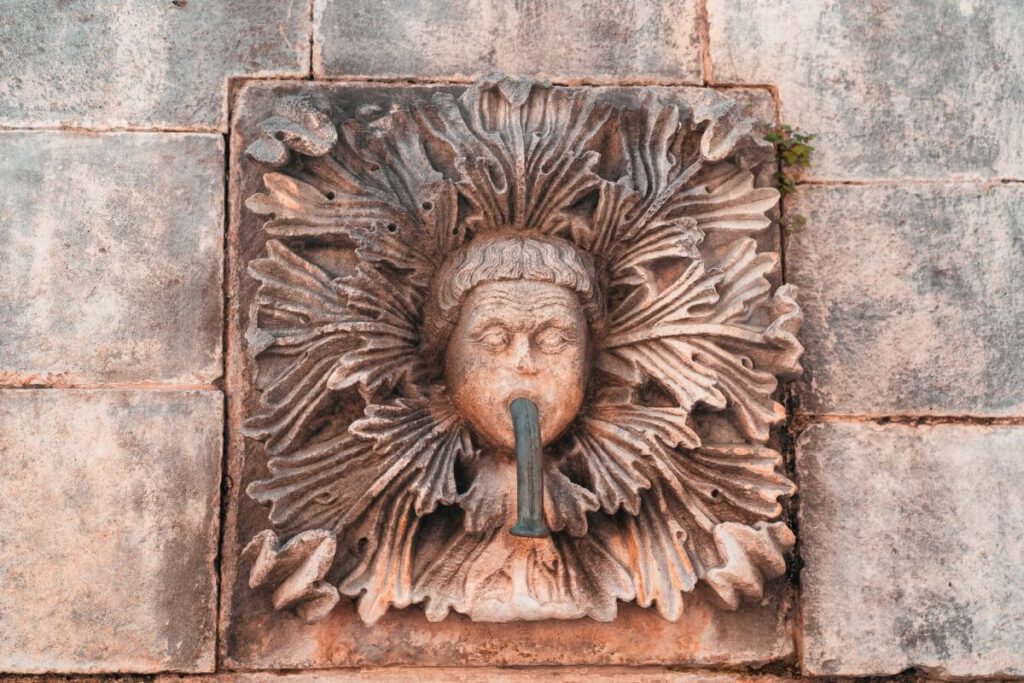
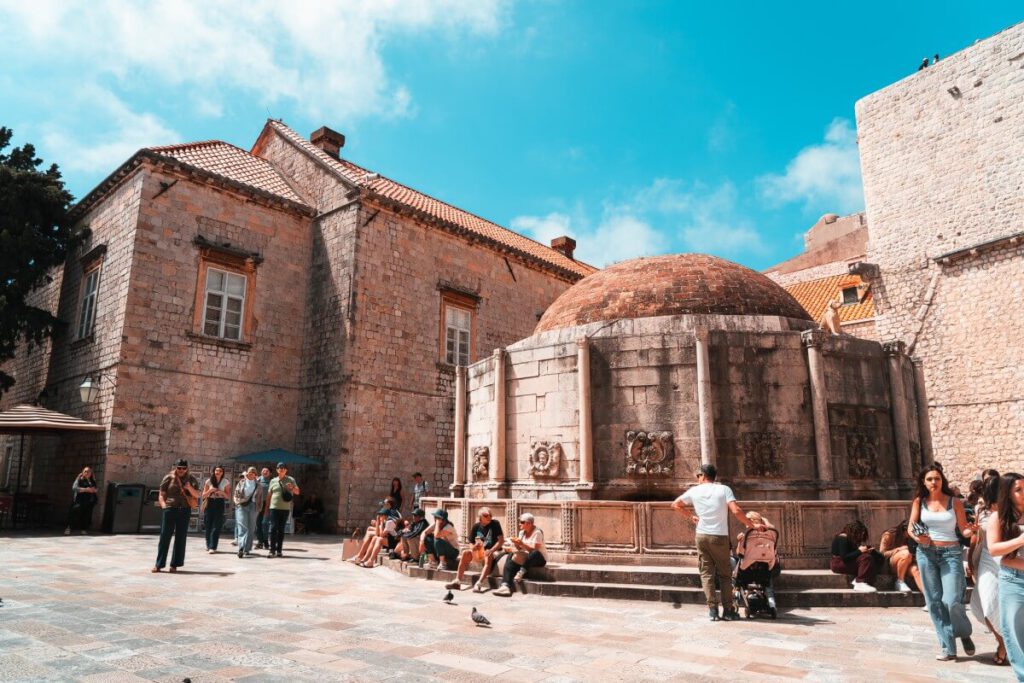
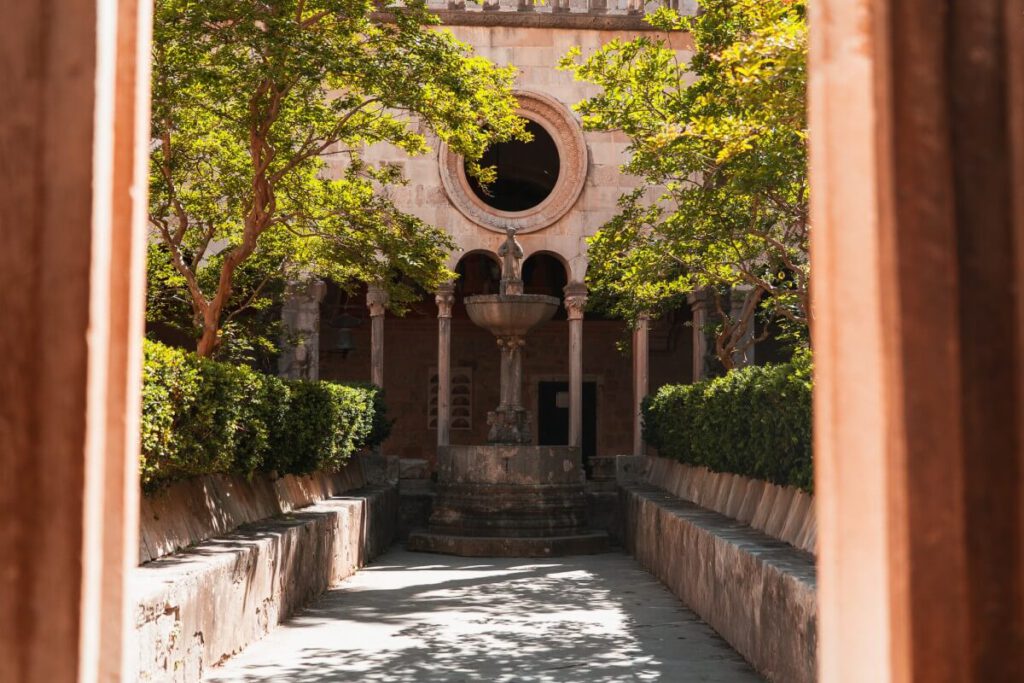
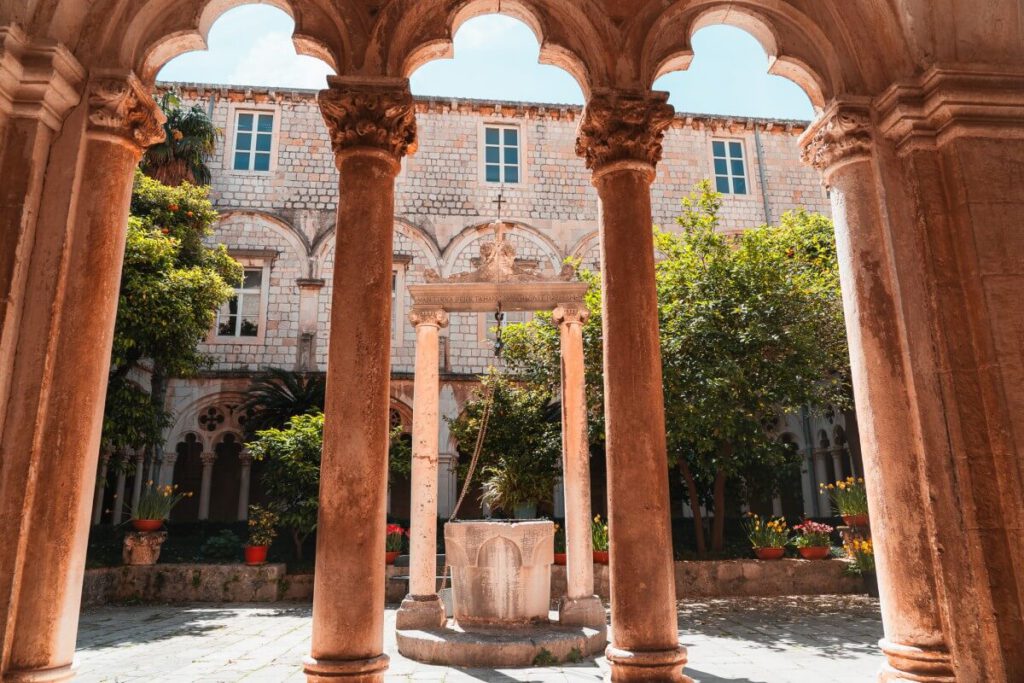
If you’d like a break from the hustle and bustle of Stradun and the rest of the Old Town, you should take a detour to the Franciscan Monastery near the Pile Gate, directly across from the large Onofrio Fountain. Admission is free with the Dubrovnik Pass.
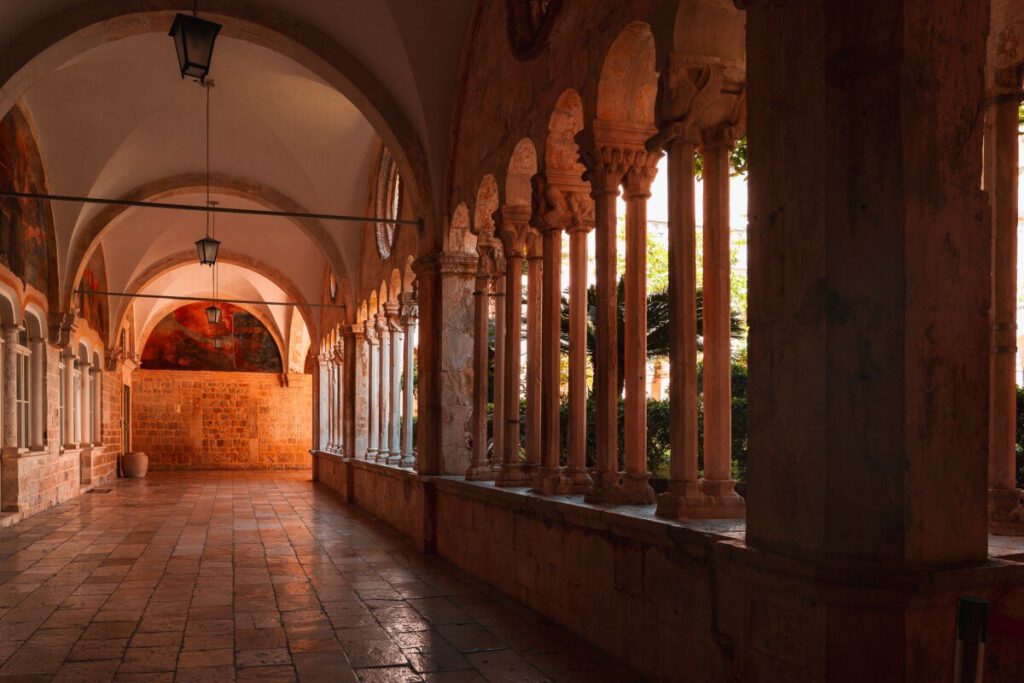
Construction of the monastery began in 1317. Inside, there is an old pharmacy and the tomb of the famous Croatian poet Gundulić.
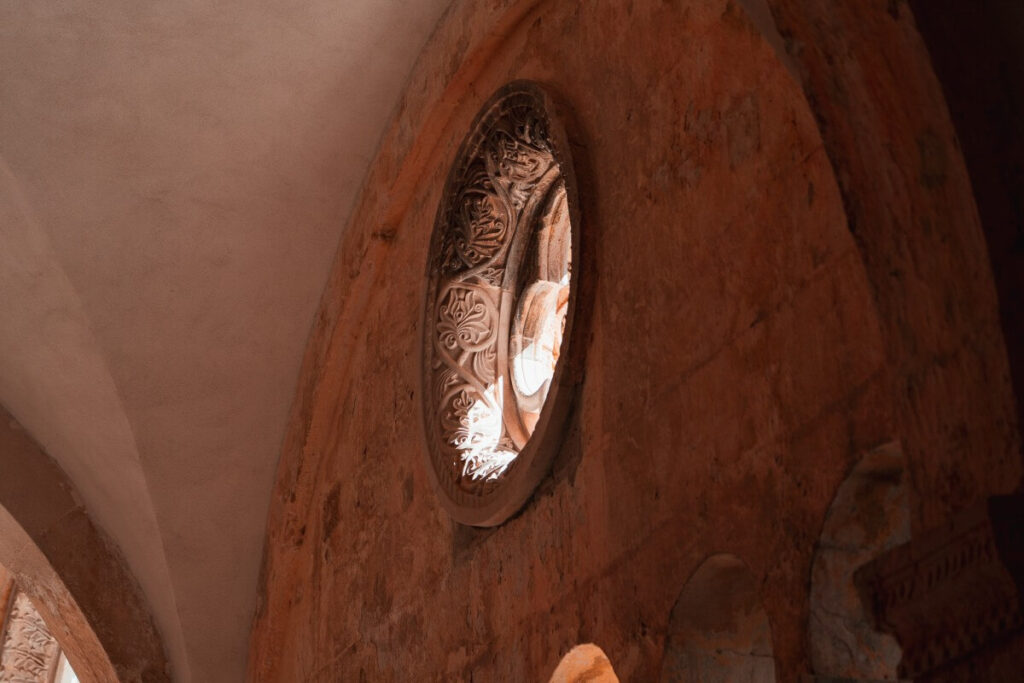
The cloister in the inner courtyard is a great spot for photos and also a peaceful place to linger and relax away from the crowds of tourists.
6. Rector’s Palace
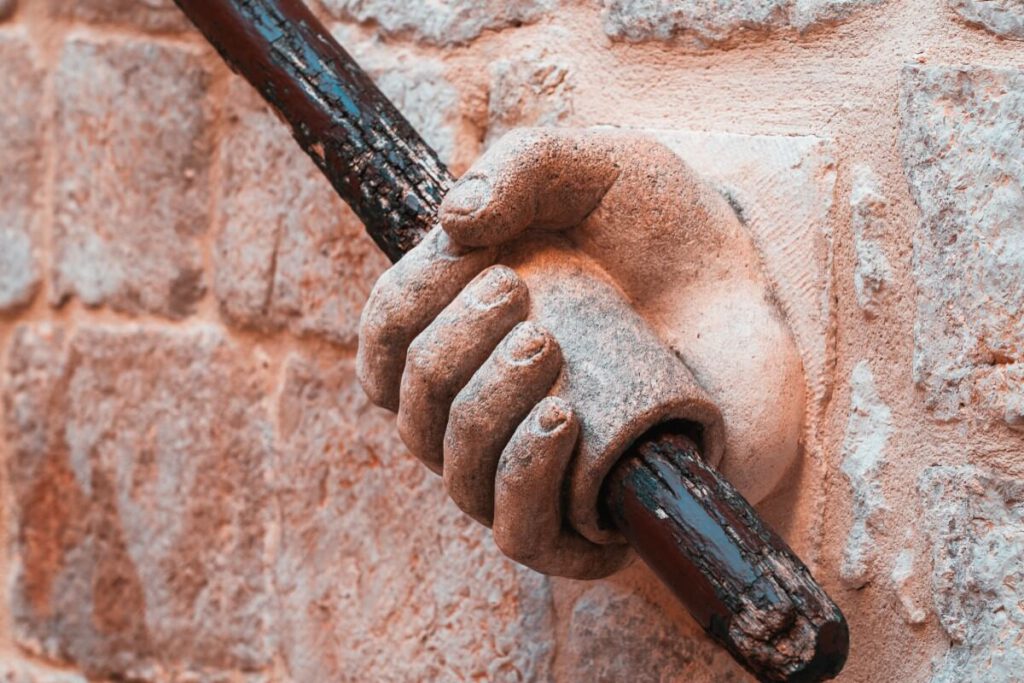
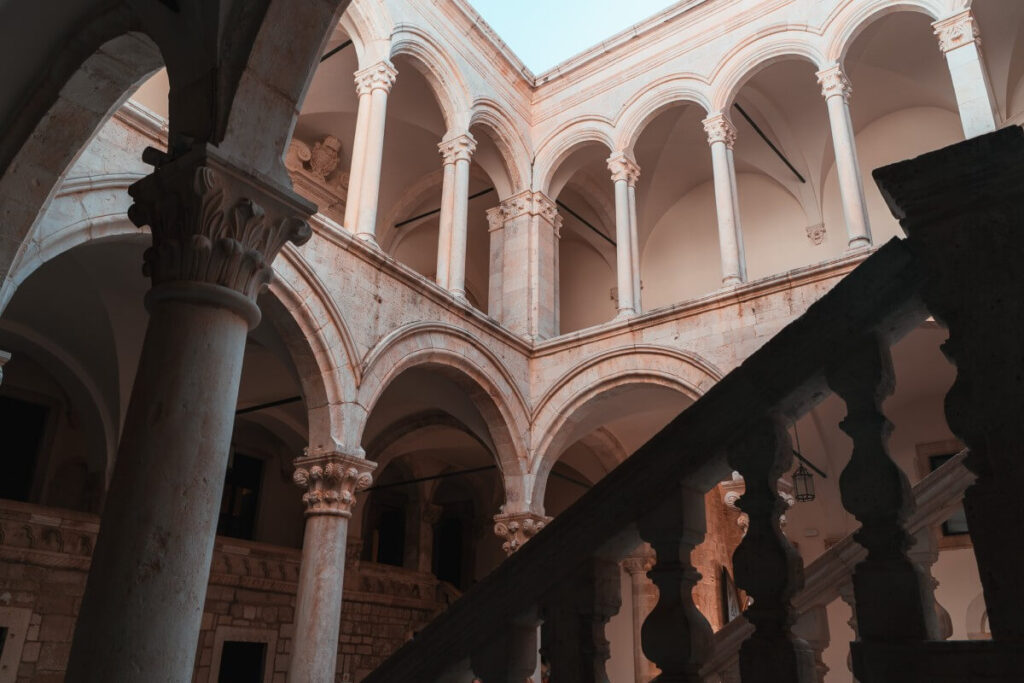
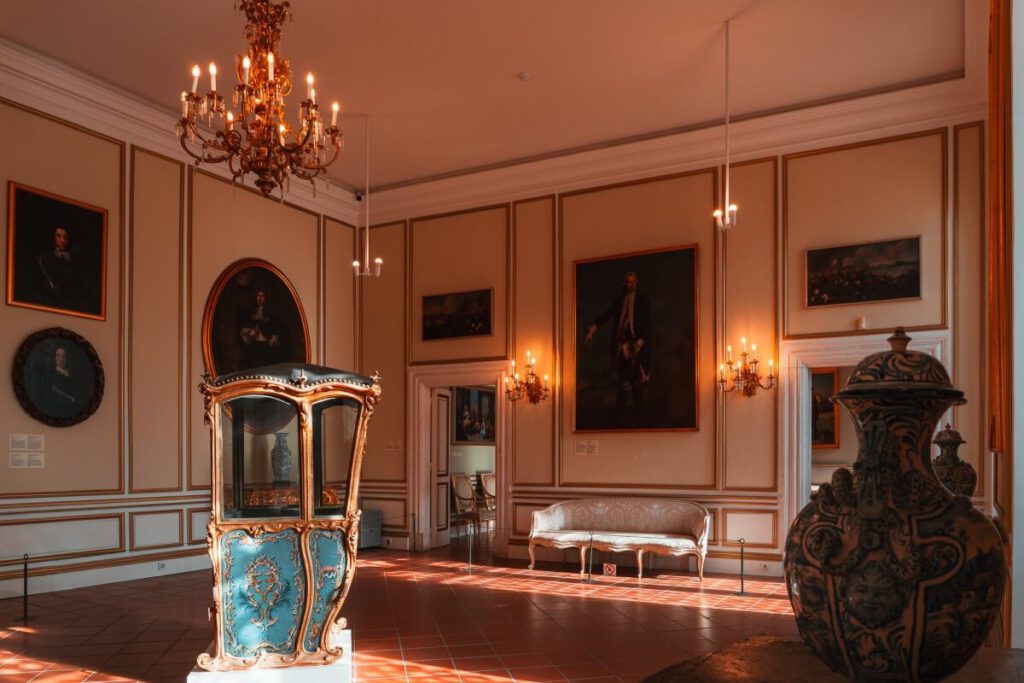
Admission to the Rector’s Palace costs €15, but it’s free with the Dubrovnik Ticket. During the time of the Republic of Ragusa, it served as the seat of government, a courthouse, and a prison. In addition to the magnificent historic building with its Gothic-Renaissance architecture and the beautiful atrium, several exhibitions await you here.
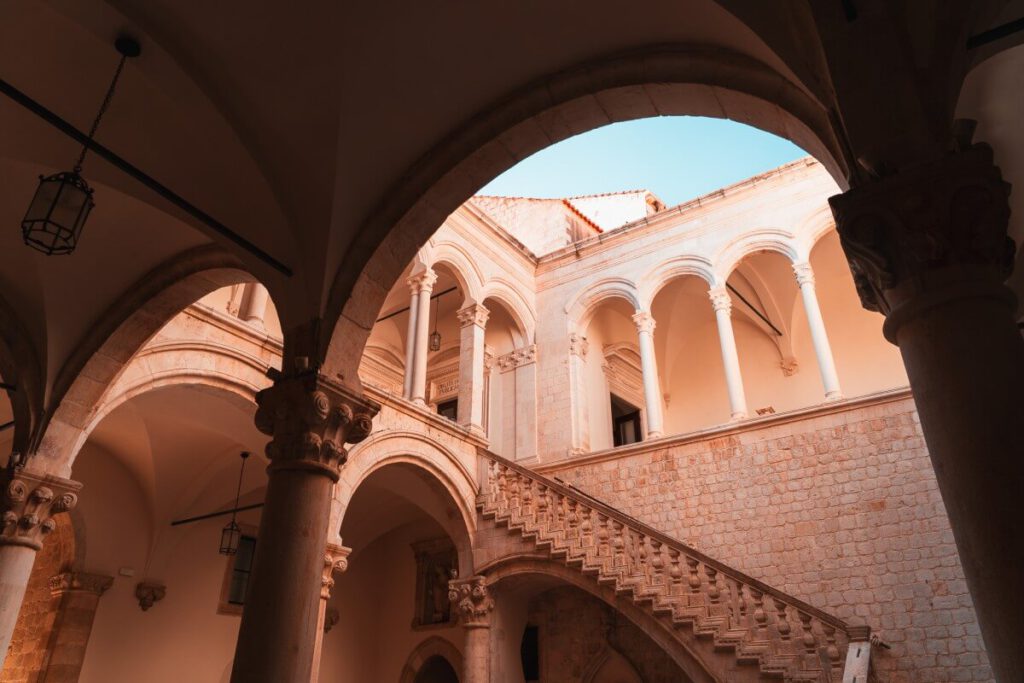
In the historic rooms on the upper floor, you can view original furniture, paintings, and portraits of nobles. Many collectibles, such as coins and weapons, are also on display. There is also a dungeon on the ground floor that you can explore.
I found the room with photos of the war in the ’90s particularly fascinating. The photographs are very powerful, and it’s truly impressive to see how Dubrovnik has recovered after its destruction. When you walk through the narrow streets today, bustling with tourists from all over the world, it’s hard to believe that a terrible war took place there just 30 years ago.
7. Sponza Palace
The Sponza Palace (Palača Sponza) is an important historic building in Dubrovnik’s Old Town. It is one of the few buildings that survived the great earthquake of 1667 largely unscathed. Today, it serves as a state archive housing documents dating back to the year 1022. Next to the entrance, there is also a memorial dedicated to the city’s history.
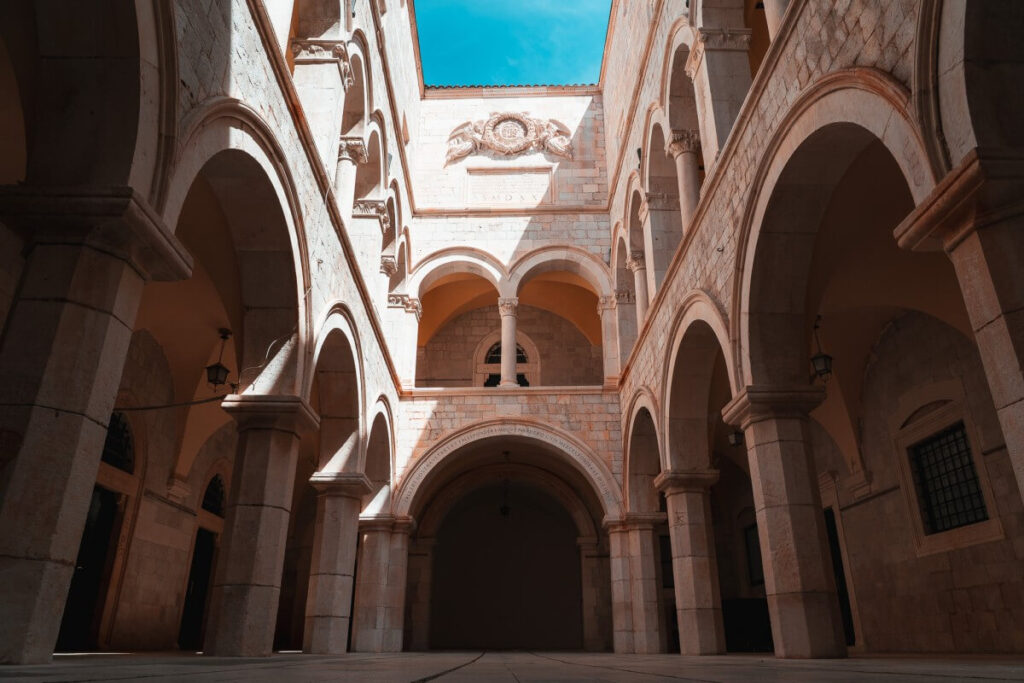
You can visit the courtyard for free.
8. Dominican Monastery
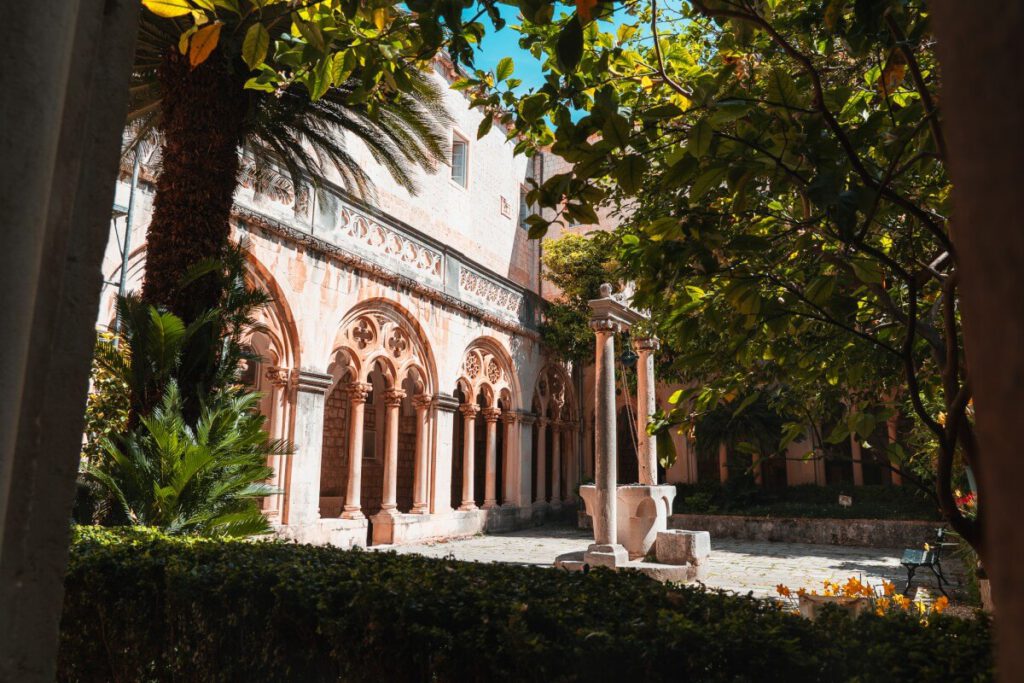
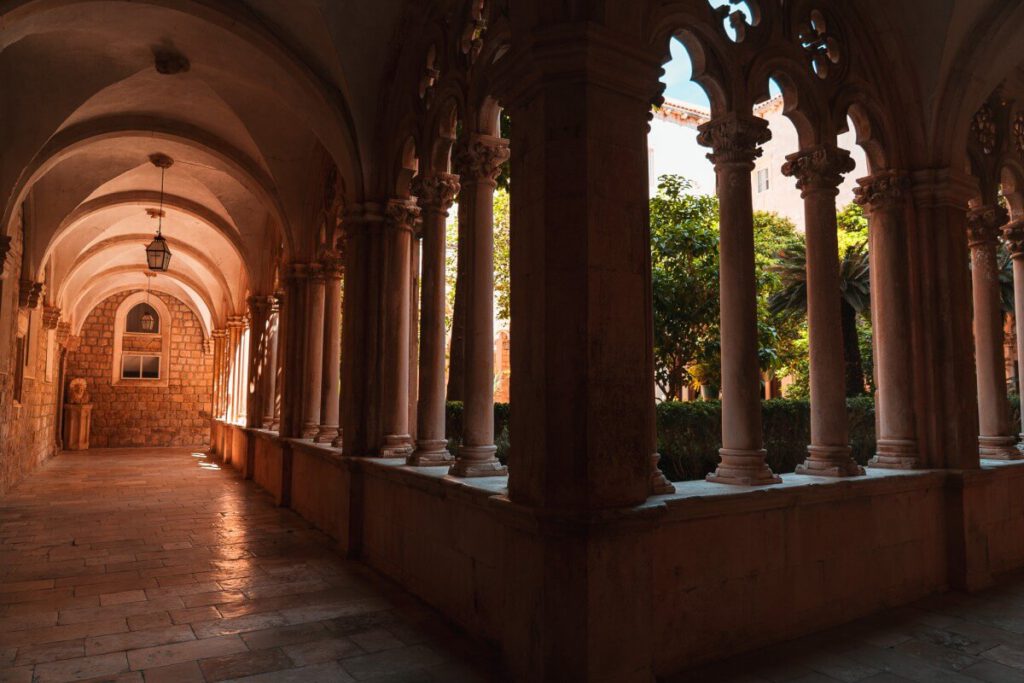
Unlike the Franciscan Monastery, admission to the Dominican Monastery is not free with the Dubrovnik Pass. But you’ll still save 1 € with it. Since there’s an admission fee, the monastery is probably much less crowded. If you’re looking for a quiet spot amid the hustle and bustle of the Old Town, the monastery’s courtyard is a great choice.
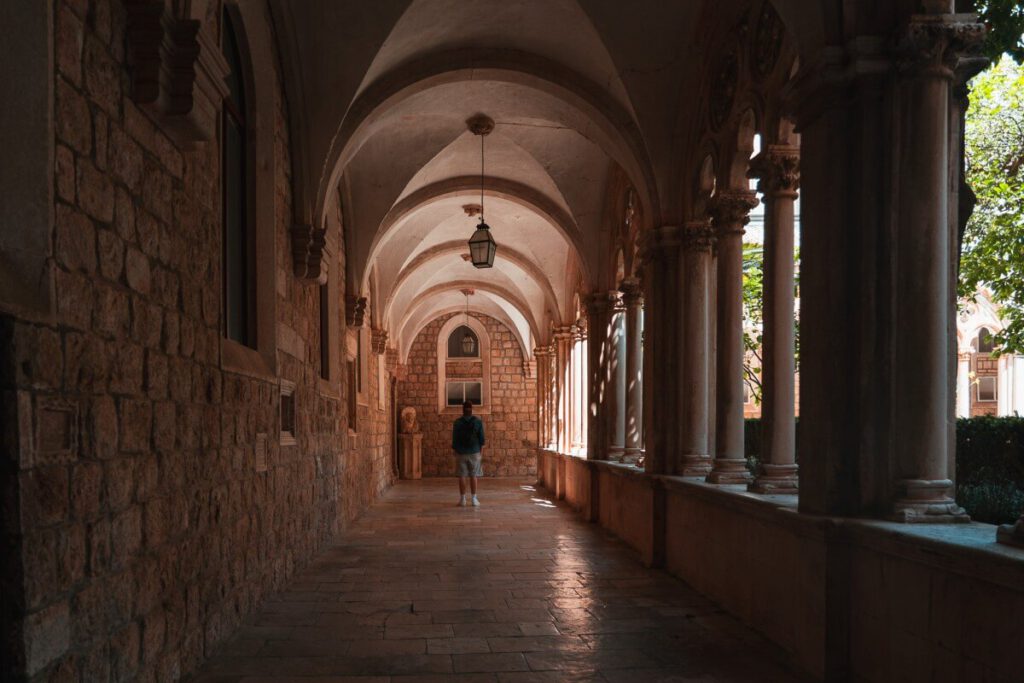
The tree-shaded cloister features a 14th-century fountain that is still in working order, but otherwise it closely resembles the Franciscan monastery. There is also a small museum with a treasure chamber.
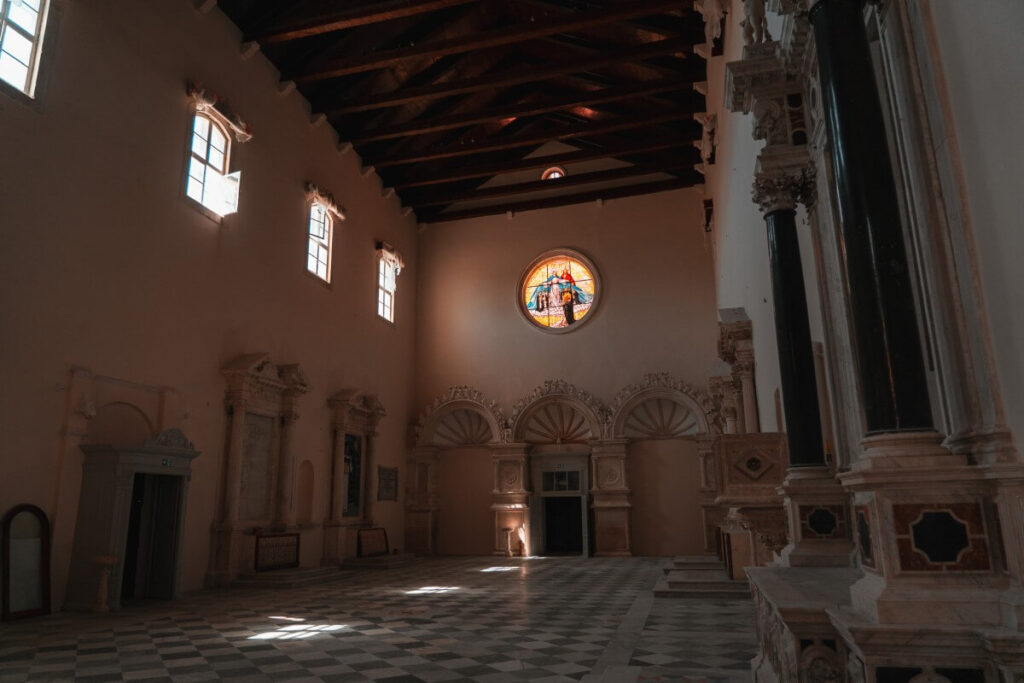
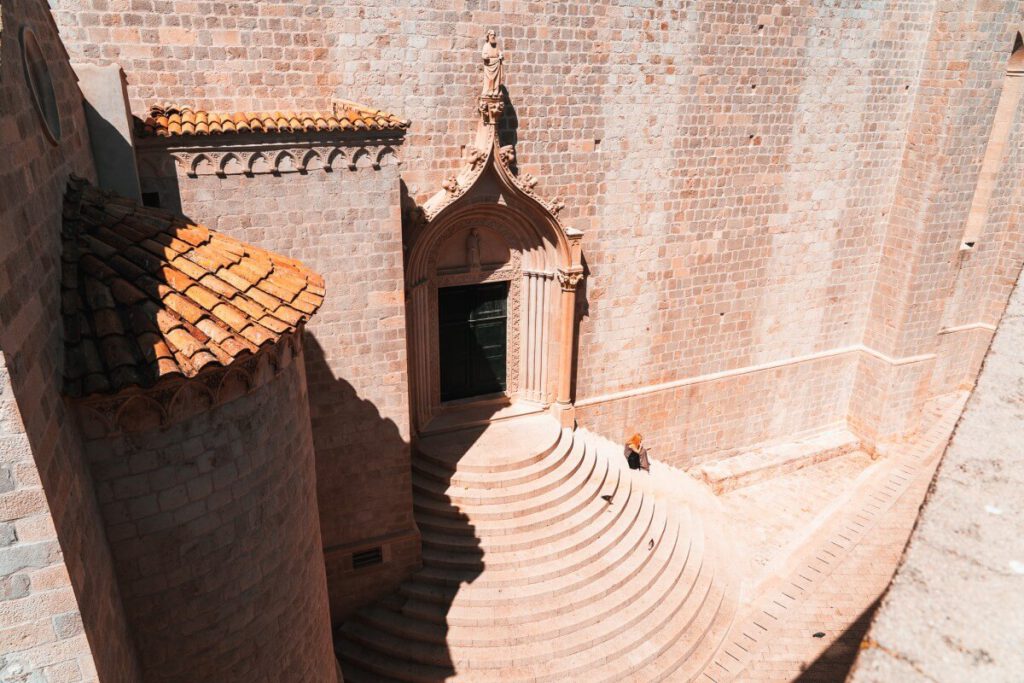
The monastery’s church has been under renovation for quite some time, but during my visit I was still able to go inside the nave, which I personally found very exciting. It’s not every day you get to see an empty church. But if visiting the church is your main reason for coming, you should be prepared for the fact that access to it is currently limited.
9. Dubrovnik Cable Car with Viewing Platform
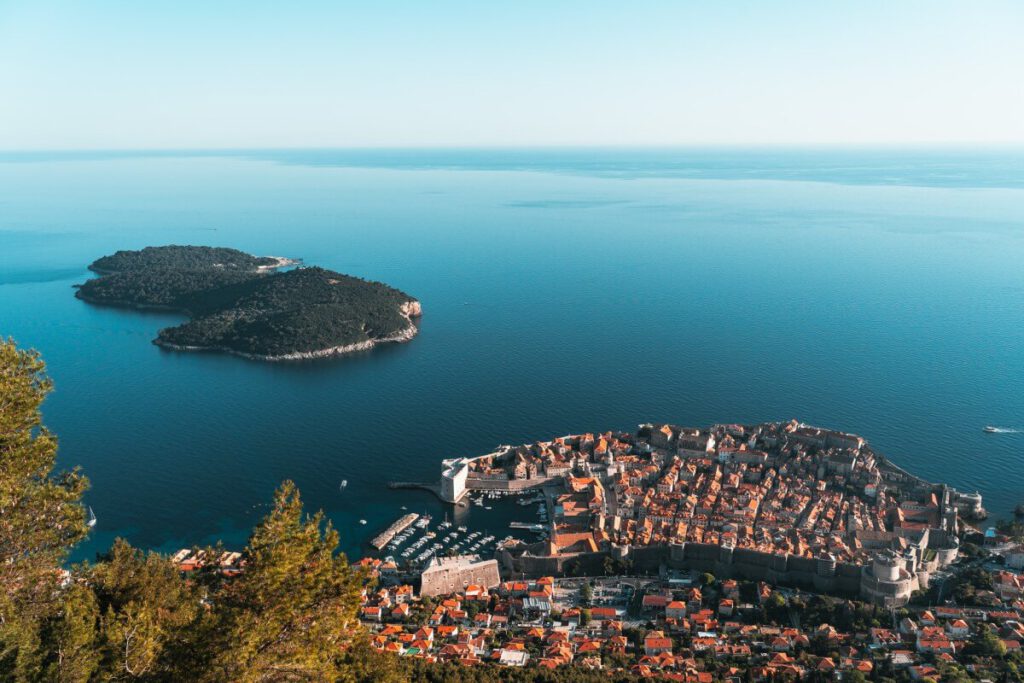
The Žičara Dubrovnik is located a few meters north of the Buza Gate in the Old Town. From here, you can take the cable car up to the summit of Mount Srđ. There’s a viewing platform right next to the exit. However, I found that the other viewing platform (Dubrovnik Skyview | MomentoSnap), located a little further east next to the Panorama Restaurant, offers an even more beautiful view of Dubrovnik’s Old Town and the island of Lokrum. The view of the city is most beautiful in the evening light.
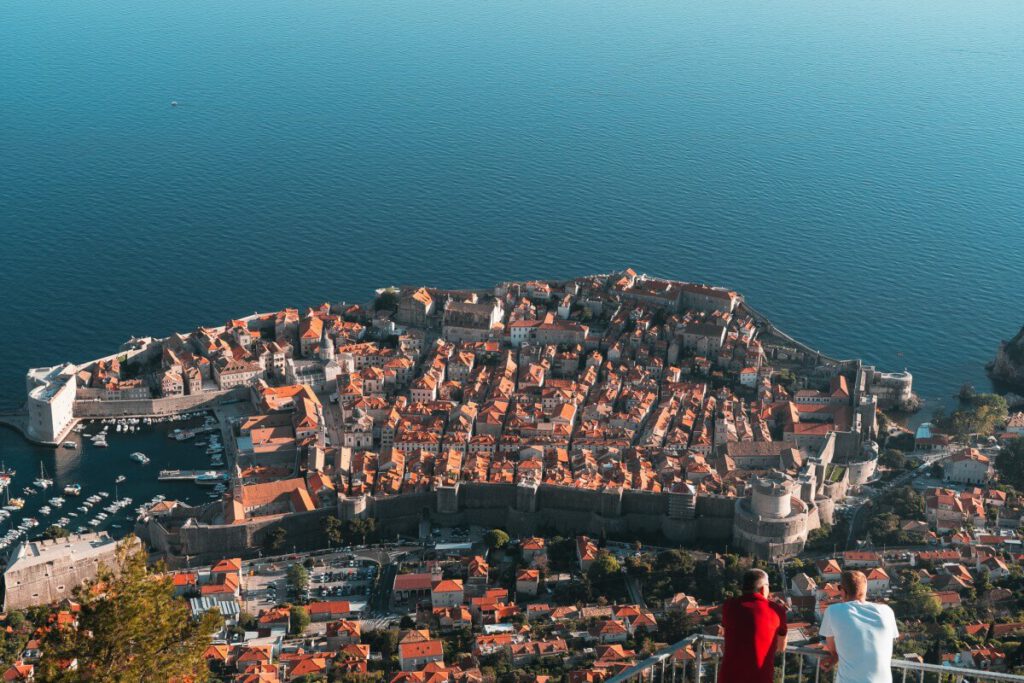
30 € per person for a round-trip train ride isn’t exactly cheap, but it’s a good option if you don’t want to walk up the hill yourself. In any case, the view of the city from the top is the best in Dubrovnik.
If you’re fit and motivated enough, you can also hike up the mountain on foot. There’s a hiking trail. Some guests just buy a one-way ticket to the top and then walk back down, or they use the Panorama Zipline Dubrovnik.
There are also crafty drivers who try to lure cable car passengers away right in front of the entrance and then take them up for 20 €.
If you keep walking east along the path, you’ll also come to the Bosanka viewpoint. From here, you’ll have yet another view of the Old Town, with the old harbor in the foreground.
10. Gundulić Square
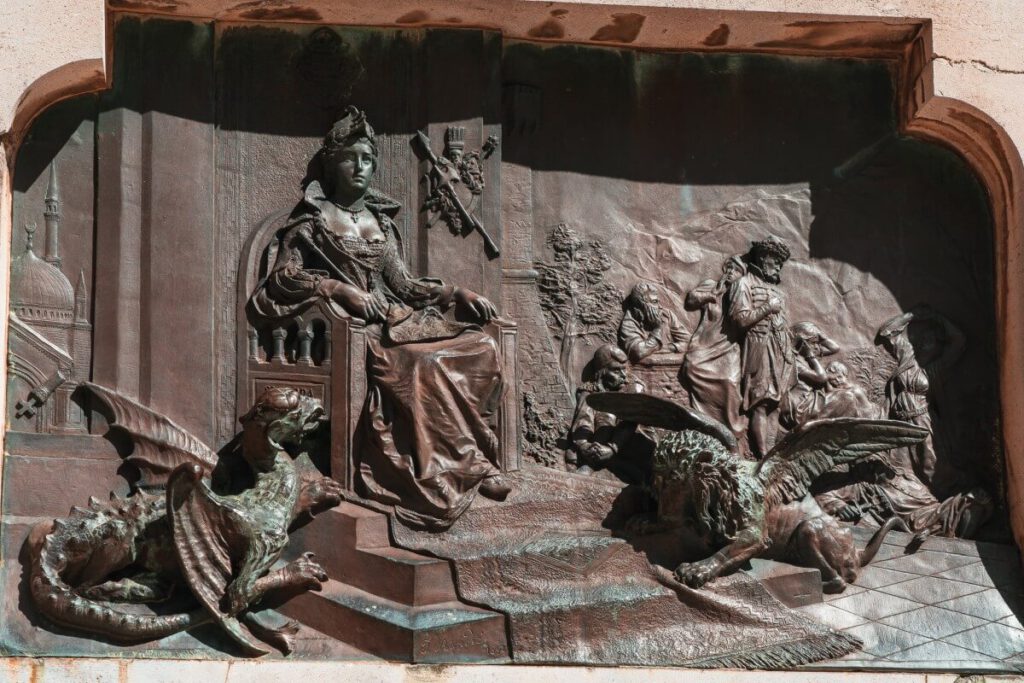
You should take a closer look at the “Spomenik Ivanu Gundulić” statue in the square of the same name. One of the images on the side depicts a dragon biting the throne, with a winged lion next to it. I wonder if this was partly inspired by *Game of Thrones*? After all, in the series, the lion is the symbol of House Lannister and the dragon is the symbol of House Targaryen. In reality, however, the dragon represents the threat posed by the Ottoman Empire, and the lion represents the threat from Venice.
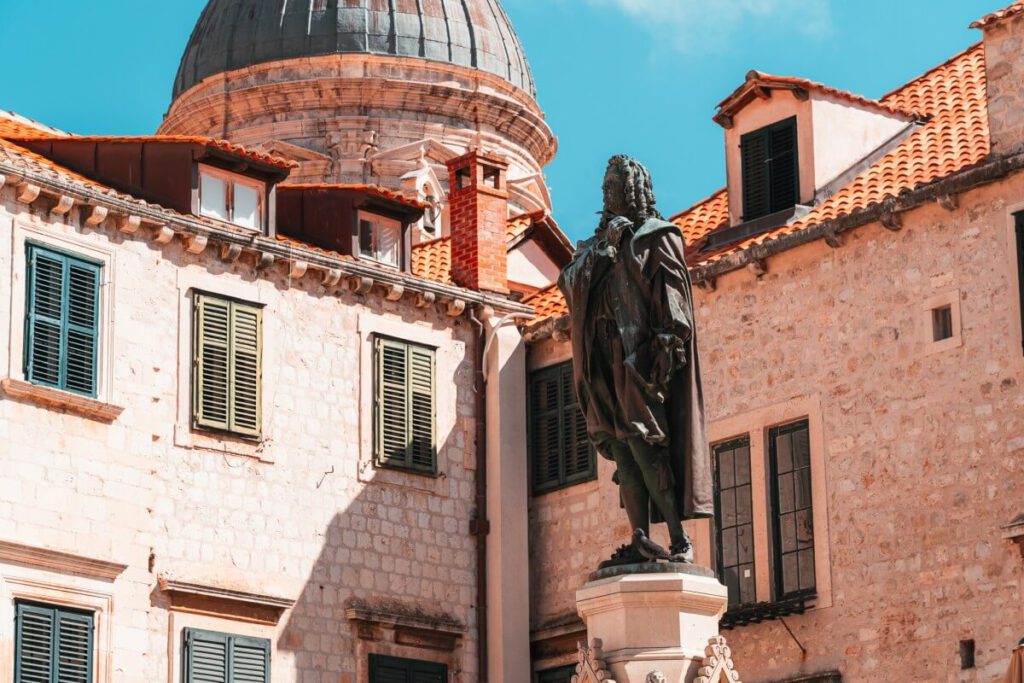
Right next to the statue, you can buy local products at the Gunduliceva Poljana Market. Locals even come here, especially in the early morning.
11. Jesuit Stairs
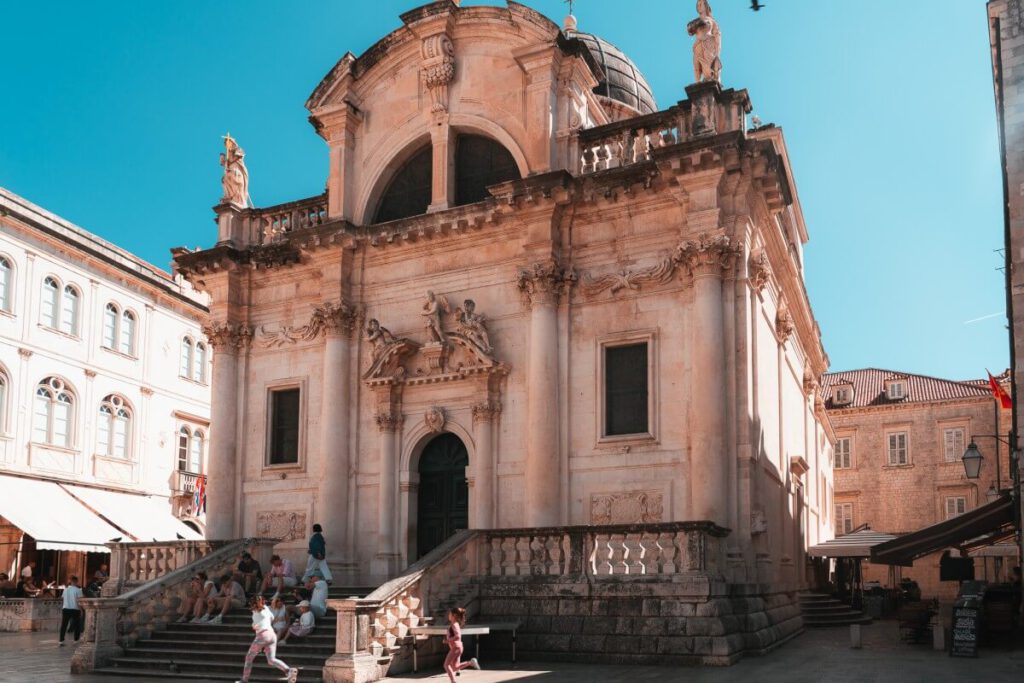
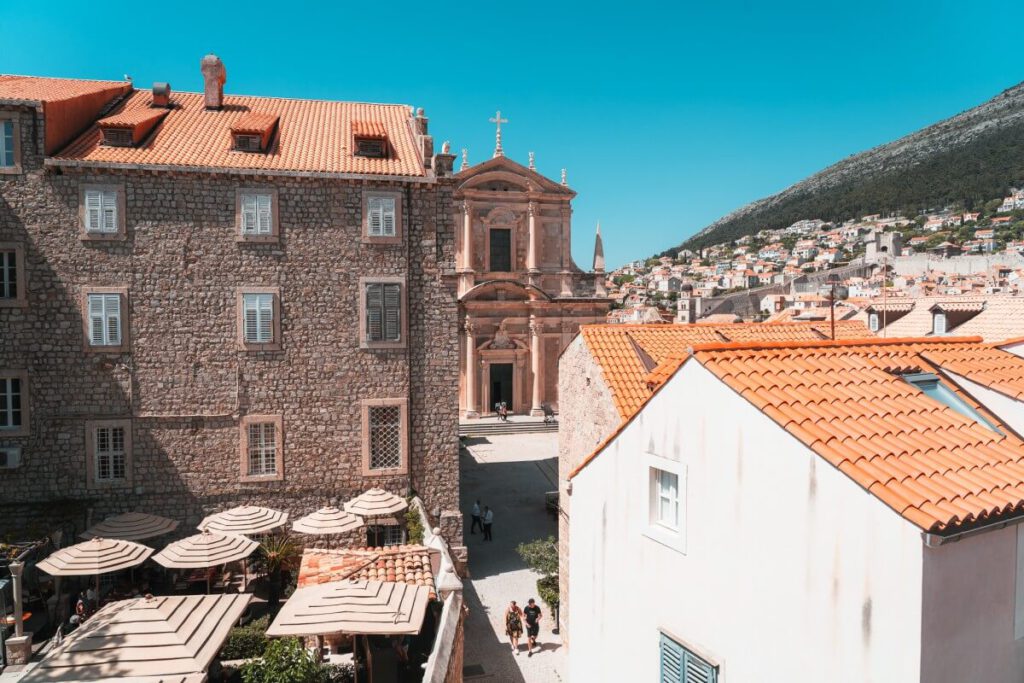
The steps in front of St. Ignatius Church are inspired by the Spanish Steps in Rome. Every day, thousands of tourists walk up and down them, trying to take photos. You’ll most likely only be able to take a photo of the steps without other people in the frame during the early morning hours.
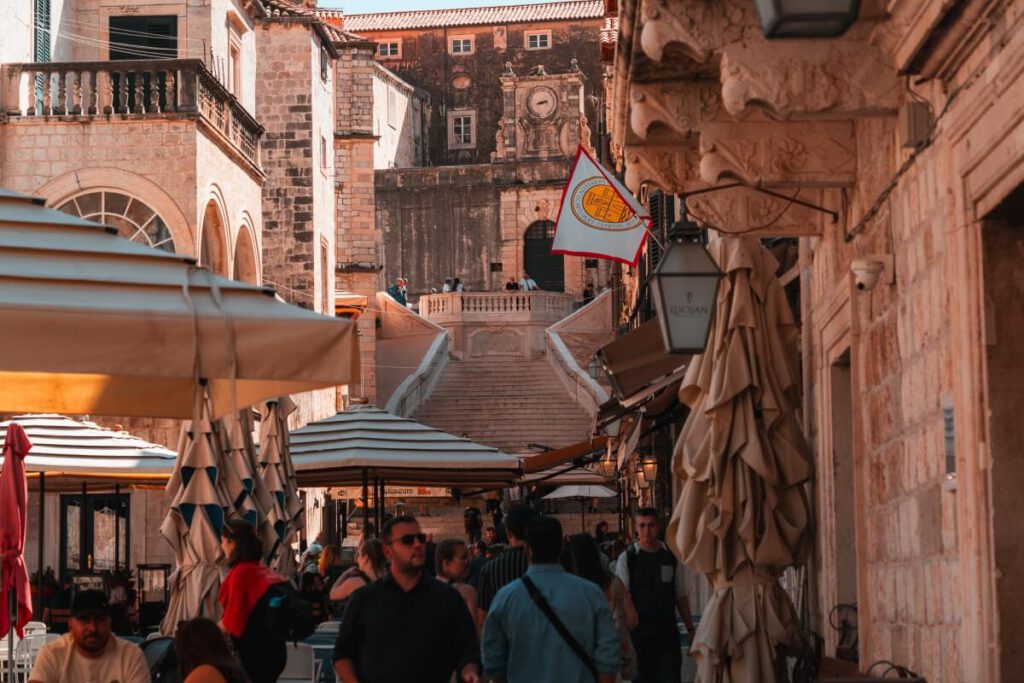
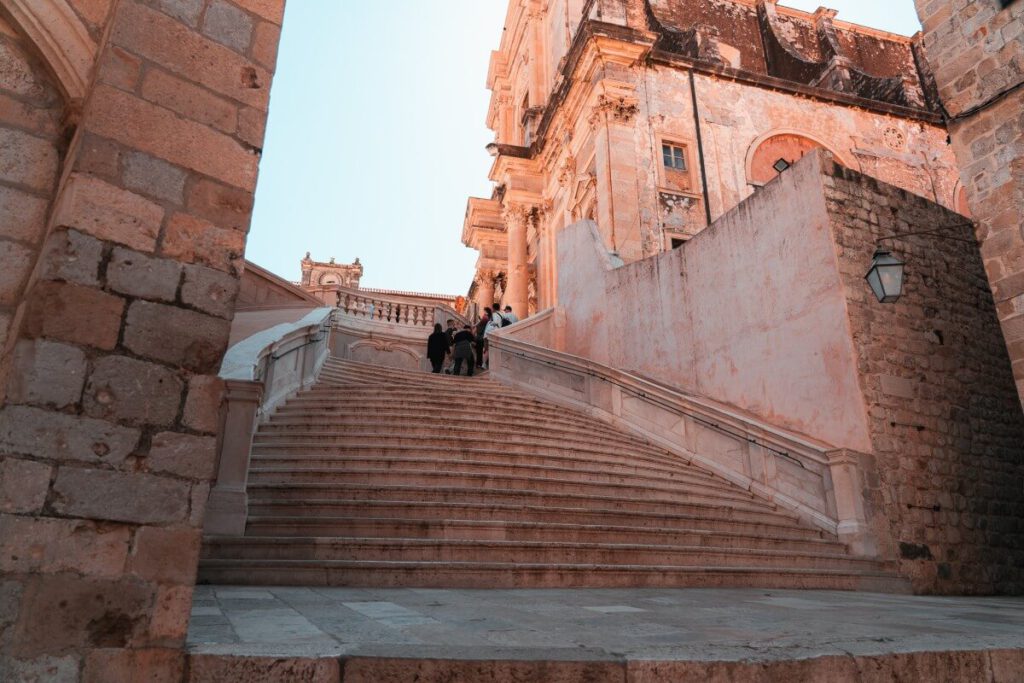
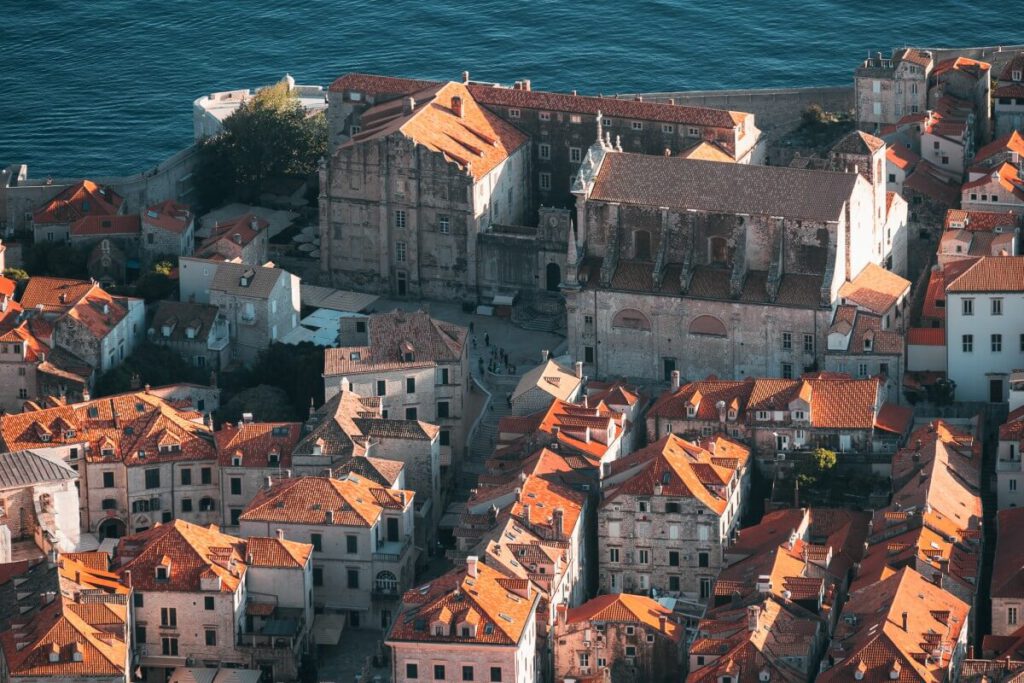
The church at the very top of the stairs is one of the most beautiful Baroque churches in the city. Admission is free.
12. Dubrovnik Maritime Museum
The Maritime Museum is housed in Fort St. Johann (Fort Sv. Ivana) at the southeastern end of the Old Harbor. The fort is an integral part of the city wall and one of the most imposing fortresses. The museum occupies the first and second floors of the fort, and the vaulted ceilings clearly show that you’re inside a historic fortress. The fort once guarded the entrance to the Old Harbor as the most important defensive bastion against enemy ships. Is there a better place for a maritime museum than this?
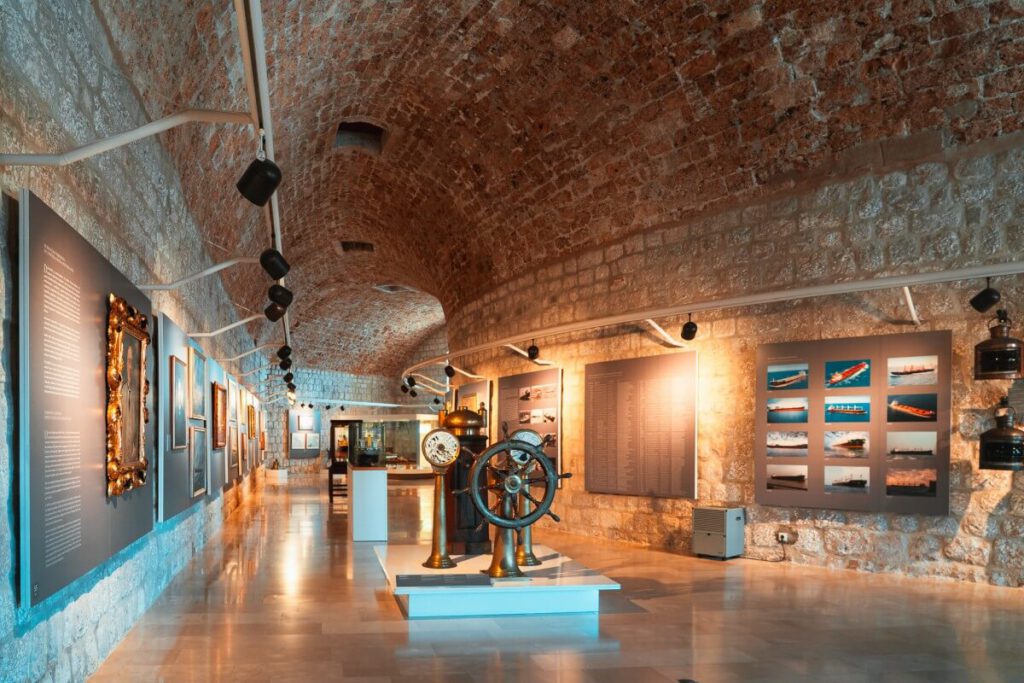
At the museum’s exhibition, you can learn a lot about the fascinating maritime history of the Republic of Ragusa, which once boasted one of the largest fleets in the world. There are also many pictures and models of ships to admire.
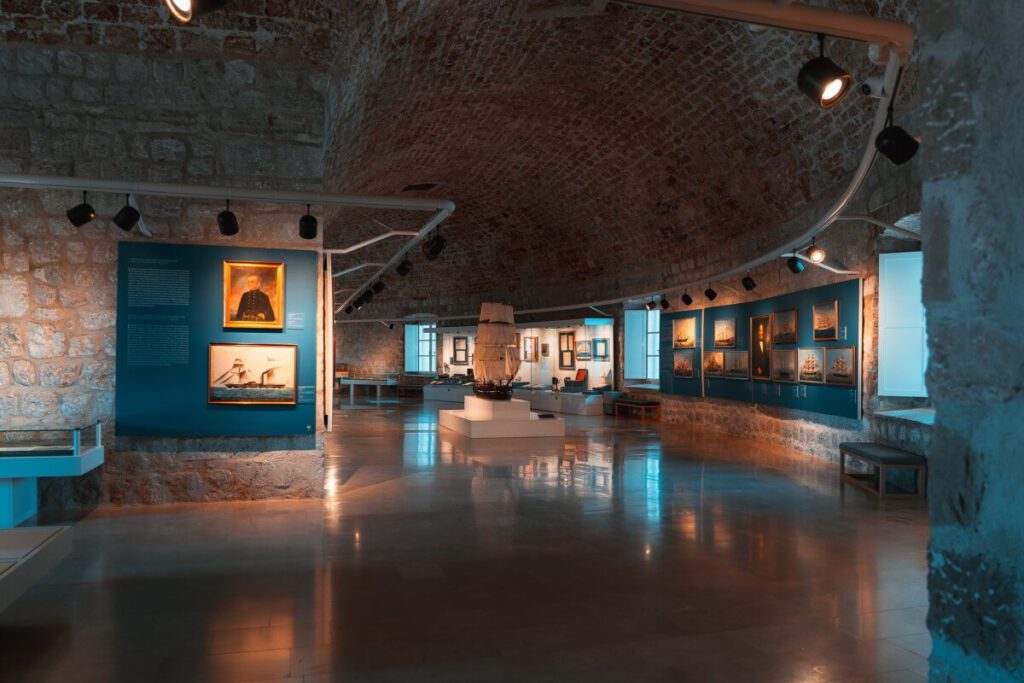
You can also visit the Maritime Museum without buying tickets to the city walls. Admission is included in the Dubrovnik Pass.
13. Old Harbor
The Old Harbor, located on the eastern side of the Old Town, was the economic and maritime heart of the Republic of Ragusa for centuries—and somehow, you can still feel that today.
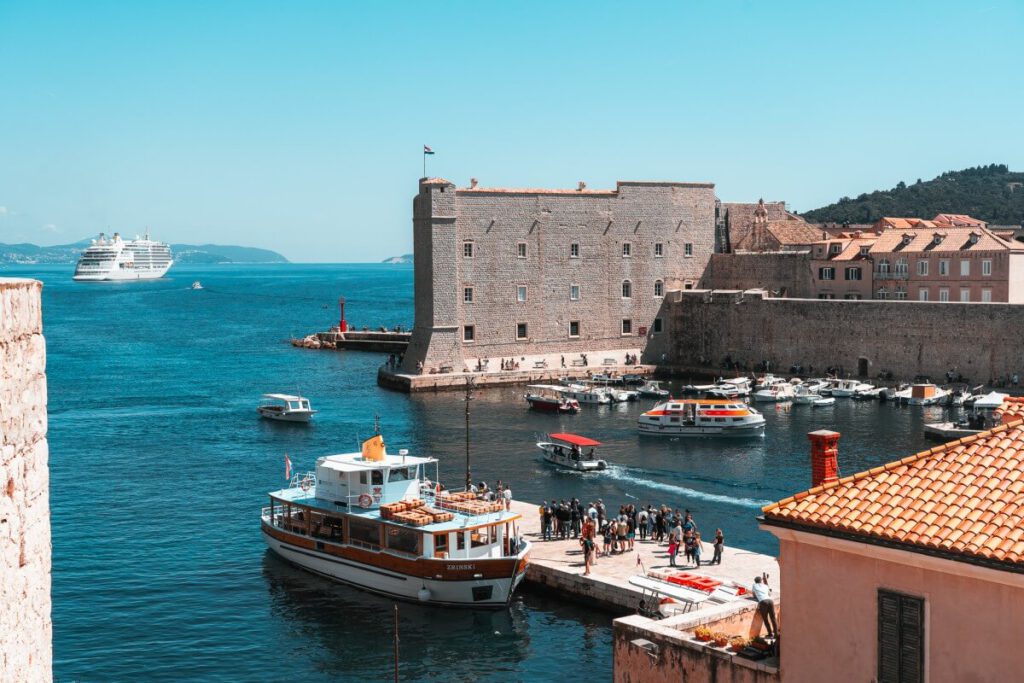
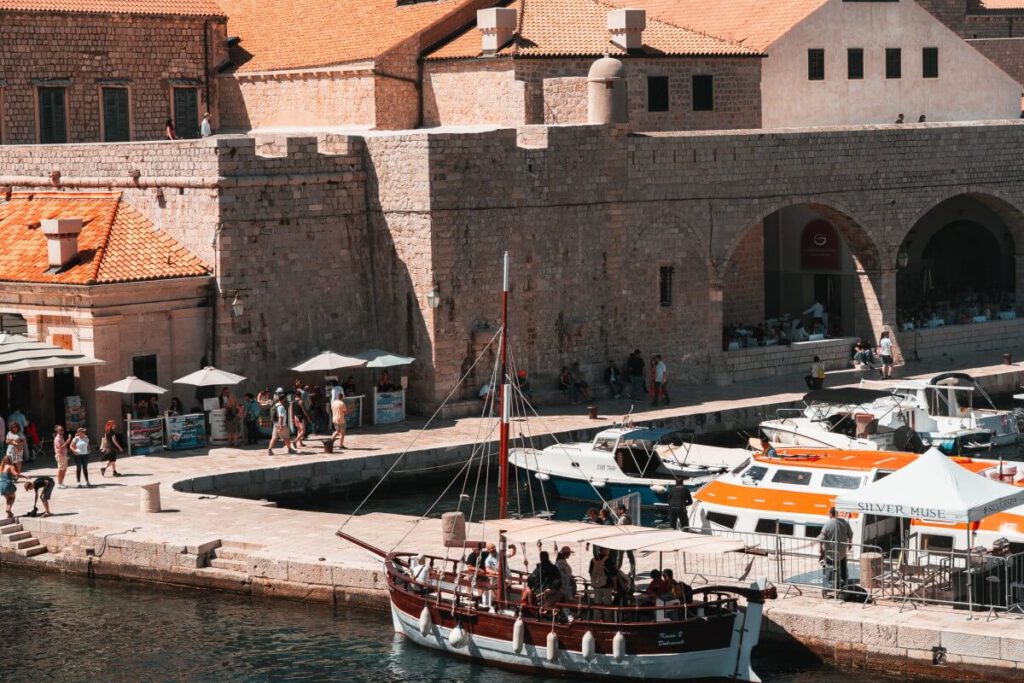
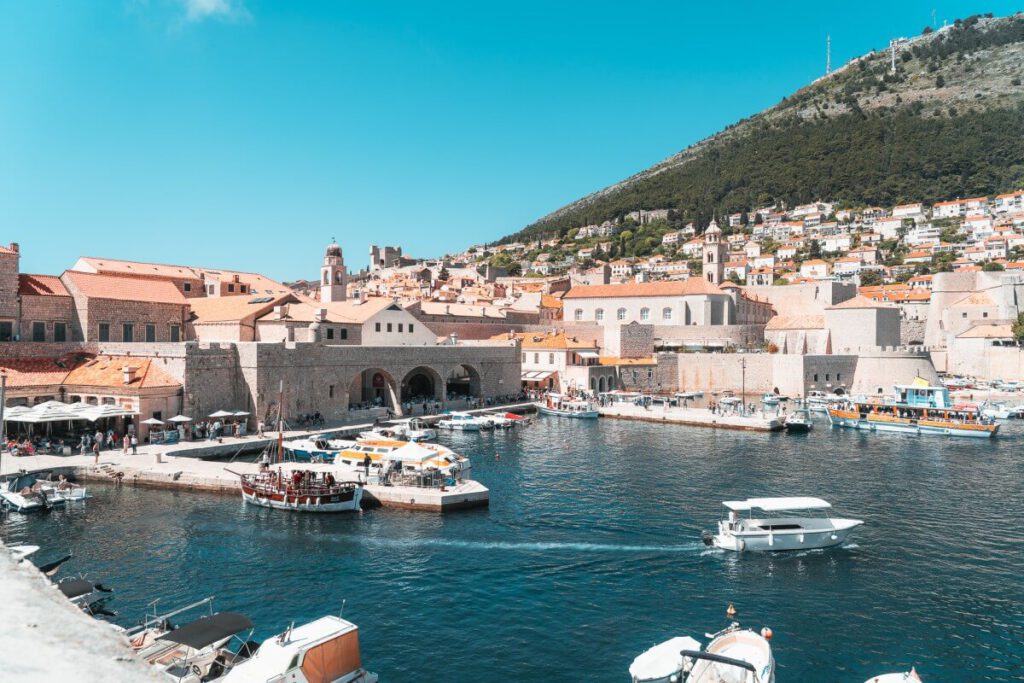
In the mid-16th century, the Dubrovnik fleet comprised nearly 200 large ships, many of which were moored here. The harbor was protected by several fortresses: St. Luke’s, St. John’s, and Revelin. Today, the Old Harbor is above all a lively, atmospheric place from which ferries also depart for Lokrum.
14. Lokrum Island
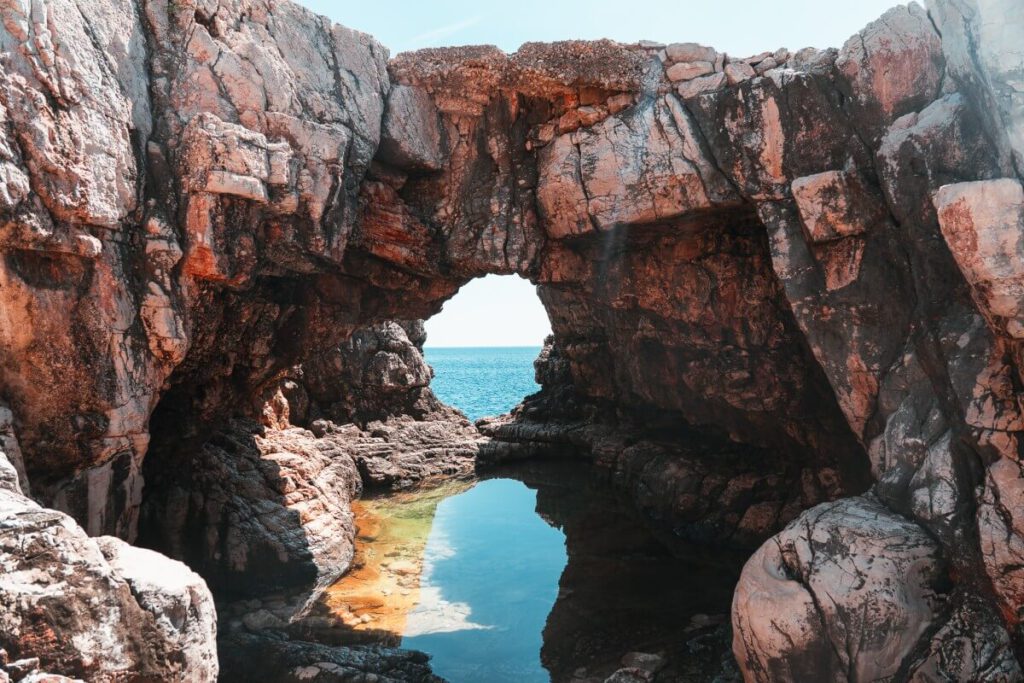
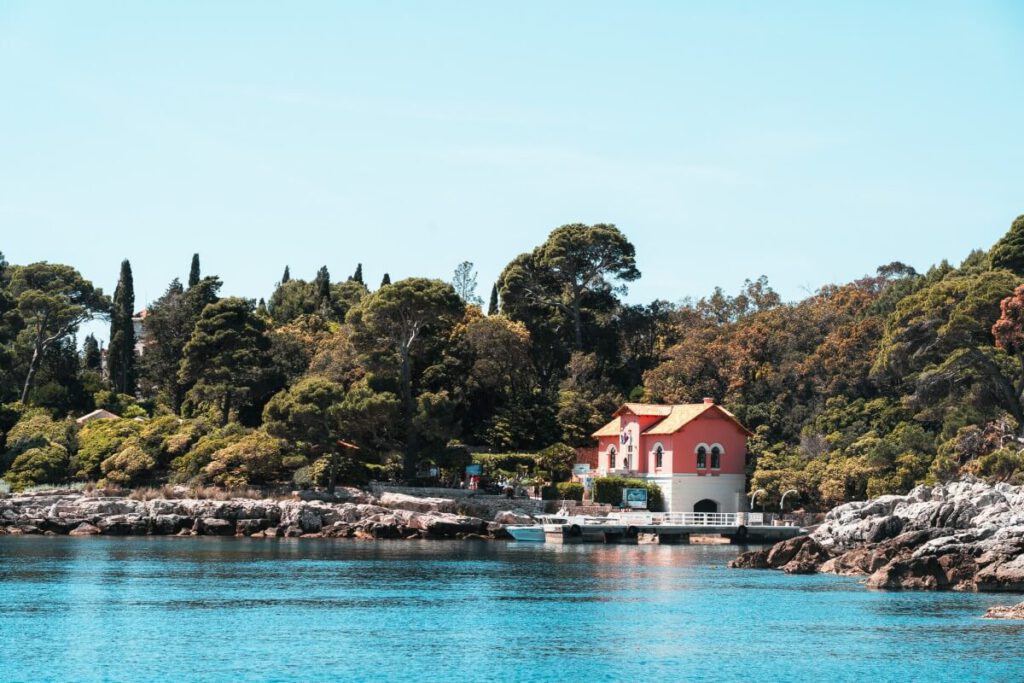
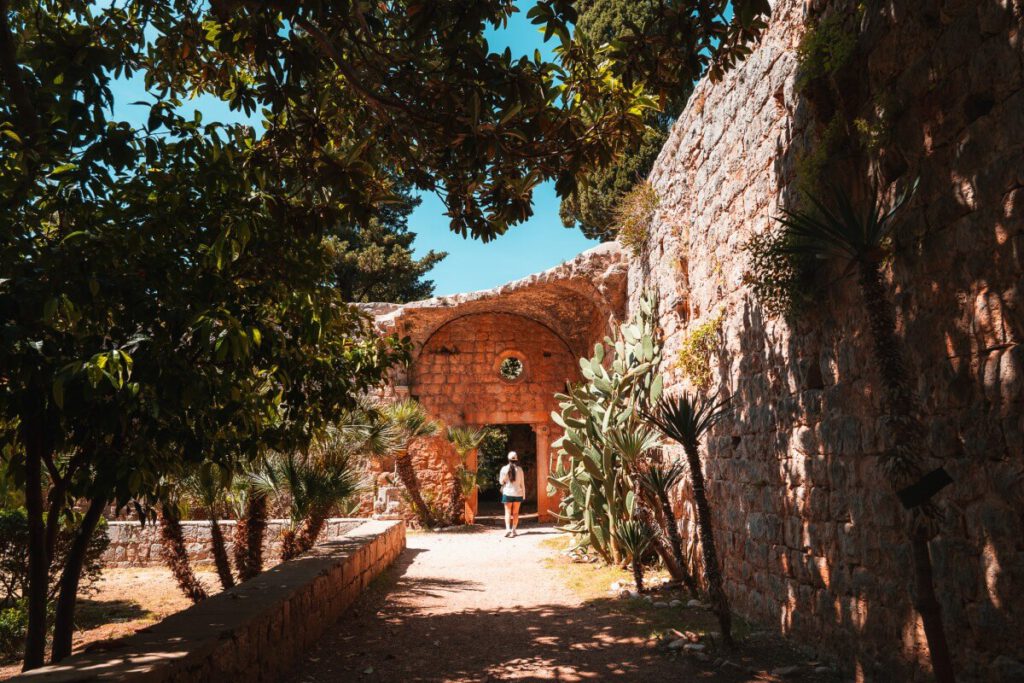
Right next to Dubrovnik’s Old Town lies this small, uninhabited natural paradise, which you can reach in just 15 minutes by ferry. The island is designated as a protected nature reserve and is definitely worth a visit for its botanical splendor, historic monastery, and legendary Game of Thrones atmosphere.
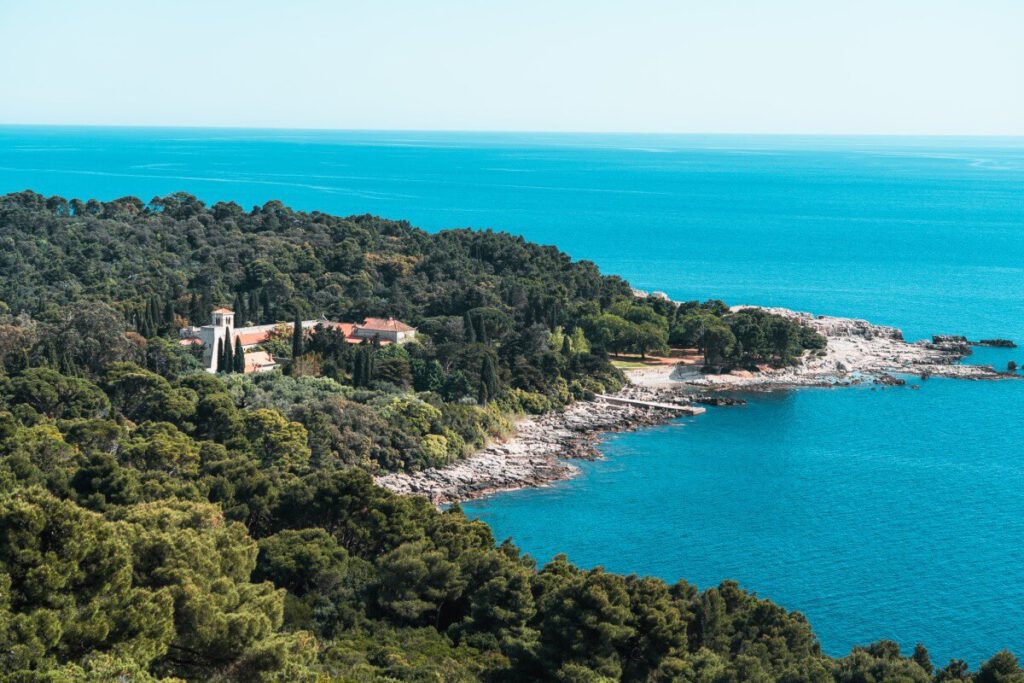
You can find a lot of information about Lokrum Island in this article:
15. Ethnographic Museum
Especially if you’re interested in history and culture, the Ethnographic Museum is a must-see. The fact that it’s located in a former granary of the Republic of Ragusa is really cool in itself. You can even peek into the old silos as you stroll through the exhibition and read all the information panels.
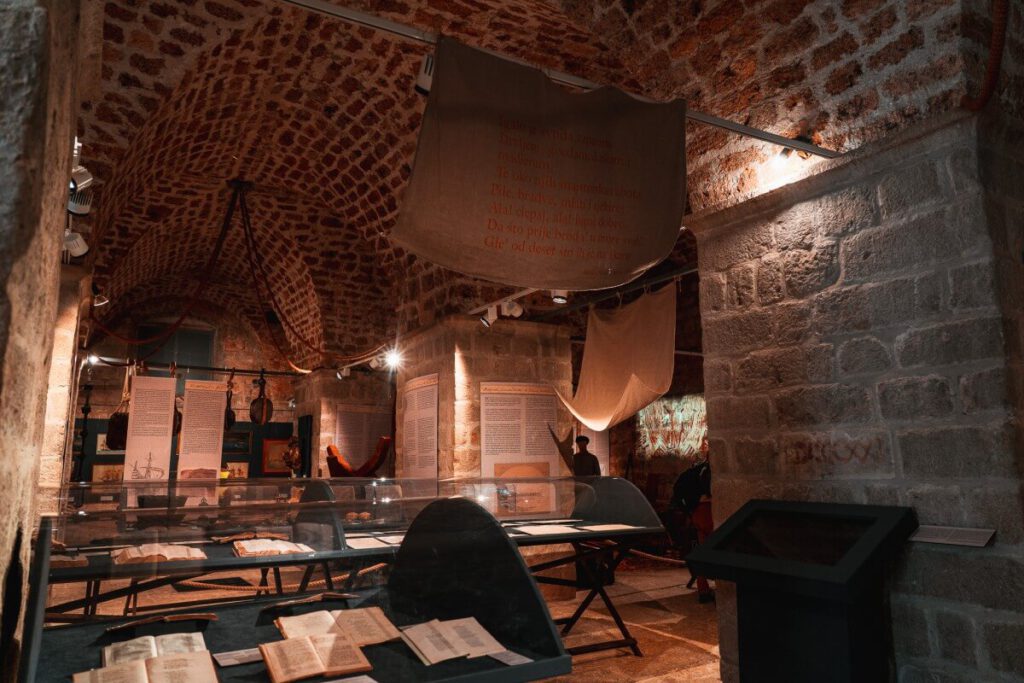
Spanning a total of three floors, you’ll learn a great deal about the traditional way of life of Croatians in the 19th century. For example, there are sections on festive attire, textile crafts, jewelry, agricultural tools, and rural architecture.
The museum is located a little way off the hustle and bustle of the Old Town, and you’ll have to climb a few flights of stairs to get there. Admission is included in the Dubrovnik Pass.
16. Cool Restaurants and Bars in Dubrovnik
There are countless places to eat and drink all over Dubrovnik. It’s all very touristy. But even so, there are still a few special highlights that I thought were pretty cool.
Rudjer Restaurant & Bar
This restaurant, right next to St. Ignatius Church, is beautifully situated in a shady and quiet courtyard right next to the city walls. I found the restaurant’s courtyard to be the coziest spot. The food was also very delicious.
Troubadour Jazz Brasserie
At this brasserie right next to the cathedral, you can sip a cocktail while enjoying live jazz music. The owner of the place even sings here himself in the evenings (starting around 7:00 p.m.).
Buža Bar
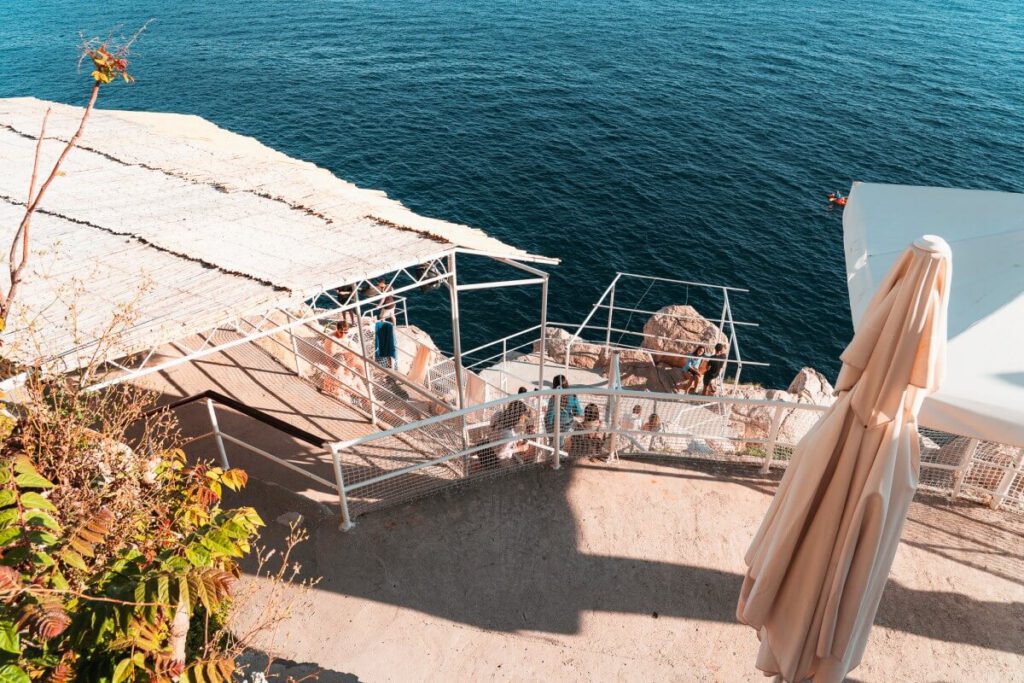
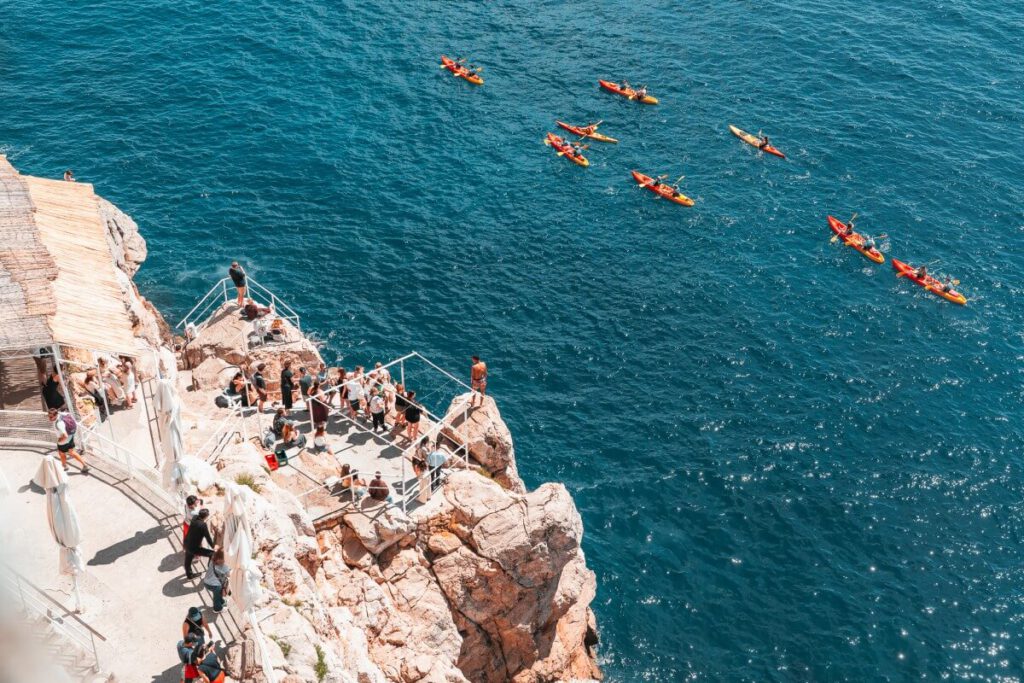
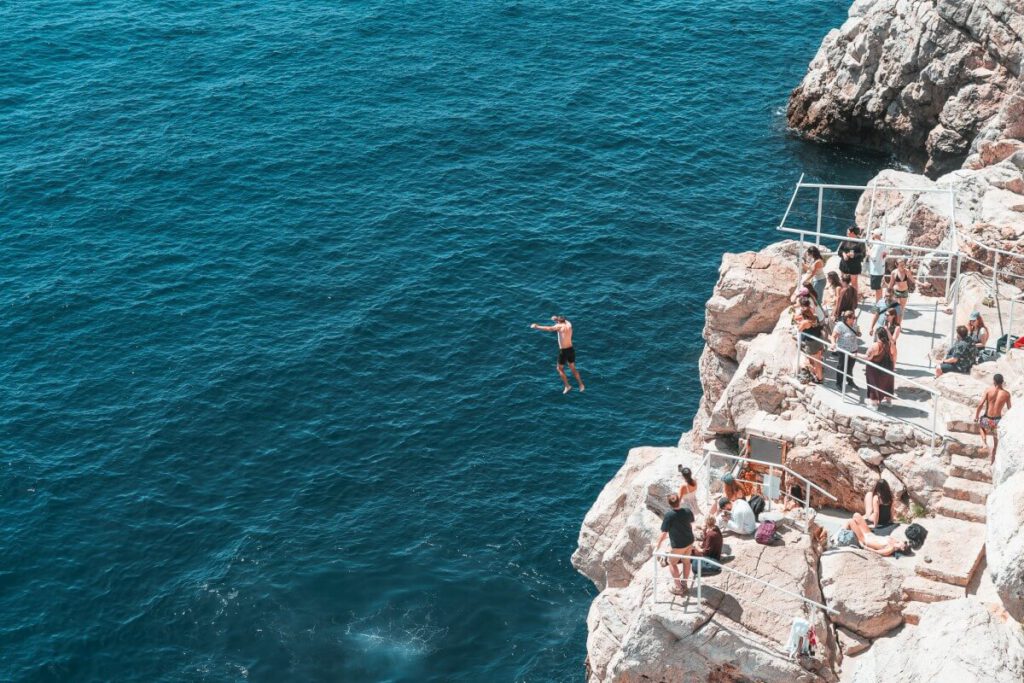
During the day, daring teenagers jump off the cliffs into the sea and guests soak up the sun; in the evening, you can enjoy the sunset with a cold beer or a glass of wine at the small bar and wind down the day.
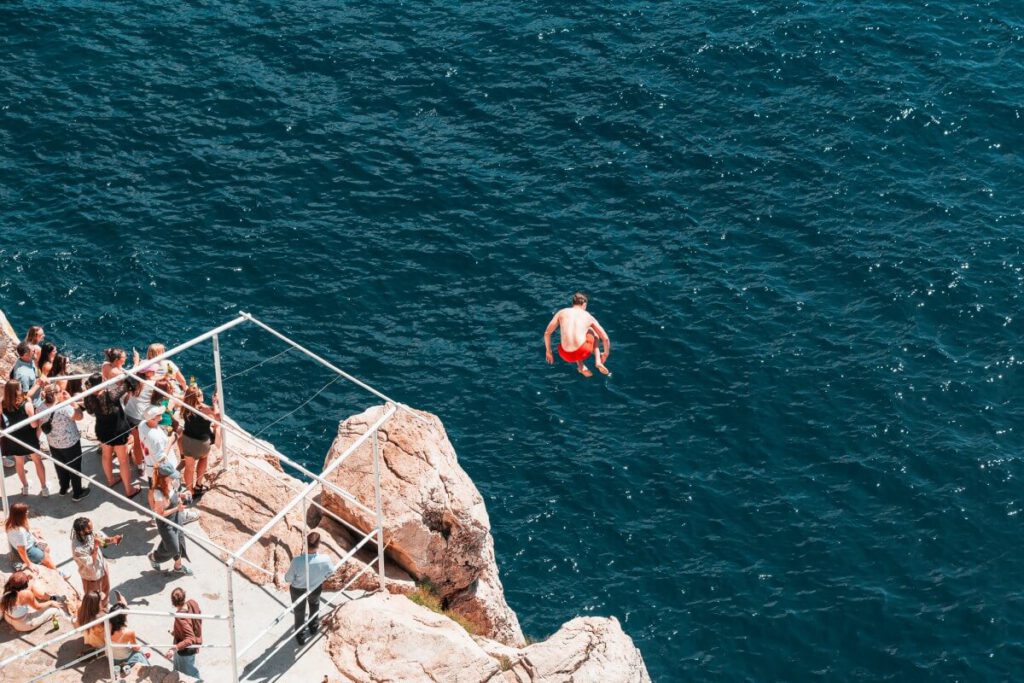
17. Dubrovnik Beaches
Dubrovnik isn’t exactly known as a beach paradise. However, you can still find a few places to swim here that will quickly turn your city trip into an Adriatic vacation.
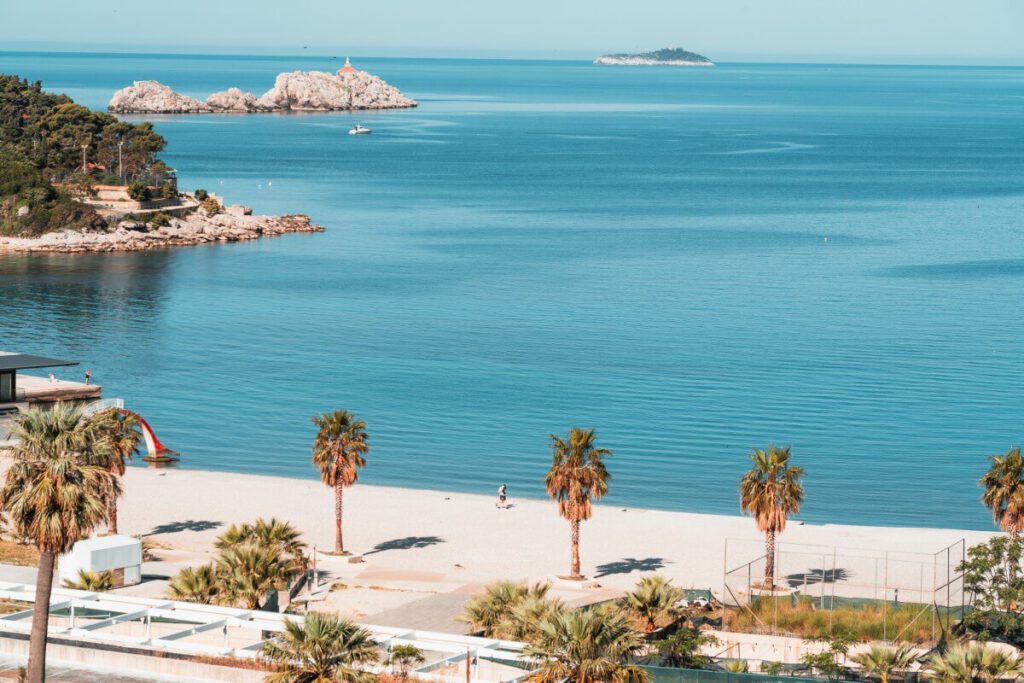
Dubrovnik City Beach
Dubrovnik’s city beach is really just a series of rocks, but they make it easy to get into the water. Especially in the summer, when temperatures can easily reach 40 degrees, it’s a good idea to come here to cool off.
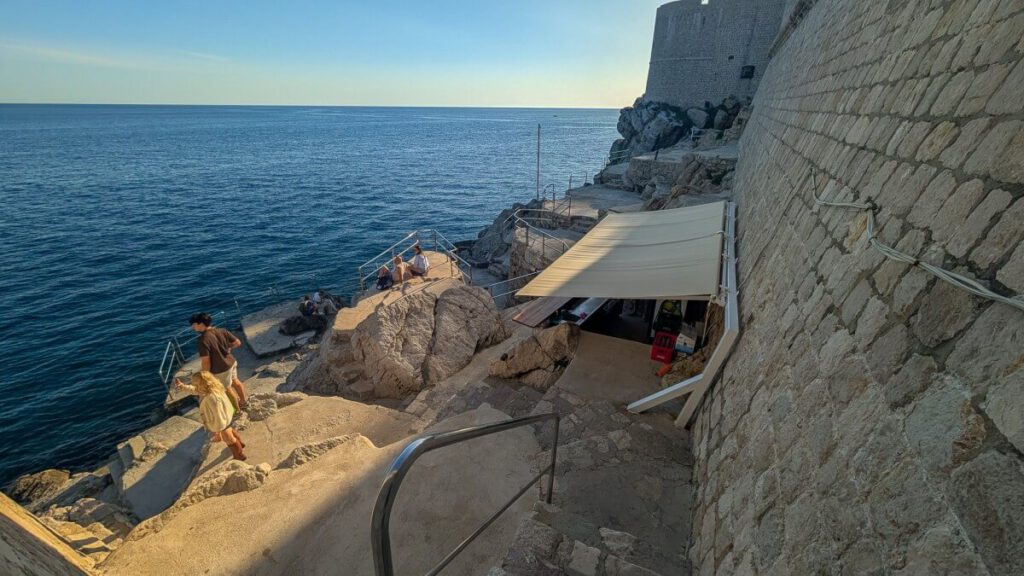
Kolorina Beach
Kolorina Beach is the small pebble beach in Pile Bay. Here, you can swim while enjoying a view of Fort Lovrijenac.
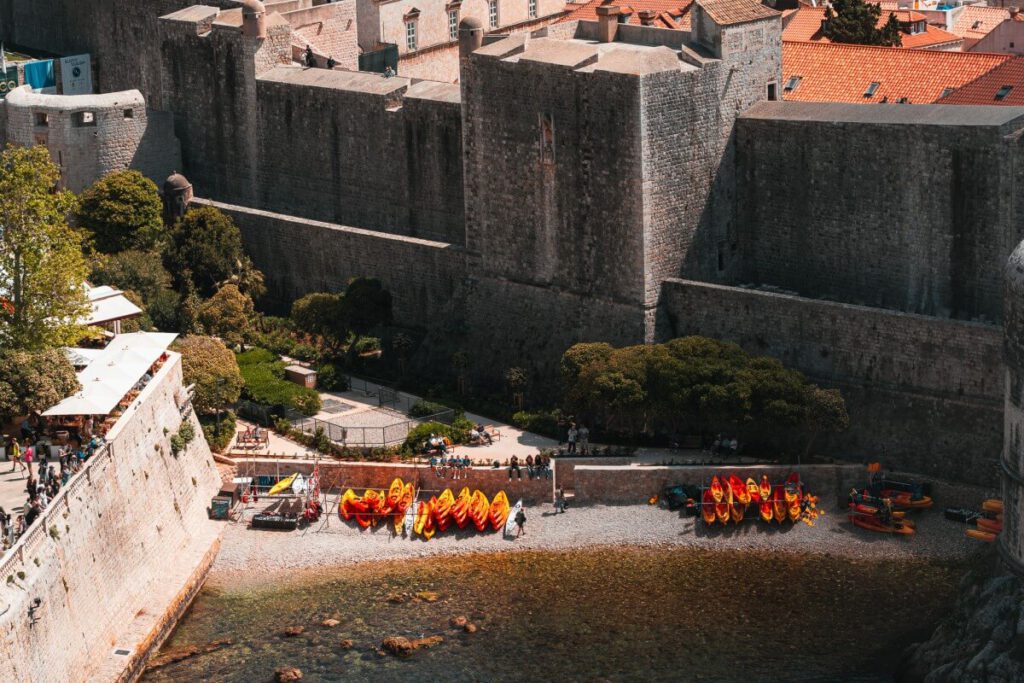
Lapad Bay Beach
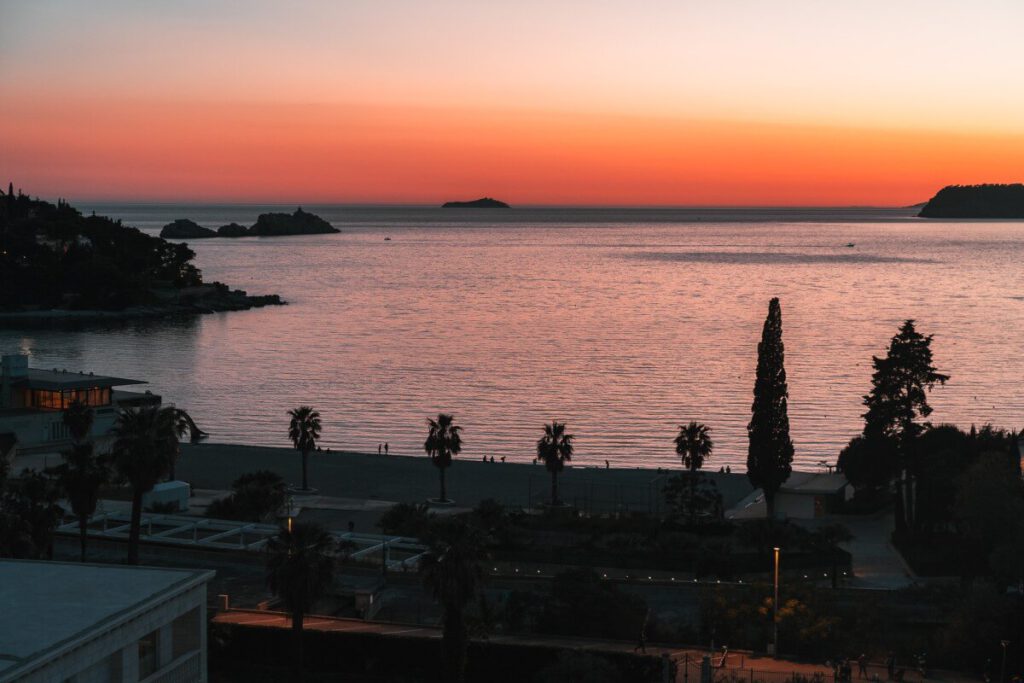
Uvala Lapad Beach is located on the Lapad Peninsula, and it is not only the largest beach in Dubrovnik but also the most beautiful beach for watching the sunset.
Betina Cave Beach
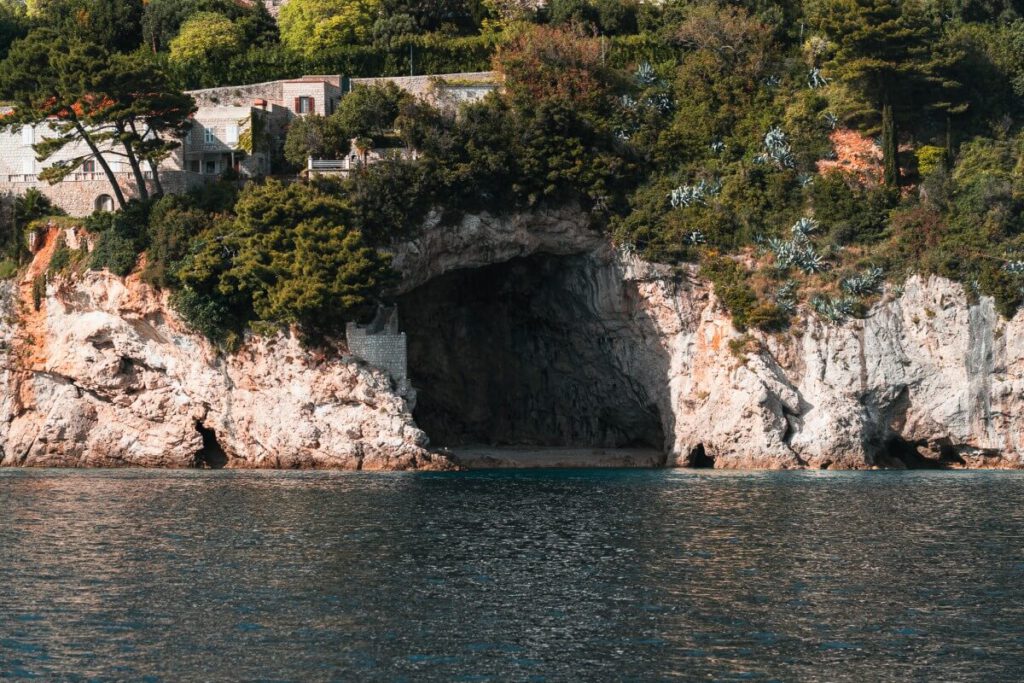
This small pebble beach is located in a natural rock cave. However, there is no access from land. You can only reach it from the water.
Banje Beach Plaza
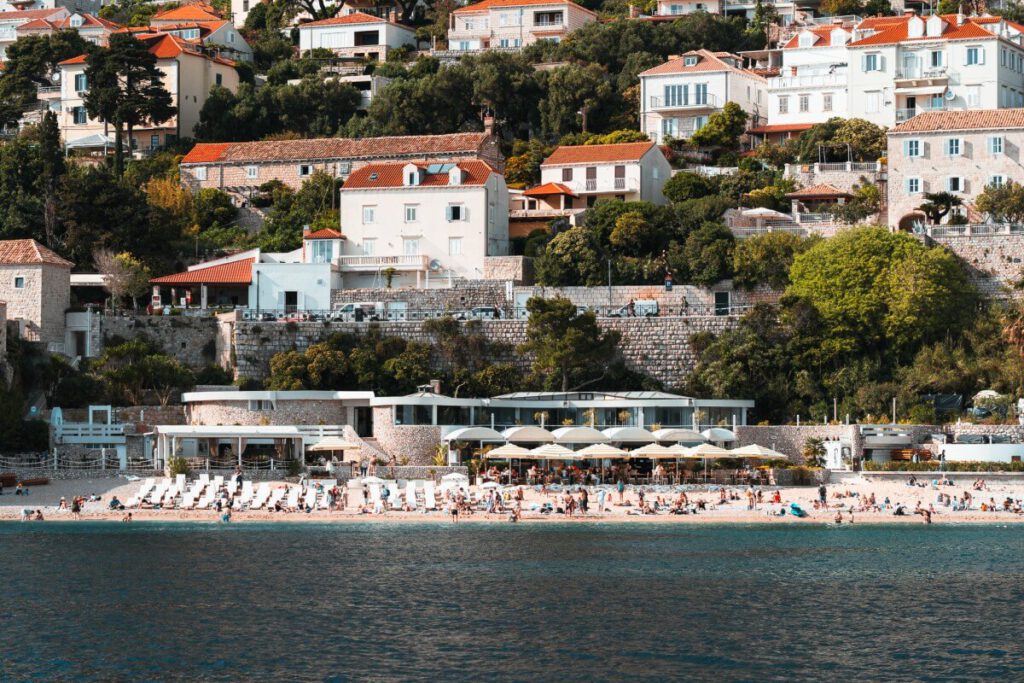
Plaza Banje is the most famous and prominent city beach. It’s about a 10- to 15-minute walk from the Ploče Gate, east of the Old Town. While swimming here, you’ll have what is probably the best view of the Old Town walls.
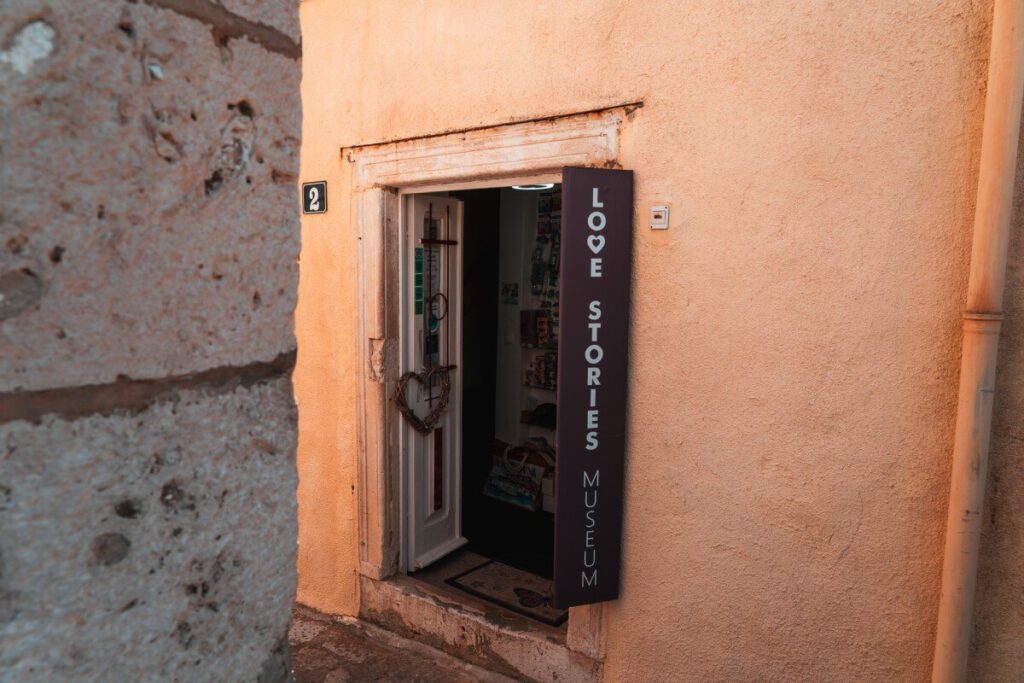
18. Love Stories Museum
A museum with a unique twist—and a charming contrast to the major historical attractions—awaits you at the Love Stories Museum. It’s especially for you if you’re interested in other people’s love stories.
Personal items such as old love letters, photos, or small mementos are on display here, each with its own little story behind it. If you’d like, you can even contribute your own love story as a visitor.
The Best activities in Dubrovnik
Sightseeing in the Old Town with a full cultural itinerary is, of course, the top activity in Dubrovnik, but at some point you’ll have had your fill of walking along the city walls and touring the interiors of palaces. Then it’s time to get to know Dubrovnik from a different perspective—from the water, from the air, or simply with a drink in hand.
The beauty of Dubrovnik: As soon as the Old Town starts to feel a bit too cramped, the open sea is just a few steps away. And that comes with plenty of activities that feel more like a vacation on the Adriatic than a cultural itinerary.
Island Explorations
Lokrum isn’t the only island near Dubrovnik. The Elaphiti Islands are definitely worth a visit as well. These include Lopud, Šipan, and Koločep.
On a tour of these islands, you’ll explore charming villages, swim in crystal-clear waters, and sample the local cuisine.
Swimming in the Blue Cave
Another boat tour takes you not only to the beautiful beaches of the Elaphiti Islands but also to the Blue Cave on the island of Koločep and other green caves. There’s a cave here that shimmers blue, and you can even swim in it.
Kayak Tours
The coastline around Dubrovnik is simply amazing. If you have time, it’s definitely worth exploring it from the water. If you also enjoy being active, then a guided kayaking tour is just the thing for you. A guide will show you the best spots to explore the city walls from the water and share entertaining facts and interesting insights about the city’s history and Croatian culture along the way.
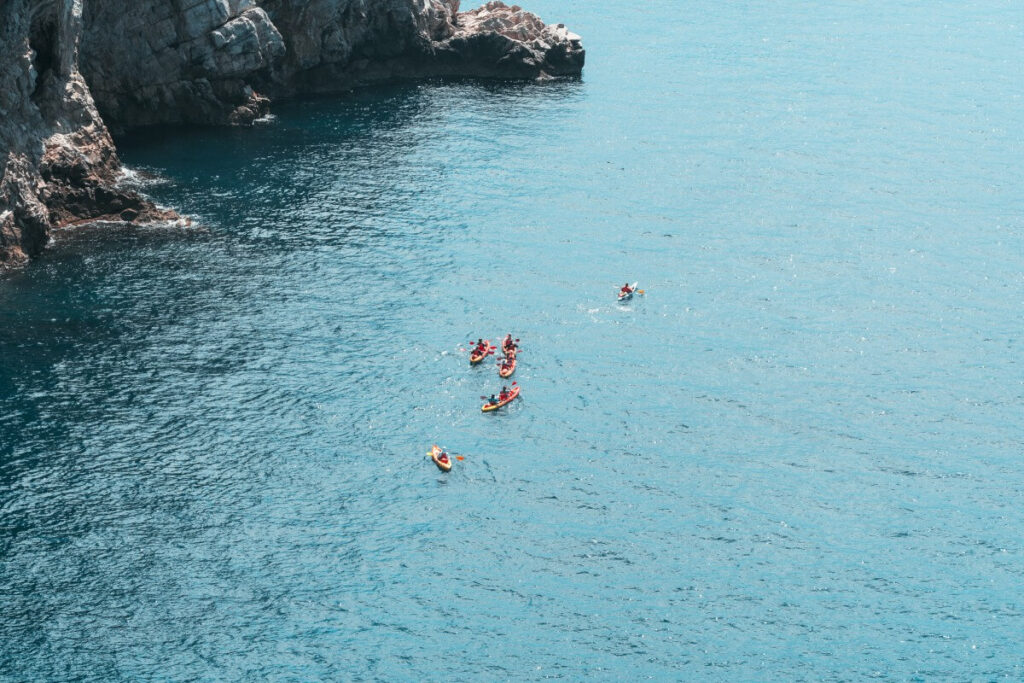
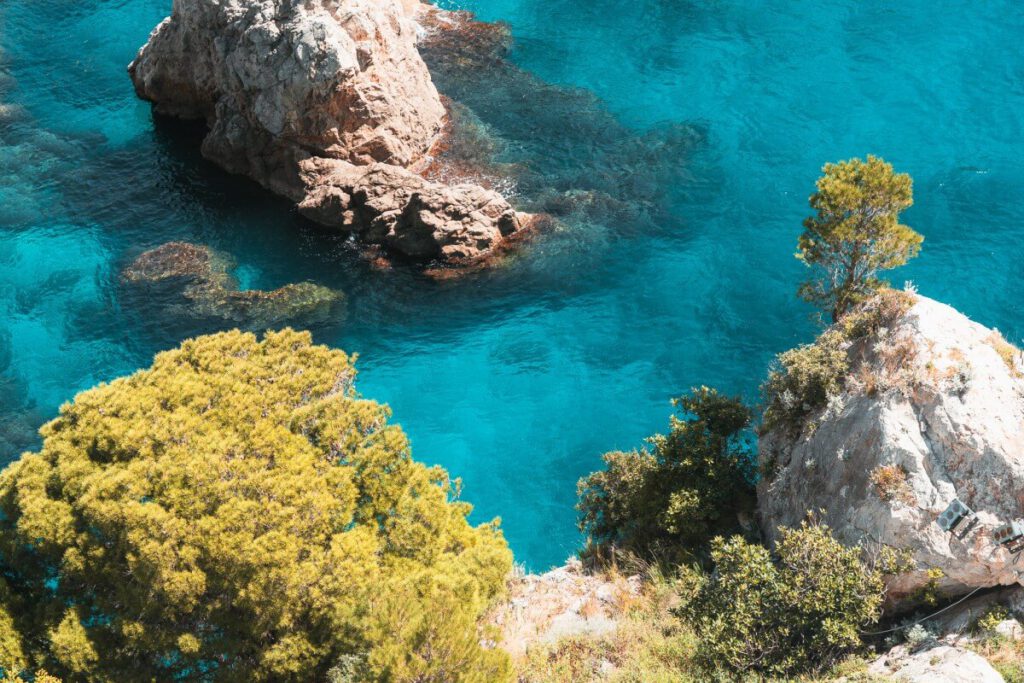
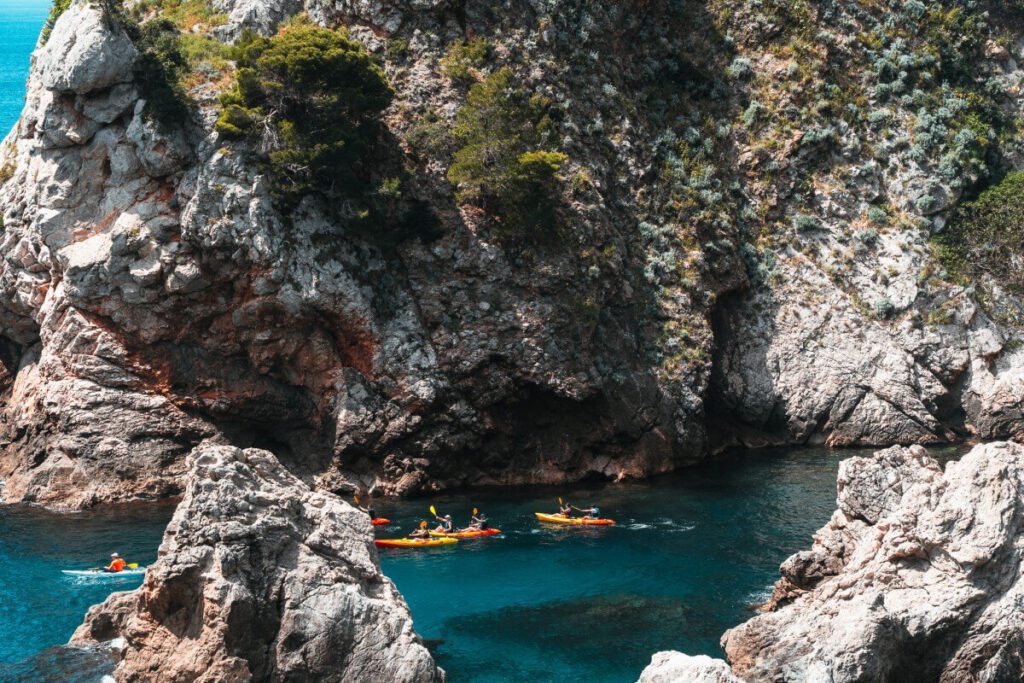
The best kayaking tour in Dubrovnik always starts from Pile Bay at Kolorina Beach.
Zip Line
Would you like to enjoy the view of the Old Town and the coast from Mount Srđ while getting an adrenaline rush? Then book the zip-line adventure.
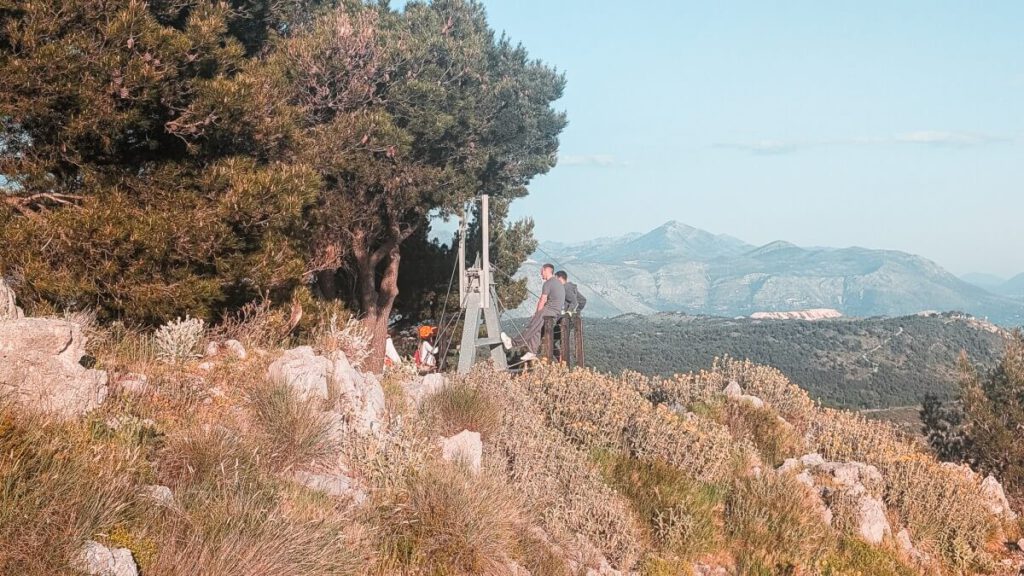
You can either buy a ticket right at the top of the mountain (if it’s not already fully booked), or you can book a full tour that includes two zip-line rides and transportation to and from Dubrovnik.
Exploring the countryside around Dubrovnik on a quad bike
The countryside around Dubrovnik is very mountainous. If you want to explore it and are also looking for an adrenaline rush, a quad bike tour is a great idea. There are many tour operators offering tours with different starting points and varying lengths. Check these out:
Boat Party with a DJ
There are plenty of ways to party in Dubrovnik. But there’s one you definitely shouldn’t miss: a sunset party on a three-story pirate ship.
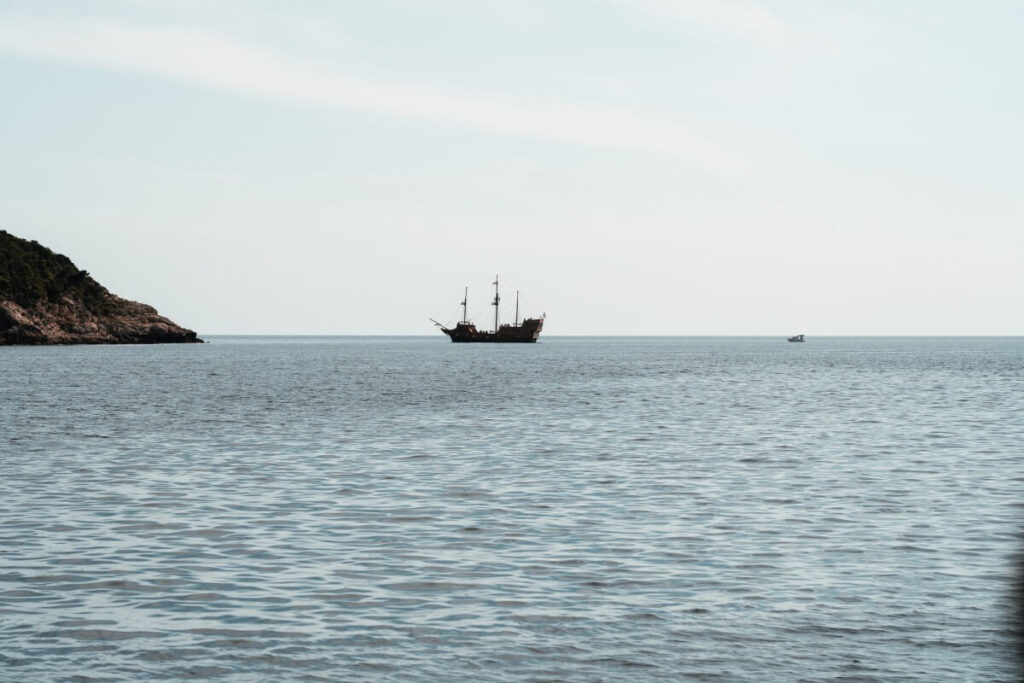
It’s great that you can book exactly that:
What to Do in Dubrovnik in One Day?
Do you only have one day to spend in Dubrovnik? Then you should stick to the absolute highlights.
- In the morning: Have a relaxed breakfast, then head straight out to explore the city walls. (Duration: 3 hours)
- At noon: Recover from the exertions of the city wall hike and grab a bite to eat at one of the restaurants along the Stradun. (Duration: About 1–2 hours)
- Afternoon: More sightseeing, with two attractions: the Rector’s Palace and the Franciscan Monastery are the ones most worth visiting. (2–3 hours)
- In the evening: Stroll through the alleys of the Old Town and end the day with a cocktail at the Buža Bar as the sun sets.
What to Do in Dubrovnik in 2 Days?
With two days, you can take it a little easier on the first day and head out onto the water and up into the mountains on the second day.
Day 1: as above, but with more time
Day 2:
- Morning: Take the ferry to Lokrum Island, explore the nature reserve, the monastery, and the Iron Throne, and go for a swim (3–4 hours)
- At noon: Back to the city, a short break, and lunch
- Afternoon: Take the cable car up Mount Srđ for the best view of the Old Town—optionally, try the zip line for an adrenaline rush (2–3 hours)
- In the evening: Watch the sunset at Uvala Lapad Beach or enjoy live jazz at the Troubadour next to the cathedral
What to Do in Dubrovnik in 3 Days?
On the third day, you’ll have time for a trip to the ocean and the remaining museums.
Day 1 and Day 2: as above.


Day 3:
- Full-day: Boat tour to the Elaphiti Islands (Koločep, Lopud, Šipan) with swimming stops and local cuisine (approx. 8 hours) – or the shorter tour to the Blue Cave (approx. 4 hours)
- If you’d rather stay in the city: spend the morning visiting the smaller sights you haven’t had a chance to see yet (Sponza Palace, Dominican Monastery, Maritime Museum, Ethnographic Museum), and in the afternoon, head to the beach for a swim (e.g., Banje Beach or City Beach)
- In the evening: Wrap up the day with a sunset boat party on the pirate ship or relax at the Buža Bar
Frequently asked Qestions and Answers About Dubrovnik
During the summer, a 1-day Dubrovnik Pass costs €40, a 3-day pass costs €50, and a 7-day pass costs €60.
Most likely, yes. That’s because in 2 days, you’ll have even more time to explore the attractions included in the Dubrovnik Pass than you would in just one day. Even if you only visit the city walls and the Rector’s Palace, you’ll save money with the 3-day pass.
In a nutshell: Yes, get it. You’re hardly going to come to Dubrovnik and not see any of the sights. The city walls alone cost €40. If you then visit two more spots with an admission fee of €8 each, you’ve already made your money back. A total of 12 museums and attractions are included in the Dubrovnik Pass. Plus, you can ride public transportation for free. That’s great if you’re staying outside the Old Town.
In short: Yes, definitely. The Dubrovnik city walls are the absolute highlight of any visit to the city.
If you want to walk all the way around the city walls, you should plan on 1.5 to 2 hours. You’ll probably stop frequently to take photos. If you stop at one of the cafés and maybe visit one of the museums, like the Maritime Museum, then plan on 3 hours. It took me 3 hours as well.
You’re only allowed to enter the city walls once with a single ticket. As soon as you leave, the ticket expires. Visitors are also checked for valid tickets.
Yes. Dubrovnik is one of the most overcrowded tourist destinations in Europe and is considered the city with the most tourists per resident. With a population of only about 40,000, it attracts nearly 1.5 million tourists annually. That works out to about 36 tourists per resident. Dubrovnik’s Old Town, in particular, is the most frequently visited area by tourists.
Yes. You should see the UNESCO World Heritage Site of Dubrovnik at least once in your life. People still live in the Old Town; there’s a rich history, churches, monasteries, and everyday life away from the main thoroughfare (Stradun). Especially if you’re out and about early in the morning or in the evening—outside of peak season, after the day-trippers have left—you’ll experience a much quieter, more authentic city.
Dubrovnik and Ragusa are the same city. Ragusa was the Latin-Italian name that was officially and internationally used for centuries. Dubrovnik is the Slavic (Croatian) name, which existed alongside it and only became the standard name in the 20th century.
The Republic of Ragusa was a city-state on the Adriatic Sea that existed with a high degree of independence from about 1358 to 1808.
No. You won’t be fined for walking through the Old Town with your wheeled suitcase. However, you should still avoid doing so to avoid disturbing the residents—especially late in the evening and in the morning.
Dubrovnik is perhaps the most beautiful city on the Adriatic. Do you agree? What do you think of Dubrovnik? Which Dubrovnik sights and activities are still missing from this article? Let us know in the comments.
Tools & services for your trip*
This is what I use on my own road trips.
Book & Plan
My gear
*Disclosure: All links above are affiliate links. If you book through them, I earn a small commission – at no extra cost to you. That's what keeps Travel-Dude free and ad-free. Thank you!
Leave a Reply