
📝 About the Author: Matthias

On this road trip, I’ll take you to the land of windmills and red-and-white-striped lighthouses, the home of lugworms and seals. To a place where sheep stare at you in wonder and seagulls fly overhead. Vast, flat expanses, dikes, and even Germany’s only fjord await you. Come along!
This route takes you from Hamburg through Schleswig-Holstein northward along the North Sea and back to Hamburg along the Baltic Sea.
Check out some highlights from this road trip:
If you want to see the entire North Sea coast, you should also check out this route along the Wadden Sea in Lower Saxony:
Road trip through Schleswig-Holstein by car or RV
Taking public transportation will be a bit more challenging for this road trip, since I’ll be describing some smaller, more remote towns along the way. So you’ll need a car—or even better, a camper van or trailer where you can sleep. A car with a tent will work too.

But in this article, I also share tips on cool hotels and apartments along the route that you can book if you’re not traveling in a vehicle where you can also sleep.
How long should I plan for a trip to Schleswig-Holstein?
This road trip itinerary can be completed in a week (7 days). However, some areas are definitely worth exploring for longer. So if you have two weeks, all the better. Even then, you won’t be disappointed with this itinerary, and you can always stay a few extra days in one of the places—for example, to relax on the beach.
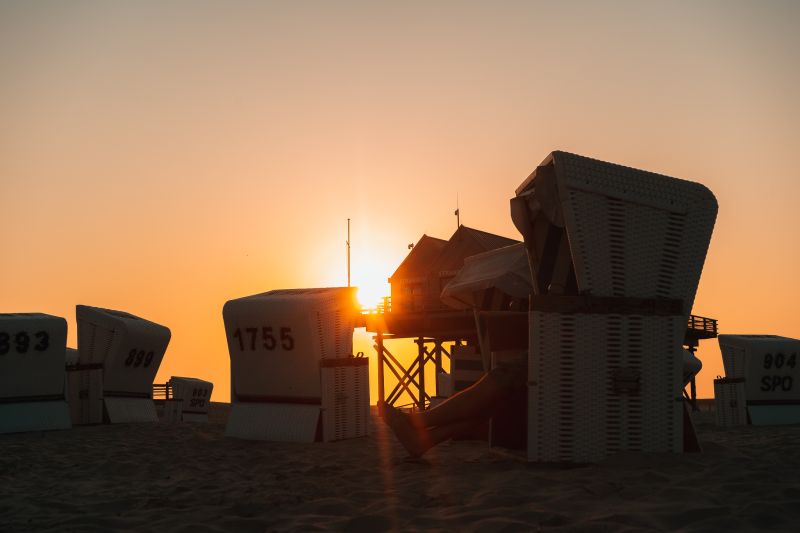
When planning my trip, I decided not to take the train or ferry to any of the islands. You can do that on Amrum or Sylt, for example. Cars are allowed there. But the ferry ride (Amrum) or train ride (Sylt) isn’t exactly cheap and isn’t worth it if you’re only staying one night. Plus, you’ll probably leave the car behind on these islands anyway. They just aren’t that big ;). But if you really want to go island hopping by car, then plan for more time.
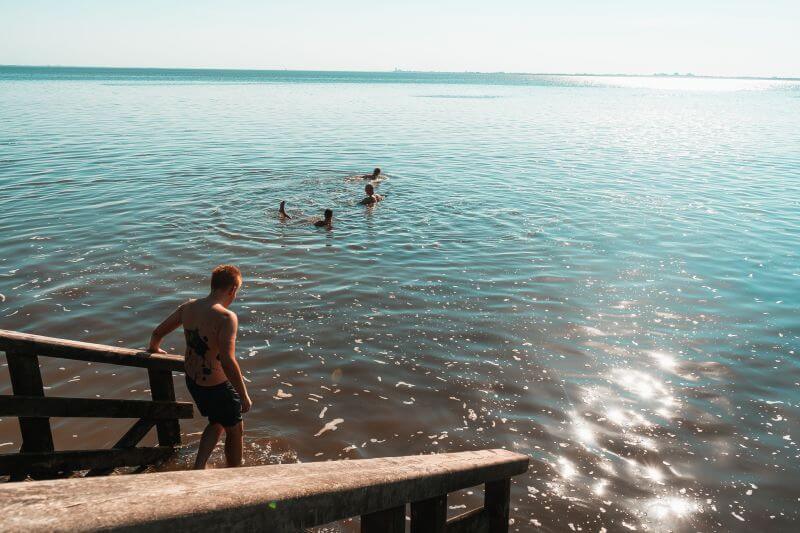
Accommodations in Schleswig-Holstein
Since I was traveling in a camper van myself, I was always on the lookout for cool campsites where I could park. However, it’s now difficult in Germany—no matter which state you’re in—and especially during the holiday season, to find spots on the fly. That’s why I recommend booking something about 2–3 days in advance. Of course, that also means you always have to plan a little ahead of time where you want to go next.
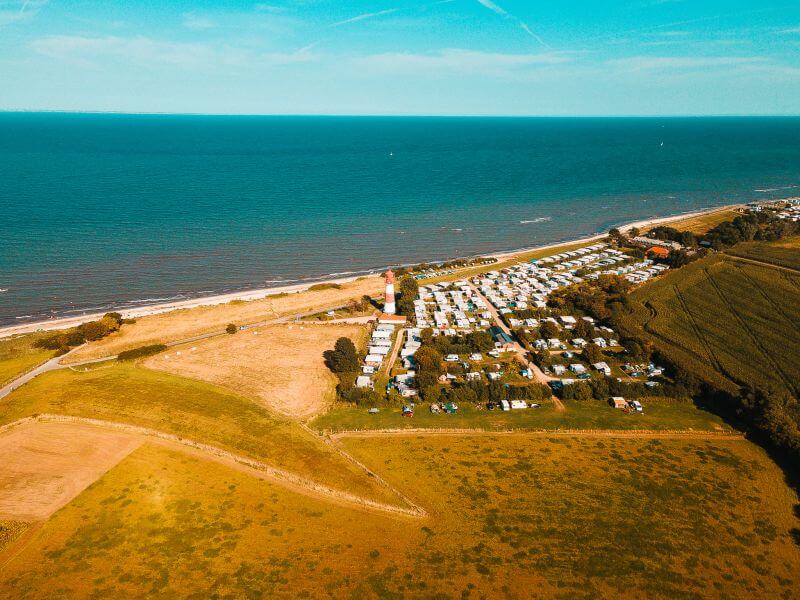
On my own trip, there were two occasions when, despite asking around and searching high and low, I simply couldn’t find a spot and ended up having to camp out in the wild. That gets stressful over time, and sometimes you get chased away, since wild camping is unfortunately often done incorrectly, which annoys local residents in particular. I can understand that to some extent. But sometimes, as a camper, you just don’t have any other choice.
Basically, wild camping is no longer allowed in Schleswig-Holstein because of a few bad apples; it’s also much less tolerated, and you could even face fines for it. If you find yourself in a situation where it can’t be avoided, here’s what I recommend:
- Avoid the spots marked on apps like Park4Night and similar ones. Everyone knows about them already—including locals and parking enforcement officers.
- During the day, find a spot that’s as secluded as possible and where your mere presence is unlikely to disturb many people. Sometimes there are public parking lots right in the middle of cities that are still secluded and quiet.
- Wait until evening, when it’s almost dark, to set up camp, and leave as early as possible the next morning—ideally before the sun rises. Then you can enjoy the sunrise at another great spot and have breakfast in peace.
- Just stay for one night.
- Leave the place you’re standing on cleaner than it was before. Pick up any trash that’s already lying around, and don’t leave your own trash behind.
- Stay in the van at night and don’t unpack all your camping gear just so you can sit outside.
- Don’t play loud music or make noise. You should also avoid having long conversations with your passengers outdoors at night, especially if there are residents nearby.
- Under no circumstances should you visit spots in nature reserves.
- Locations in or near forests are also challenging. Most forests in Germany are privately owned. This means there are forest rangers everywhere who monitor the forests. Hunters are also often out and about very early in the morning.
- Ask the property owner if you can stay on the property for the night. For example, at farms in the countryside.
If enough people follow these simple, common-sense rules, perhaps people who camp in the wild will be more widely accepted again in the future.
1. Hamburg
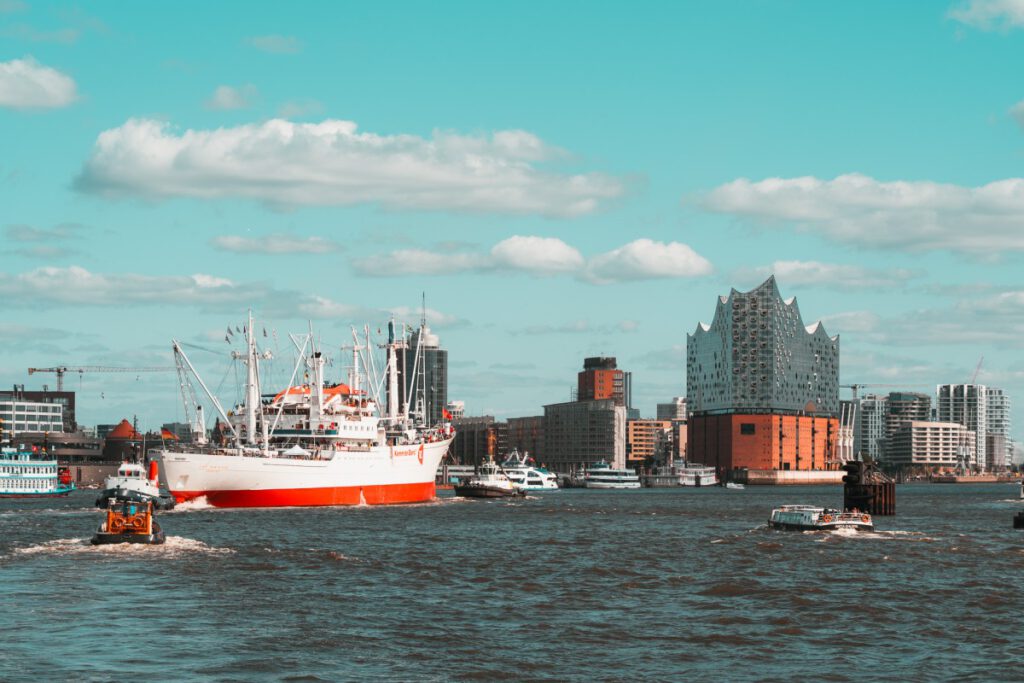
Hamburg is both the starting point and the end point of this route. So you can also take some time to explore the Hanseatic city. For example, check out the cranes at the Alter Schwede, a massive boulder situated on the banks of the Elbe. Take a trip into nature right in the heart of the city at Planten un Blomen. Or finally visit the new Elbphilharmonie, right after you’ve explored the Speicherstadt. There’s plenty to experience in Hamburg. Here are plenty of tips:
2. Glücksstadt
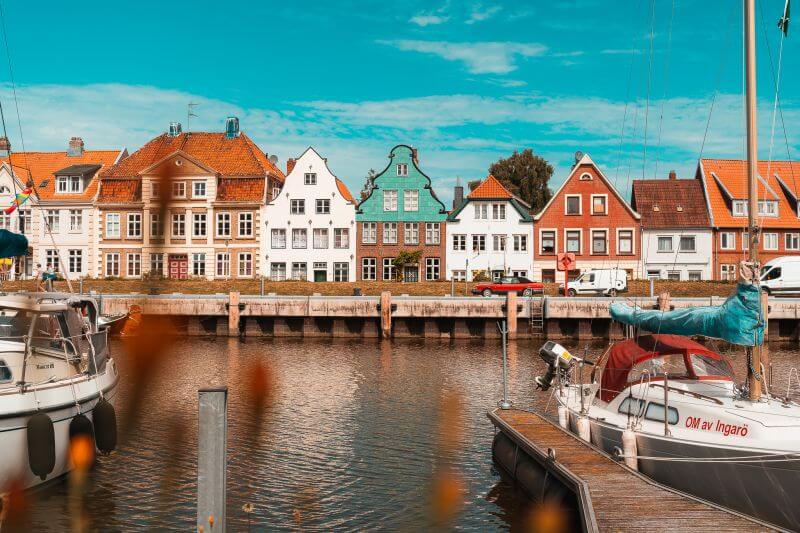
Glücksstadt is the first stop on the way to northern Germany. The town was founded by King Christian IV of Denmark as a planned city intended to rival Hamburg, and reached its peak around 1644. What makes Glücksstadt unique is the radial layout of its streets and houses. It is the only city of its kind in the German-speaking world.
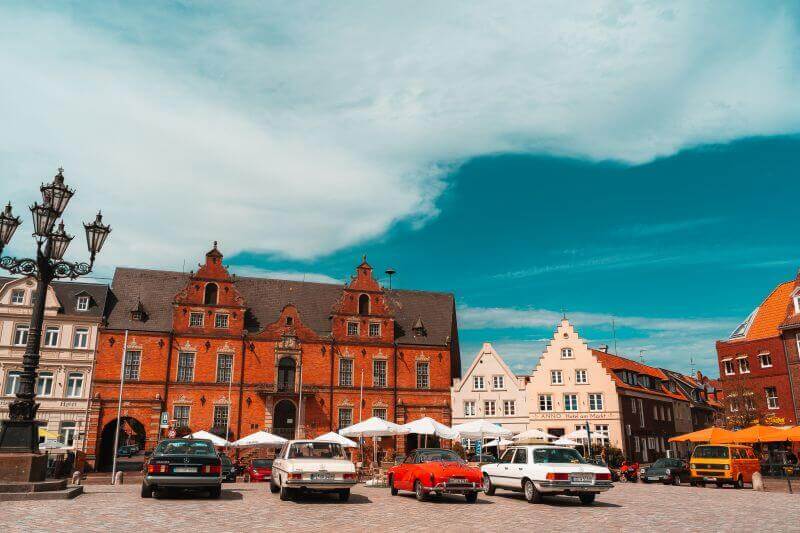
Enjoy an authentic, fresh Glückstadt matjes here—for example, at one of the restaurants near City Hall—and take a stroll past the historic buildings along the inland harbor and through the town itself.
3. Friedrichskoog
Next, we head to the tranquil town of Friedrichskoog. There’s a wonderful seal colony here where young seals are raised until they’re big enough to be released back into the North Sea.
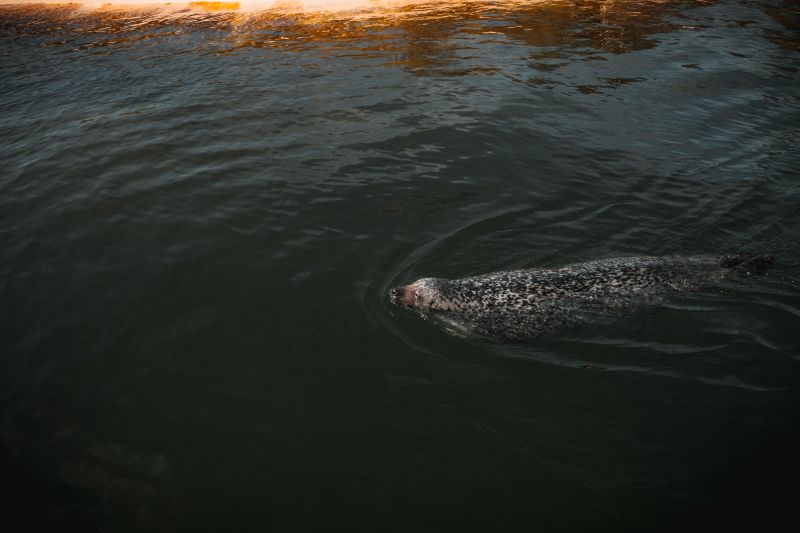
You can’t always see the pups, but there are a few seals swimming in the two main pools. You can watch them from above or underwater through the underground viewing window.
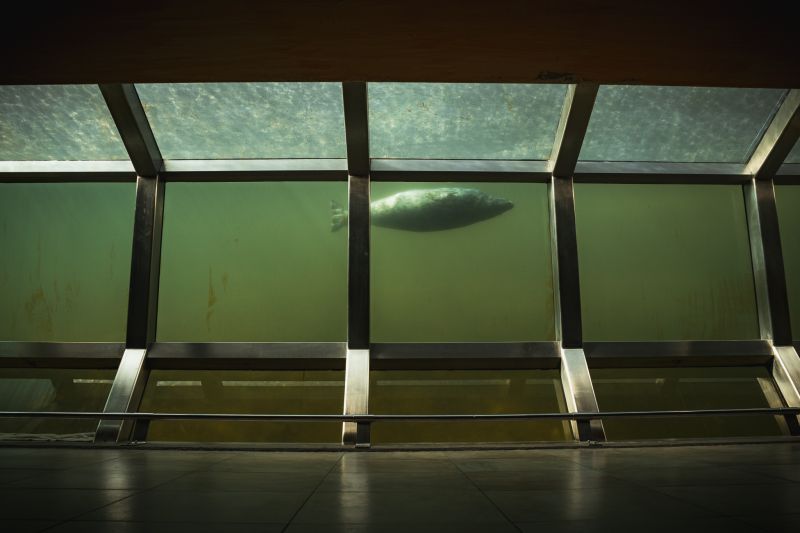
There is also a small museum inside the colony. Admission is free, but you can leave a small donation if you enjoy your visit and would like to support their work.
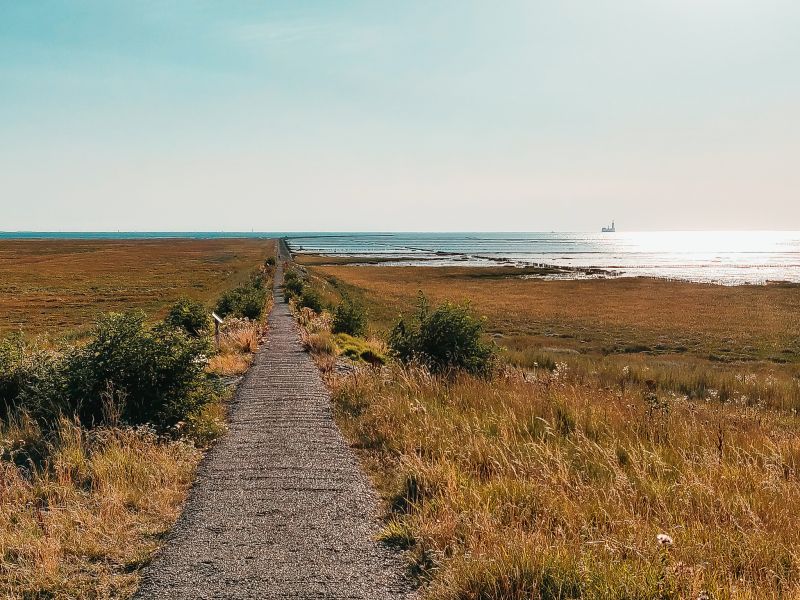
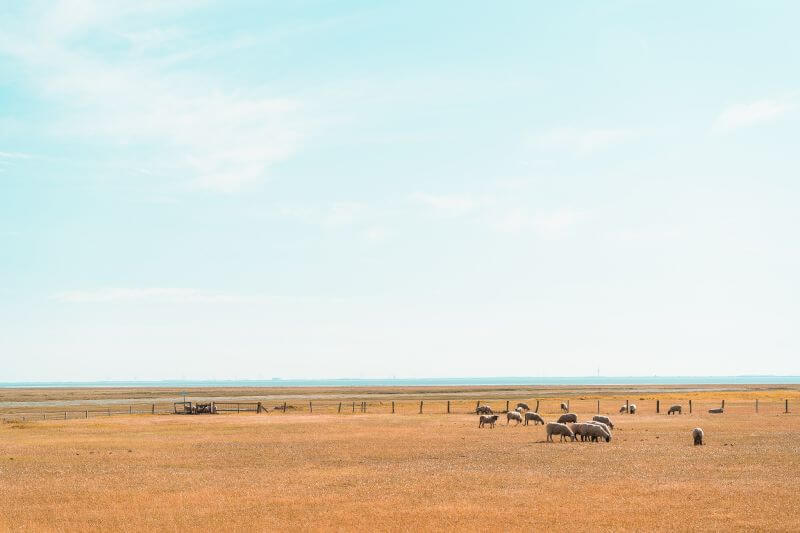
Another highlight in Friedrichskoog is a hike along the Trischendamm. This 2.2-kilometer path leads out onto the North Sea, past salt marshes and across the mudflats.
You can also find a place to stay in Friedrichskoog: If you’re traveling by van, I recommend “Bullivan”—a laid-back campsite with a fire pit and a hammock. For €20 per van and two people (€15 for one person), you can park right on the dike. There are also 4 bicycles that guests can use on a first-come, first-served basis.
4. Eider Barrier
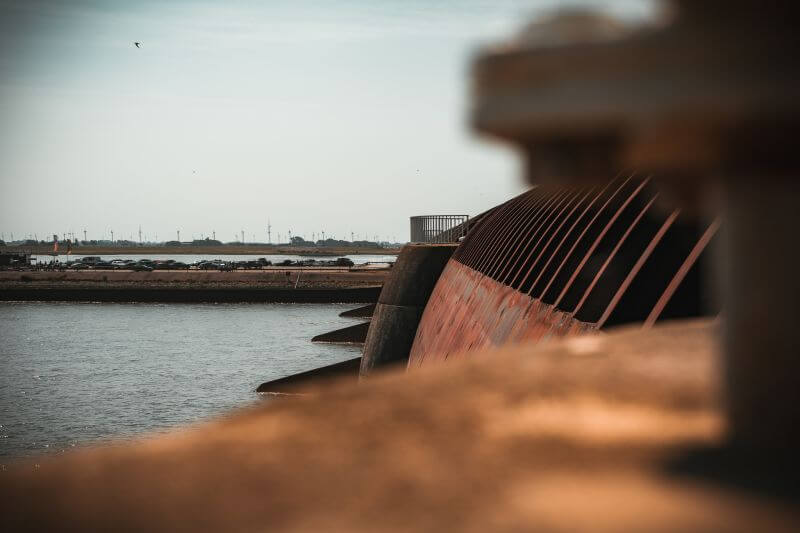
On your way north, you’ll pass the impressive Eider Barrage. Construction was approved in 1962 following a major flood in the area and was completed in 1973. The barrage has five large gates that are closed during storm surges.
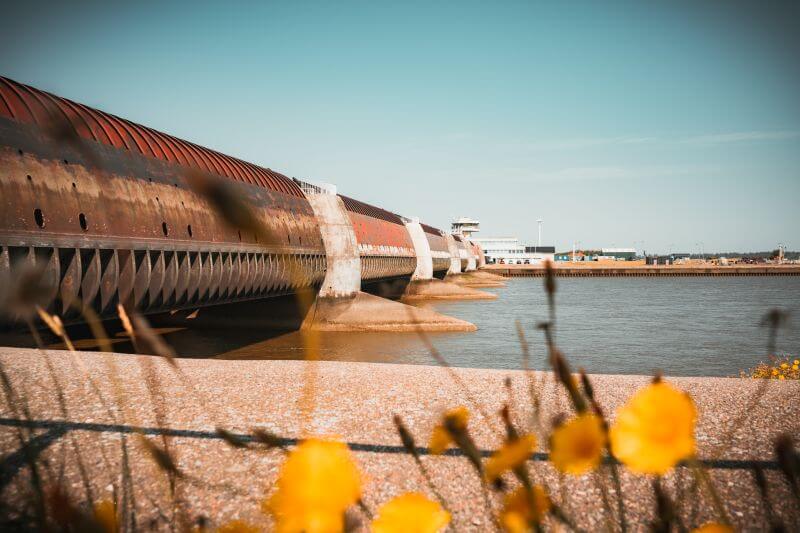
You can park on either side of the parking lot here and walk across the floodgate. There’s also a snack bar at one of the parking lots.
5. Sankt Peter Ording
Sankt Peter Ording (often referred to simply as SPO) is probably the best-known—and consequently the most crowded—town on the entire North Sea coast. Nevertheless, it’s a beautiful place and well worth a visit. With a beach that’s 12 km long and 2 km wide, there’s plenty of room for the many beachgoers.
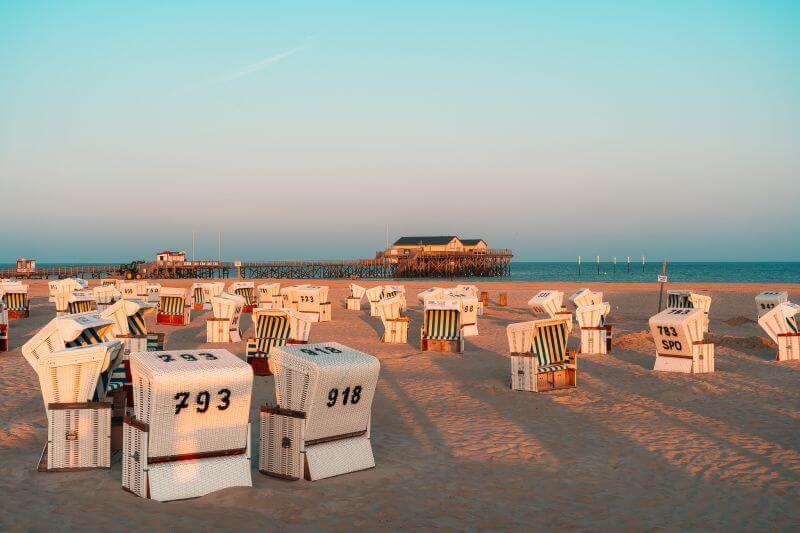
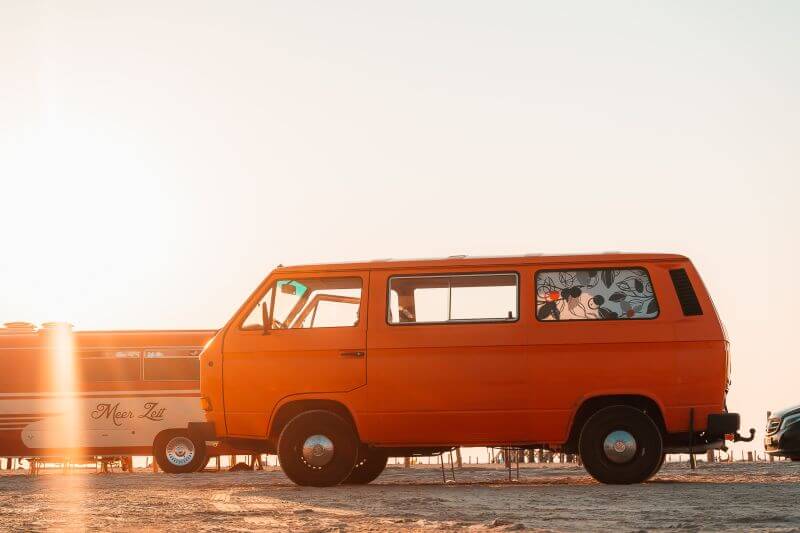
One of the highlights is parking your van or car right on the beach at Sankt Peter Ording and then exploring the seemingly endless coastline.
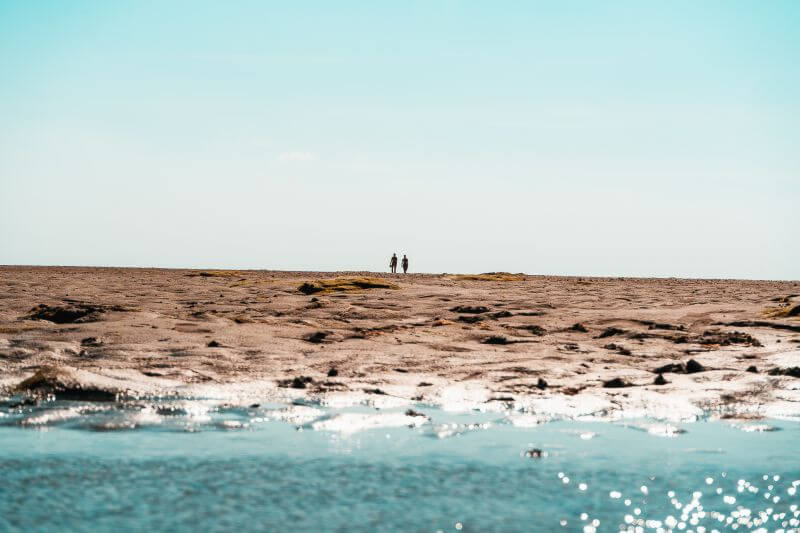
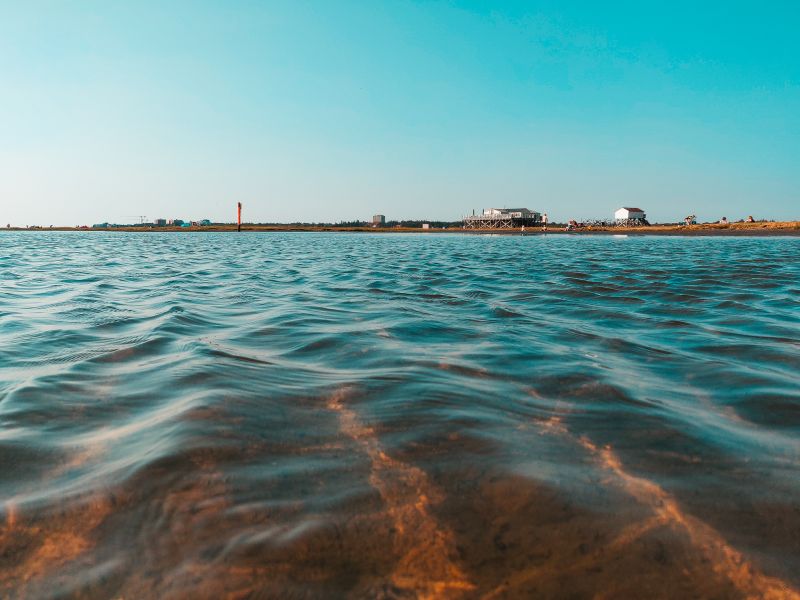
Things are a bit quieter at the Dorf/Süd swimming area. It’s especially nice in the evening at low tide, when you can wade out to the buoys in warm, knee-deep water.
Especially during the summer vacation season, it’s generally going to be very difficult to find even reasonably priced accommodations in Sankt Peter Ording. Campgrounds are often already full by then, too. You should book well in advance.
There are a few spots in the city where you can camp out. However, there are “No Overnight Parking” signs everywhere, and the authorities do spot checks from time to time. The locals aren’t too happy about it either. But if you can’t find anywhere else, it’s an option in a pinch. Don’t leave any trash behind and pick up other people’s trash while you’re at it, keep the noise down, get up early, and then leave. That way, you shouldn’t run into any major problems.
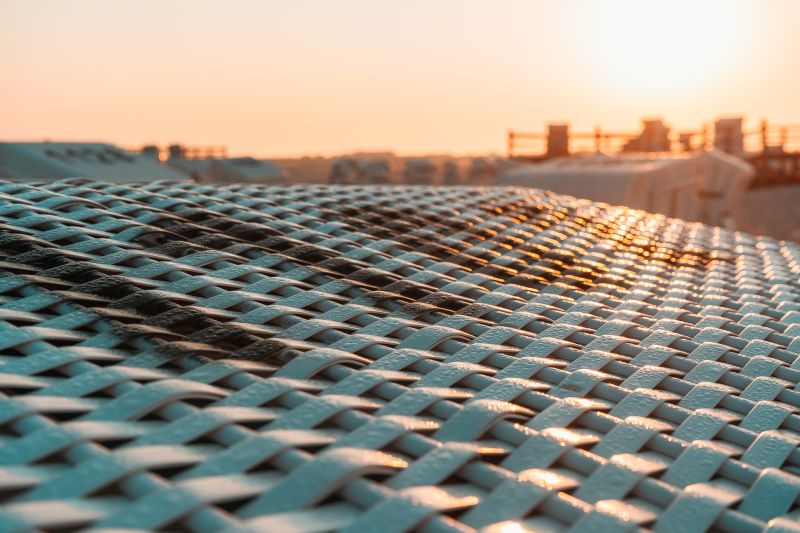
“Sankt Peter Ording is at its most beautiful when the light morning mist still hangs over the coast like a transparent veil, when the sun’s rays gently sparkle off the dewdrops on the beach chairs, and the seagulls look on in bewilderment when a person crosses their path at this hour—at half past six in the morning.”
Matthias
If you’re looking for a bit more comfort, you’ll find plenty of great hotels throughout Sankt Peter Ording. One highlight is the Beach Motel. The rooms here are decorated in a very creative style, and there are even surfer-themed suites. There’s even a Jever Suite with its own tap ;)
You can find much more information and the best sights in Sankt Peter-Ording here:
6. Westheversand
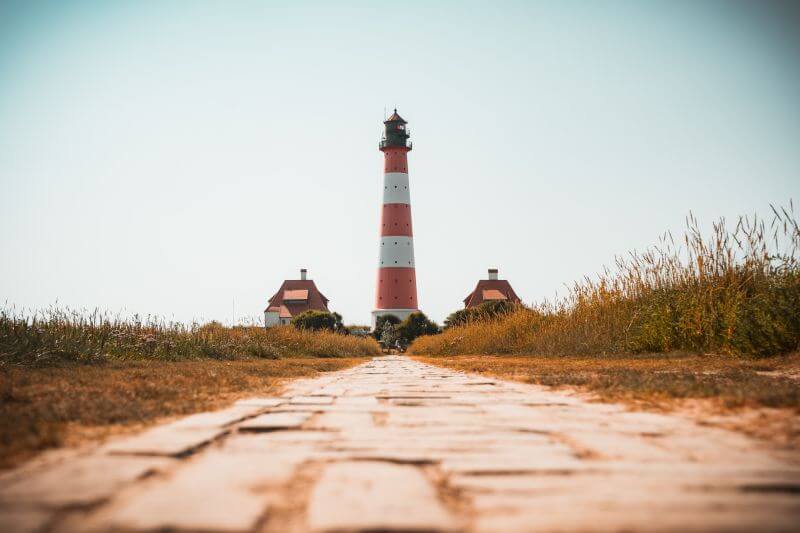
A little further north—on the Eiderstedt Peninsula in North Frisia—things are much quieter than in Sankt Peter Ording. Here, one of Germany’s most famous lighthouses stands alone on a mound in the countryside. The Westheversand Lighthouse is one of those typical red-and-white-striped towers familiar from books and stories.
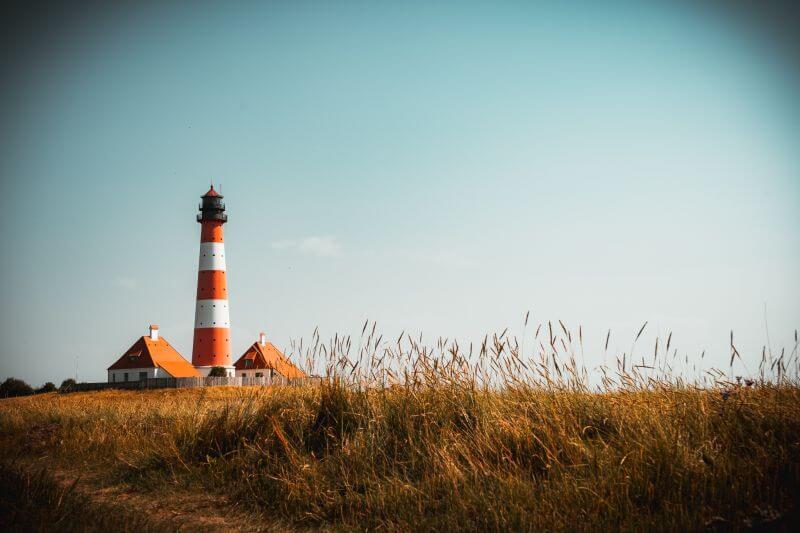
On a wonderful hiking and biking trail, lined with many informational signs, you’ll first walk to the mudflats and then head toward the lighthouse. From the lighthouse, you’ll take the Stockensteig—a historic stone path—back to the parking lot. However, you’re not allowed to ride your bike on this path.
7. Friedrichstadt
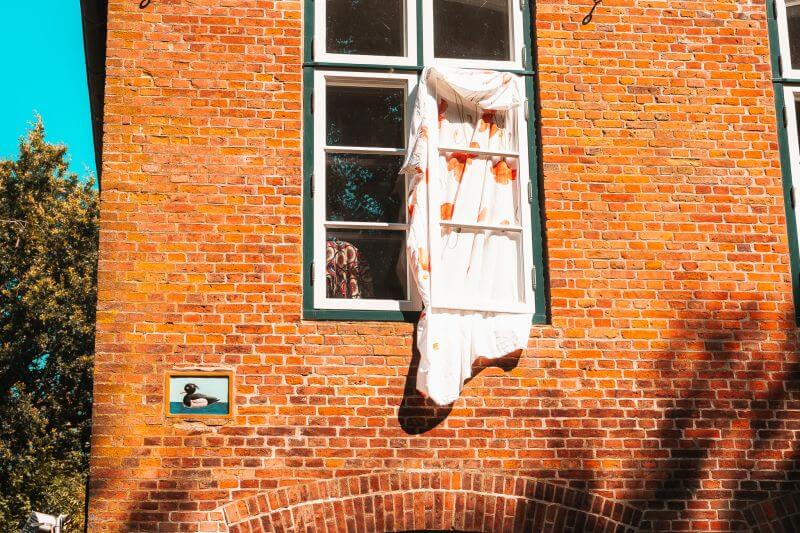
We continue into the hinterland of the North Sea coast to Friedrichstadt, a settlement founded by Dutch religious refugees in the early 17th century. They certainly played a major role in why Friedrichstadt is now known as “Little Amsterdam.”
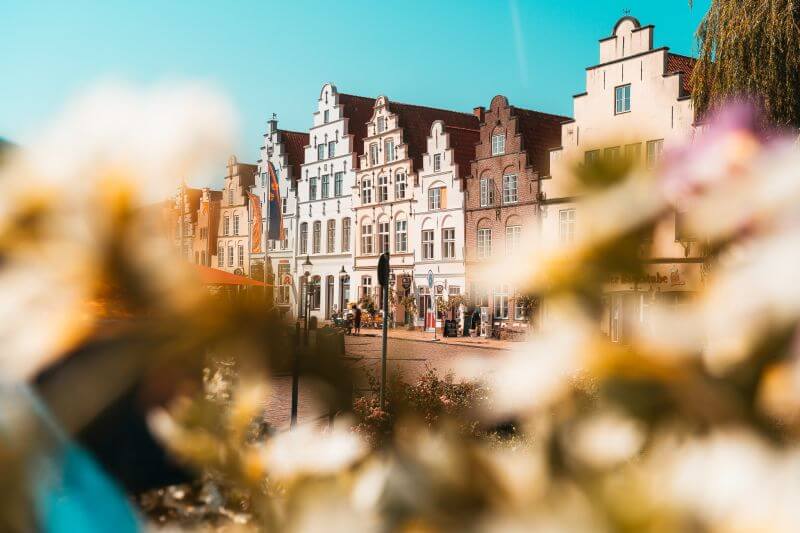
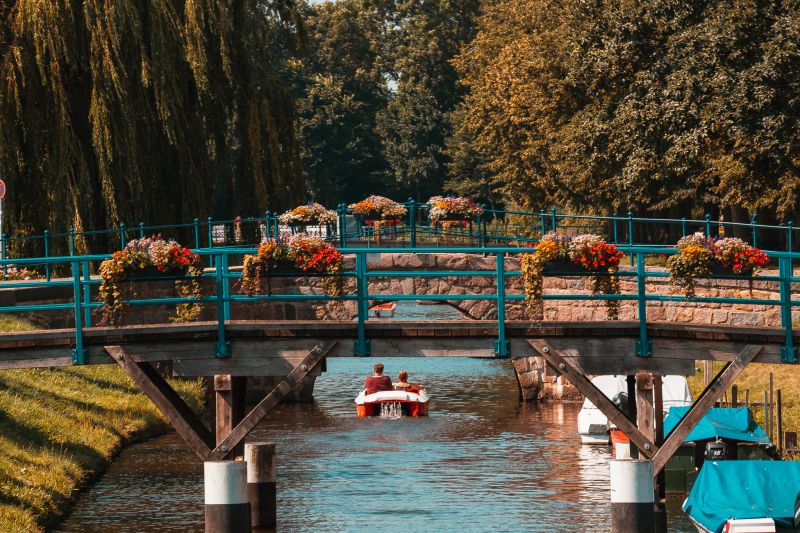
The stepped-gable houses and the canals surrounding the old town are particularly reminiscent of the Dutch capital. You should definitely take a stroll through the old town. Everything revolves around Prinzenstraße and the market square.
There are also boat rentals along the canals and guided tours. An authentic hotel in Friedrichstadt is the Hotel Klein Amsterdam. It is located right next to the Old Town on one of the canals and also offers bicycle rentals.
8. Nordstrand
This road trip doesn’t take you to an island. While it is possible to drive a car or van to some islands, such as Sylt or Amrum, it’s far too expensive and not worth it for just a few nights’ stay.
Instead, you can visit Nordstrand, a former island. Since 1987, it has officially been classified as a peninsula following the completion of a dike. Until the 17th century, Nordstrand and the neighboring island of Pellworm were actually a single, large island, but this changed as a result of several major floods.
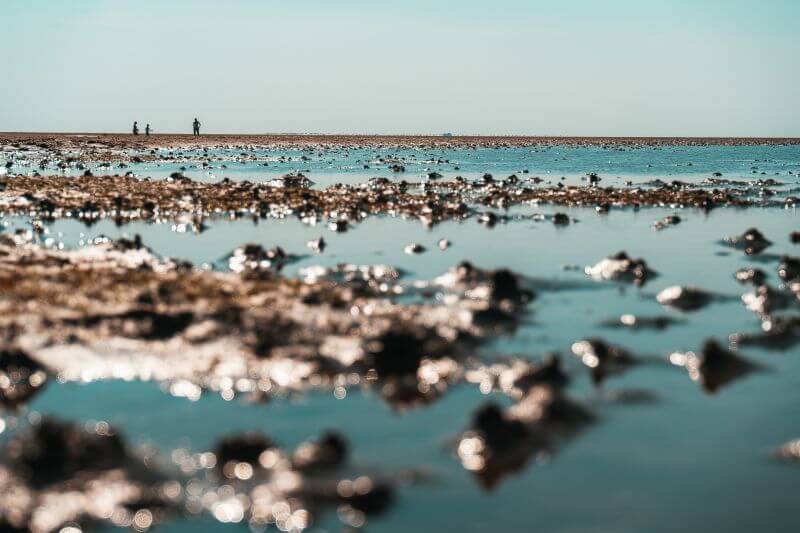
You can see all the way from the green meadows along the coast of Nordstrand to Pellworm. The Pellworm lighthouse is still clearly visible. And when the tide is out, it even looks as though you could walk all the way there. But you’d better not try it—it can be dangerous.

A great spot for a mudflat hike is the Fuhlehörn beach. From there, a path leads to the Hallig of Südfall. Check it out on Google Maps. The path goes right through the water. But if you’re not familiar with the tides, it’s best to join a guided hike or stay close to the shore.
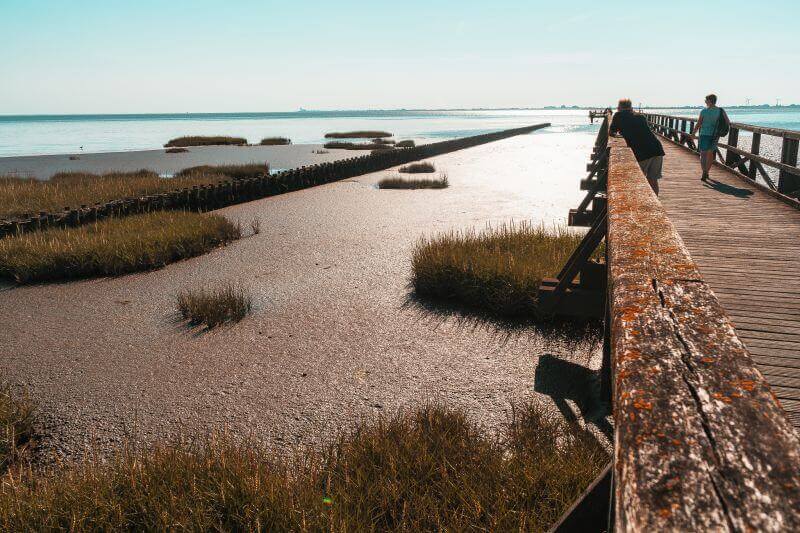
The Schobüll pier, just before Nordstrand, is also worth a visit. It leads right across the shallower mudflats, where kids especially love to play. And at the end of the pier, you can wade into the water or, depending on the tide, hop around on the mudflats.
9. Schlei
Did you know there’s a fjord in Germany? The Schlei is an estuary of the Baltic Sea, but because of its geography, it’s referred to as a fjord rather than a river. This makes it Germany’s only fjord.
The Schlei stretches 42 km from the Baltic Sea inland, and with a volume of 163.8 million cubic meters, it’s actually quite substantial. The region reminded me a bit of the Thuringian Sea. You could easily spend a whole week or more here and never get bored.
If you have enough time, kayaking or canoeing is a great way to explore the Schlei. There are plenty of different tour operators throughout the region.
You can find much more information about the Schlei here:
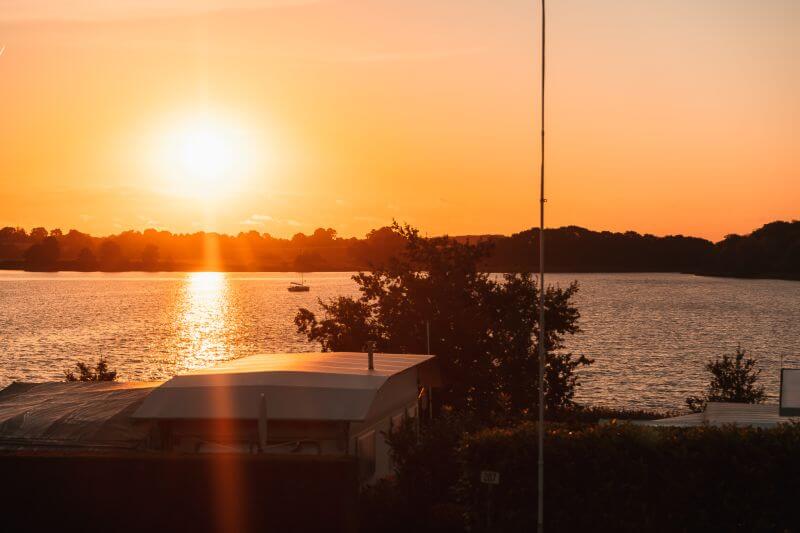
The Wees Campground is a great starting point for exploring the entire region. It’s worth staying here for 1–2 nights, but be sure to reserve a spot in advance.
Haitabu Viking Village
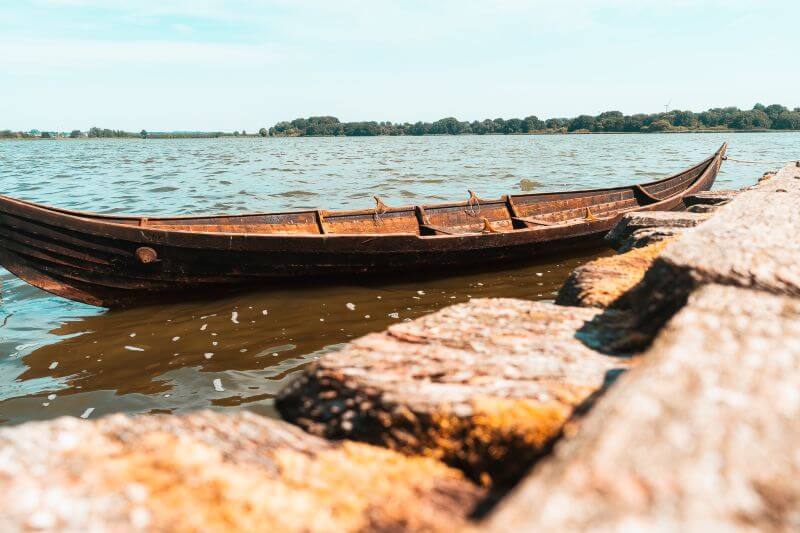
Just a few minutes’ drive from the Wees campground lies the Viking village of Haithabu, which is a great destination for people of all ages.
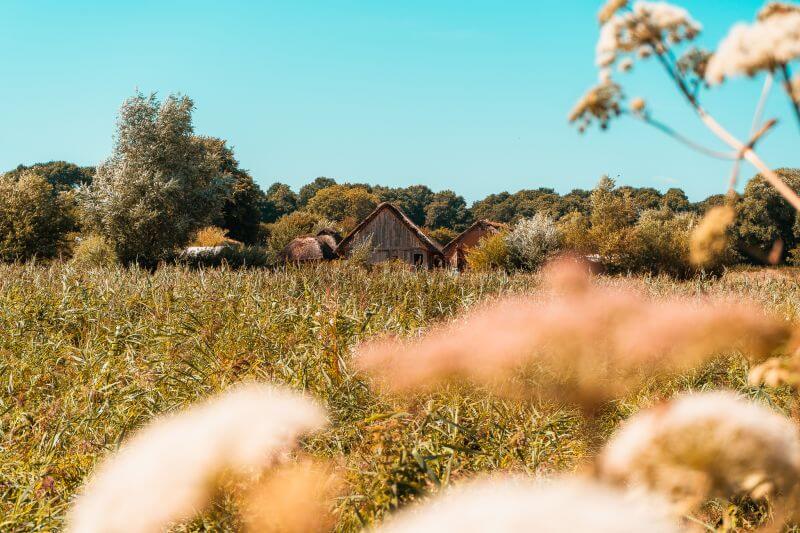
Start by walking along the semicircular embankment lined with oak trees. From here, you can already see the huts in the village in the distance.
The village itself is also really fascinating. The faithful replicas are truly well-made. Chickens roam the grounds, and the volunteers dressed in authentic clothing who live here are happy to share details about life in the Viking Age.
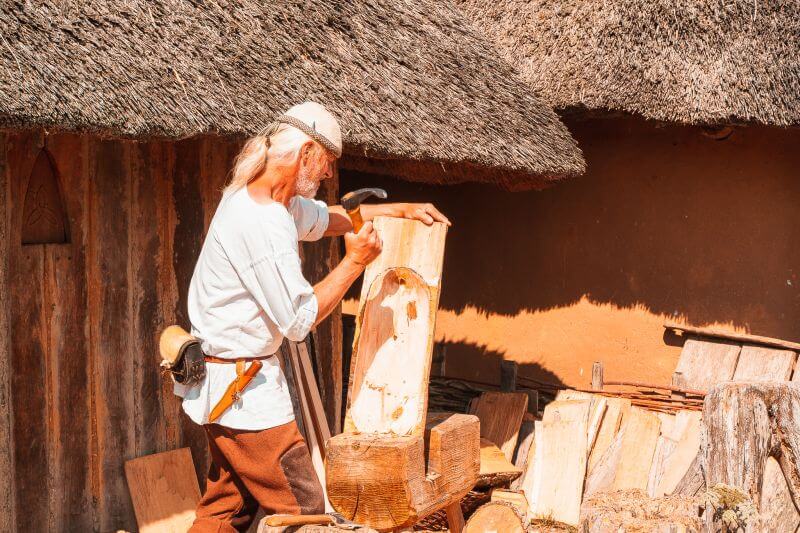
For €8 per adult, you get admission to the houses and the nearby Viking Museum.
Fallshöft Lighthouse
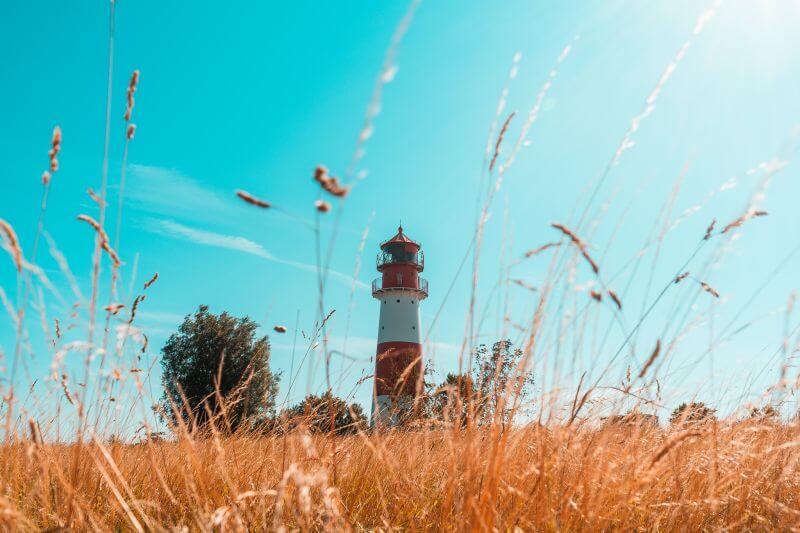
The first and last lighthouse keepers at the Fallshöft Lighthouse are the two most famous keepers in the area… and also the only two.
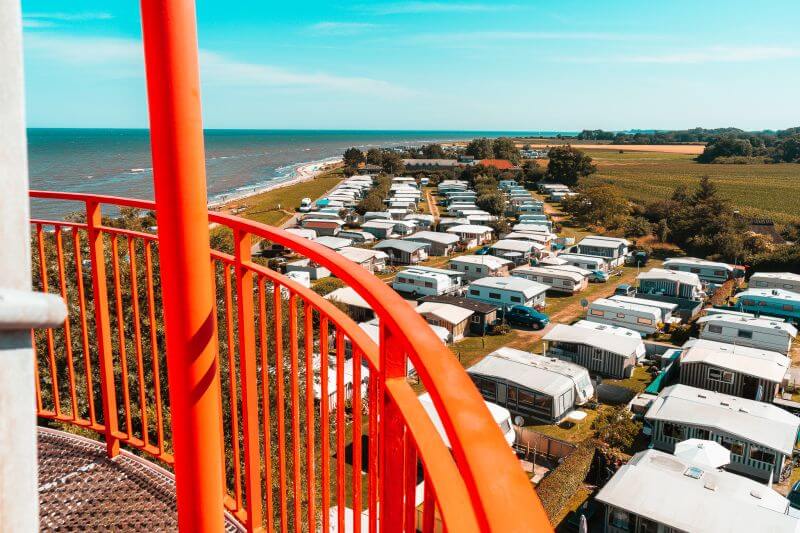
For a €2.50 admission fee, you can enjoy the fantastic view of the coast from the upper floors of the tower and also learn a lot about life in the tower before operations were automated. From time to time, weddings are also held here on the second floor.
Right next to the lighthouse, there’s also a great campground just steps from the beach—the Seehof Campground.
Kappeln
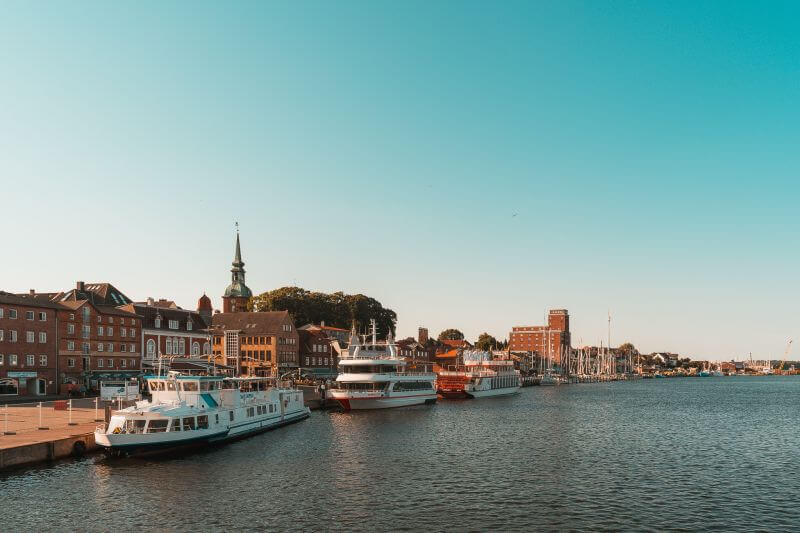
Kappeln is the maritime hub of the Schlei region. There are many restaurants and pubs along the waterfront in Kappeln. Historic sightseeing steamboats depart from here for tours to Schleimünde.
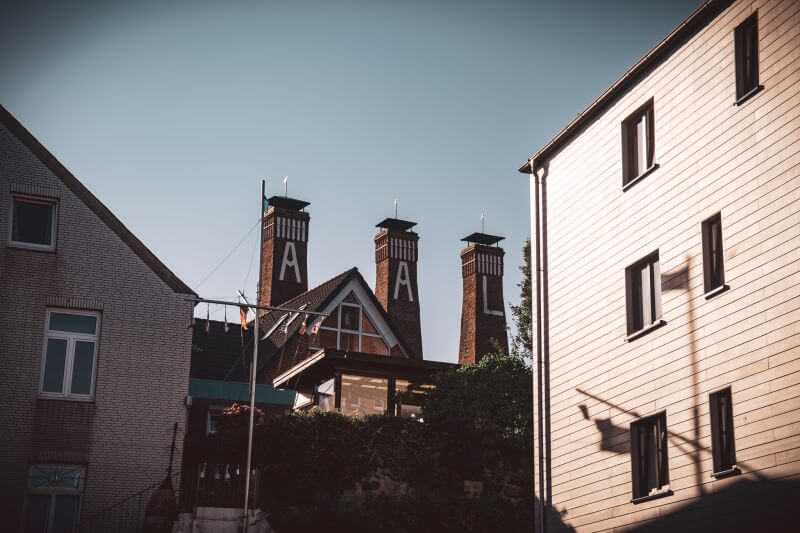
Even from a distance, you’ll spot one of the city’s landmarks—the three chimneys of the Föh Eel and Fish Smokehouse. Whether here or at one of the many other restaurants along the harbor, you should definitely treat yourself to a fish sandwich.
One of the highlights of Kappeln’s old town is the Amanda Mill, built in 1888, which you can even visit for free. Next to it is a historic sawmill.
You can read a lovely review of Kappeln here by Finja.
Schleimünde
Schleimünde separates the Baltic Sea from the Schlei. The lighthouse is probably the most distinctive feature here. Although it isn’t very large, its green-and-white stripes make it stand out from its red-and-white counterparts.
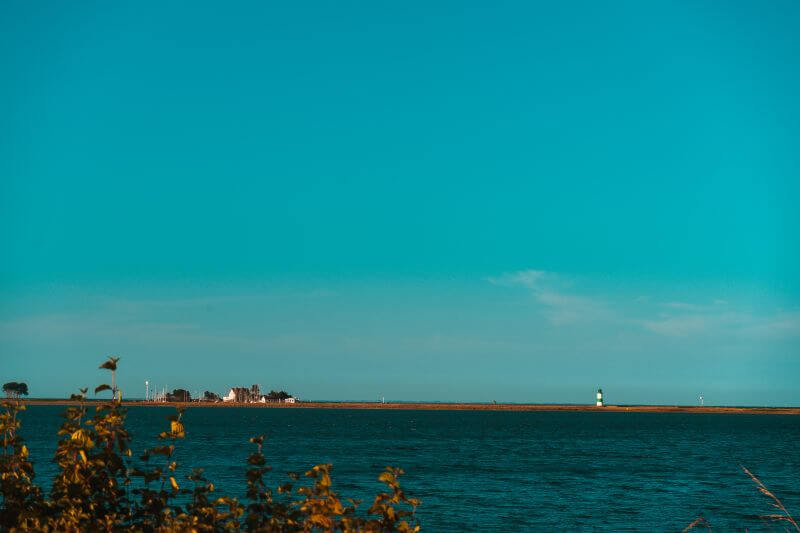
There are quite a few vacation rentals in Schleimünde that are right on the water or even out on the water. If you’ve always wanted to spend your vacation in a floating vacation home, this might be a good option for you.
10. Dänisch-Nienhof near Schwedeneck
Now you’re leaving the Schlei region and heading further east.
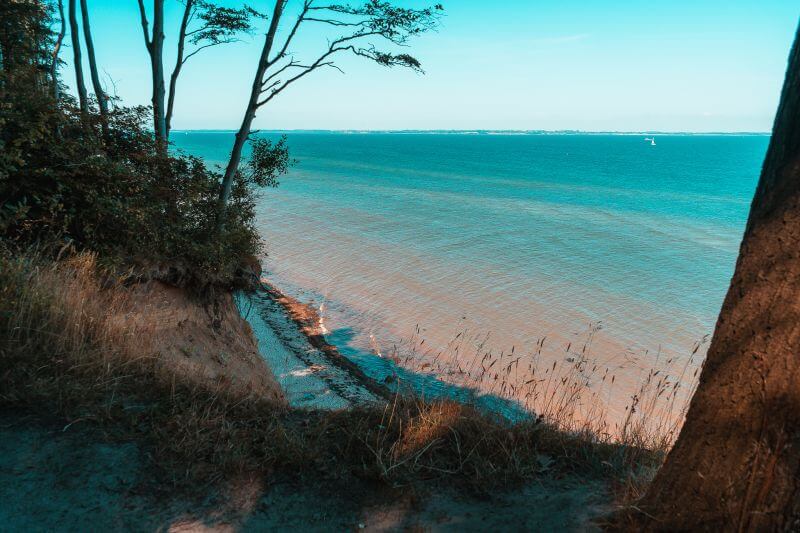
The Schwedeneck area is still quite idyllic. The coastline here is rather rugged, with a few scattered stretches of sandy beach. It’s precisely this variety that makes hiking in the region so interesting. Park at one of the parking lots for €1.50 per 2 hours (e.g., in Stohl) and explore the area on foot.
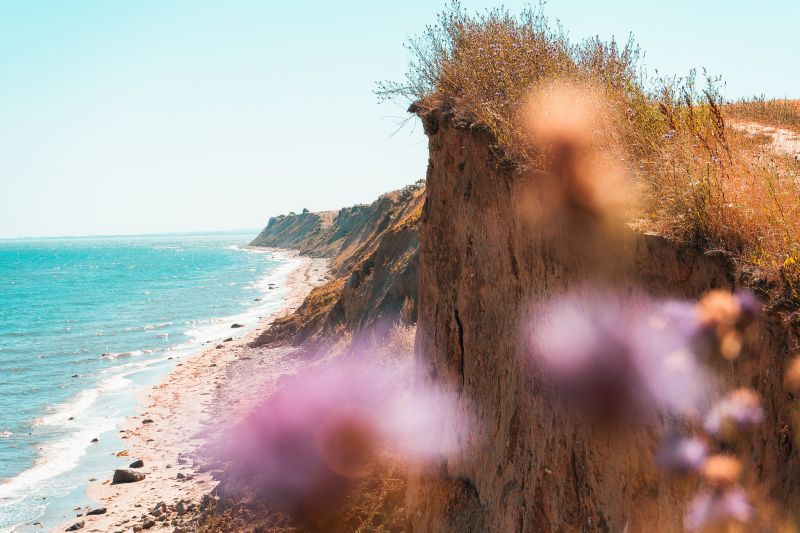
An easy route I can recommend goes from Stohl to Dänisch-Nienhof and back. You can find the route here.
The trail along the cliffs near Schwedeneck reminded me a lot of the high-altitude hiking trail on Rügen.
11. Hohwacht Bay
Hohwacht Bay has a great beach. It’s especially beautiful along the cliffs. While in Hohwacht, be sure to take a walk to the viewing platform, which is nicknamed “Flunder” because of its shape.
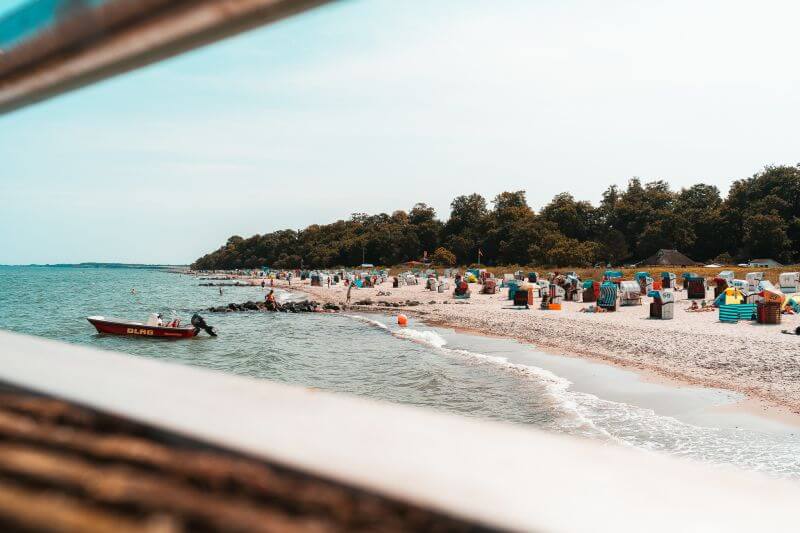
The area around Hohwacht is known as “Holstein Switzerland” because of its rolling hills. The landscape here was shaped by a thick layer of ice. You can learn all about it at the Ice Age Museum in Lütjenburg.
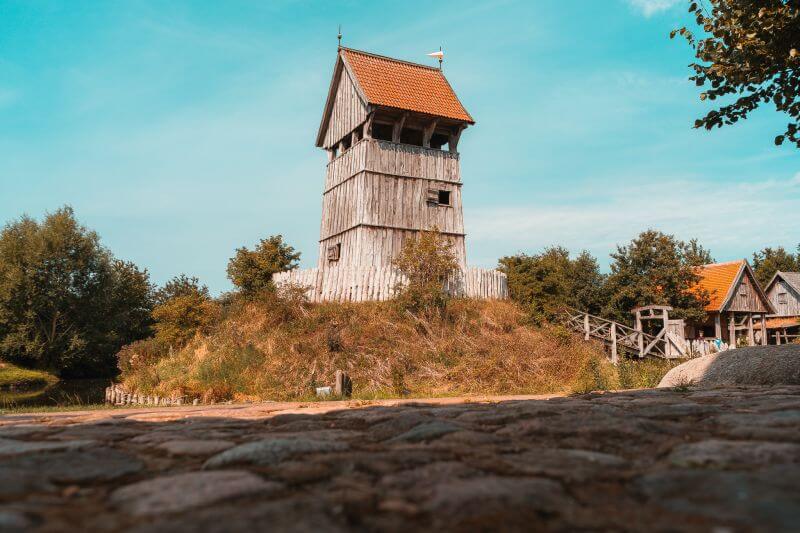
The medieval village in Lütjenburg is also worth a visit. Here, buildings from the Middle Ages have been faithfully reconstructed, and the result is truly impressive. You can really get a sense of how people lived over 1,000 years ago.
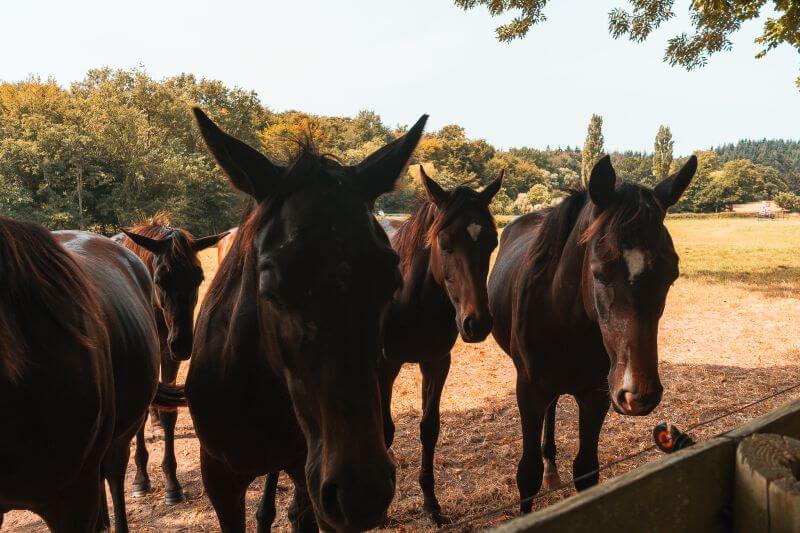
The idyllic Panker Estate, situated on the lake and featuring a castle, is also a great place to visit. There are several small shops and galleries here. The estate is particularly well-known for its horse breeding.
12. Fehmarn
Fehmarn is a great vacation destination for families. As a result, many accommodations here book up quickly, especially during the school holidays. You should therefore make your arrangements well in advance. Book a hotel or vacation rental early.
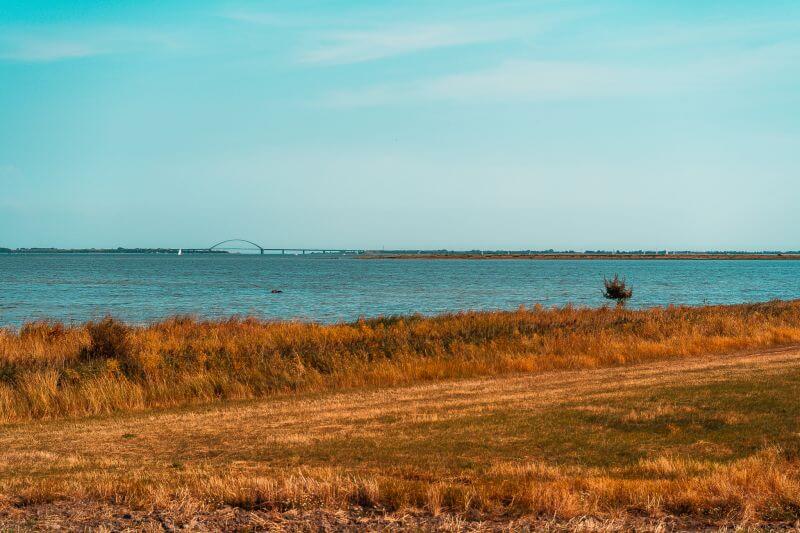
Personally, I found the island almost a bit too touristy. The best thing to do in Fehmarn is probably to explore the island’s beautiful nature by bike. You can find more information here.
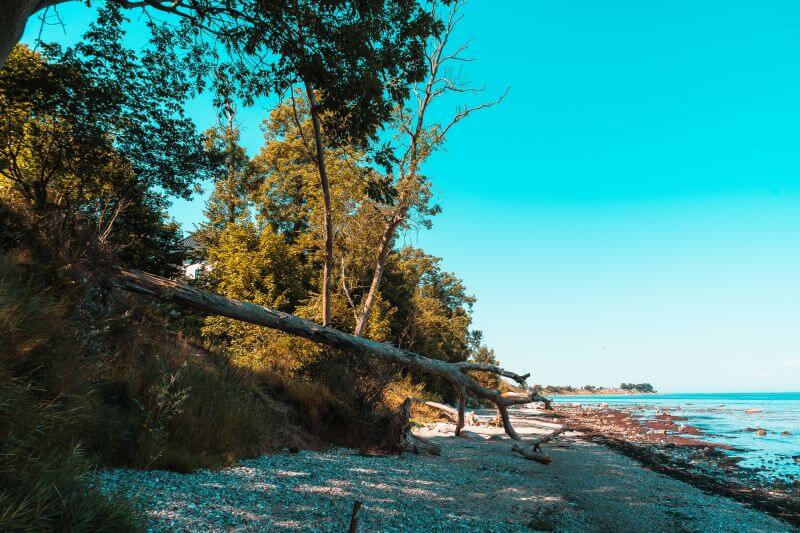
I found the most beautiful beach on Fehmarn along the cliffs on the eastern side of the island. Behind the rocky natural beach, shady trees stretch toward the sea. Some of them have fallen over onto the beach. There’s a hint of the Caribbean in the air. In addition to the many rocky areas, there are also sandy spots where a few sunbathers are lounging. For the most part, however, this stretch of coastline is empty and quiet.
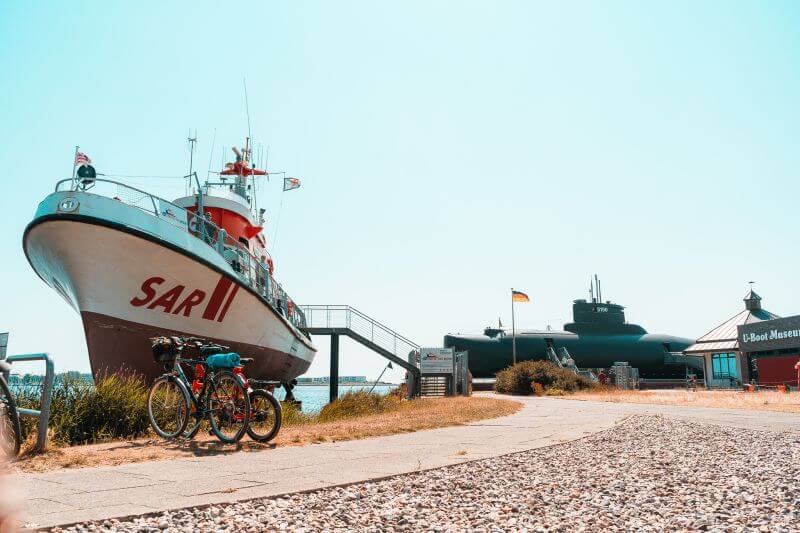
Even in bad weather, Fehmarn has plenty to offer, such as the Maritime Museum. Or head to the restaurant “Zum goldenen Anker” and order some authentic Labskaus.
Impressions of the North Sea and Baltic Sea from Schleswig-Holstein
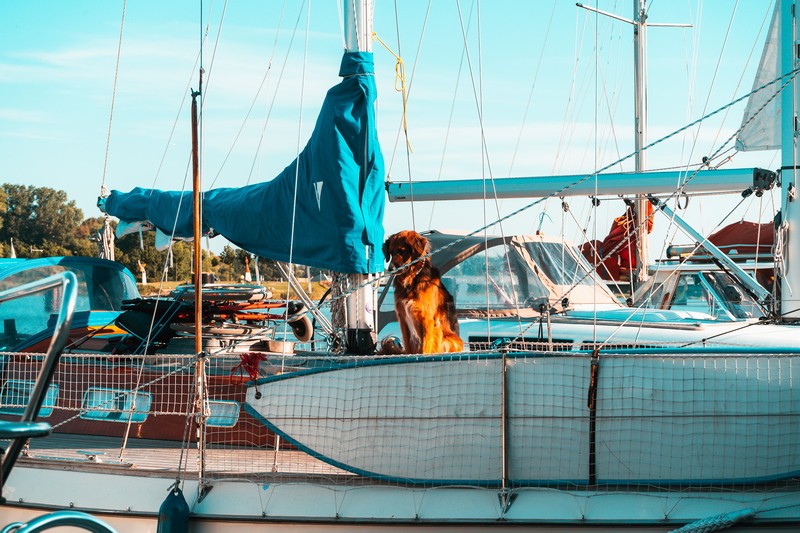
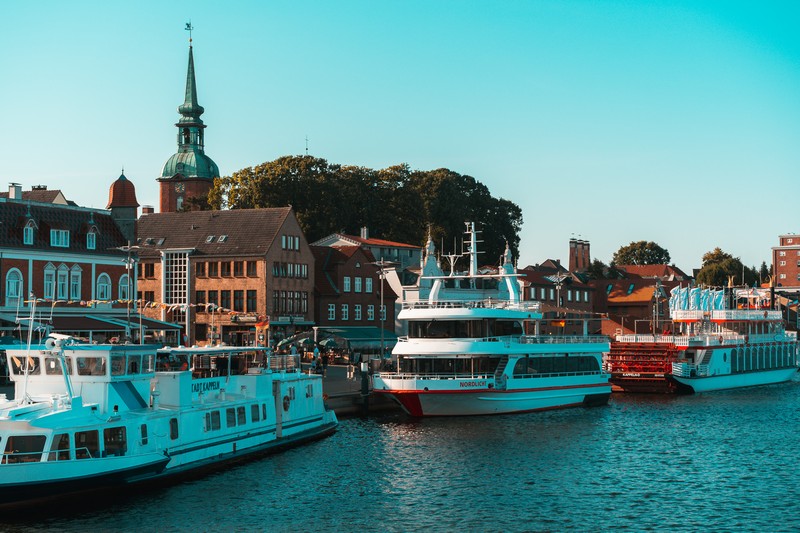
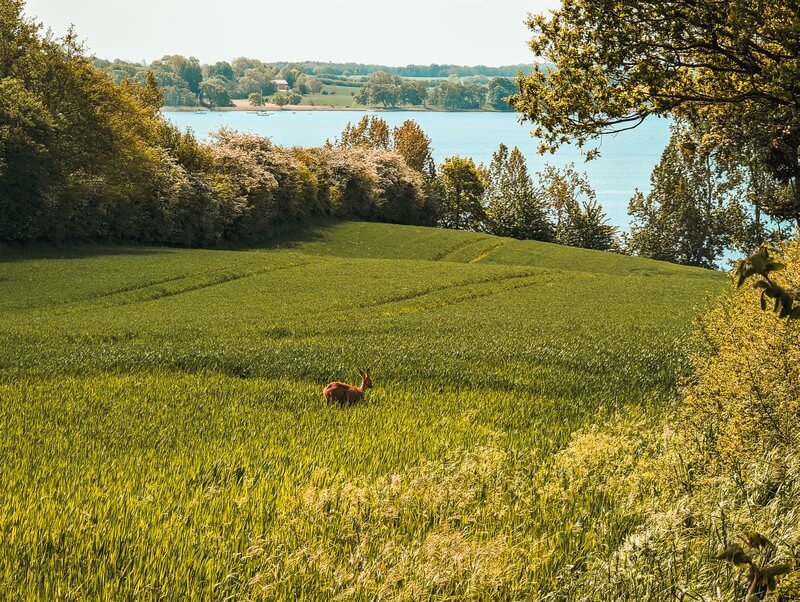
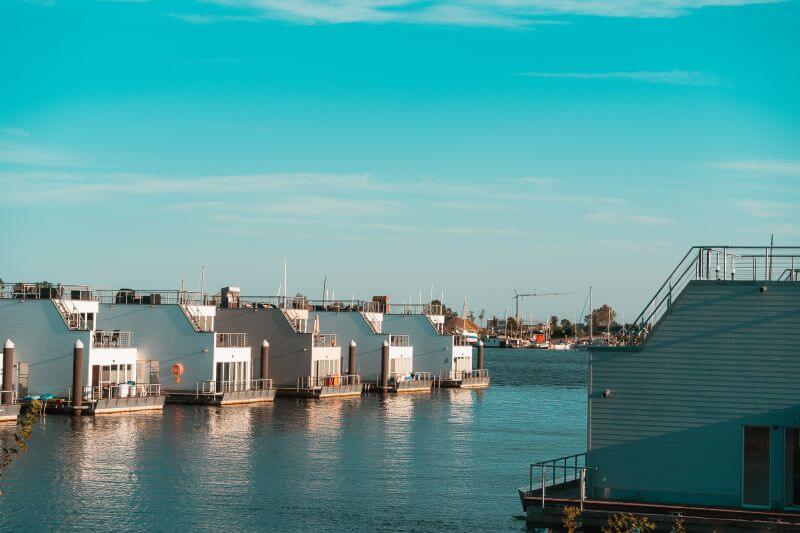
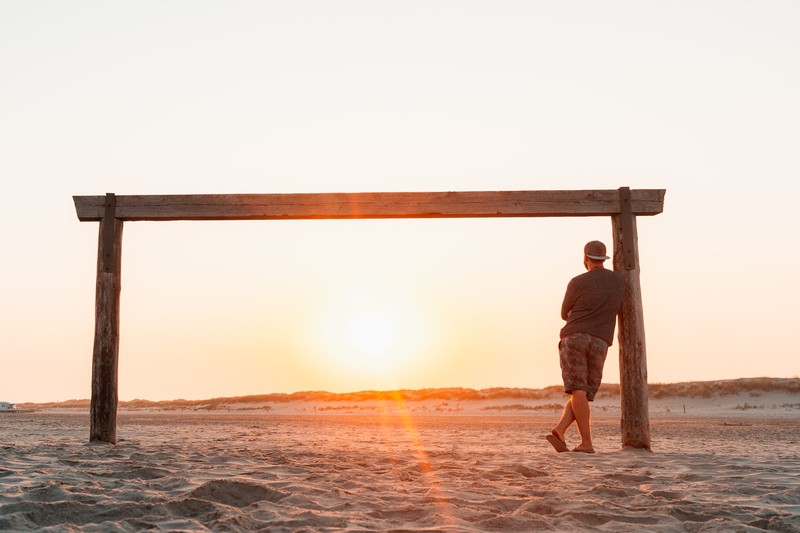
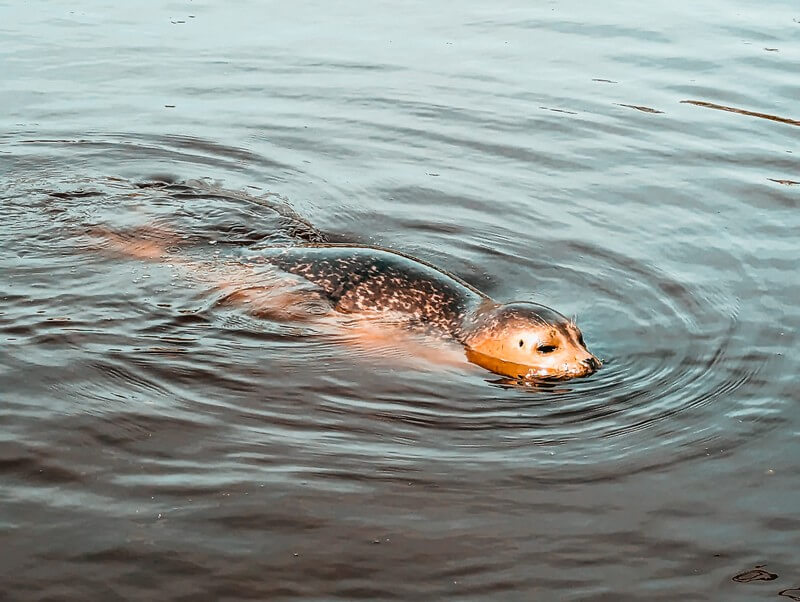
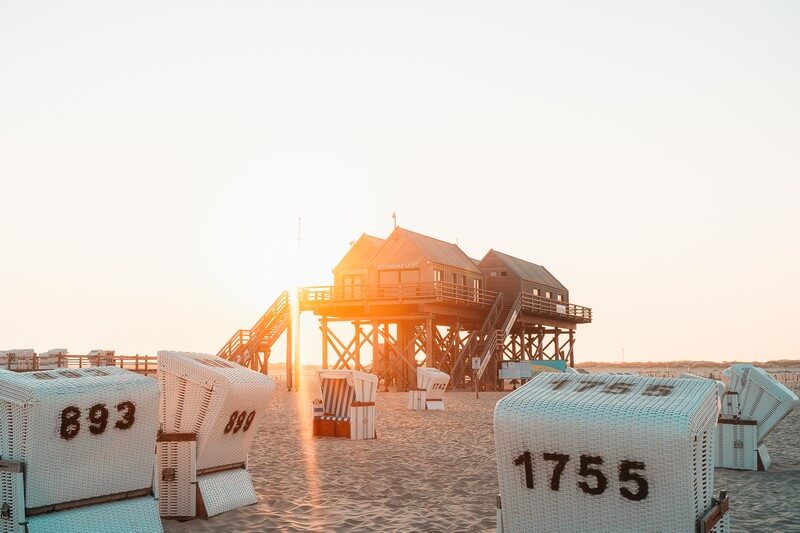
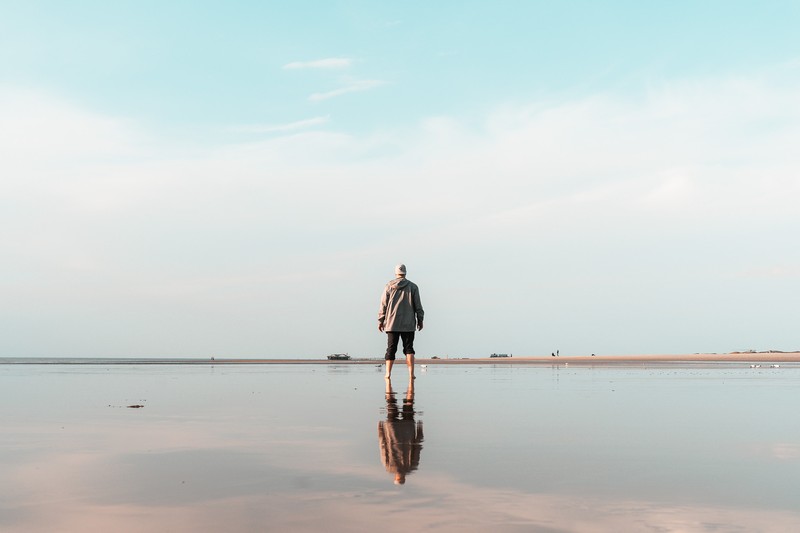
As you can see, both the North Sea and the Baltic Sea offer plenty of great places to explore. Which spot in Schleswig-Holstein should you definitely check out? I’d love to hear your thoughts.
Tools & services I recommend for your trip:*
📶 Flexible and affordable mobile Internet worldwide
🚁 My drone for aerial photography
🚗 Find and compare cheap rental cars
🎟 Find and book cool activities
🔒 Secure Internet connection with NordVPN
*Note: These links are affiliate links. If you book through them, I will receive a small commission without it being more expensive for you. A purchase from you via these links helps me to continue offering free content without annoying ads on this website. Thank you for your support! I really appreciate it!