

📝 About the Author: Matthias


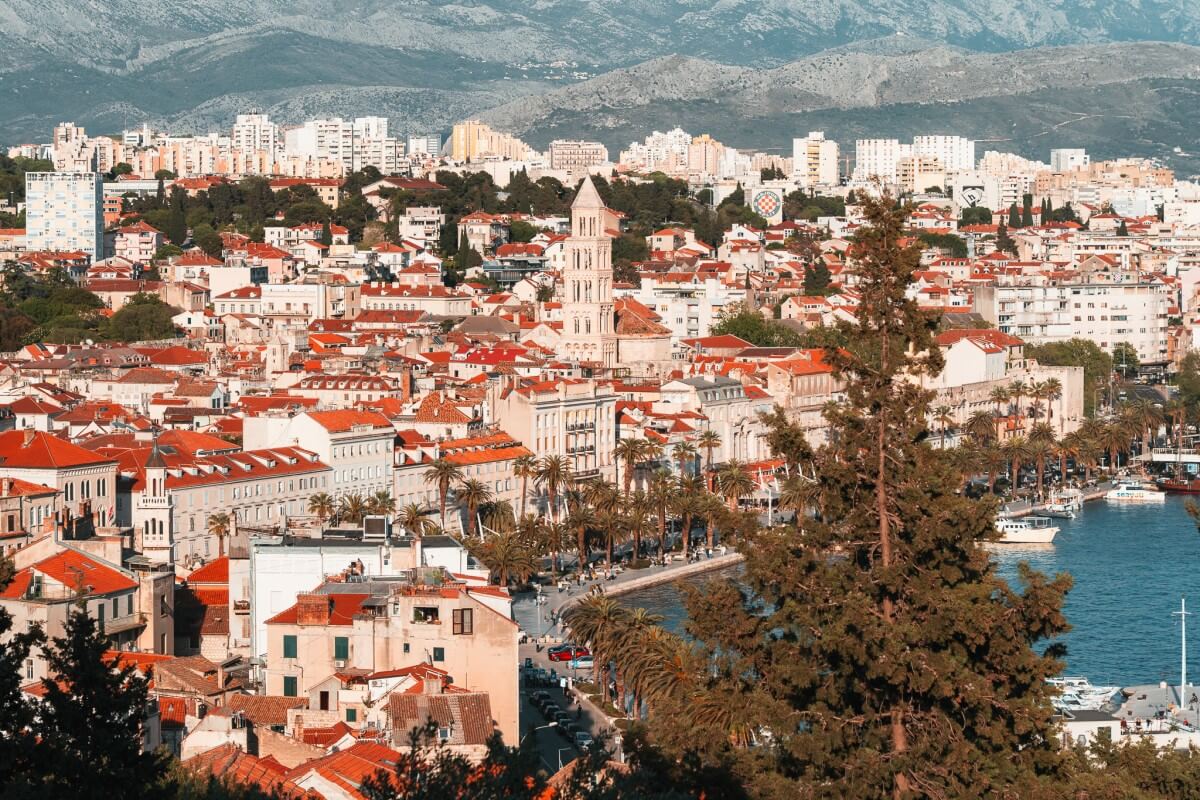
Croatia’s second-largest city, with its fantastic location on the Mediterranean and its winding old town, is perfect for a city getaway where you can explore everything in just one full day. In addition to the famous Diocletian’s Palace, there are plenty of other historical secrets to discover. You’ll find all the highlights and hidden gems you shouldn’t miss in Split in this article.
- ⭐⭐⭐⭐ Akademis Fit Split 9.3 Booking – Modern, with parking, about a 15-minute walk to the first attractions
- Blue Lagoon & 3 Islands by Speedboat – Premium Boat Tour from Split
- Excursion to the Krka Waterfalls – Day trip with boat ride and swimming
- What & Where: Croatia’s second-largest city (approx. 160,000 residents) in Dalmatia on the Adriatic Sea; Old Town located within the Roman Diocletian’s Palace, a UNESCO World Heritage Site since 1979.
- How long to stay? Old Town highlights in 1 full day; ideally 1–2 nights near the Old Town, allowing more time for boat tours or Krka National Park.
- What should you know? Most of the palace is free; the cathedral, bell tower, crypt, Temple of Jupiter, and treasury require a ticket (“Purple Ticket” for everything, approx. 1–1.5 hours); Museums: €5–7 admission; fish market daily approx. 6:30 a.m.–2:00 p.m.
- Getting around: The Old Town, Riva, and Marjan Hill are all within walking distance; free parking is usually only available outside the Old Town if you’re driving.
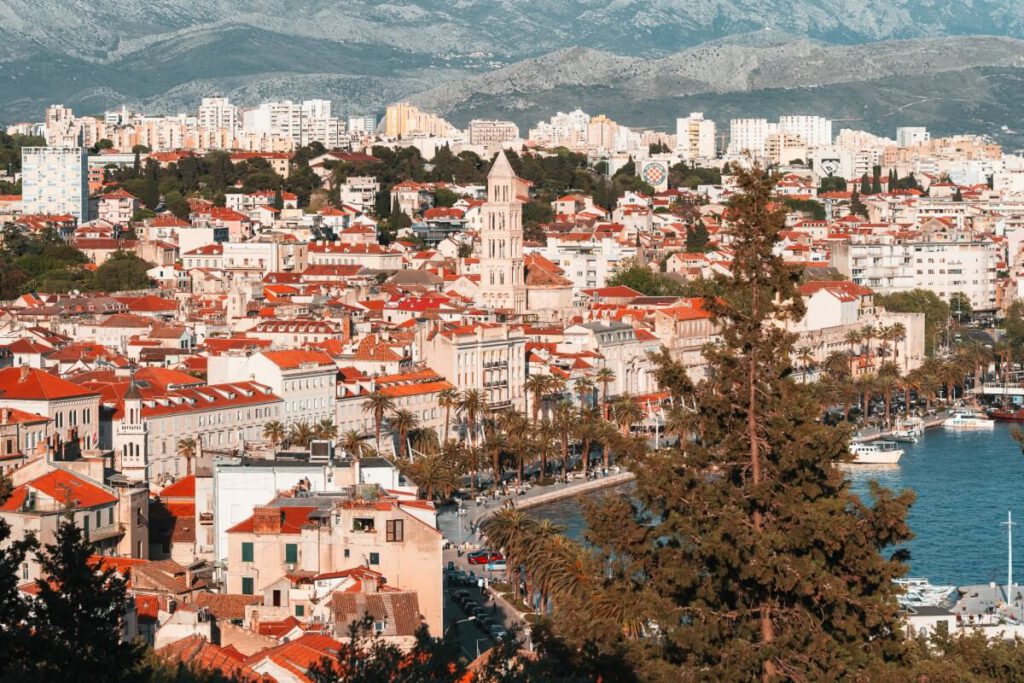
Located in Dalmatia, Split is Croatia’s second-largest city with a population of about 160,000, but its main attractions are so centrally located in and around the Old Town that you can explore all the tourist highlights in just one day. It’s especially fun here to simply stroll through the winding alleys and discover Split’s historical secrets on your own.
You can also find all the Split attractions mentioned in this article here on the map:
You are currently viewing a placeholder content from Google Maps. To access the actual content, click the button below. Please note that doing so will share data with third-party providers.
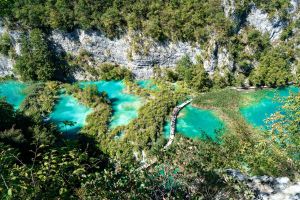
More InformationIf you have more time, a boat tour or a day trip to one of the region’s famous national parks – such as Krka National Park – is also well worth it:
- Split: Blue Lagoon & 3 Islands – Premium Speedboat Tour
- Split: Nighttime boat party with a DJ, free shots, and an after-party
- Split: Day Trip to the Krka Waterfalls with a Boat Ride and Swimming
It’s best to find a hotel for one or two nights, as close as possible to the Old Town, so that you can start exploring the city right after breakfast in the morning.
Accommodations in Split
If you’re traveling by car and need a free parking spot, your options are usually limited to areas outside the Old Town. I stayed at the Akademis Fit Split. It has a parking lot, is quite modern, and it’s only about a 15-minute walk to the nearest sights.
1. Diocletian’s Palace
If you’re in Split, a visit to Diocletian’s Palace is practically a must. The Roman Emperor Diocletian had this massive complex – covering about 30,000 square meters – built right on the waterfront around the year 300 AD in a record time of just ten years. It was intended to be his retirement home.
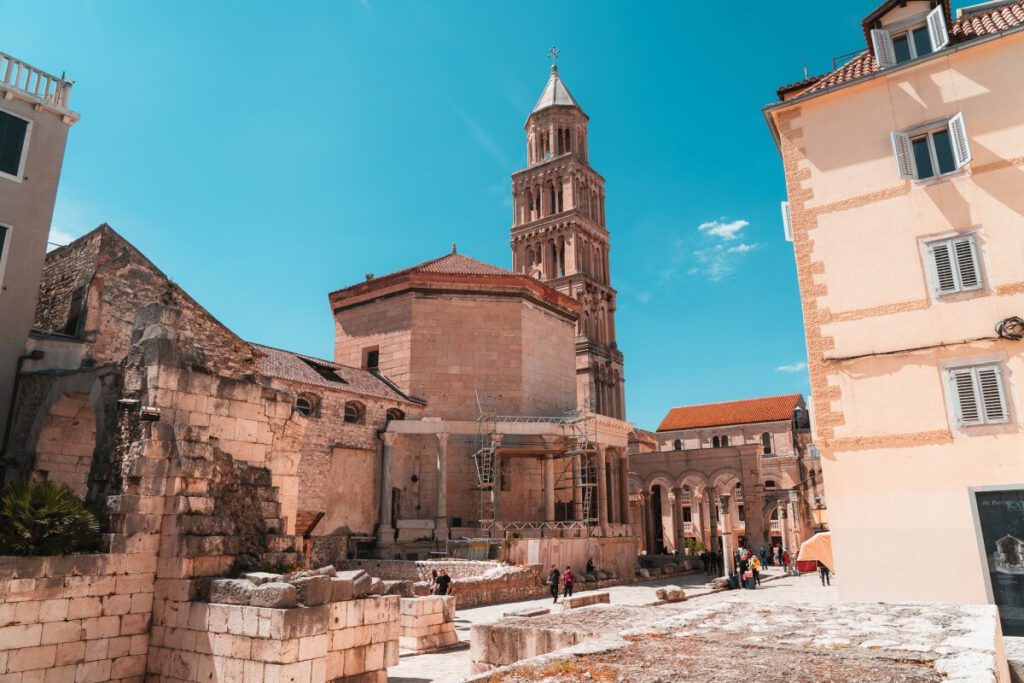
Today, many parts of the palace are ordinary businesses or residential buildings where people live. As a result, the palace feels like an open-air museum. This unique interplay – the fact that an ancient imperial structure is now a vibrant, inhabited neighborhood – was one of the reasons why UNESCO designated Split’s Old Town a World Heritage Site in 1979.
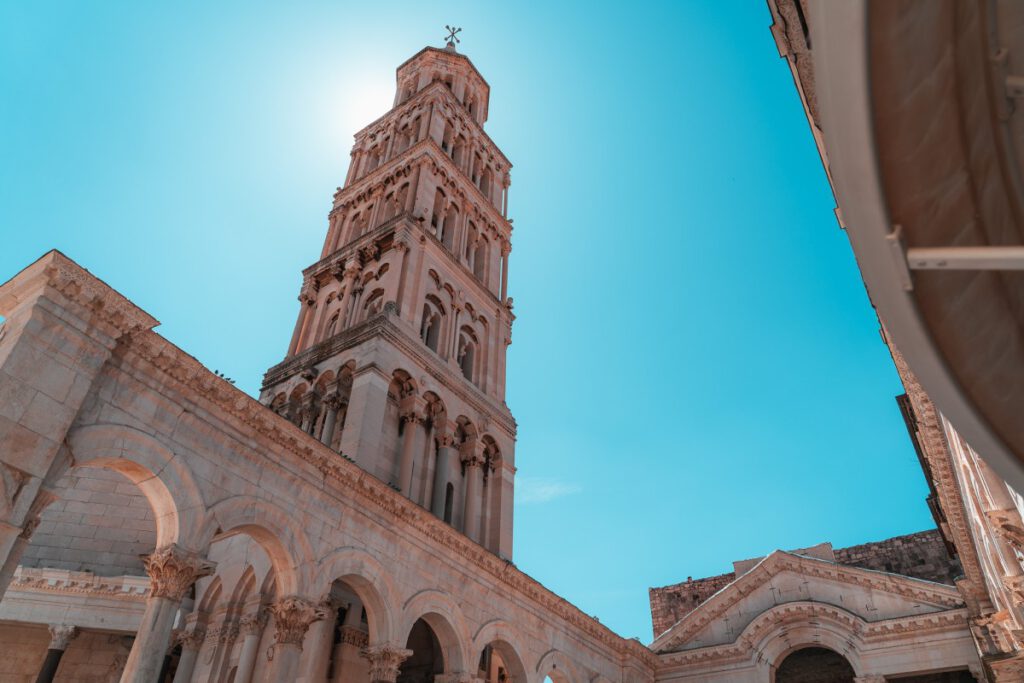
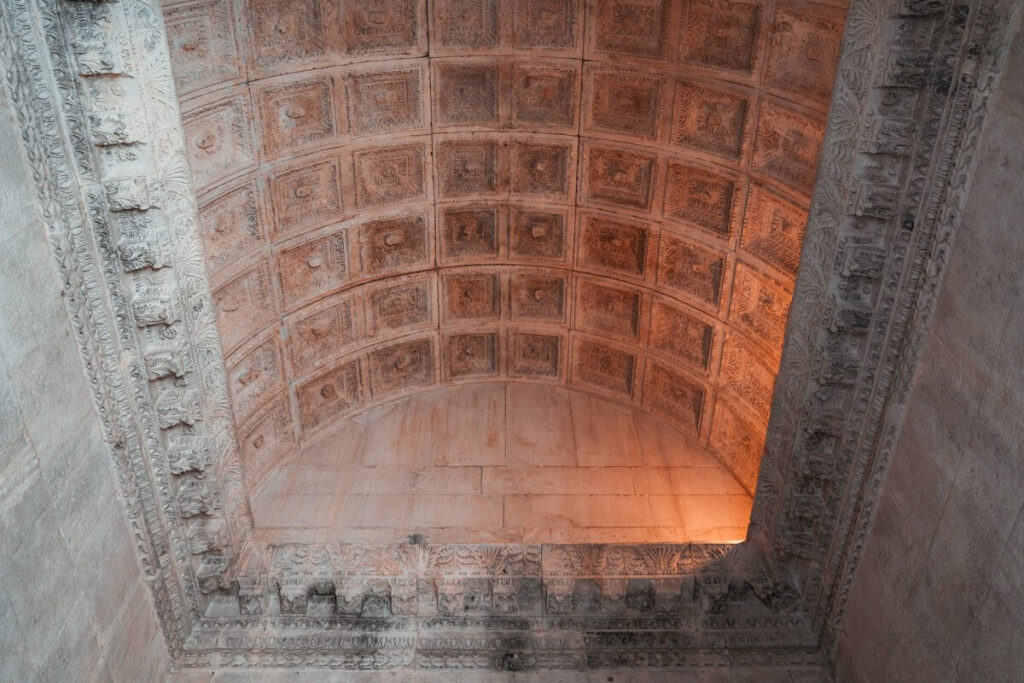
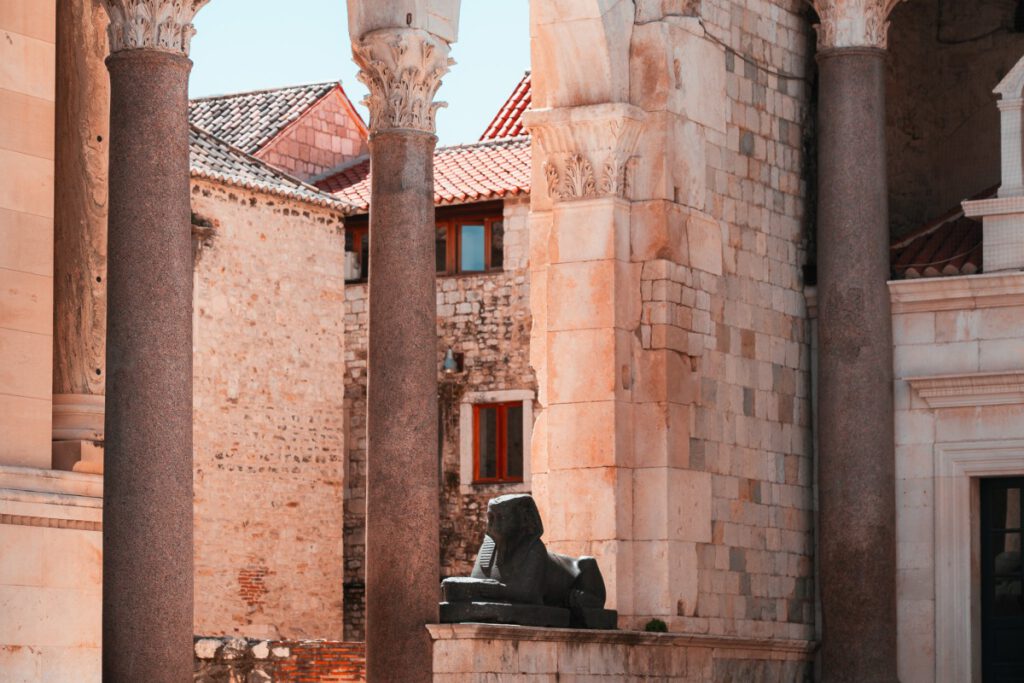
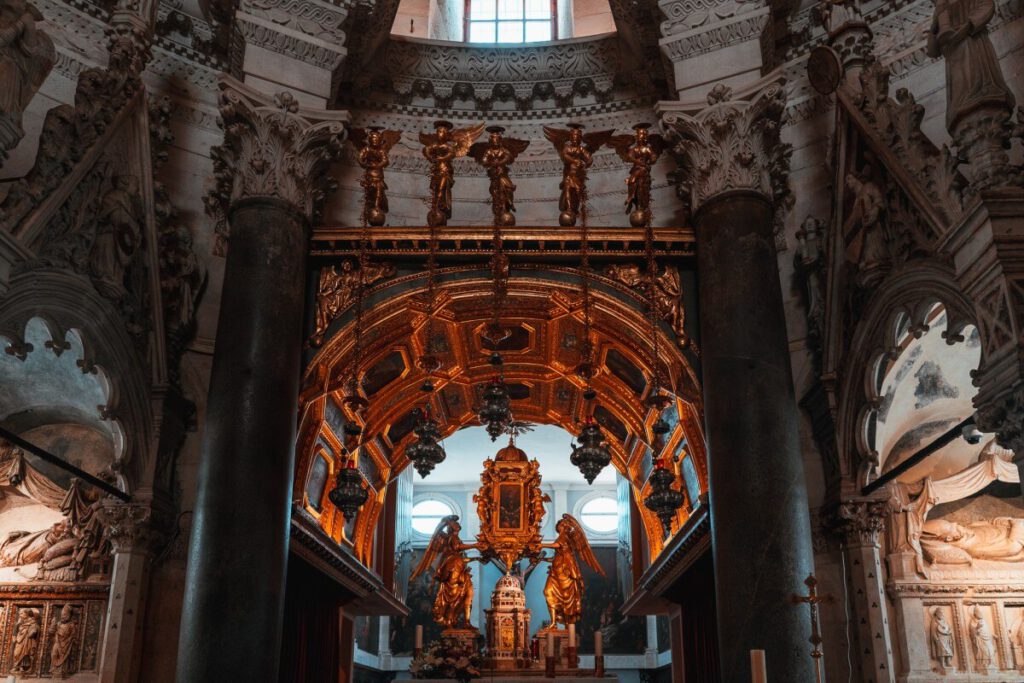
The centerpiece is Peristil Square, surrounded by monumental colonnades. From here, various paths lead to the individual ruins of the palace. You can visit most of them for free. Admission is charged only for the following areas:
- Cathedral
- Bell Tower
- Crypt
- Temple of Jupiter
- Treasury
It’s actually quite simple. Go to the ticket office in the central square and choose one of the different-colored tickets, which cover all admission options. With the “Purple Ticket,” you can see everything. It takes about 1 to 1.5 hours to explore all the paid areas.
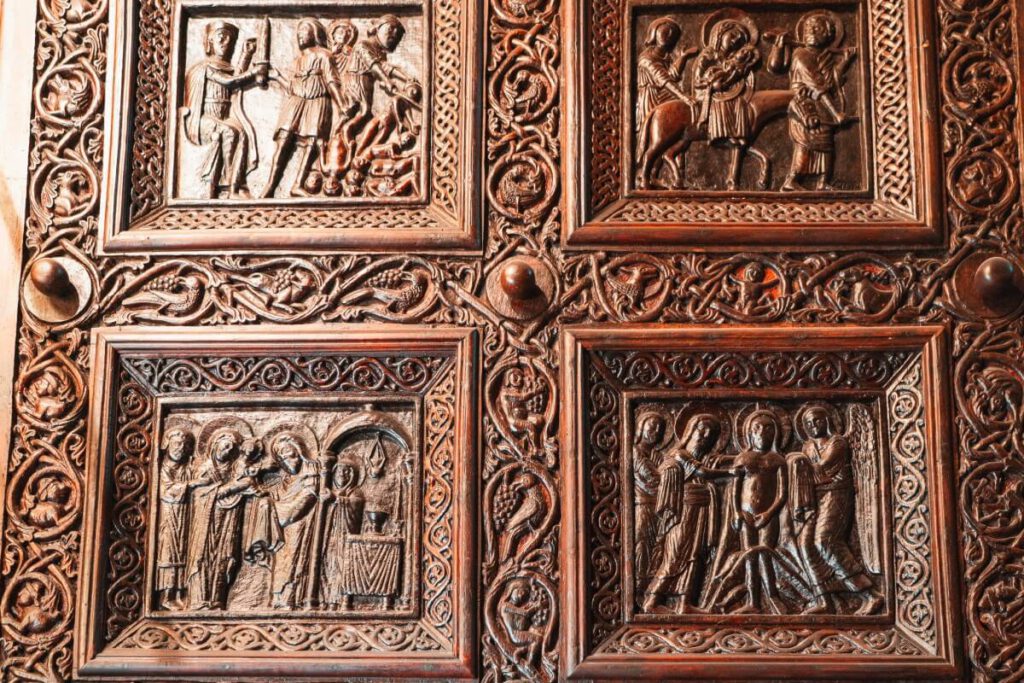
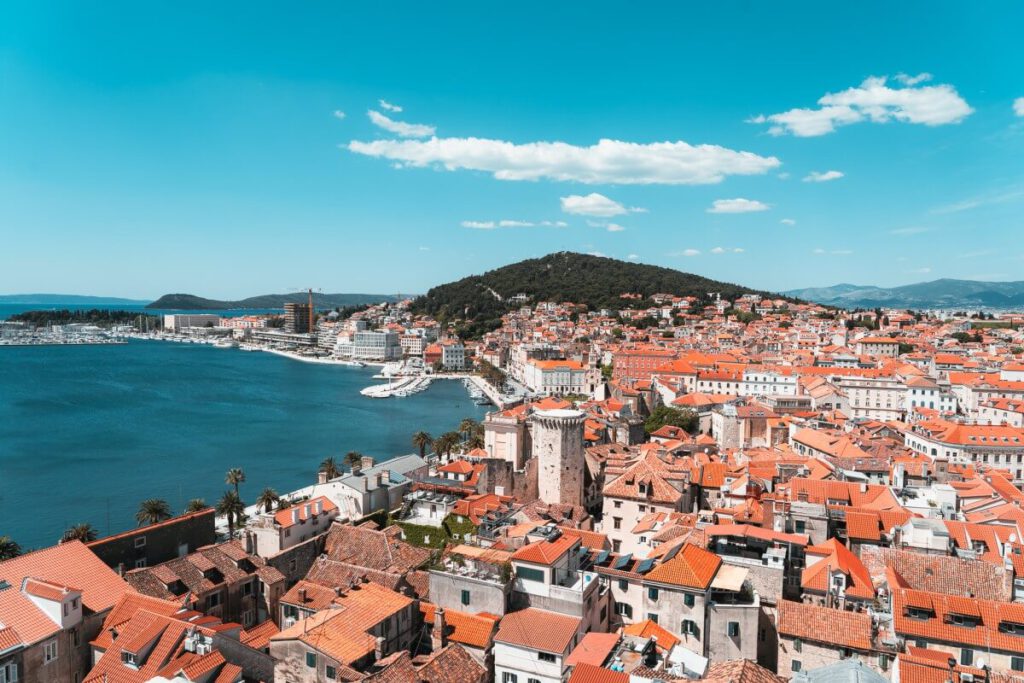
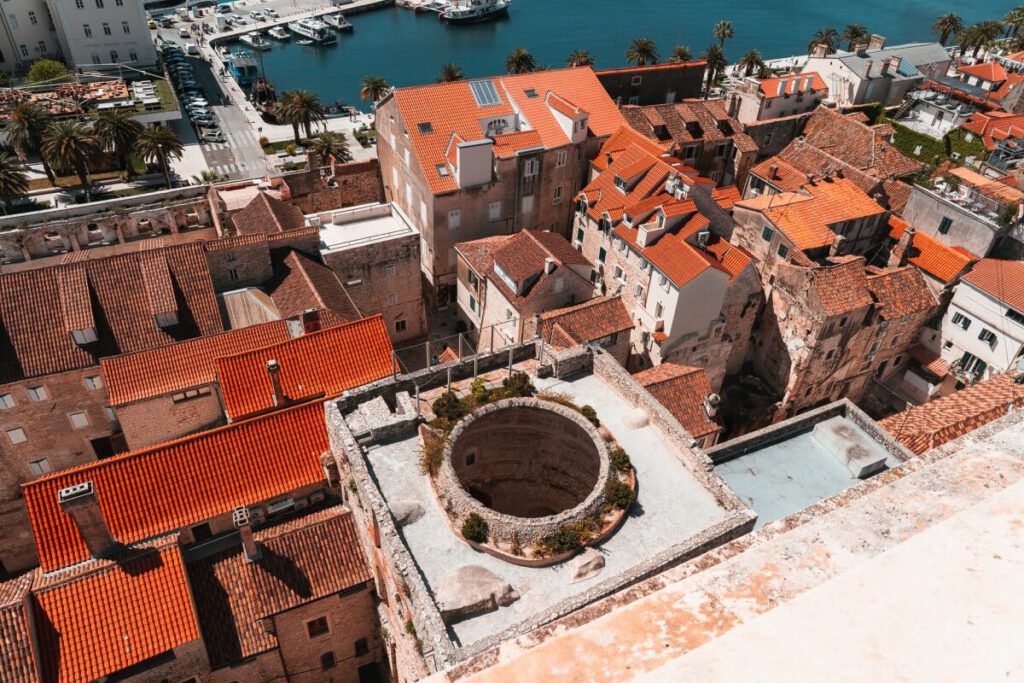
Be sure to also head toward the Vestibule with its open dome. It is the former entrance hall of Diocletian’s Palace, and you can enter it for free. These days, there are small concerts almost every day featuring local music groups performing Dalmatian klapa singing.
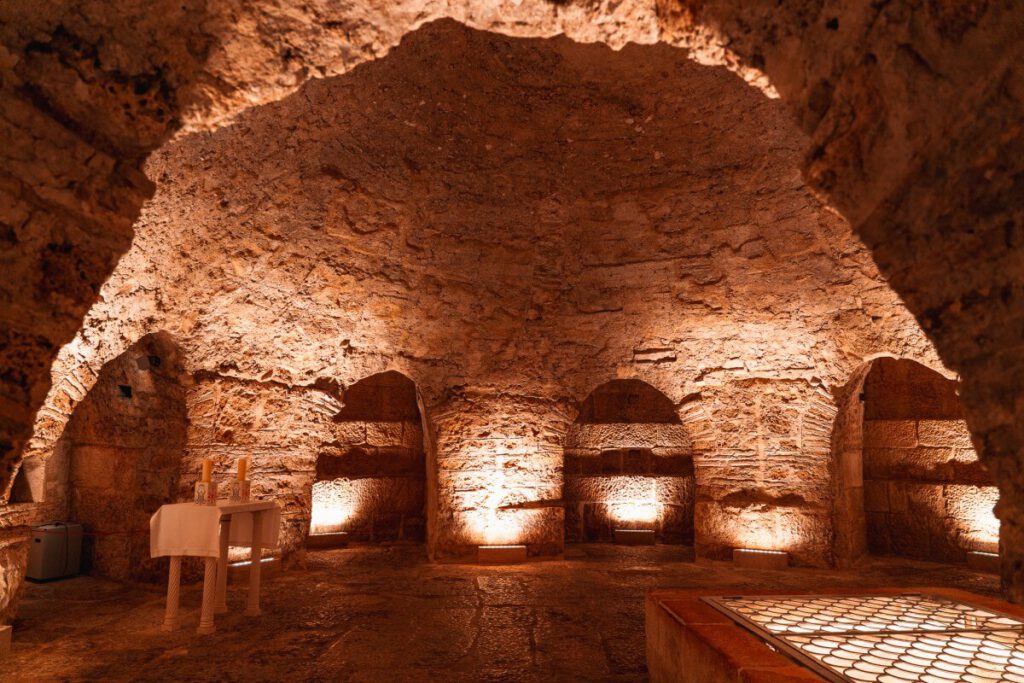
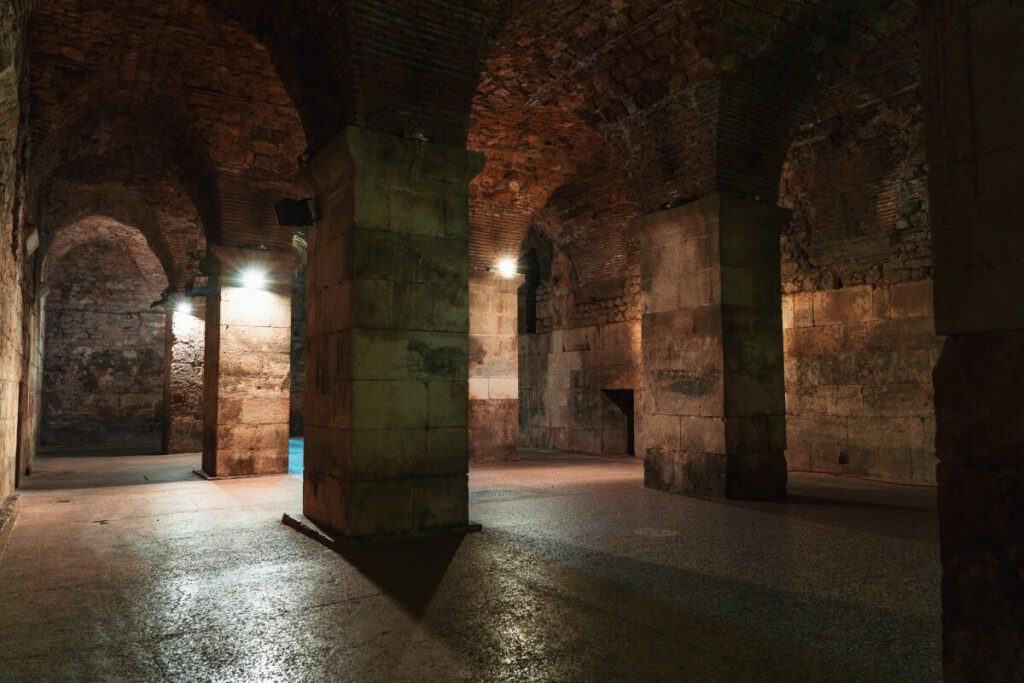
Beneath the entrance hall lies another fascinating part of the palace that’s open to the public: the Diocletian Cellars (Podrumi) – a massive, vaulted underground structure. You’ll often find souvenir stands here, unless the area is undergoing renovations. Scenes from *Game of Thrones* were also filmed here (the dragon catacombs in the Pyramids of Meereen).
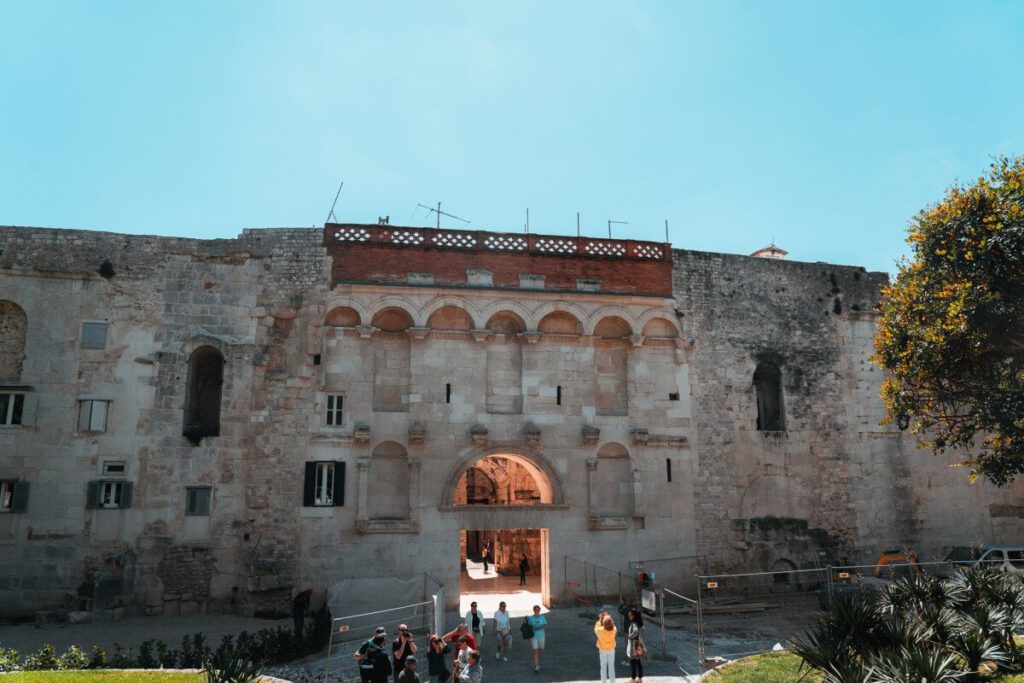
2. Golden Gate (Porta Aurea)
The Golden Gate is located in the center of the northern palace wall. It was built in the early 4th century as the main gate of Diocletian’s Palace – the road to Salona led from here. However, it did not receive its name until the Renaissance: All four gates are named after metals, and the most important one was given the most precious name. A lovely coincidence: in the evening, the gate glows a beautiful golden yellow in the sunlight.
3. St. Martin’s Small Franciscan Church
Right above the Golden Gate is what might be the narrowest church you’ve ever seen.
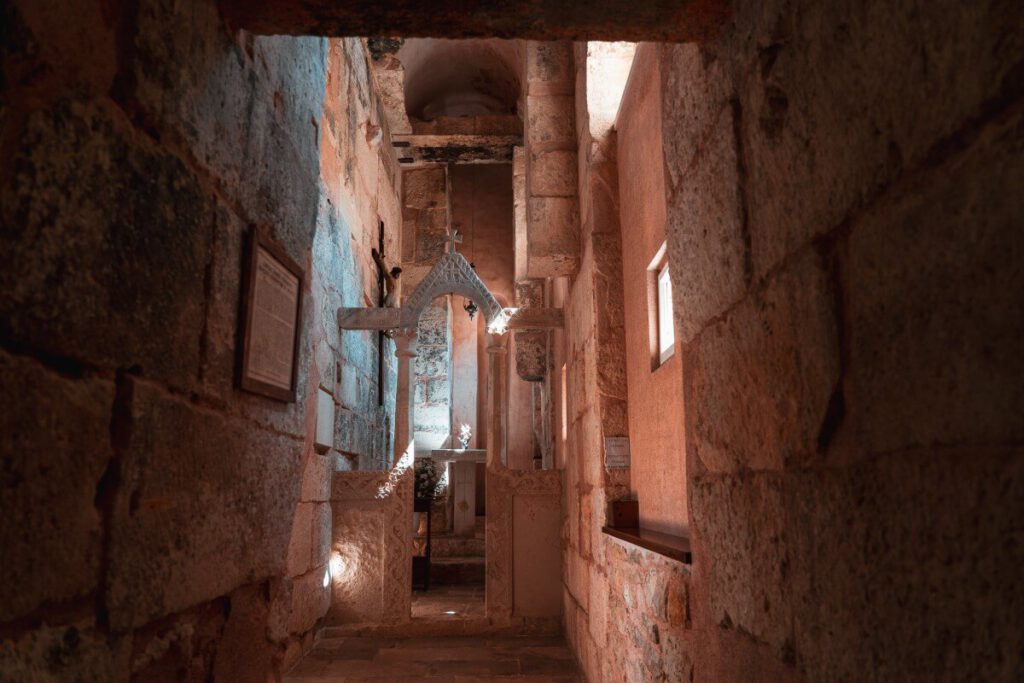
In the 6th century, small churches were built above all four gates. The one at the Golden Gate is dedicated to Saint Martin and occupies a narrow corridor measuring 1.64 × 10 meters, which served as a guard walkway in Diocletian’s time. Right next to the inner courtyard, there is a small staircase leading to the chapel. A nun is usually seated at the entrance. For a small donation, you may also enter the church.
4. Statue of Gregor of Nin
Right next to the Golden Gate stands Ivan Meštrović’s 7.58-meter-tall bronze statue depicting the Bishop of Nin. Visitors come here to rub its feet and make a wish.
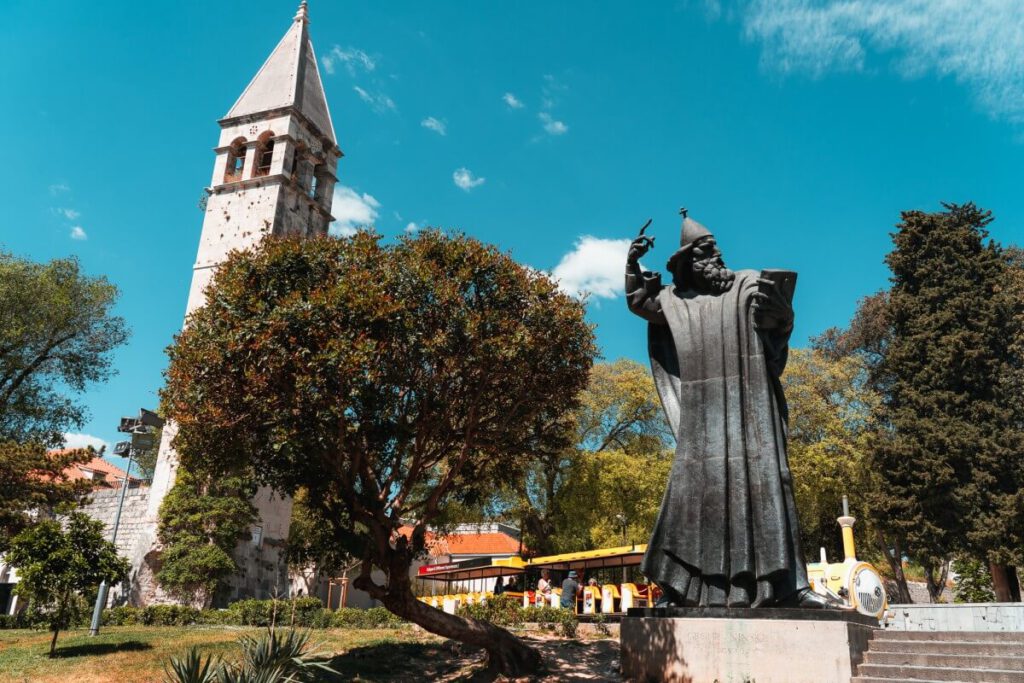
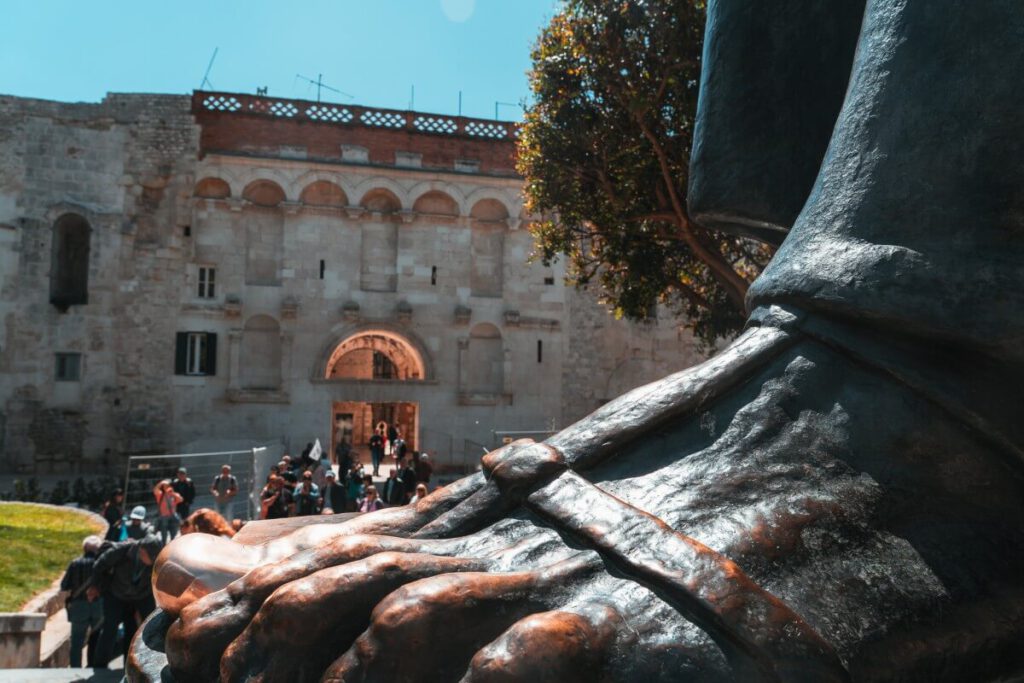
I really enjoyed sitting here in the shade next to the statue in Strossmayer Park and watching the hustle and bustle on the square.
5. Spar supermarket in a historic palace
In the 15th century, the Papalić patrician family built a palace on the site of an original Romanesque palace dating from the late 13th century. Today, these historic rooms of the small Papalić Palace house a Spar supermarket, where you can shop among 500-year-old columns and walls.
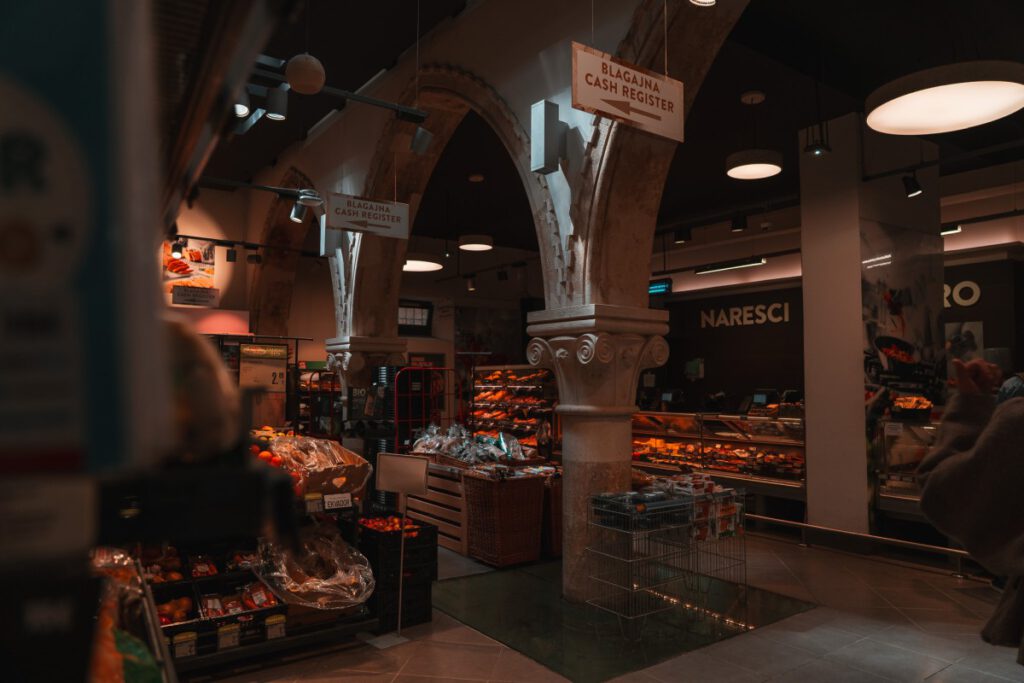
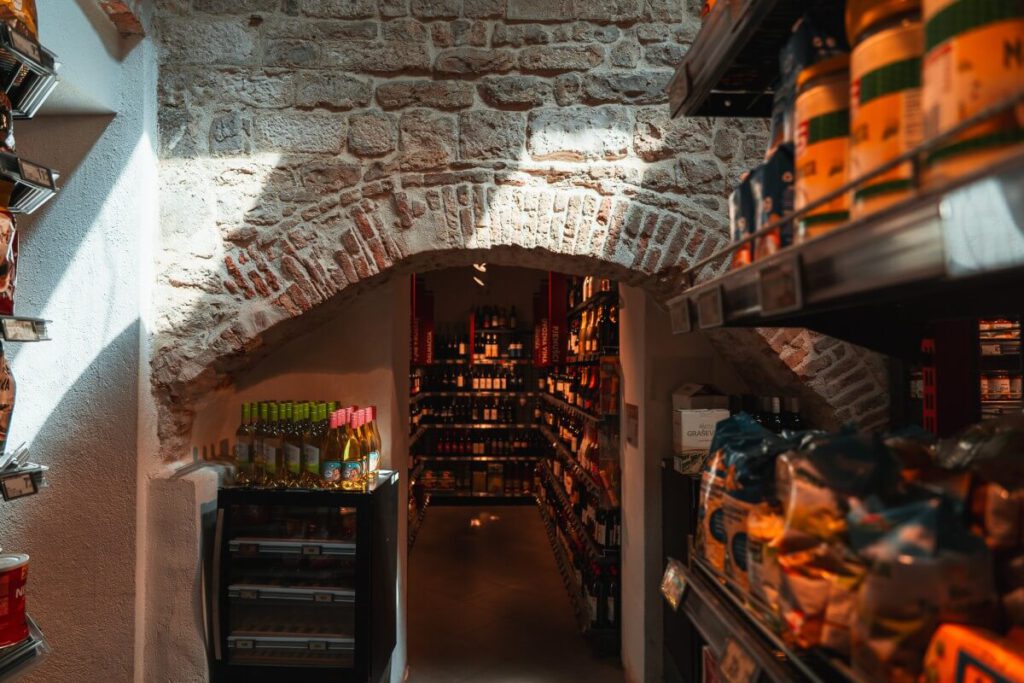
In some places, there are even glass floors in the sales area, through which you can see the old stone floor below. That’s why you could say this offers a truly unique shopping experience.
6. Split City Museum
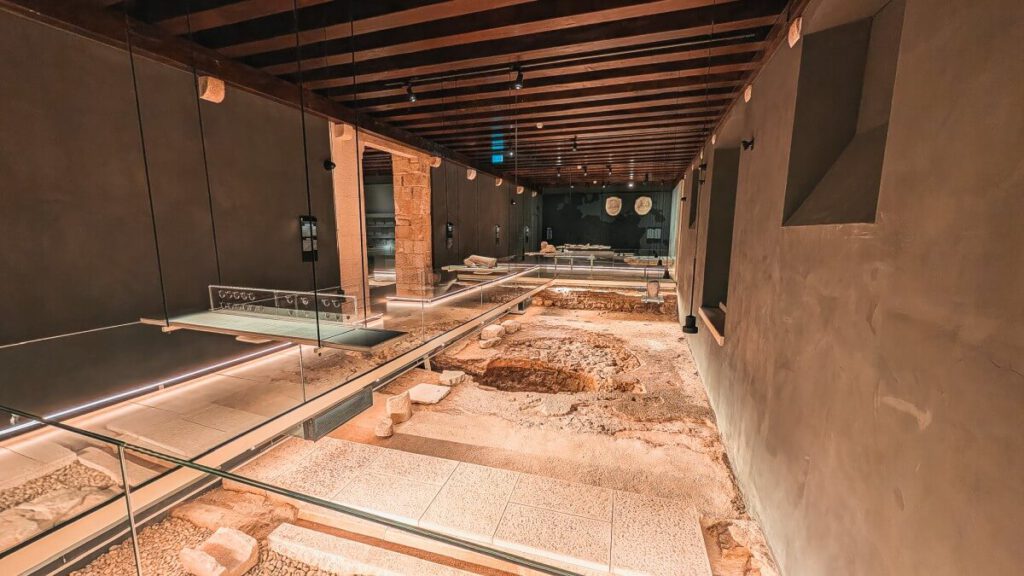
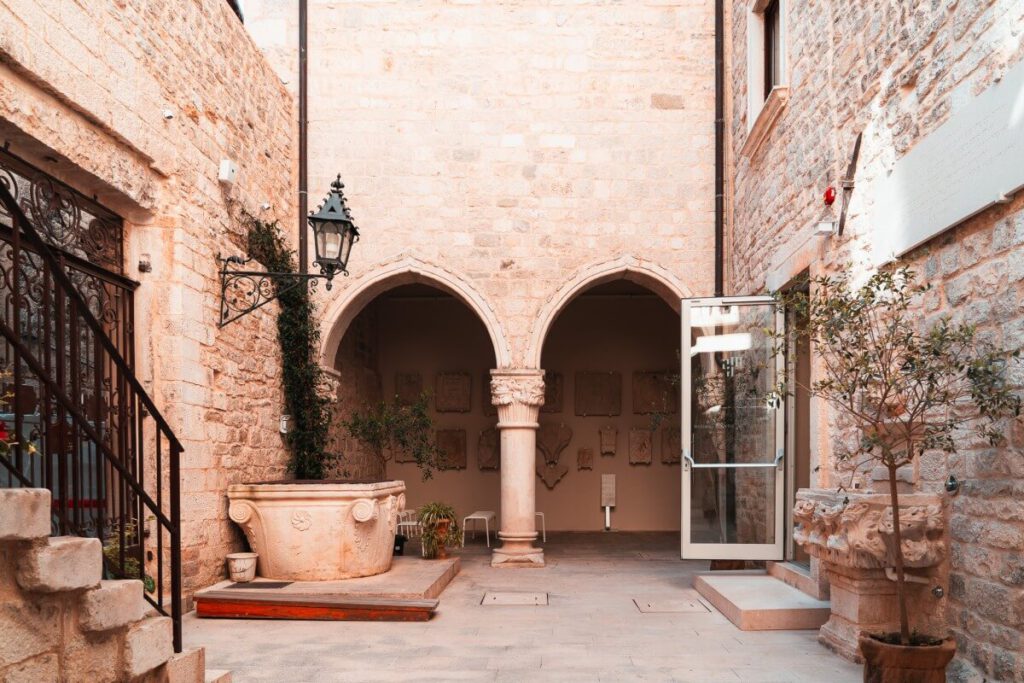
The Split City Museum is located in the grand Papalić Palace, a 15th-century Gothic noble palace. Spanning three floors, the museum offers a wealth of information about Split’s history, and on the renovated ground floor, you can marvel at ancient remains from the time of Diocletian’s Palace, built around 300 AD, when Emperor Diocletian ruled here. You’ll also learn which regions the Roman Empire encompassed at that time.
7. Museum of Fine Arts
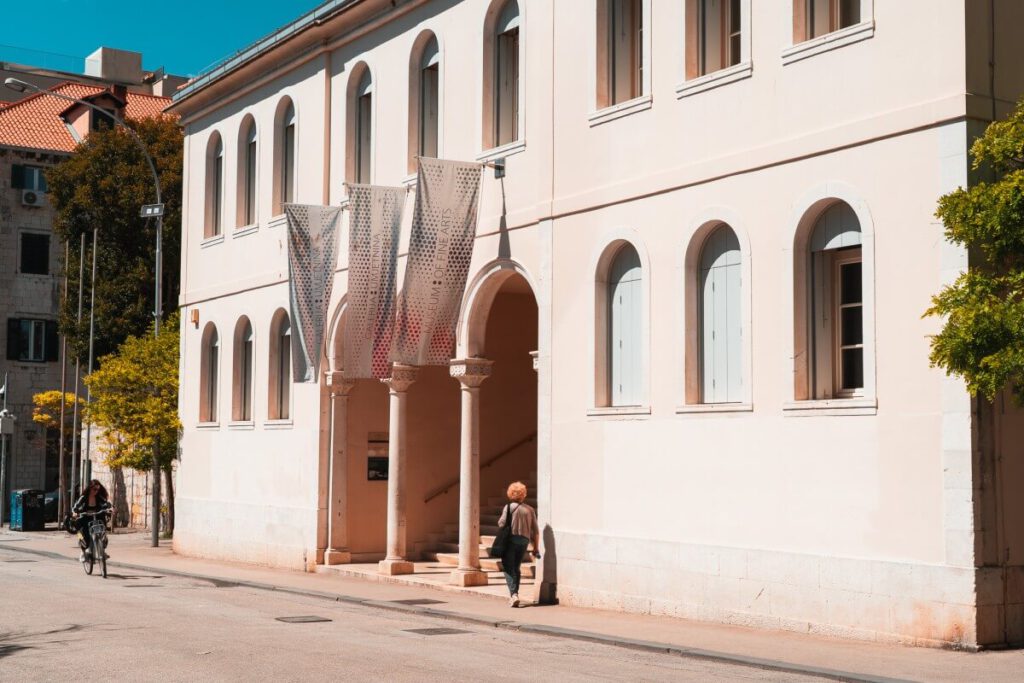
The Museum of Fine Arts features Croatian and European works from the 14th century to the present. Admission is €5, and the museum hosts regularly changing special exhibitions.
8. Split Ethnographic Museum
At this museum, you’ll gain a fascinating insight into the lives of the Dalmatians in centuries past. Here, you’ll discover traditional costumes, textiles, jewelry, handicrafts, and the everyday culture of Dalmatia. It’s located right behind the vestibule, and admission is €7.
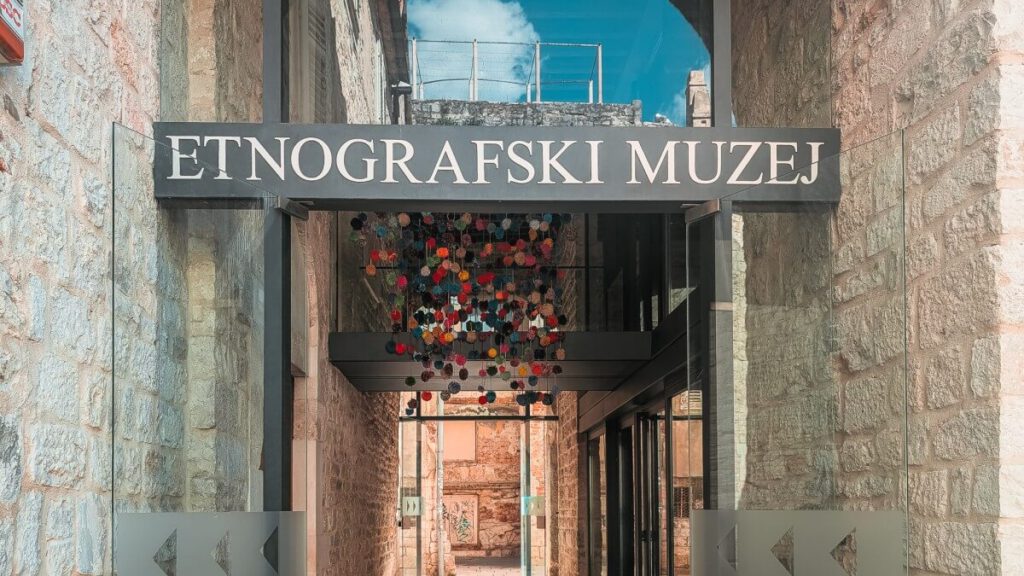
9. Republic Square
Republic Square, with its magnificent arcades, is one of the most beautiful squares in Split. The square opens to the south, offering a view of the harbor and the Riva.
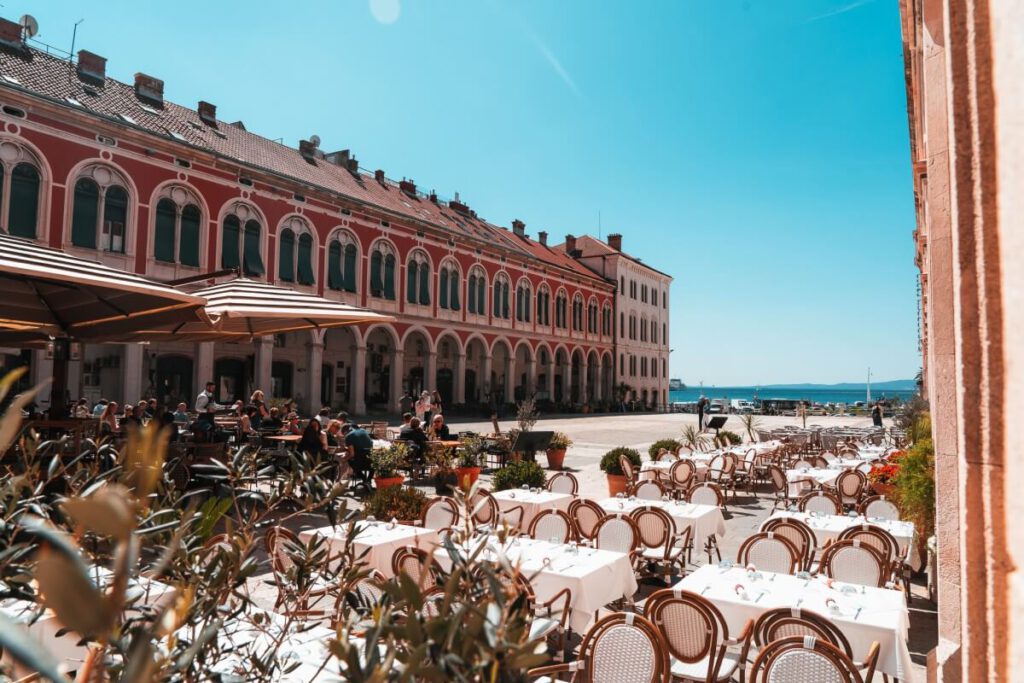
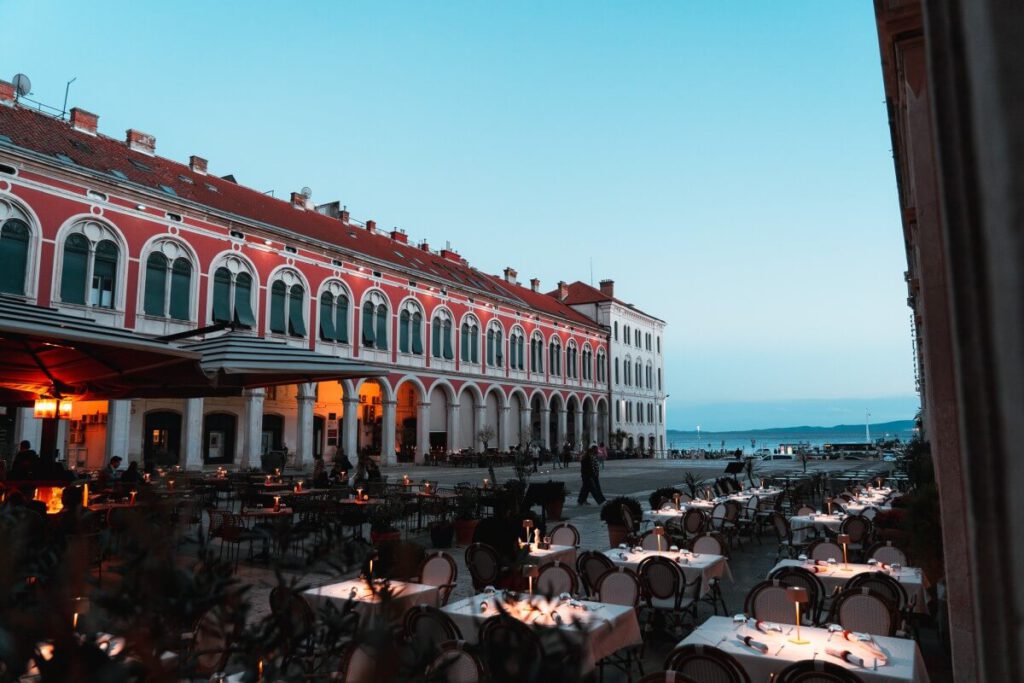
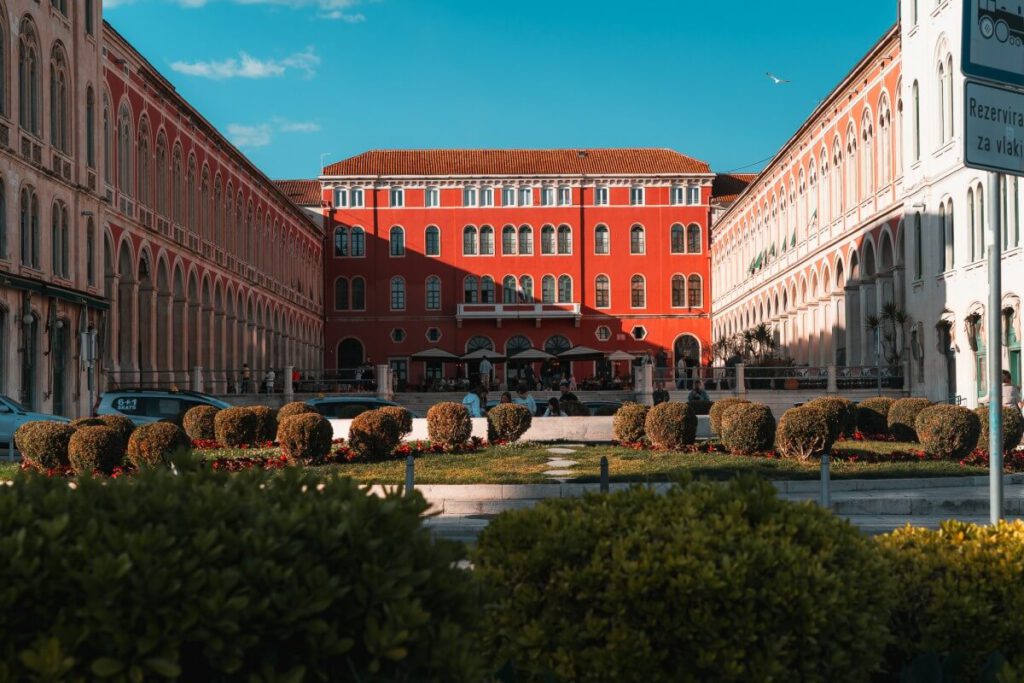
There are plenty of restaurants and cafés here where you can enjoy the view while having a cup of coffee or a meal.
10. The Markets of Split
There are two markets you should definitely visit during your stay in Split:
- the “Gradska ribarnica” fish market
- and the “green market” Pazar
The fish market is located next to Republic Square in the western part of the Old Town and is open daily from around 6:30 a.m. to about 2:00 p.m. It is known for the fact that there are no flies buzzing around there. This is probably due to the nearby sulfur springs, which flies don’t particularly like.
The green market is located outside the Old Town, right next to the eastern wall. Here you can buy fruit, vegetables, and all kinds of other local delicacies, such as pickled olives, capers, olive oil, anchovies, figs, and almonds. They also have strawberries.
Both markets are mainly frequented by locals, and here you can still experience authentic everyday life in Split.
11. People’s Square
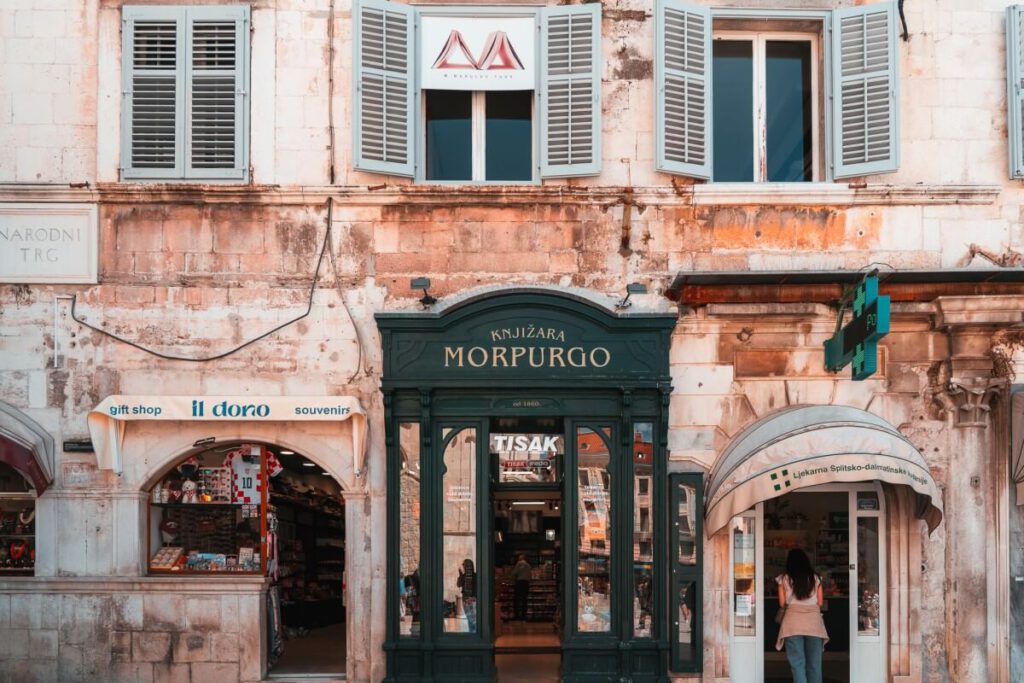
The People’s Square is simply called “Pjaca” by the locals. It dates back to medieval Split and is located right in the heart of the Old Town. Here you’ll find the old town hall, several palaces belonging to wealthy noble families, and one of the oldest bookstores in Europe that’s still in business – the Morpurgo Bookstore – which still stands where it was first founded.
12. Riva City Promenade
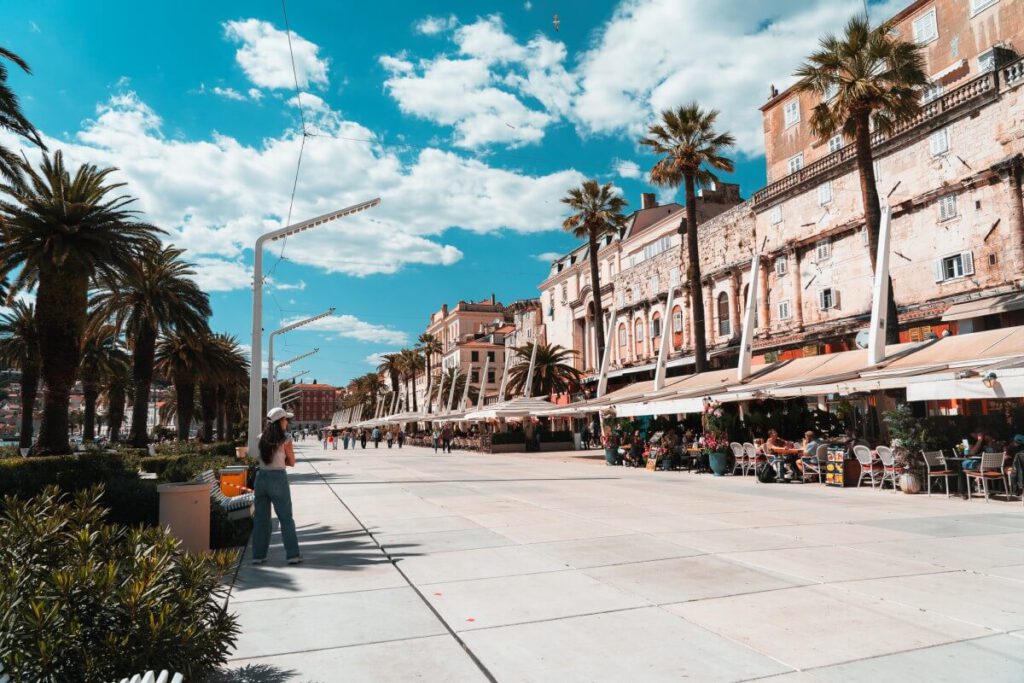
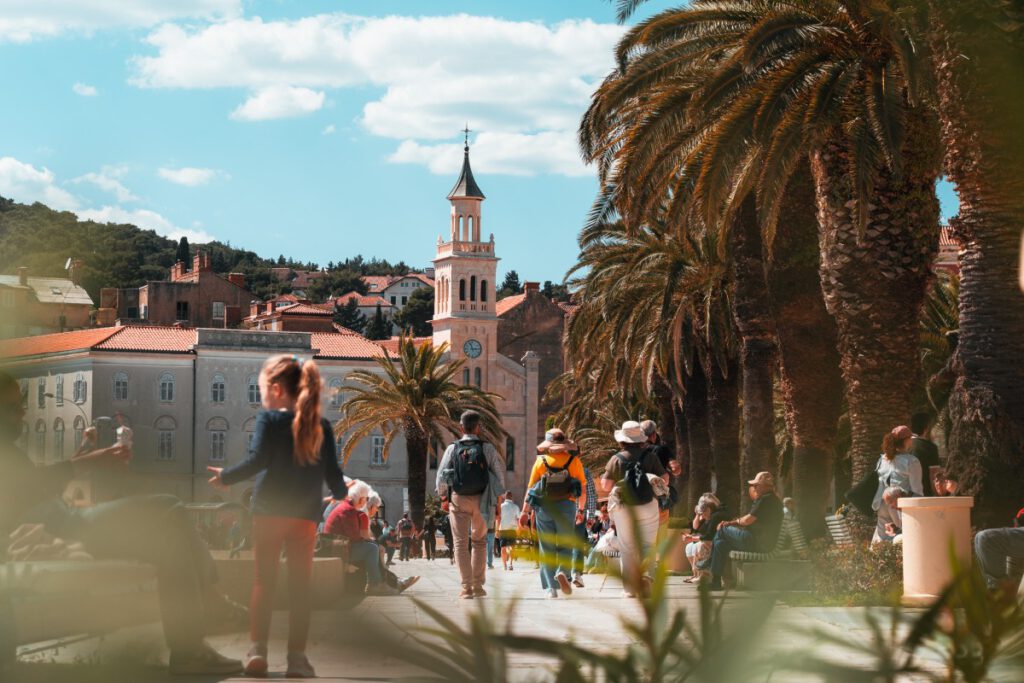
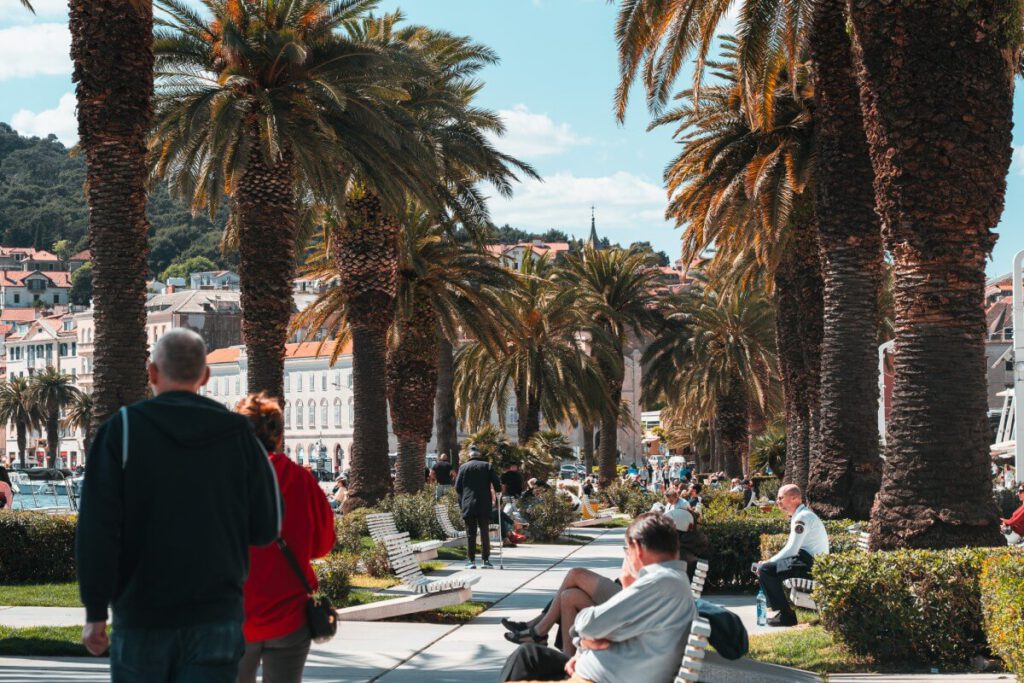
Of course, no seaside city would be complete without a waterfront promenade. In Split, that’s the expansive Riva with its palm-lined avenues. There are many shops, restaurants, and cafés here.
13. Marjan Forest Park
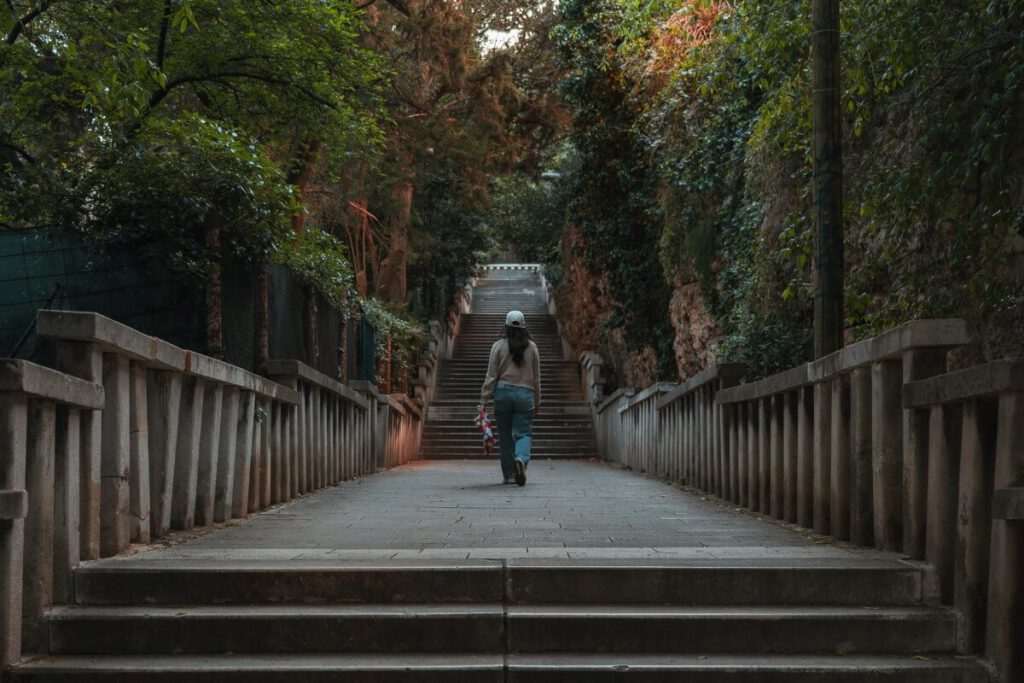
Marjan is a densely forested peninsula that locals also refer to as “the city’s green lung.” At the very top of the hill in this park – the 178-meter-high Telegrin – you’ll find some of the most beautiful viewpoints overlooking the city and the Adriatic Sea.
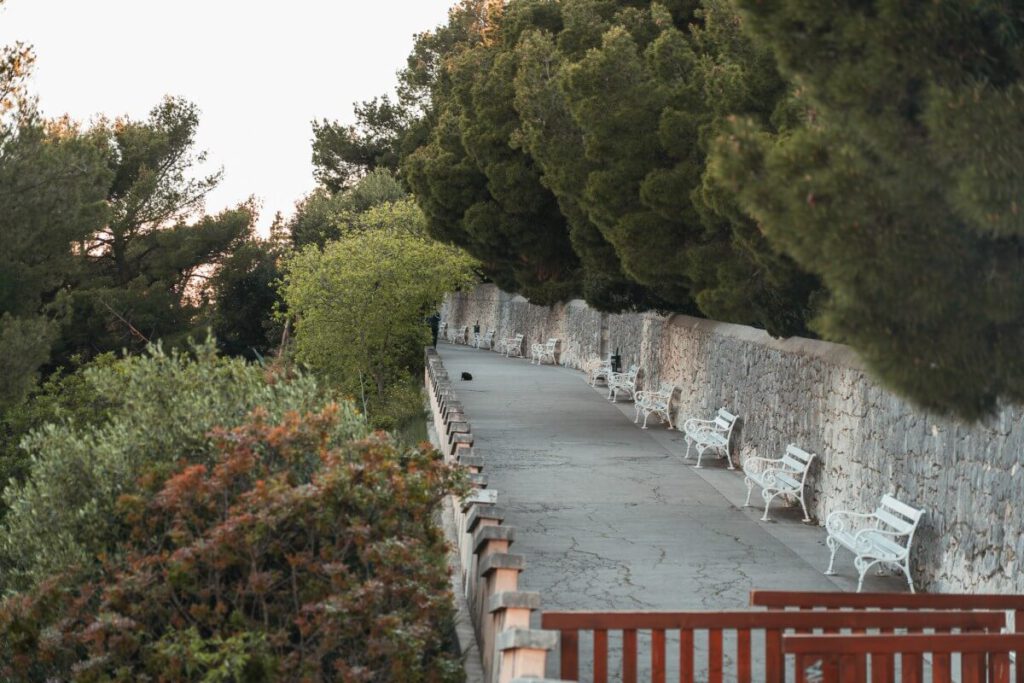
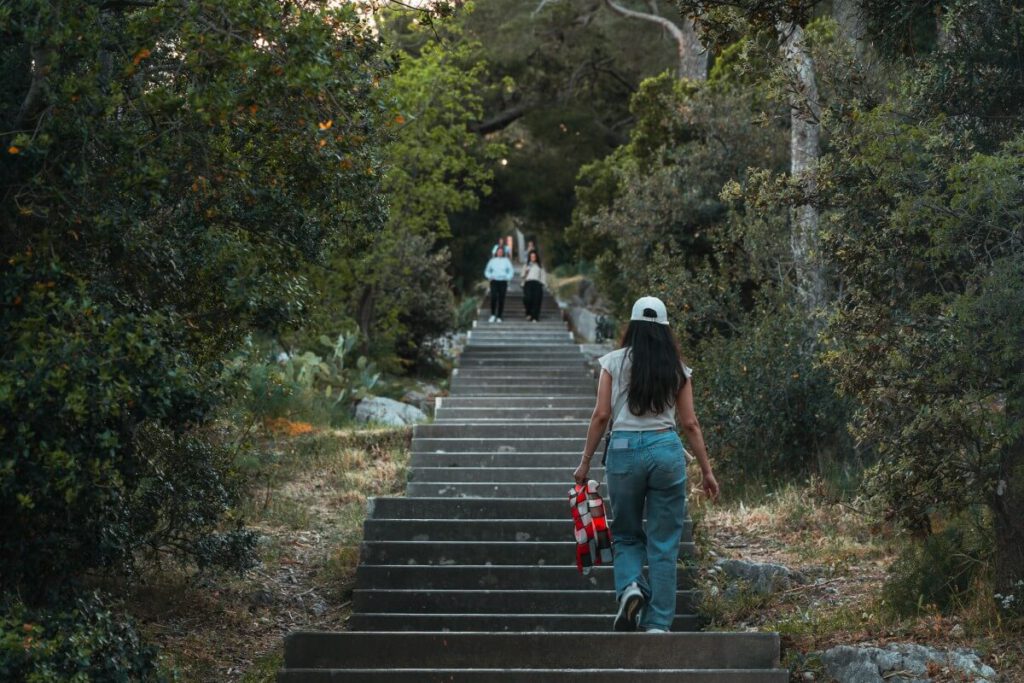
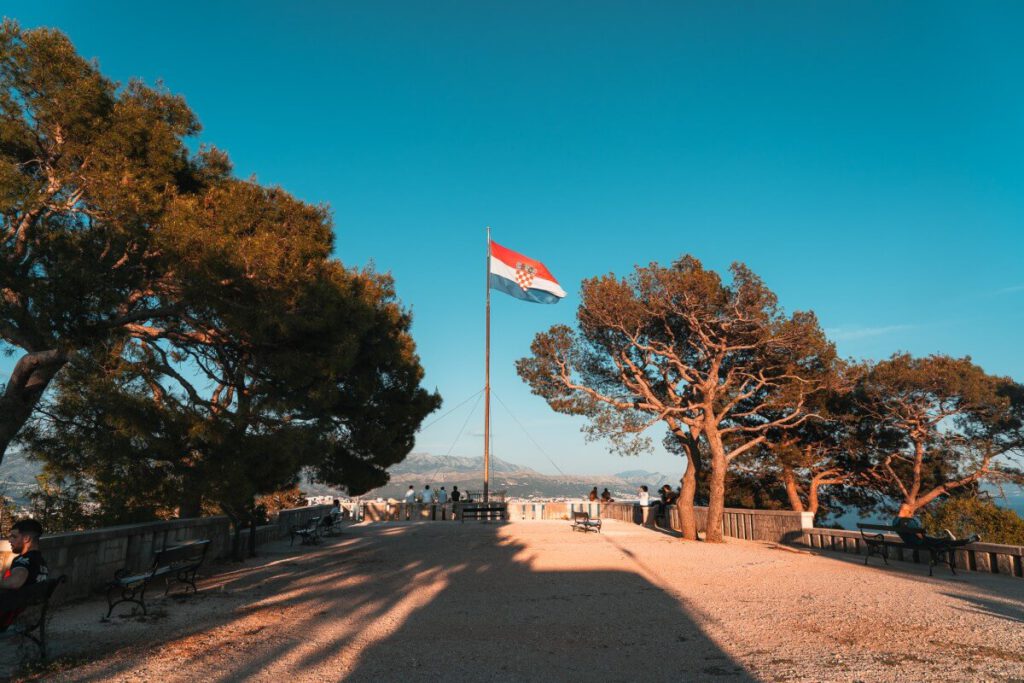
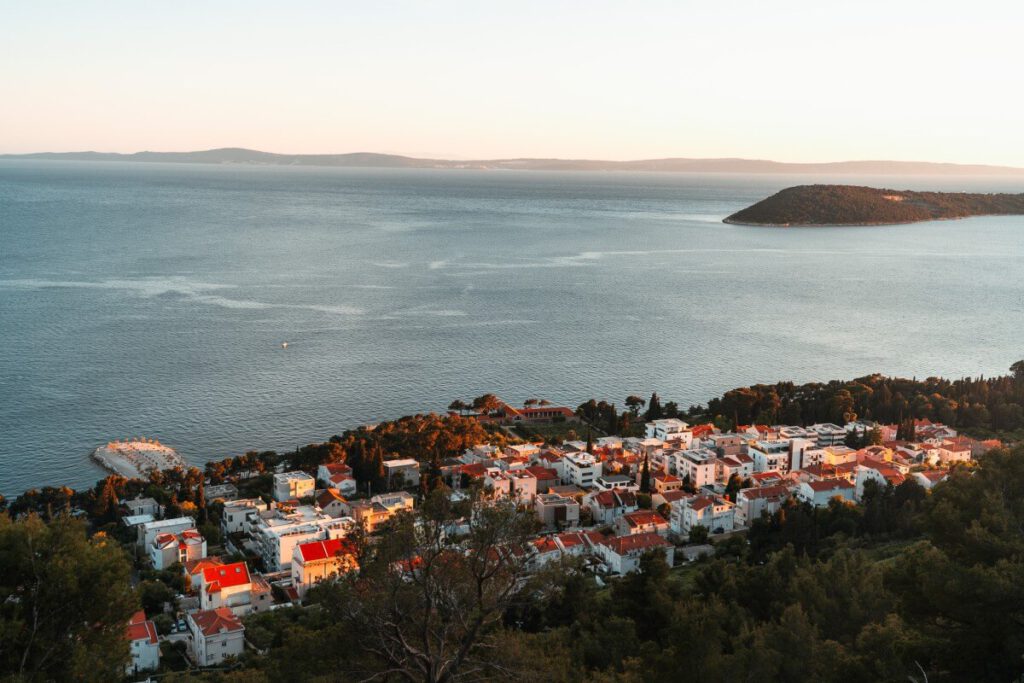
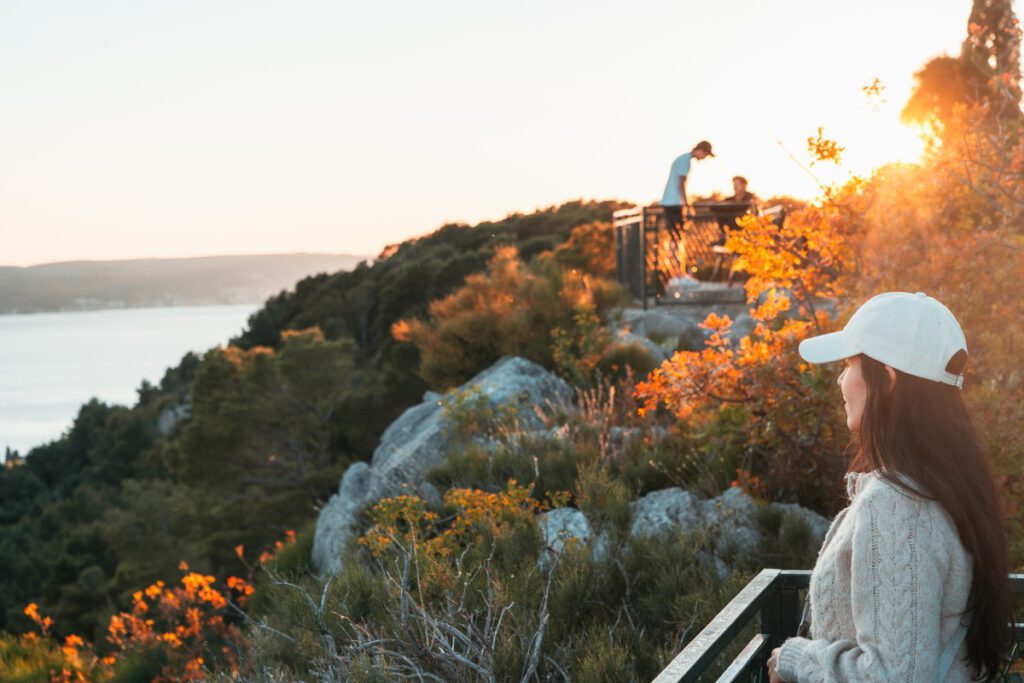
If you don’t want to take the arduous route up all those stairs to the very top, then it’s enough to just walk to Prva Vidilica. This first lookout point is only about 15 minutes from the Old Town and already offers a great view of Split.
14. St. Mary’s Benedictine Convent “de Taurello”
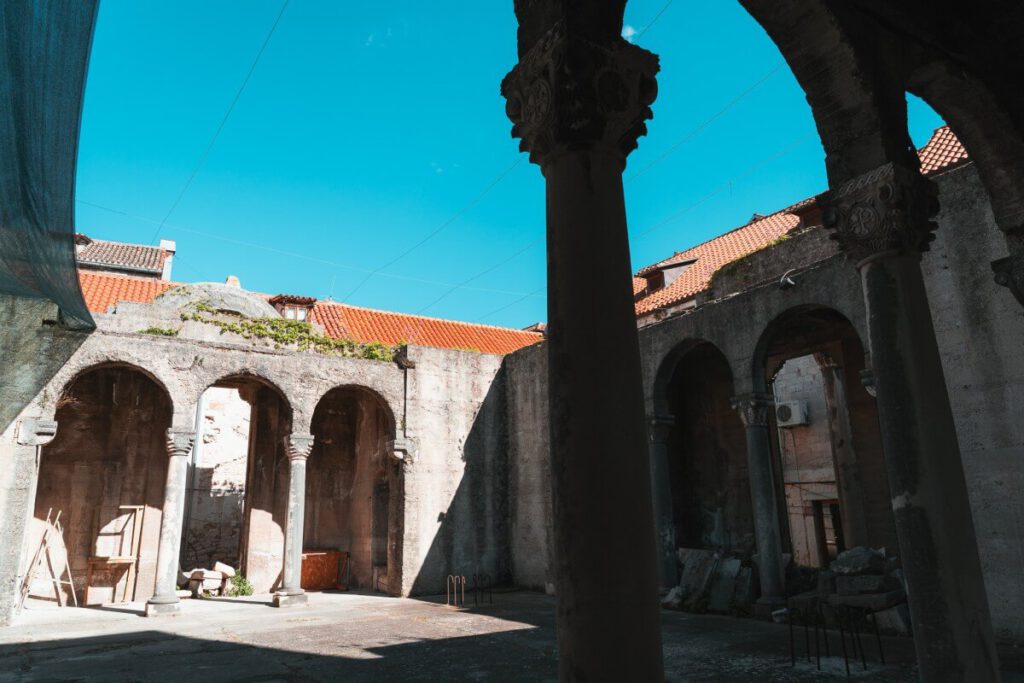
The largest Benedictine monastery in Split is tucked away in a courtyard in the Old Town. It was founded in the 11th century. In 1937, it was partially demolished to make way for a grandly planned but never completed Orthodox Church of St. Sava in the Neo-Byzantine style. Still preserved from the old monastery are the arcades of the monastery courtyard, the Gothic portal on Kraj sv. Marije Street, and the Renaissance portal on Domaldova ulica.
Discover all of Split’s historic buildings
There are signs with maps of Split at various locations throughout the city. These maps show all the well-known sights, as well as some lesser-known ones.
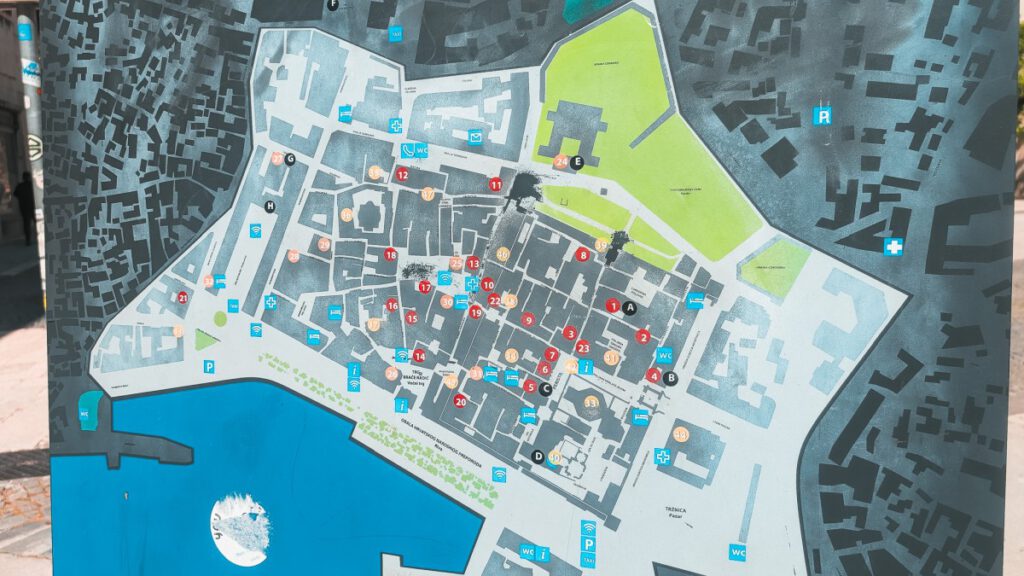
I thought it was really cool to take pictures of this map and try to find all these places without using Google Maps – kind of like a scavenger hunt. You can really discover some of Split’s hidden gems that you won’t find in any blog post or travel guide. There are 3 different categories:
- Religious buildings, such as the small Franciscan chapel or the Benedictine monastery
- Public buildings, such as the city hall or historic hotels
- Residential buildings, such as various palaces
Split has more to offer than just the Palace of Diocletian. Which Split attraction is your favorite? What highlight is still missing from this list? Let us know in the comments.
Tools & services for your trip*
This is what I use on my own road trips.
Book & Plan
My gear
*Disclosure: All links above are affiliate links. If you book through them, I earn a small commission – at no extra cost to you. That's what keeps Travel-Dude free and ad-free. Thank you!
Leave a Reply