

📝 About the Author: Matthias


This roadtrip takes you along one of Europe’s most spectacular and enigmatic coastlines. Nestled between the rugged Atlantic Ocean and the deep-green mountains of the French and Spanish Basque Country, you’ll follow the winding coastal roads and explore an ancient culture that has preserved its own unique spirit. Immerse yourself in Basque traditions and cuisine, and discover hidden natural treasures, rugged cliffs, and breathtaking beaches that will stay with you for a long time to come.
- What & Where: Self-drive coastal road trip itinerary through the French (Iparralde) and Spanish Basque Country (Euskadi), approx. 350–450 km from Biarritz/Bayonne via Hendaye, Hondarribia, San Sebastián, Zumaia, Deba, Lekeitio, and Gernika to Bilbao.
- Stops & Highlights: UNESCO Basque Coast Geopark with flysch formations (Zumaia/Deba/Mutriku), Game of Thrones filming locations: Itzurun Beach (Dragonstone) and Gaztelugatxe, Urdaibai Biosphere Reserve, historic Gernika (Picasso, Town Hall), San Sebastián, and the Guggenheim Museum in Bilbao.
- How long is the road trip? Ideally 2 weeks; intentionally planned as a slow travel experience with beach and travel days, but also doable in 5–7 days if time is limited.
- What should you keep in mind? Book campsites early; wild camping is prohibited (up to a €5,000 fine); toll on the AP-8; Gaztelugatxe requires free advance tickets (limit of 1,462 people per day).
On this road trip, you’ll not only discover spectacular natural wonders but also explore the most beautiful cities in the Basque Country. Politically speaking, however, the Basque Country is not a separate state but is divided among three main regions and two countries:
- The Autonomous Community of the Basque Country (Euskadi) in Spain
- The region of Navarre in inland Spain
- Northern Basque Country (Iparralde) in France
“Greater Basque Country” (Euskal Herria) comprises a total of seven provinces: four in Spain and three in France. Euskara, one of the oldest living languages in the world, is spoken throughout the region. You can often tell that the region is bilingual by looking at the place-name signs. Especially in the Spanish part, the Basque name (e.g., Donostia) is listed first, followed by the Spanish name (e.g., San Sebastián).
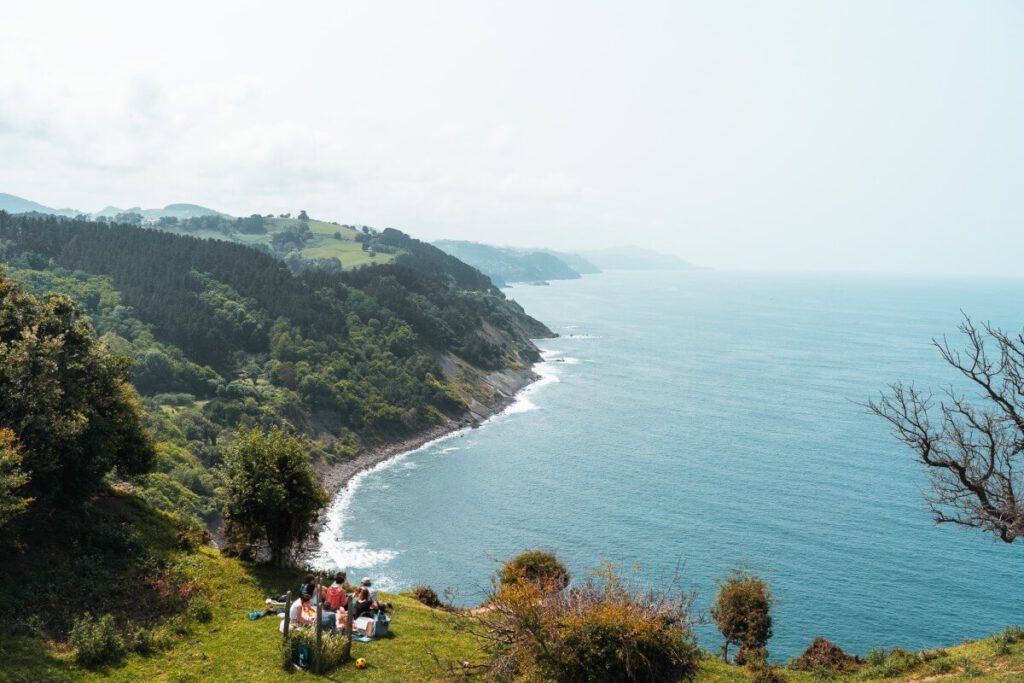
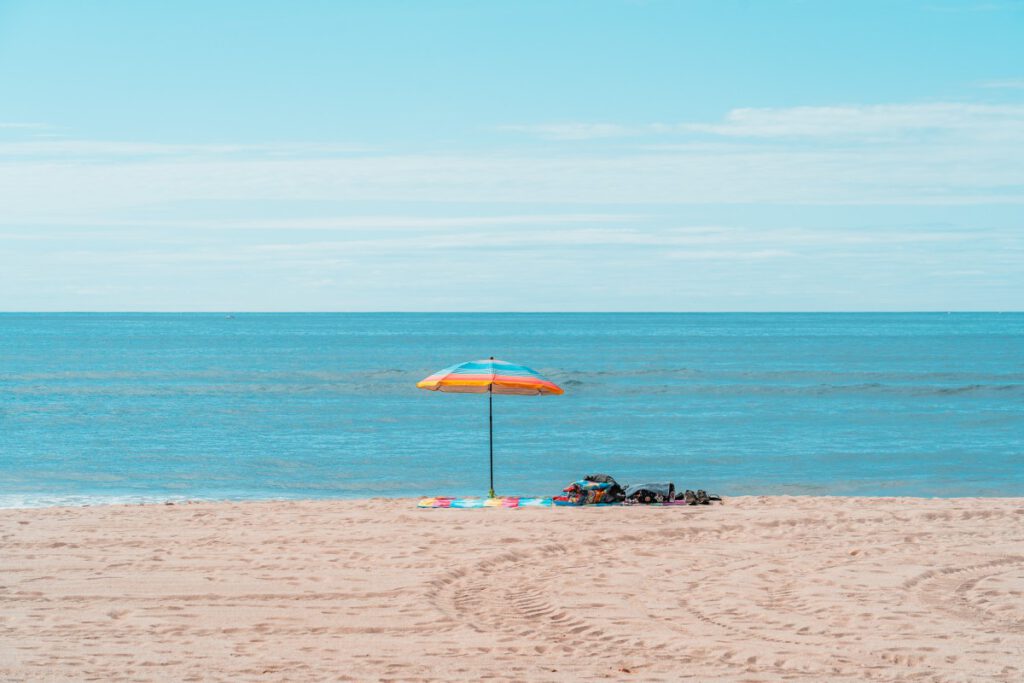
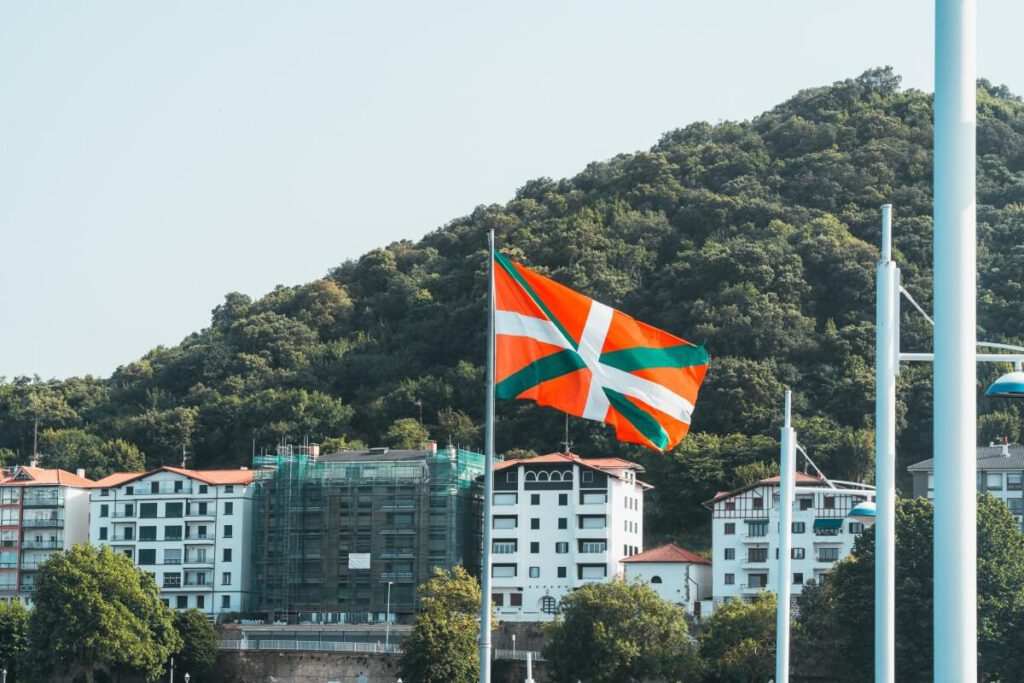
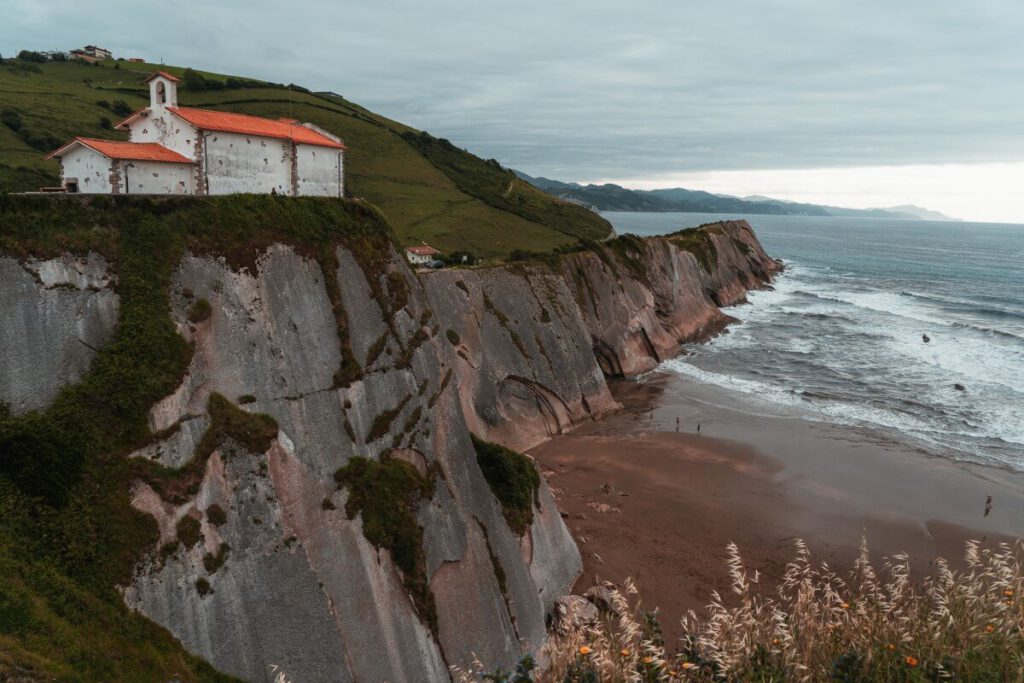
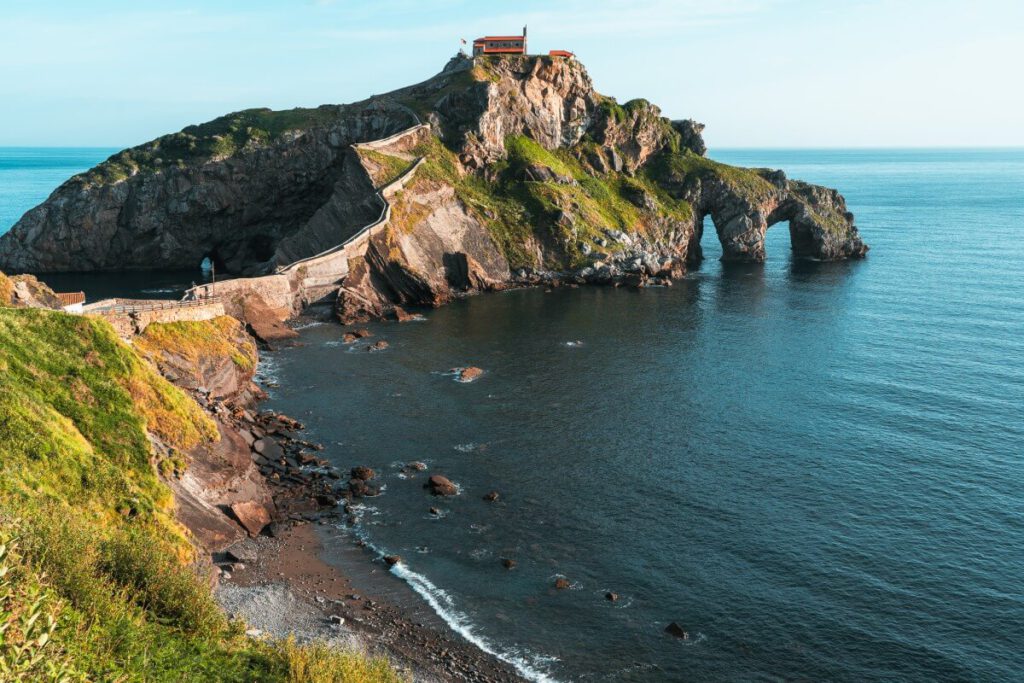
This road trip takes you along the Basque coast, so it covers only the Basque Country and Iparralde. It starts in the French towns of Biarritz and Bayonne, heads to Hendaye, and from there crosses the border into Spain to places like Hondarribia, San Sebastián, Guernica, and all the way to Bilbao. Along the way, you’ll pass through many small fishing villages and explore, among other things, the absolutely breathtaking Flysch Coast, which is also a UNESCO Geopark and an incredibly great place for hiking. But these are by no means the only highlights awaiting you in this region.
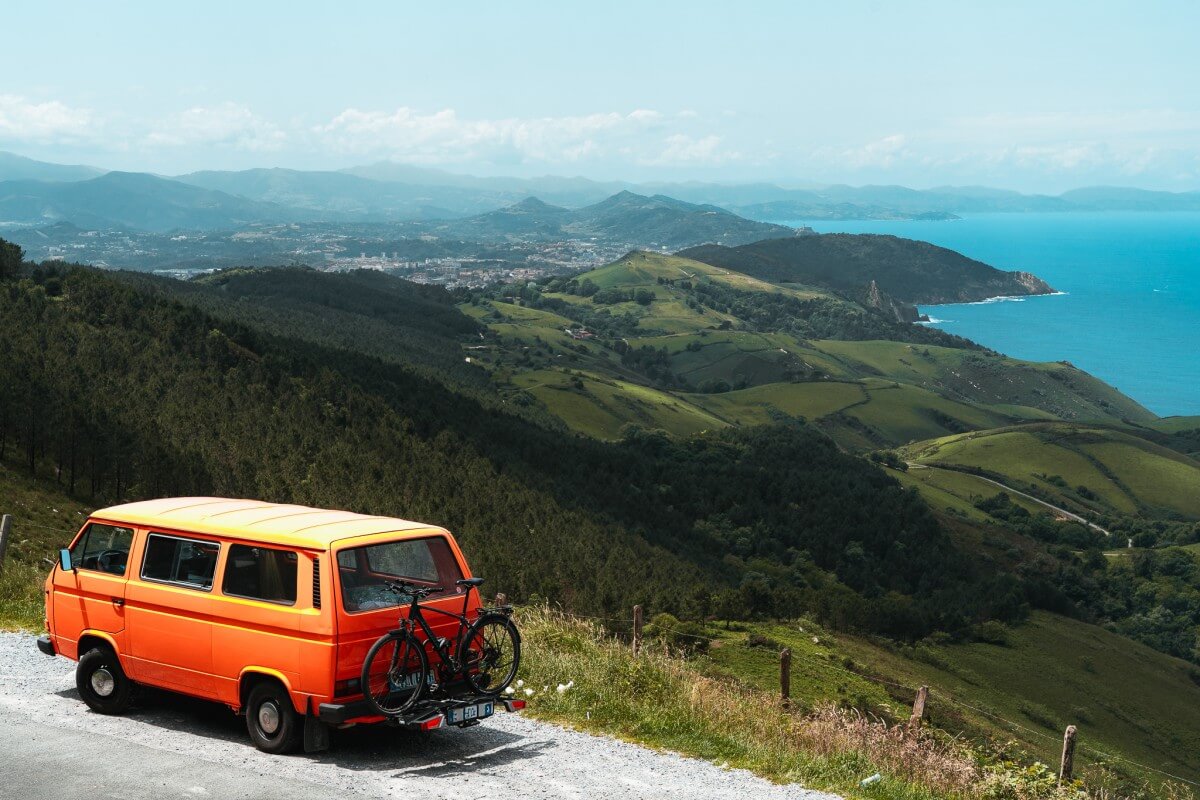
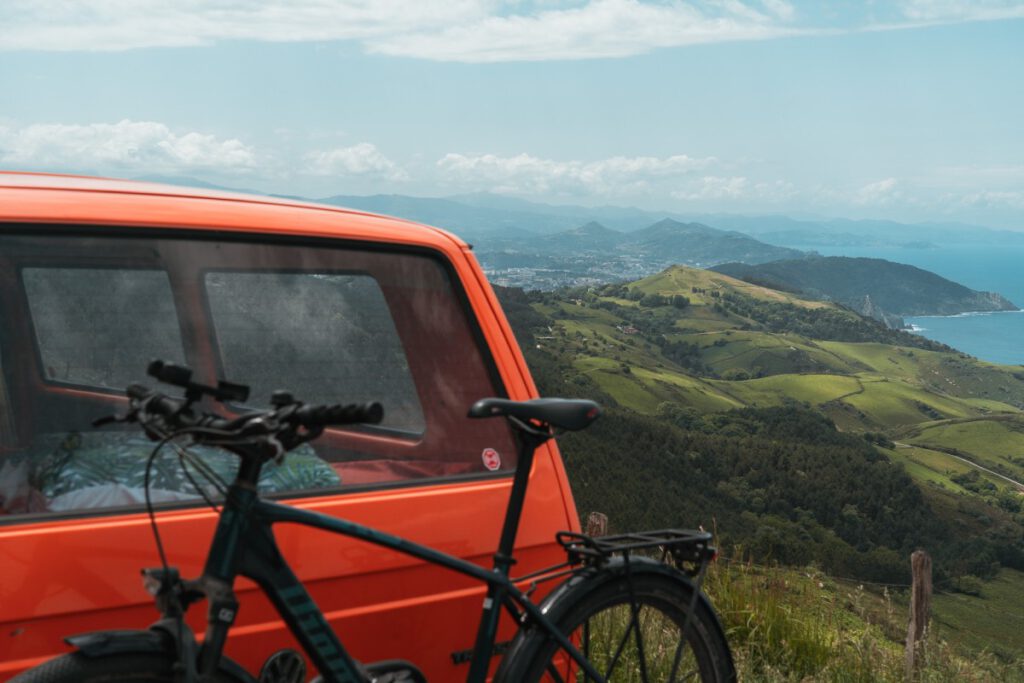
I took this road trip myself one June in my T3 and was blown away – by the culture of the Basque Country, but above all by the breathtaking scenery.
How long should a road trip along the Basque Coast be?
I recommend setting aside 2 weeks (14 to 16 days) for this road trip. The direct route from Biarritz to Bilbao is only about 150 km (just over 1.5 hours via the AP-8). If you include all the coastal detours and side trips on this road trip, you’ll end up covering more like 350 to 450 km. Theoretically, you could drive that in a single day. However, this relatively short route features many great sights and picturesque places that are worth a longer stay. Plus, there are many regions that are perfect for hiking or simply relaxing on the beach. Slow travel is really much better here than sightseeing hopping.
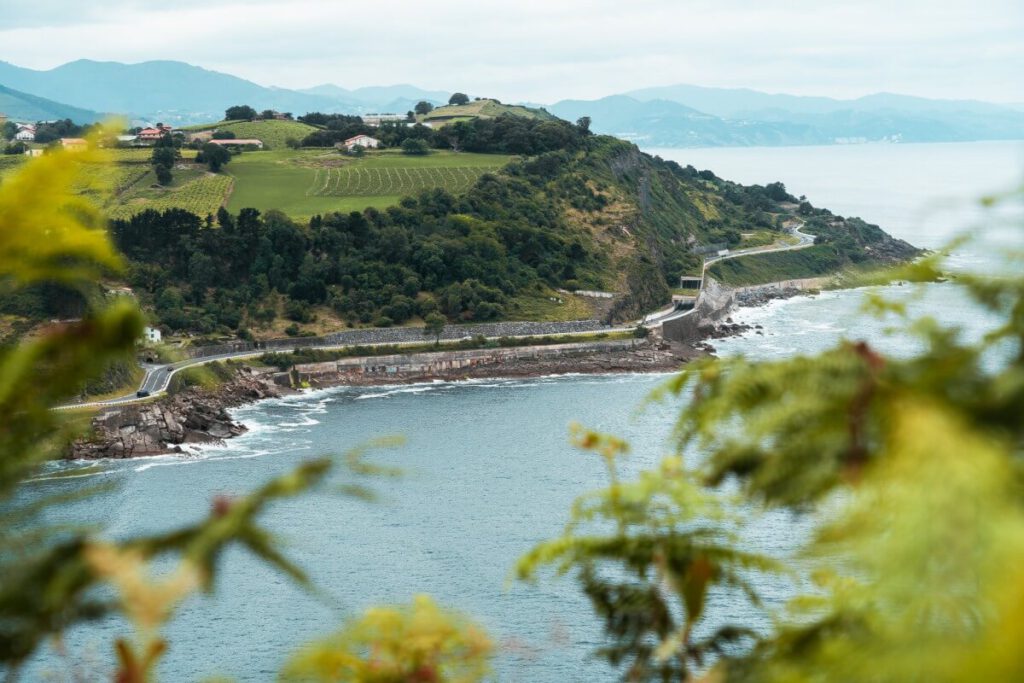
Do you only have a week (5 to 7 days) to spare? Even then, this road trip is still doable. However, you’ll have to skip a few places and won’t be able to stay in any one place for very long.
Best starting and ending points for a road trip through the Basque Country
This article covers the route from Biarritz, France, to Bilbao, Spain. On my own road trip, I drove down from the north in my VW Bus, so naturally Biarritz was my first stop. But you can easily reverse the route without any trouble.
Since there are airports in both Biarritz and Bilbao, you can also plan your trip using a rental car. However, there are significantly more direct flights to Bilbao than to Biarritz (and vice versa).
You can also plan your road trip so that it starts and ends in Bilbao. In that case, however, be sure to allow enough time to drive back to Bilbao from Biarritz. If you take the toll road, though, the drive takes just over two hours.
Accommodations in the Basque Country
I’ve planned the road trip so that you’ll always have stops where you stay for several nights, with travel days in between when you drive from one region to the next. That way, you don’t have to pack up and check out every morning, but can spend a whole day exploring the area, going for a hike, or just hanging out at the beach.
Of course, it’s important to have good accommodations. On my own trip, I mostly stayed at campgrounds because I was traveling in a camper van. But since I also like to stay in hotels when I need a little more comfort, I’ve researched great hotels in every location. In cities like Bilbao, San Sebastián, and others, there usually aren’t any central campgrounds, which is why I stayed in hotels here that also offer parking – an important convenience if you’re traveling by car.
Camping in the Basque Country
Throughout the Basque Country, there aren’t actually that many campgrounds located right on the coast or just a few kilometers inland. Especially in the Spanish Basque Country, the number of such sites is much lower than in the French part. There are only about 10 in total along the coast. Often, you can’t just stay there for one night; sometimes you have to book several nights. But the sites that do exist – and the ones I recommend here in this article – are absolutely fantastic.
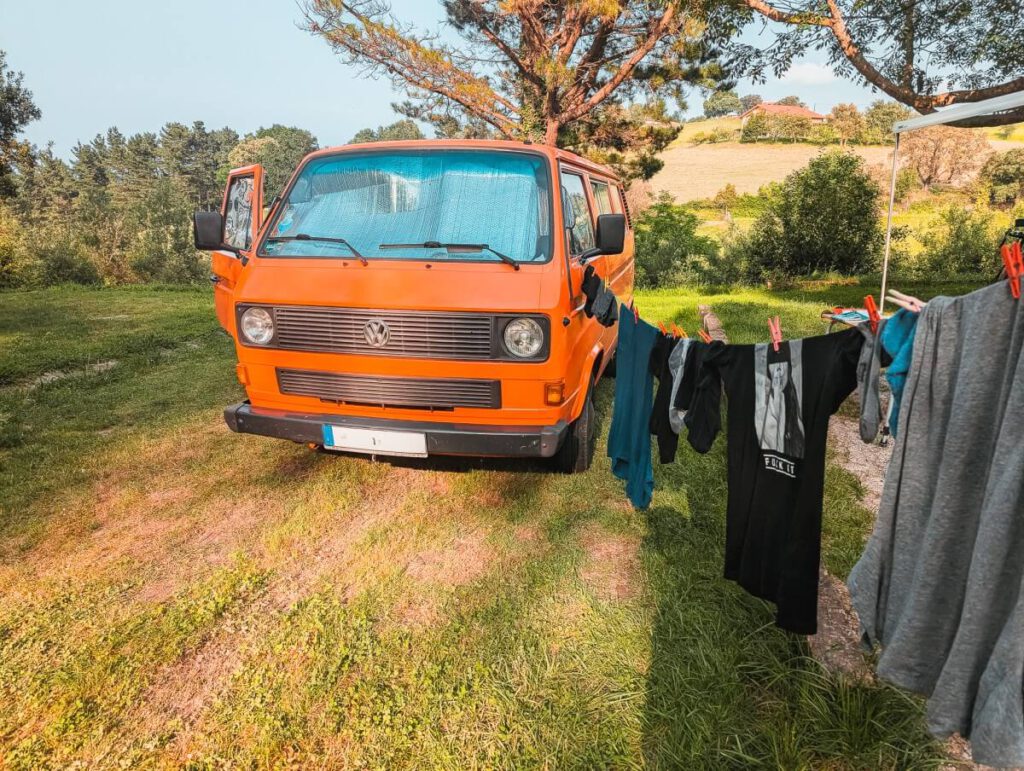
Note: Since campsites are so scarce, there may be shortages, especially during peak season. I once got a glimpse of a campsite’s booking system while checking in, and by the end of July, virtually everything was booked up. Just showing up at the campground on a whim in the hope of getting a spot could lead to an unpleasant surprise, especially then. That’s why I always recommend booking a few days in advance. In the off-season, this was almost never a problem for me. Only on weekends that included holidays did I ever find a campground fully booked.
An alternative to campgrounds are RV parks (Áreas de Autocaravanas), which you can find in almost every major city. While they’re usually not very scenic, they serve their purpose.
⚠️🏕️ Wild camping in the Basque Country: Wild camping is prohibited throughout the Basque Country, especially in nature parks and along the coast in the Spanish Basque Country. Fines can reach up to €5,000, and there are regular checks even at night.
1. Biarritz and Bayonne
- Duration: Day 1 through Day 3 (arrival and one full day = 2 nights)
- Hotel Recommendation: Hôtel du Palais Biarritz – The Unbound Collection by Hyatt
- Camping tip: Camping Le Pavillon Royal (just outside Biarritz)
The first leg of this road trip actually consists of two city tours. You’ll explore the two neighboring towns of Biarritz and Bayonne, with Biarritz serving as the best base. Both cities are definitely worth a visit.
Biarritz
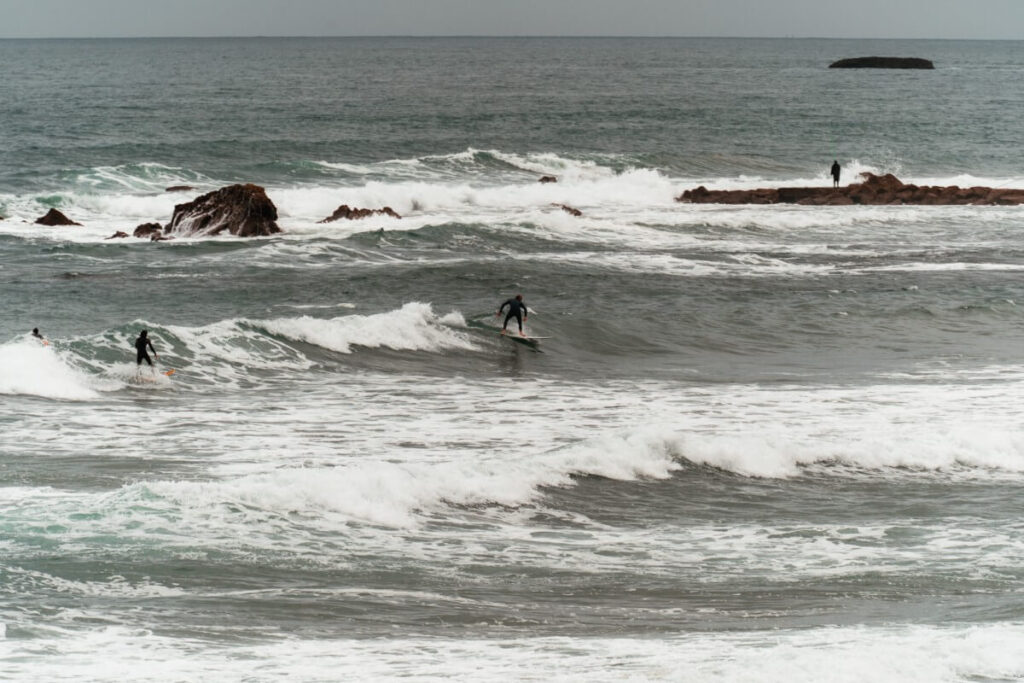
Biarritz is a city of the rich and famous, and you can tell just by taking a quick stroll through the old town: stunning villas and magnificent hotels, some of which charge over €2,000 a night. But Biarritz also has its own unique surfer charm. No wonder, since Biarritz is essentially the birthplace of surfing in Europe.
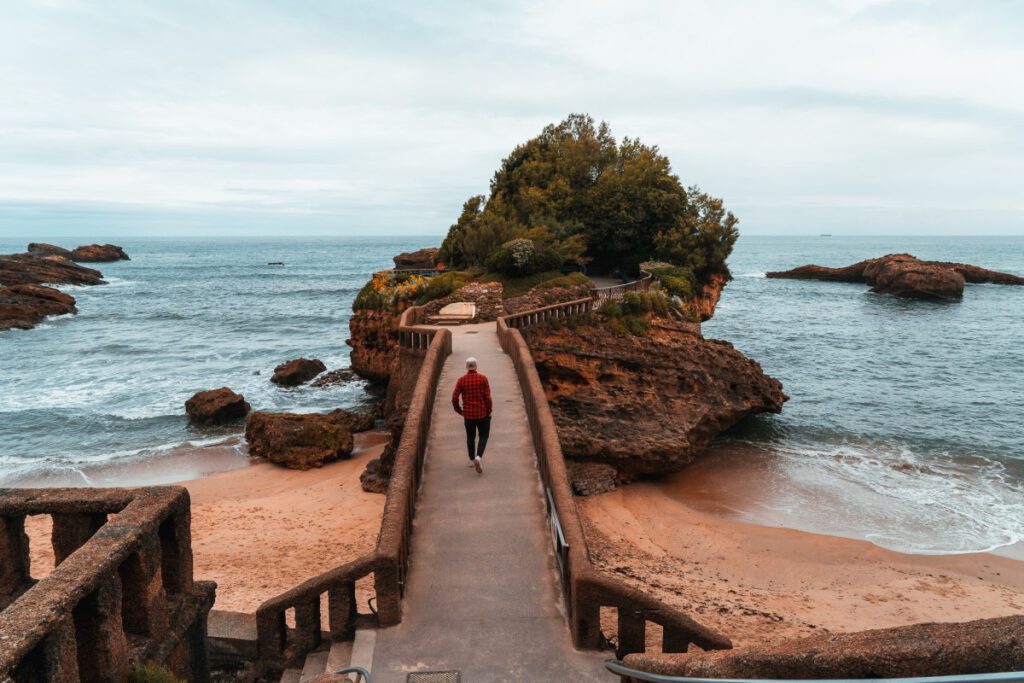
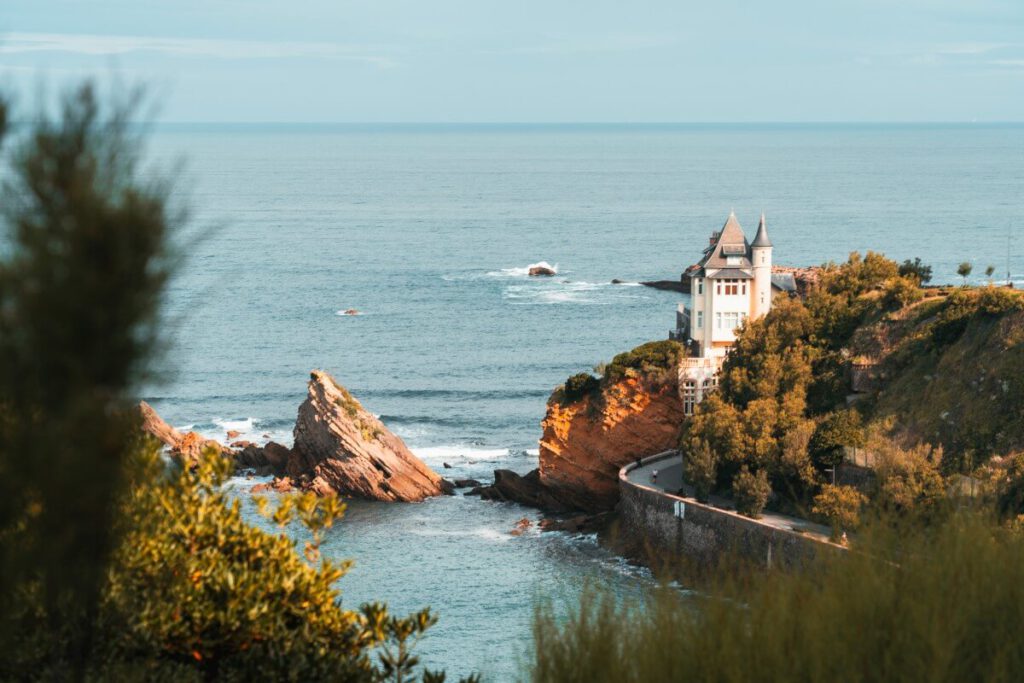
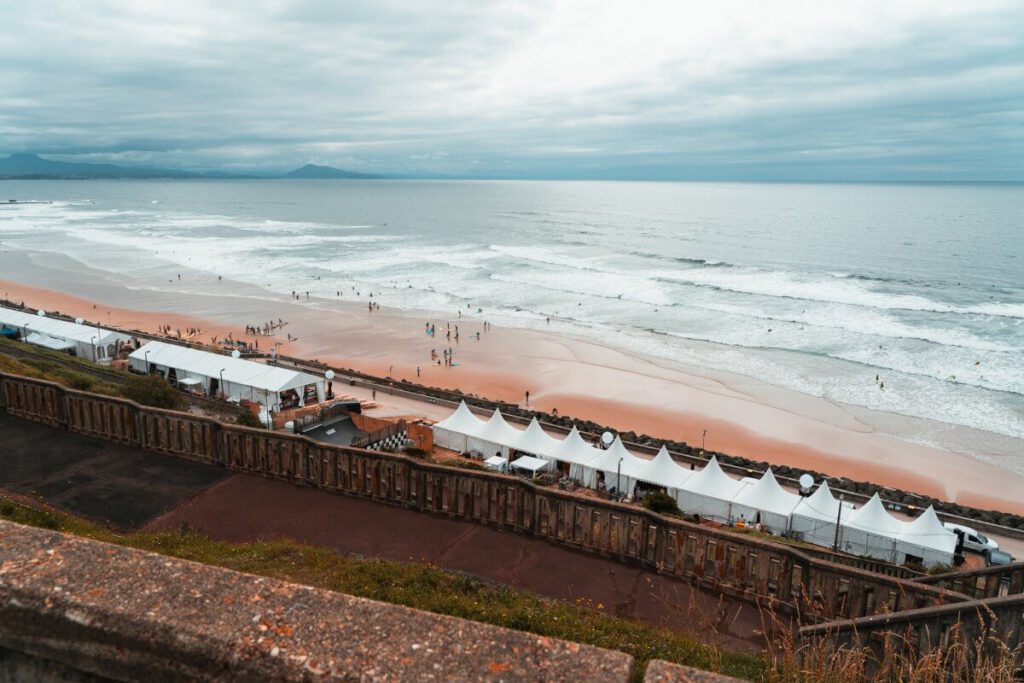
You can find out all the things to do in Biarritz and lots of other tips here:
📢 Don’t miss these highlights in Biarritz:
Surfing lessons on the beach at Côte des Basques
Bayonne
Bayonne is the capital of the French Basque Country, and it’s definitely worth spending half a day there – and not just because it’s only about a 20-minute drive from Biarritz.
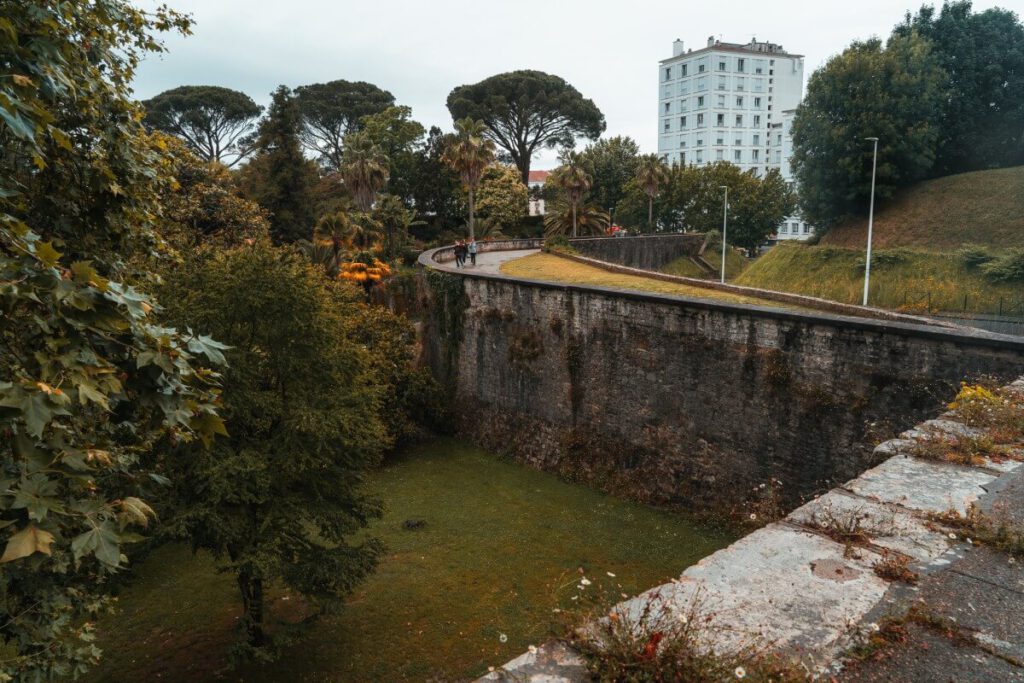
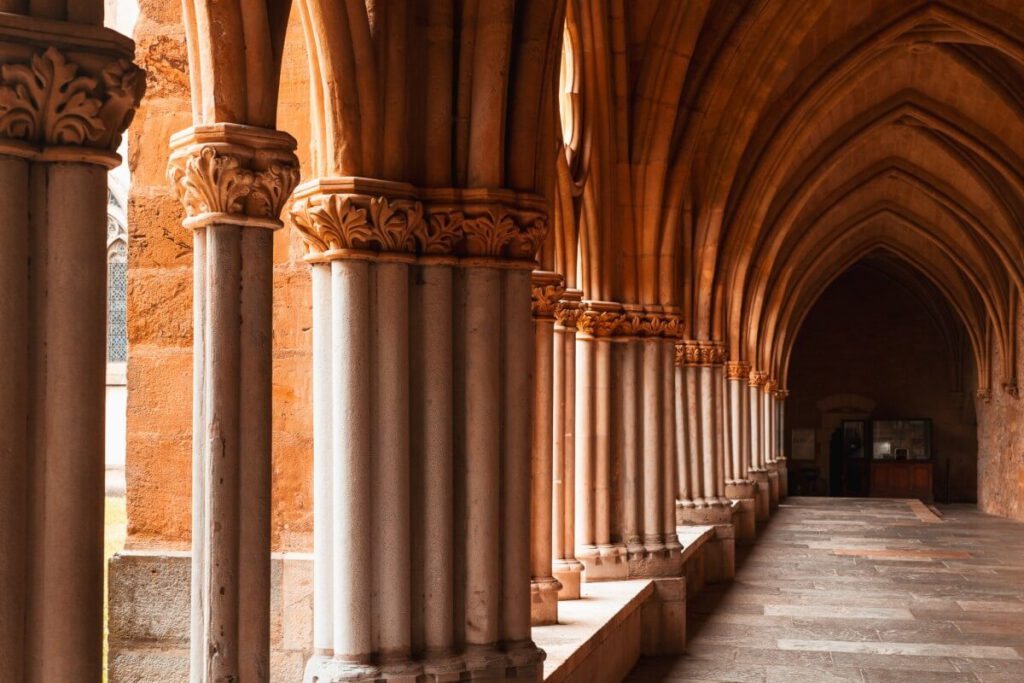
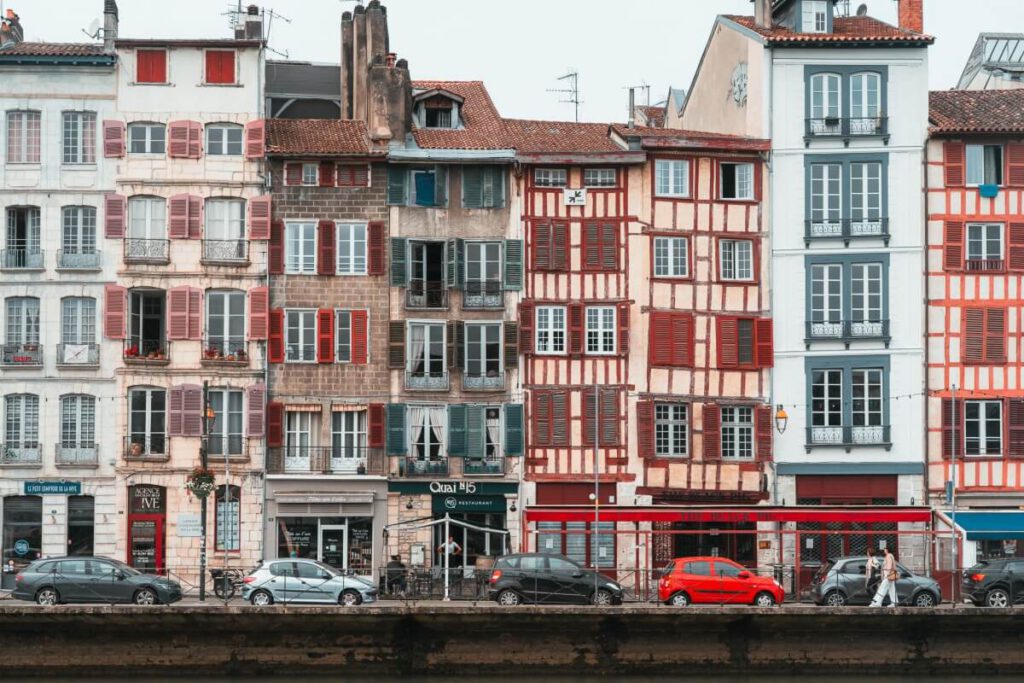
Bayonne is truly picturesque – in my opinion, it even beats Honfleur in Normandy. You can stroll through the old town and explore the historic fortifications. Bayonne is also well known for its many traditional chocolatiers.
Find out everything there is to do in Bayonne and get lots of other tips here:
📢 Don’t miss these highlights in Bayonne:
Bayonne on Foot: The Highlights of This Medieval City of Art and History
2. Biarritz to Hendaye
- Duration: Day 3 to Day 5 (2 nights)
- Hotel Recommendation: Hotel Uhainak
- Camping Tip: Camping Hendaye Ametza
The next section is just a short ride from Biarritz to Hendaye. Along the way, you’ll pass through the idyllic town of Saint-Jean-de-Luz, which you can explore for a few hours during the day. You’ll spend a full day exploring Hendaye and the neighboring town of Hondarribia, which is already part of Spain.
Saint-Jean-de-Luz
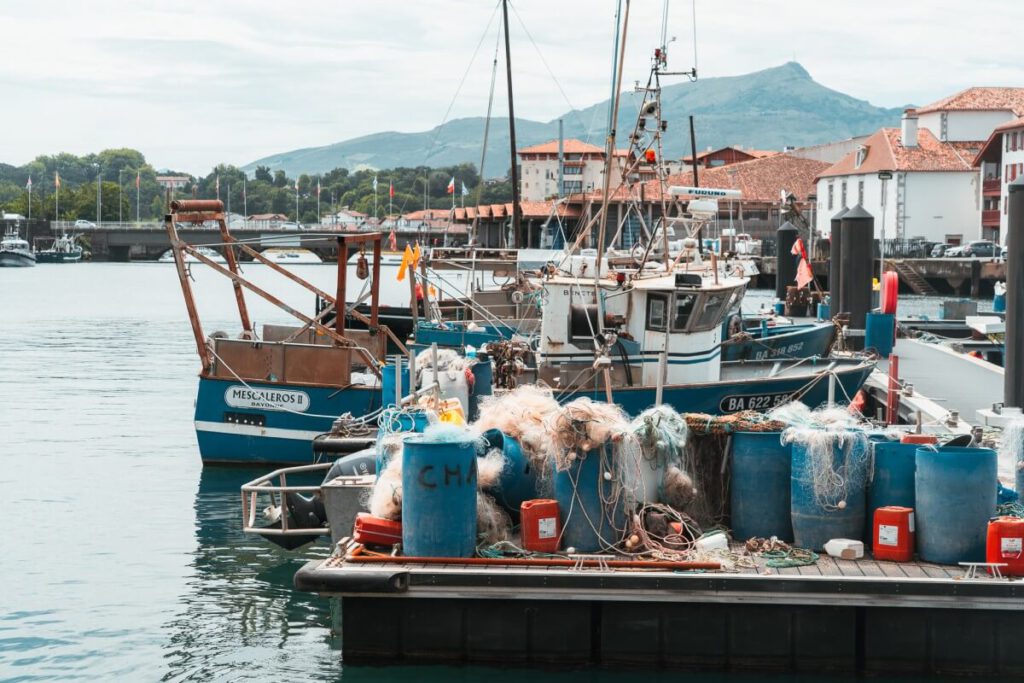
This coastal town is an idyllic little beach oasis with a fascinating history. One of my favorite spots here was the picturesque Place Louis XIV right next to the harbor, which is actually very popular with local artists. Just sit down at one of the restaurants here, order a refreshing drink on a hot summer day, and watch the hustle and bustle around the square.
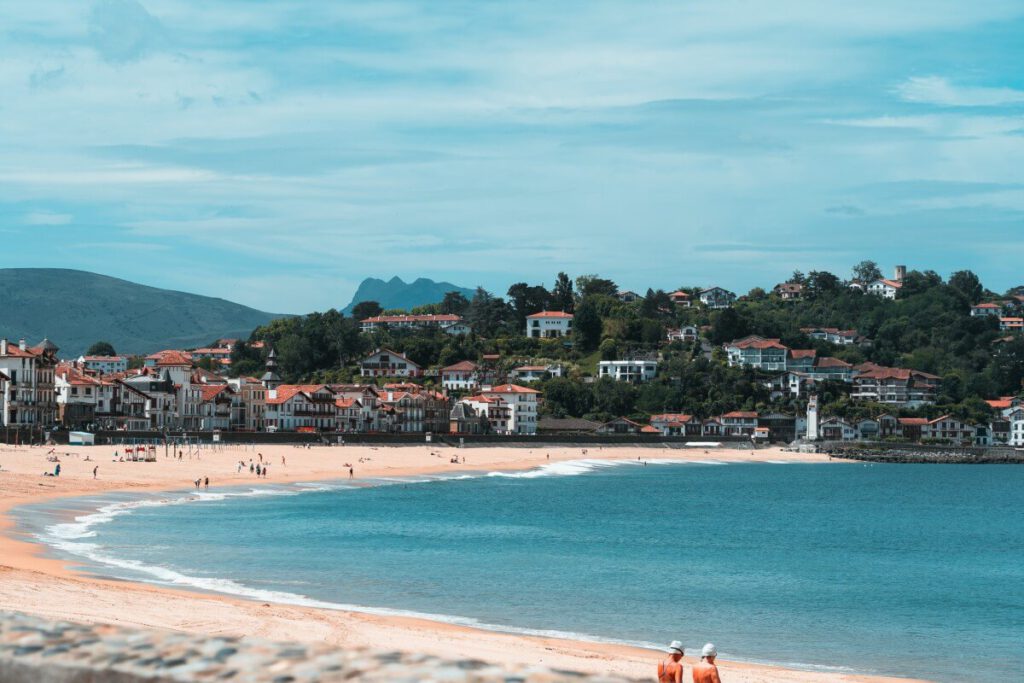
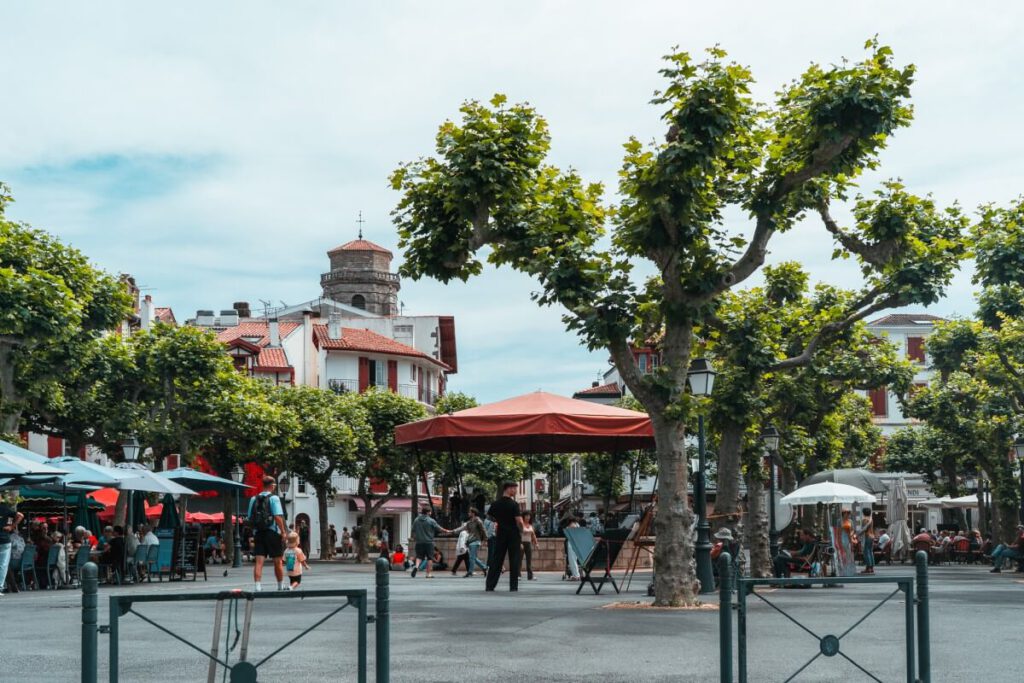
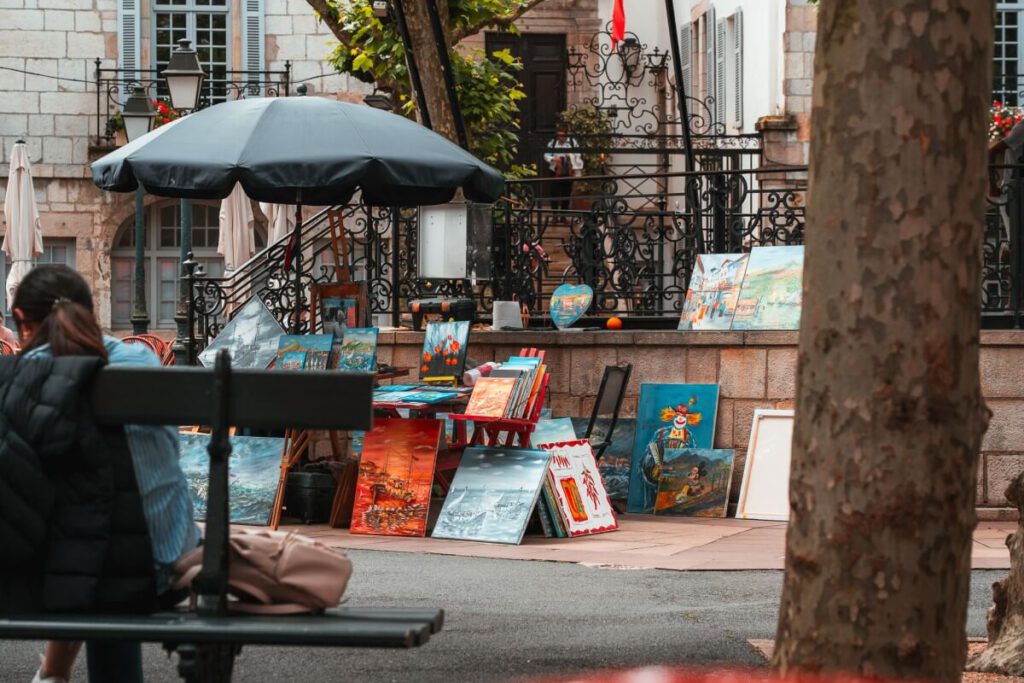
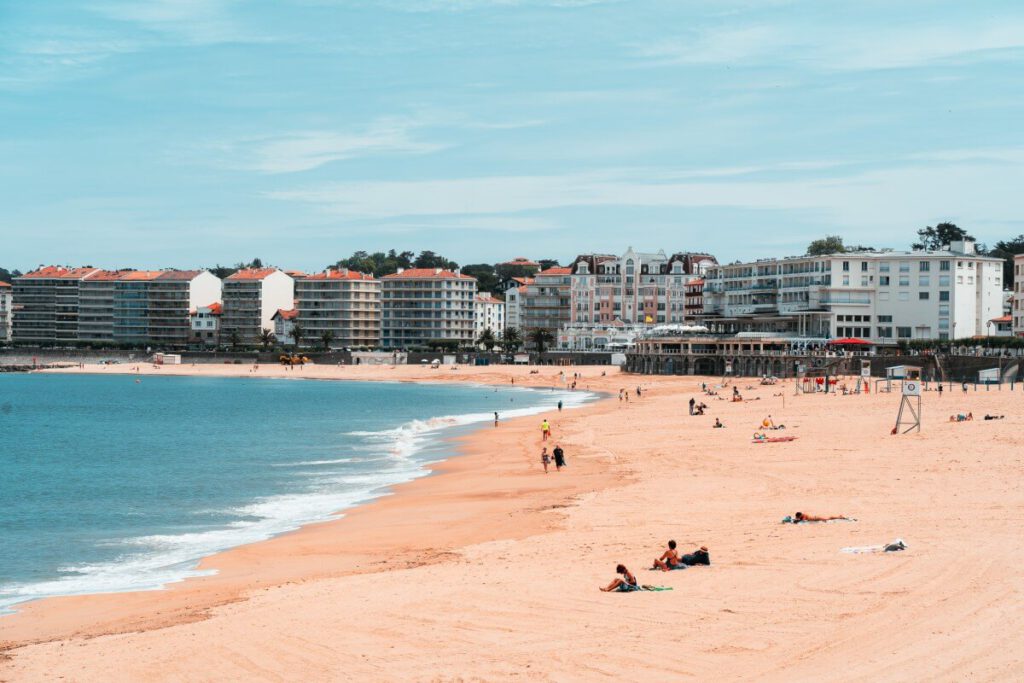
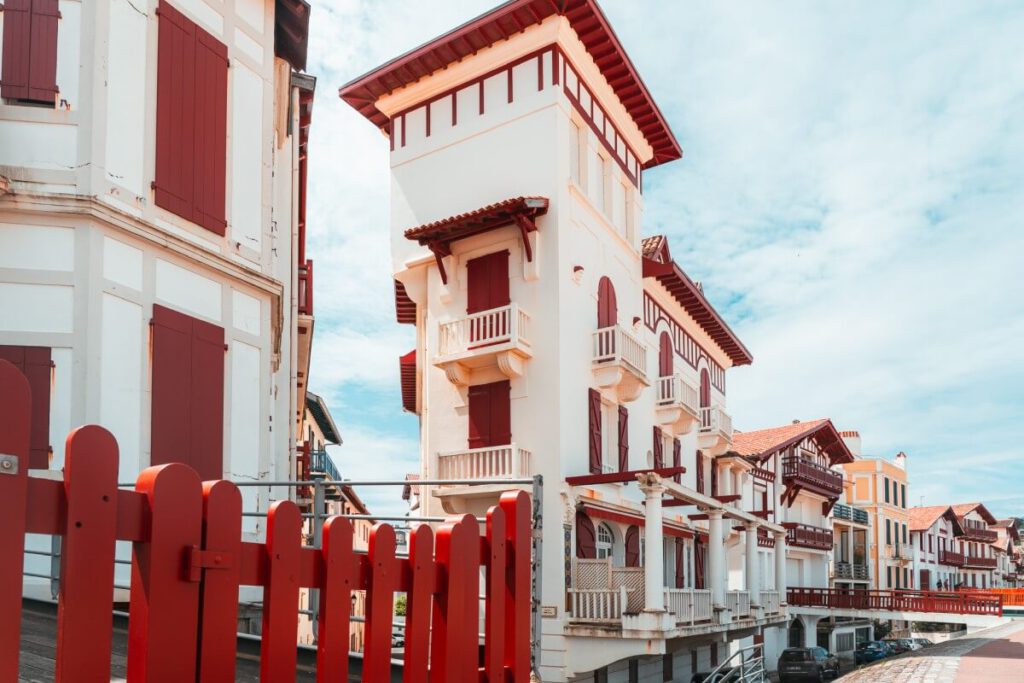
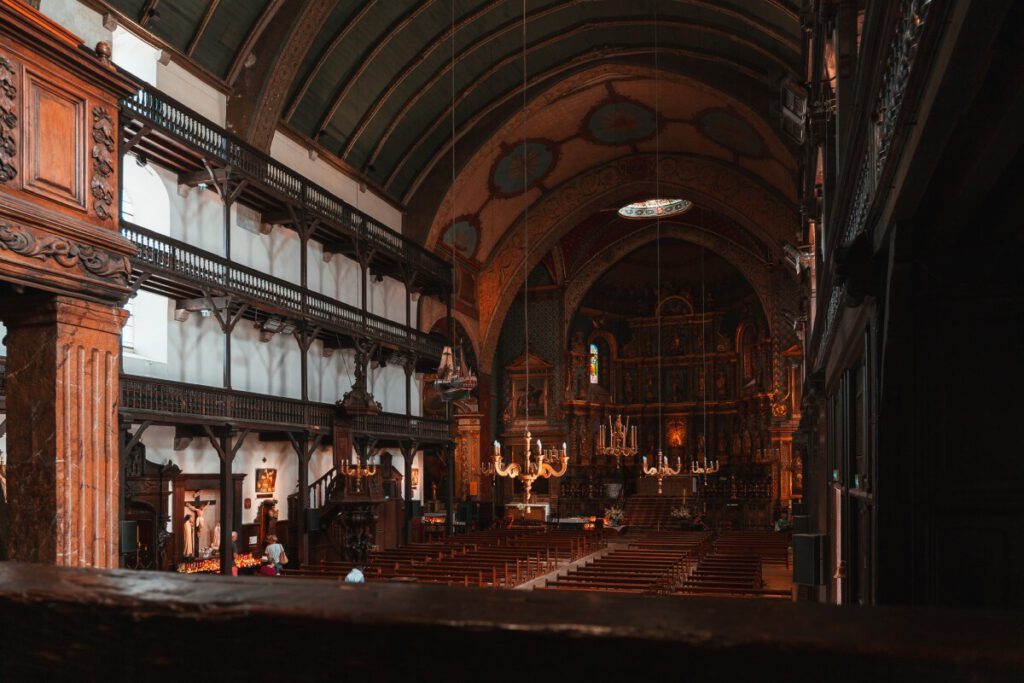
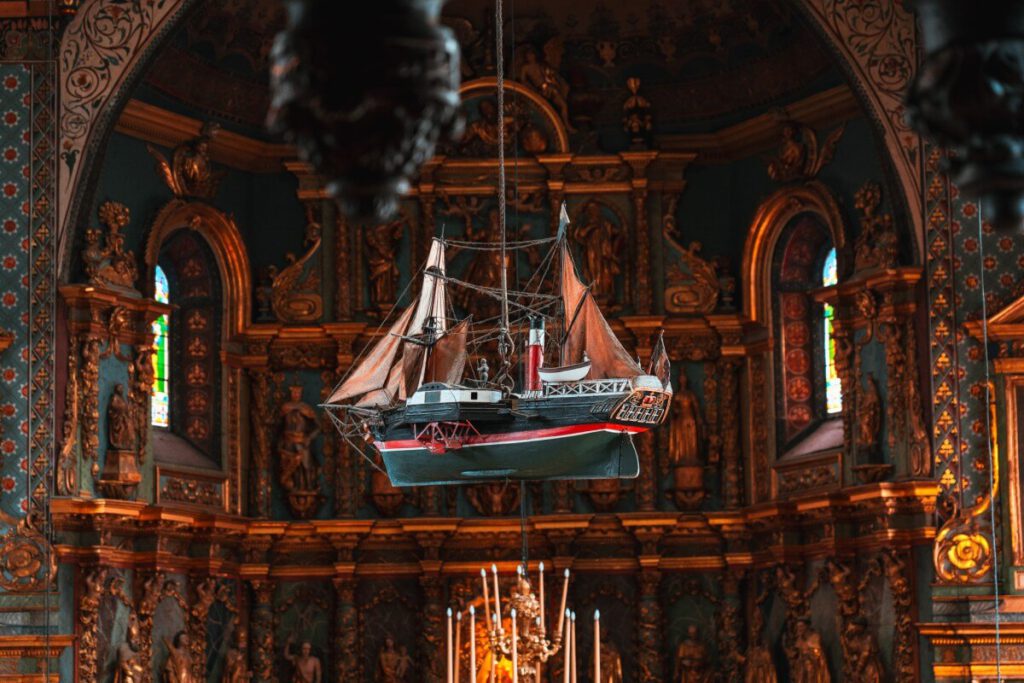
Otherwise, of course, the Grande Plage in the heart of the city is a major attraction for visitors. But a visit to the Église Saint-Jean-Baptiste is also well worth it. After all, it was here in 1660 that Louis XIV, the “Sun King” – a figure surely familiar from history lessons – married Maria Theresa of Spain. The Maison Louis XIV is a small museum located in the historic building where the Sun King once stayed.
📢 Don’t miss these highlights in Saint-Jean-de-Luz:
Saint-Jean-de-Luz, Basque Country: Boat tour along the coast
Hendaye
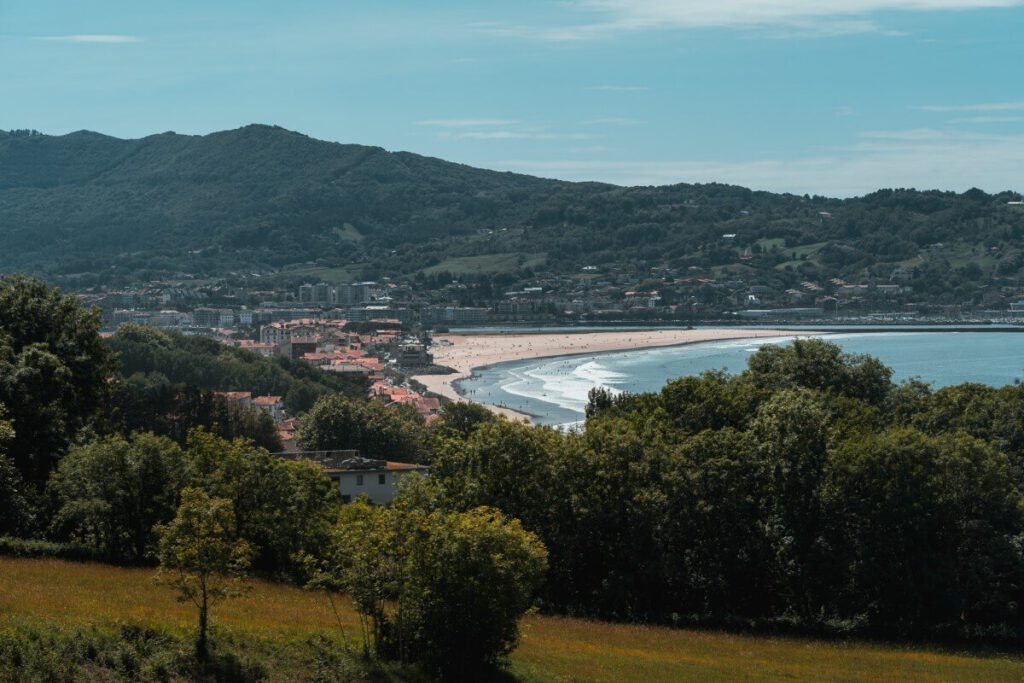
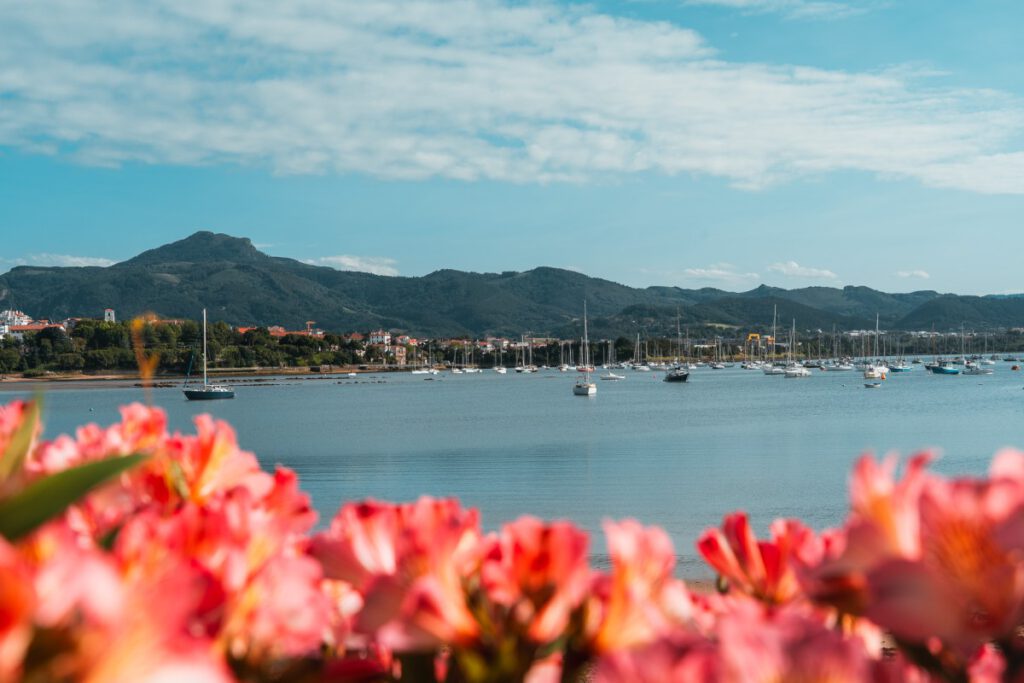
This charming little seaside town is your last stop before the Spanish border. From the vast beach, you can already see Hondarribia in Spain.
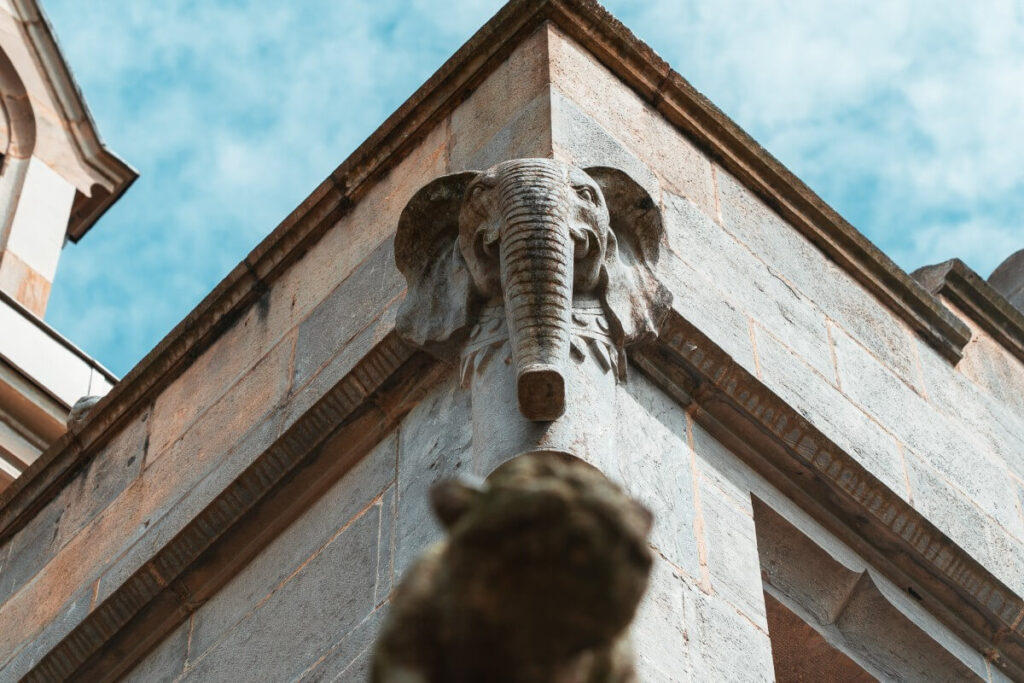
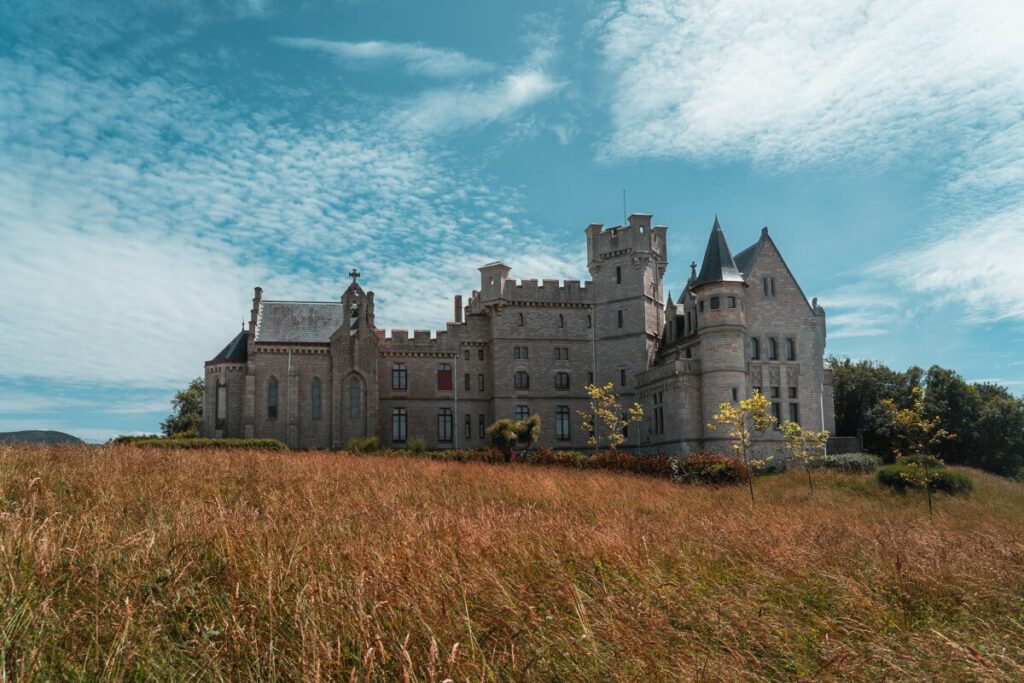
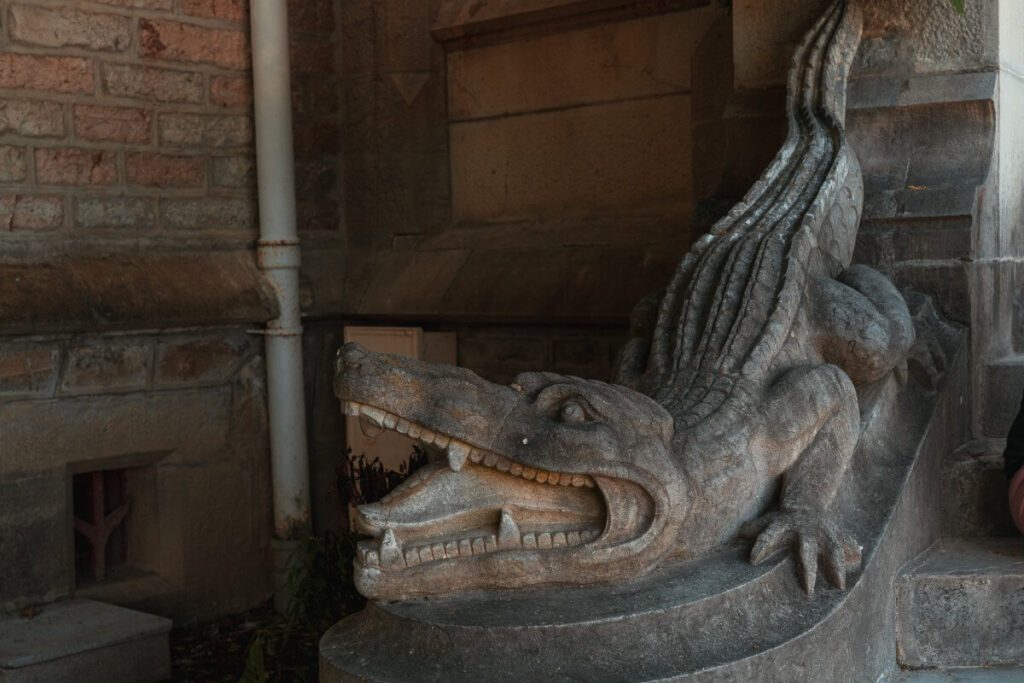
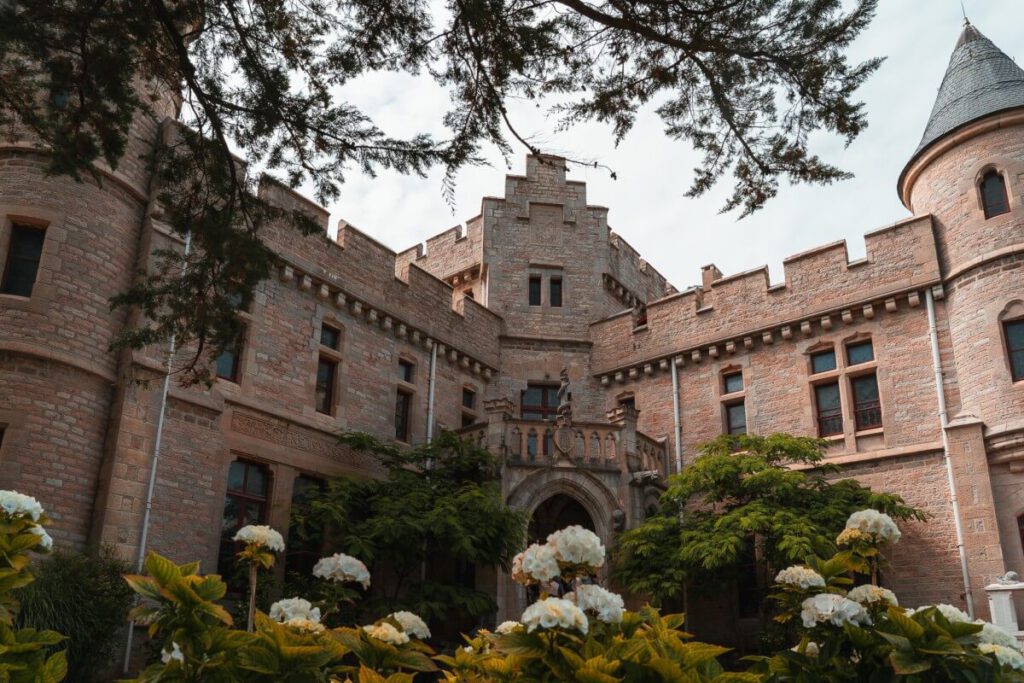
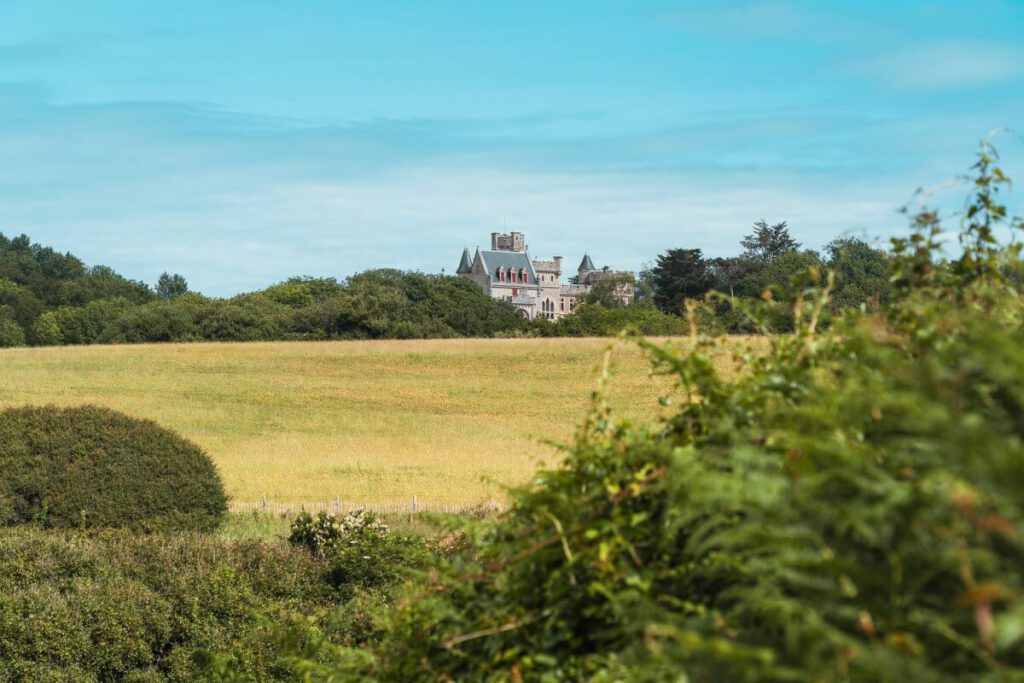
In Hendaye, there’s a beautiful castle nestled between the mountains and the coast, offering stunning views of both – the Château d’Abbadia, named after the cartographer, ethnologist, and adventurer Antoine d’Abbadie. For a €2.50 admission fee, you can walk through the garden and tour the castle from the outside. The castle’s façade is unique, featuring many animal stone sculptures that reflect Antoine d’Abbadie’s interest in the Orient and Africa. Can you find them all? Guided tours of the castle’s interior are also available, though not with an English-speaking guide.
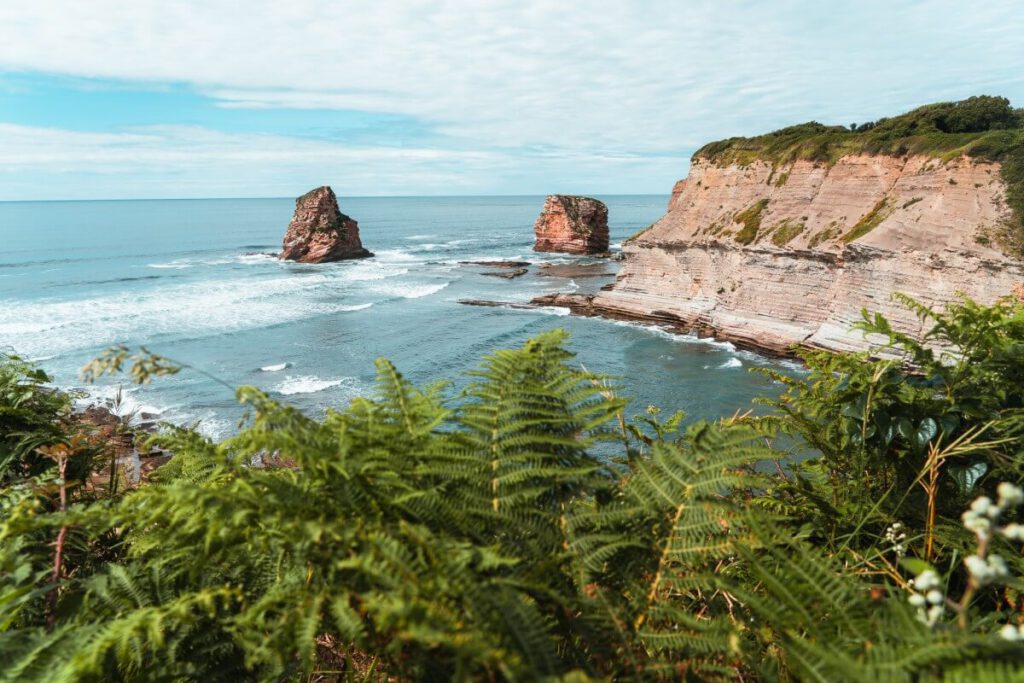
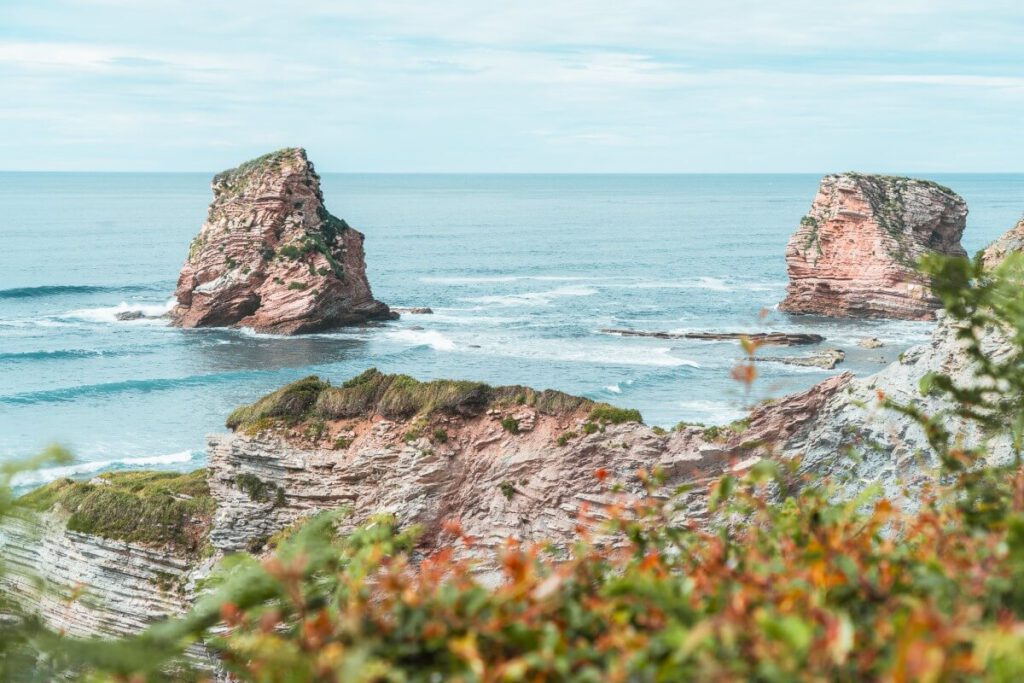
There’s a really great hiking trail along the coast in Hendaye that takes you around the Rochers des deux Jumeaux area in about 30 to 45 minutes. From the cliffs along the trail, you’ll enjoy fantastic views of the coast and the rock formations in the water.
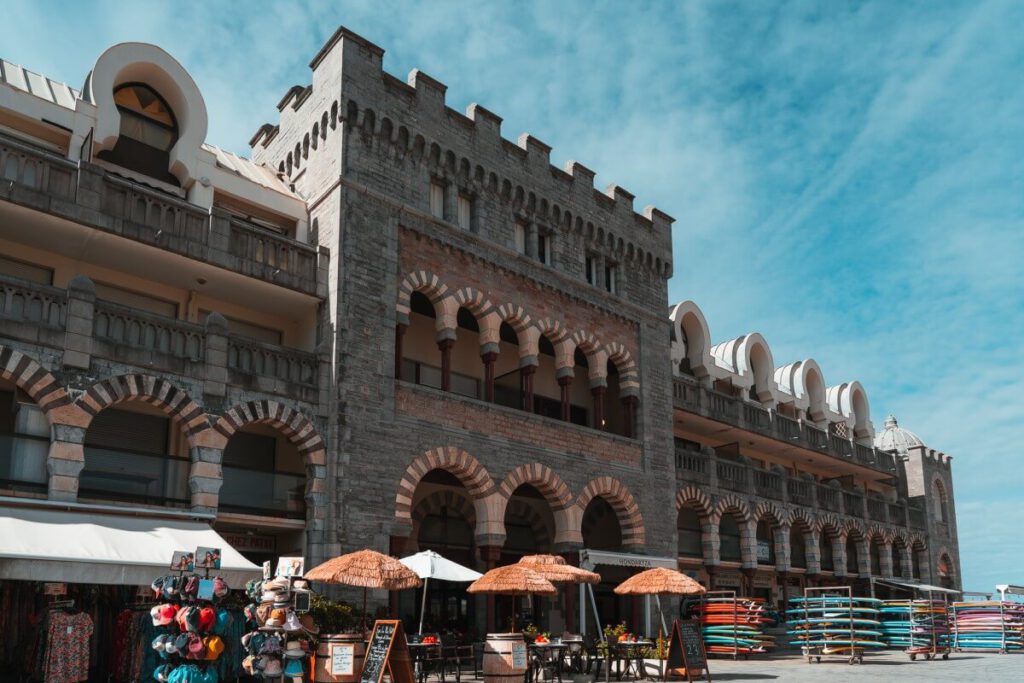
A particularly striking feature of Hendaye Beach is the Résidence Croisière, built in 1884 in the Moorish-Orientalist style. The building once served as the town’s casino and is typical of the seaside resort architecture of that era.
📢 Don’t miss these highlights in Hendaye:
Evening catamaran cruise with local appetizers
Hondarribia
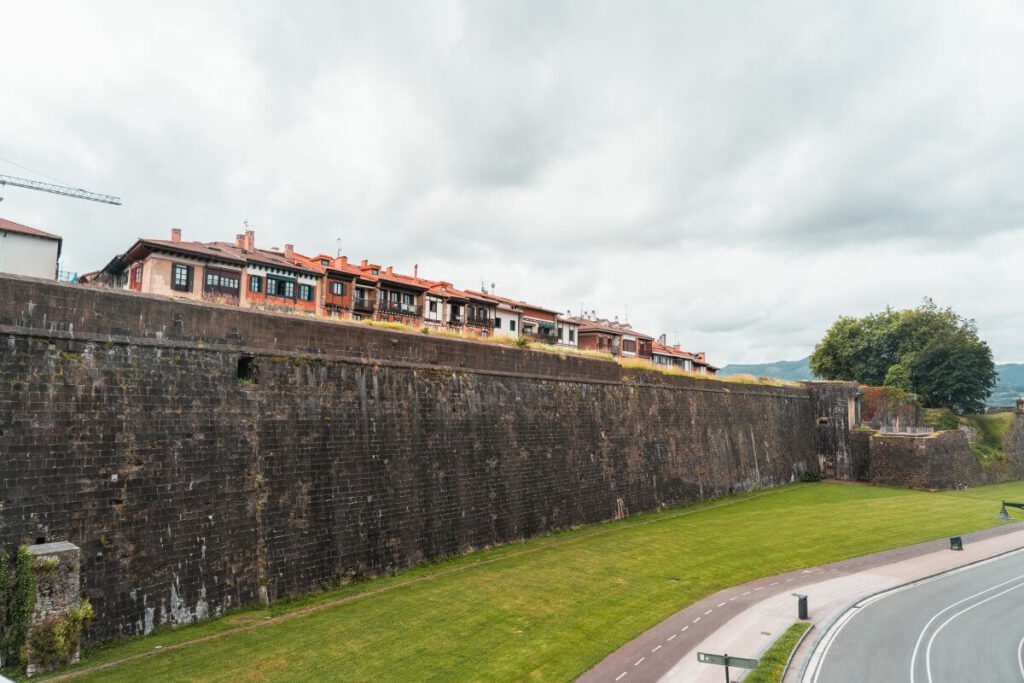
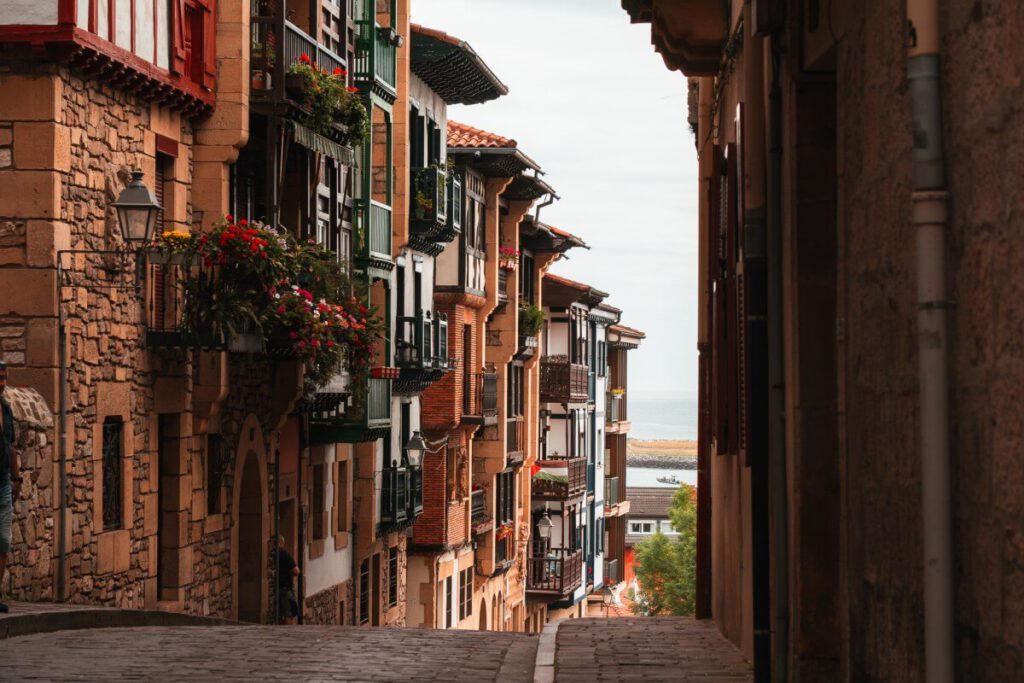
Like Hendaye, Hondarribia is located right at the mouth of the Bidasoa River. You can therefore easily reach the town from Hendaye in just a few minutes by car. A stroll through the hilltop old town with its medieval city walls is well worth it. The historic center is exceptionally well-preserved: cobblestone streets, traditional stone houses, coats of arms on the facades, and the typically ornate and colorful wooden balconies.
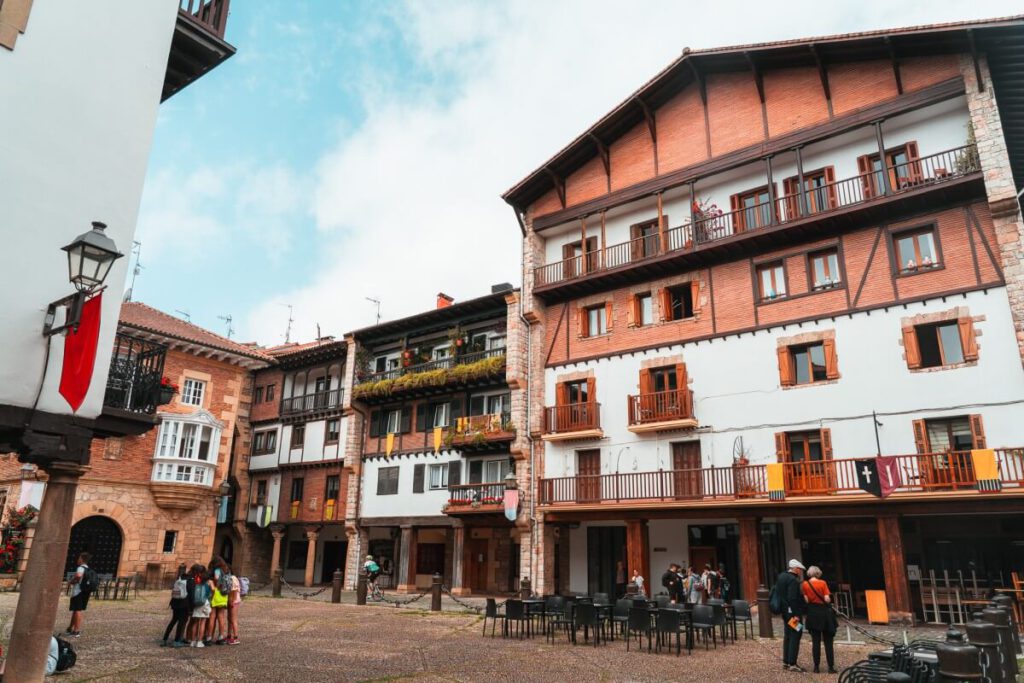
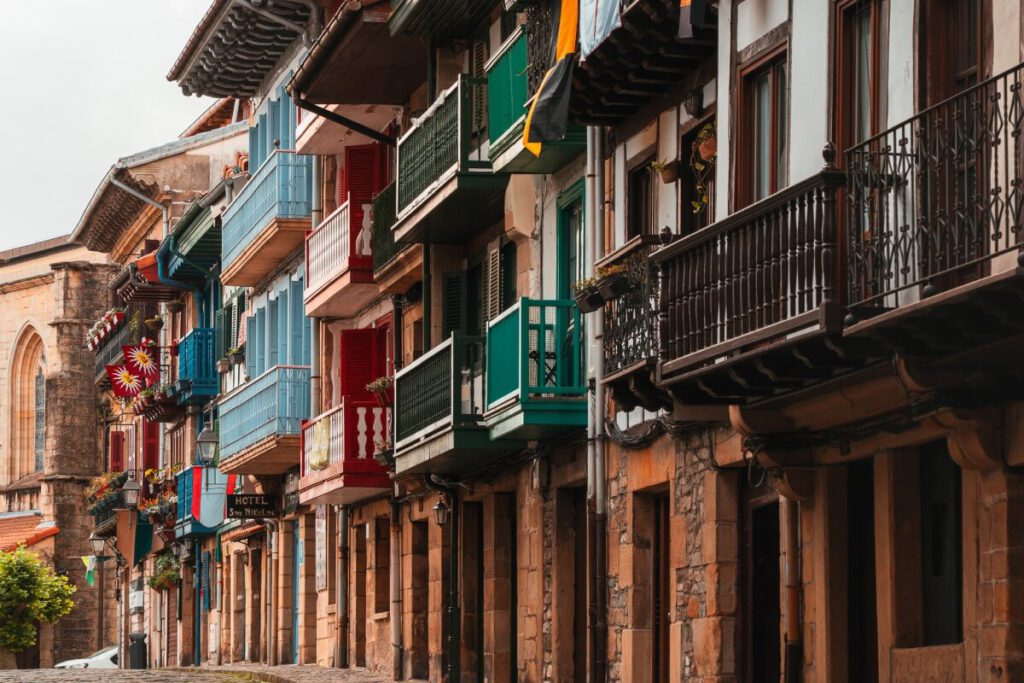
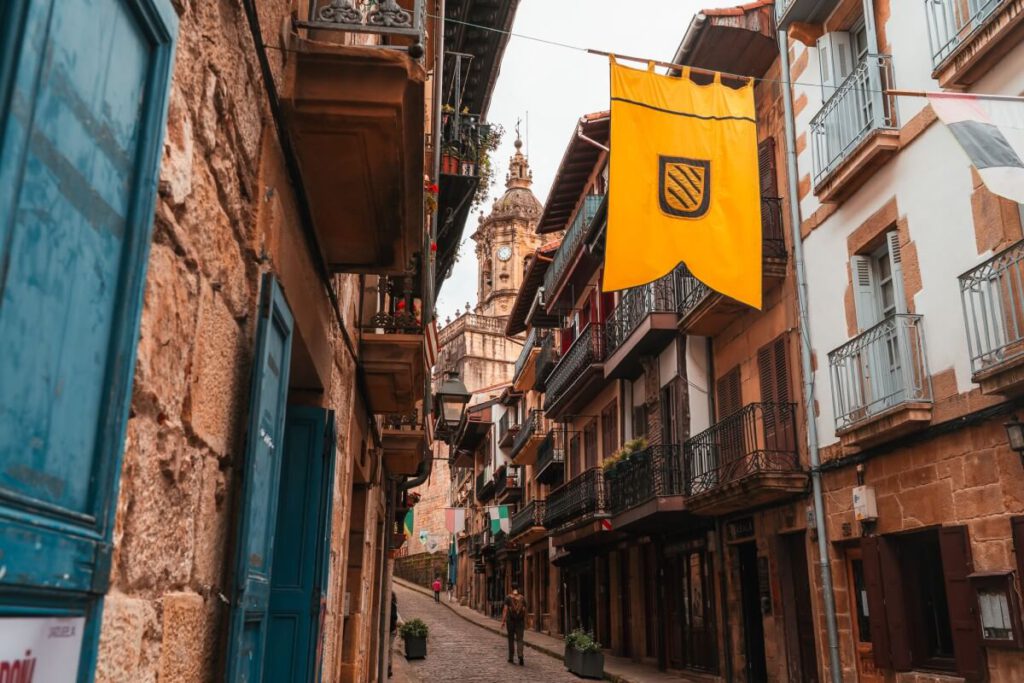
Explore the church square at Santa María de la Asunción y del Manzano and Gipuzkoa Enparantza Square, stroll through the narrow streets, and keep an eye out for the many details you can discover everywhere here. From the Old Town, you can also easily reach the fishing district, where you’ll find many local shops and restaurants along the marina.
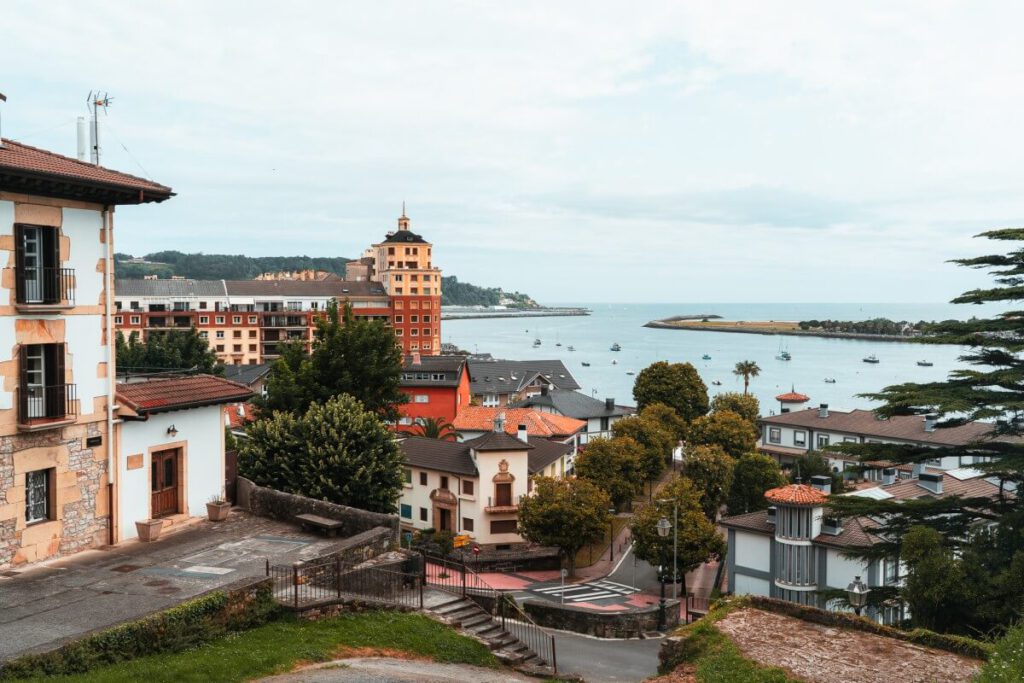
📢 Don’t miss this in Hondarribia
Deep-sea fishing trip on a traditional fishing boat
3. Hendaye to San Sebastián
- Duration: Day 5 to Day 8 (3 nights, 2 full days)
- Hotel Recommendation: Hotel Palacio de Aiete
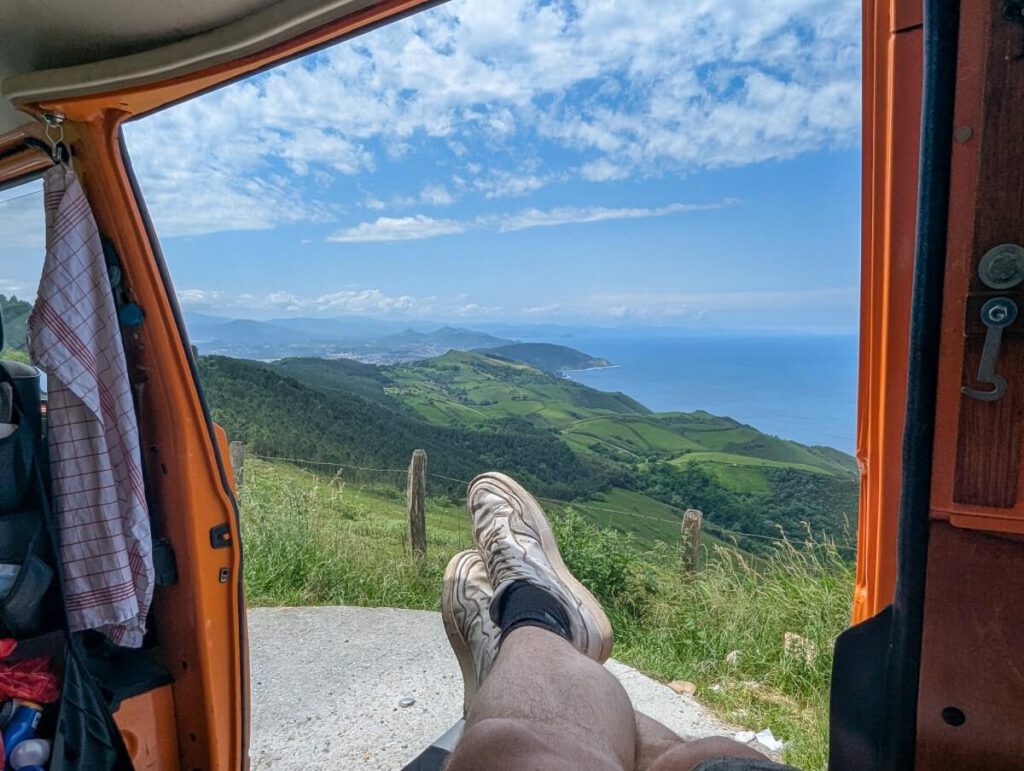
Next, we’ll head to San Sebastián. I highly recommend taking the coastal path over Mount Jaizkibel rather than the expressway further inland. The route does take longer and can be quite steep at times, but you’ll be rewarded with spectacular views. You should set aside at least two full days for San Sebastián itself. In my opinion, the city is one of the most beautiful in Europe, perhaps even in the world.
Ruta Jaizkibel
There are several stops along the route over the Jaizkibel ridge that are well worth visiting. The first is at the Guadalupeko Ama Birjinaren Santutegia shrine. From the parking lot, you’ll have a great view of the bay, including Hondarribia and Hendaye. There are also a few great hiking trails. Just a few meters further on the other side of the road, a short loop trail leads around the 19th-century Guadalupeko gotorlekua fort.
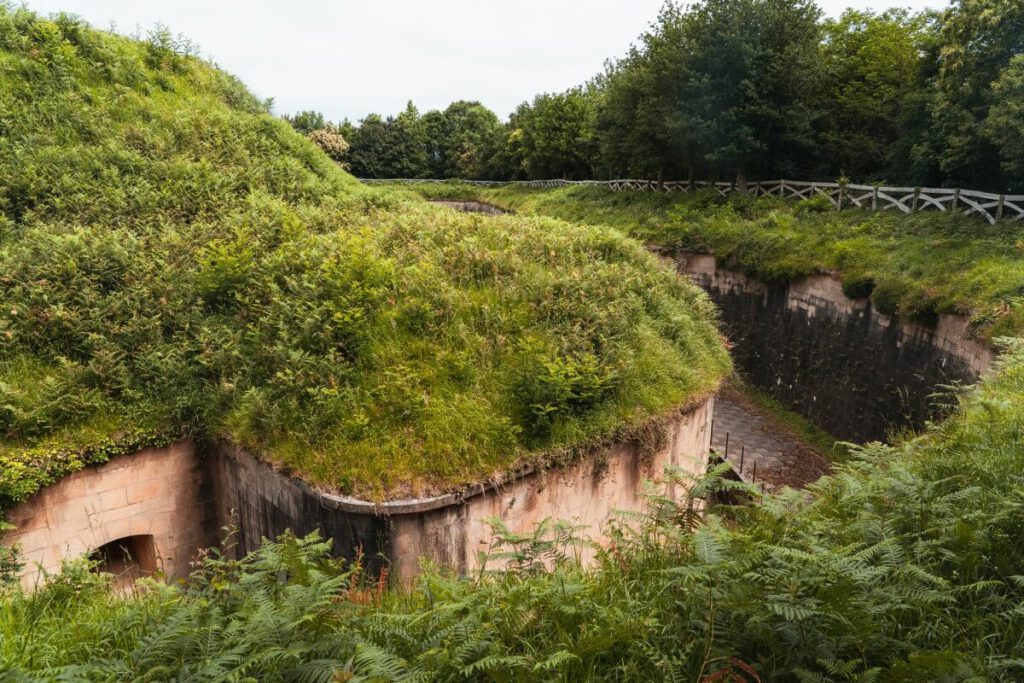
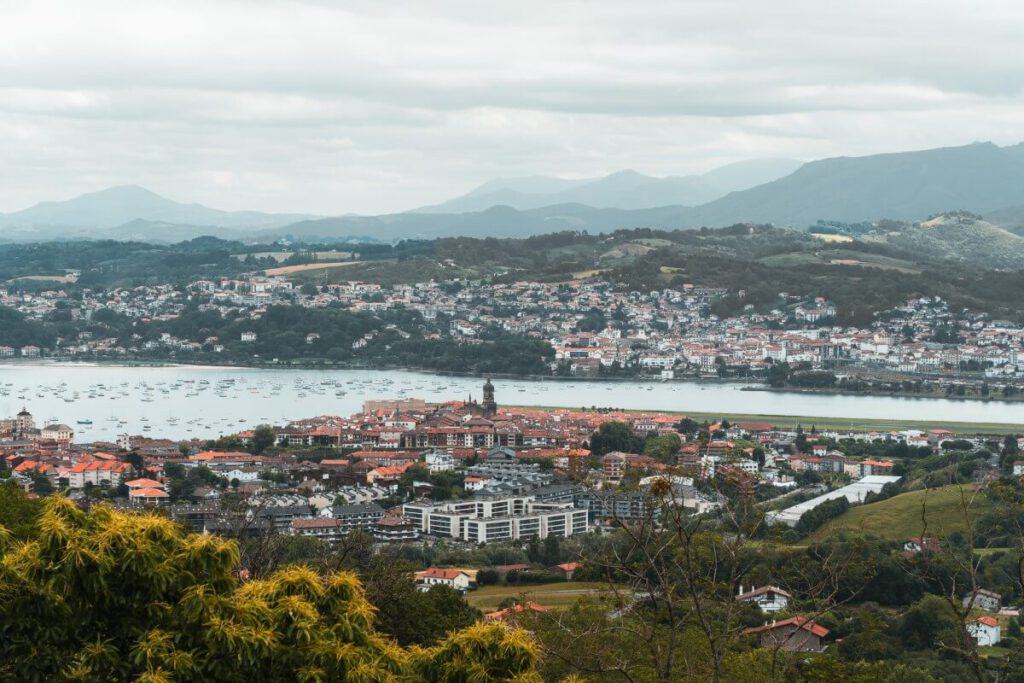
You should definitely stop at the Torre de Santa Bárbara (Jaizkibeleko IV. Dorrea (Santa Barbara)). The tower stands on the ridge of Jaizkibel, and right next to it is a lookout point that offers a fabulous panoramic view of the landscape.
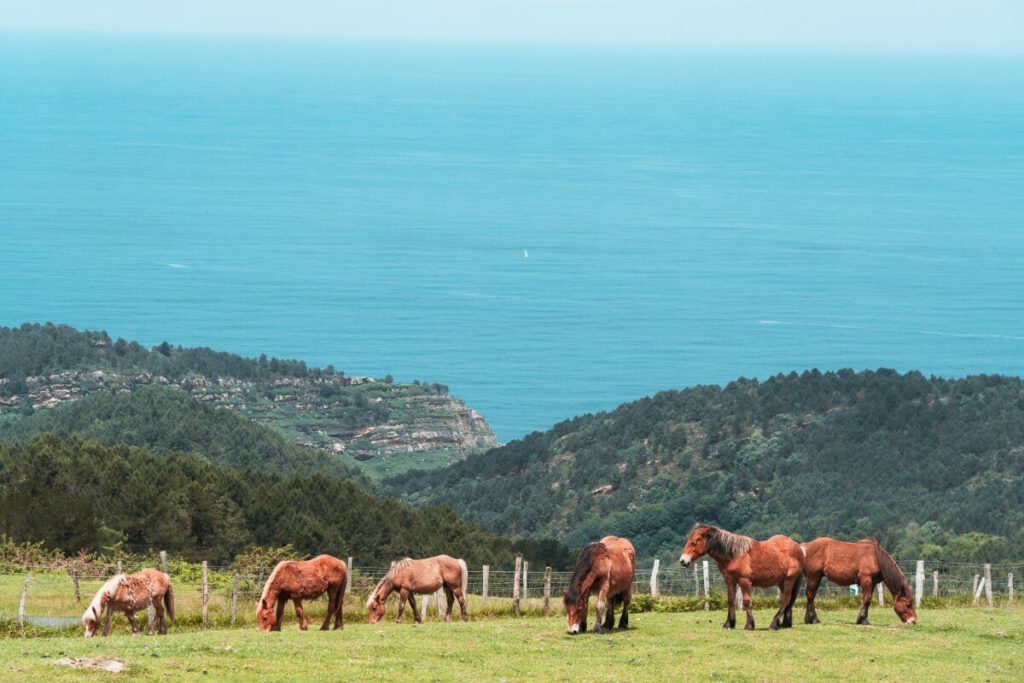
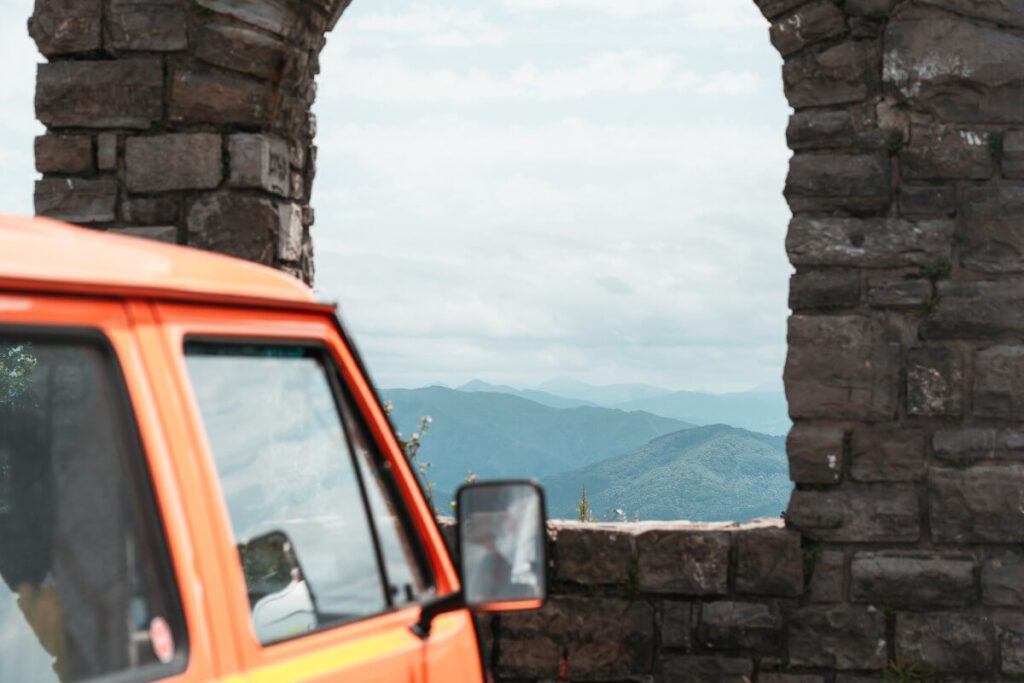
As you continue on your way, you’ll keep coming across stunning views, some of which offer a glimpse of San Sebastián Bay.
San Sebastián
San Sebastián is considered one of the most beautiful cities in the world. It combines the dramatic scenery and beach culture of Rio de Janeiro with the urban elegance and architecture of Barcelona – but all within a much smaller area. Add to that unique culinary delights, significant historic buildings, and natural highlights with spectacular panoramic views.
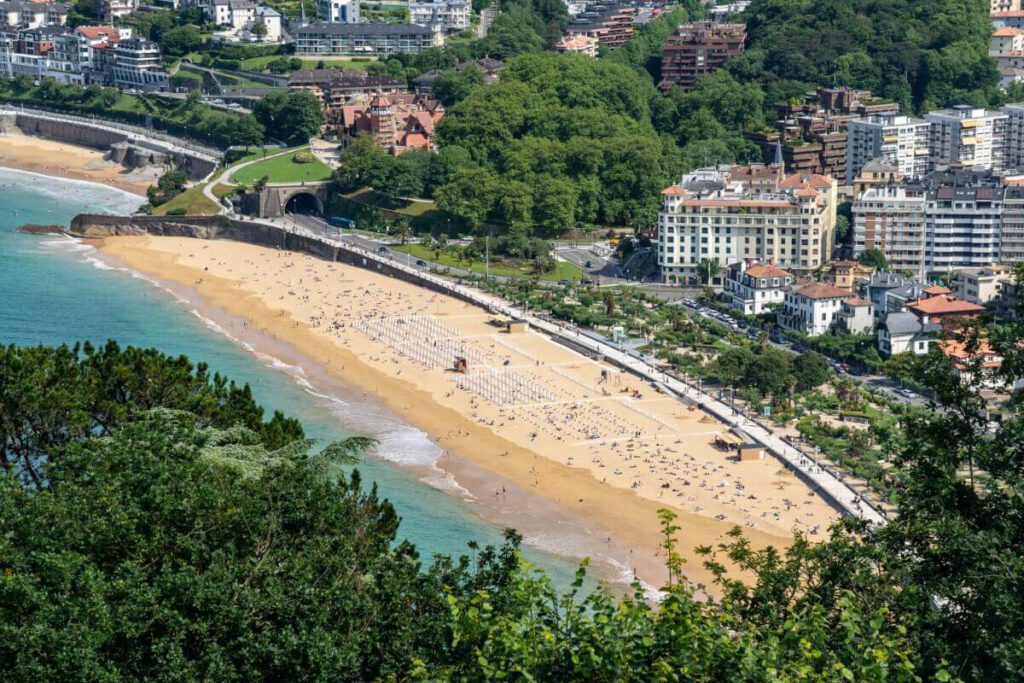
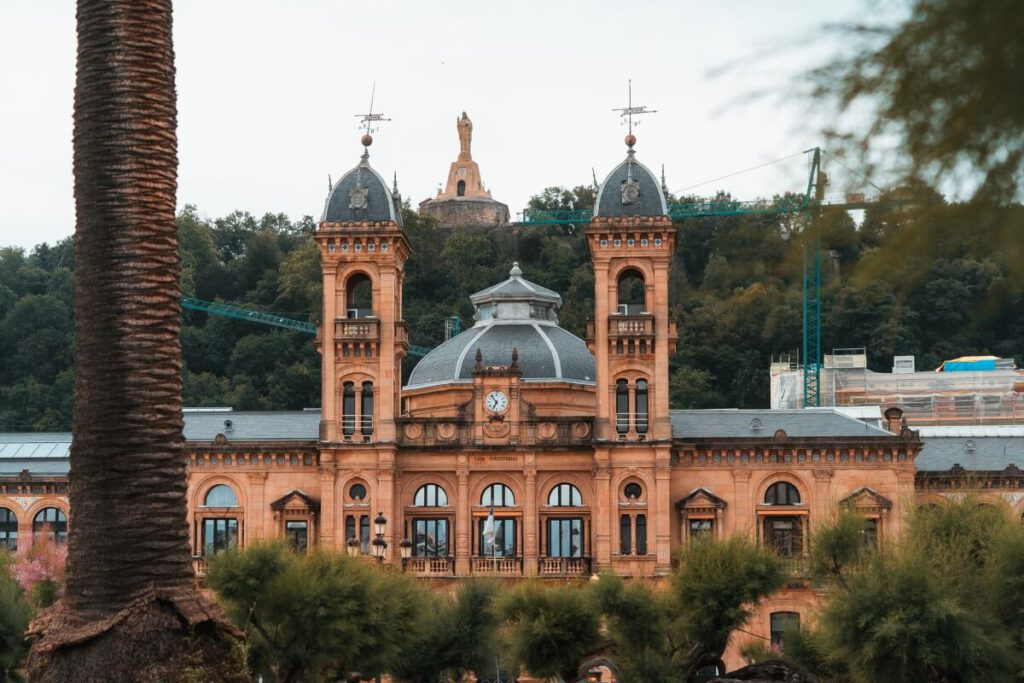
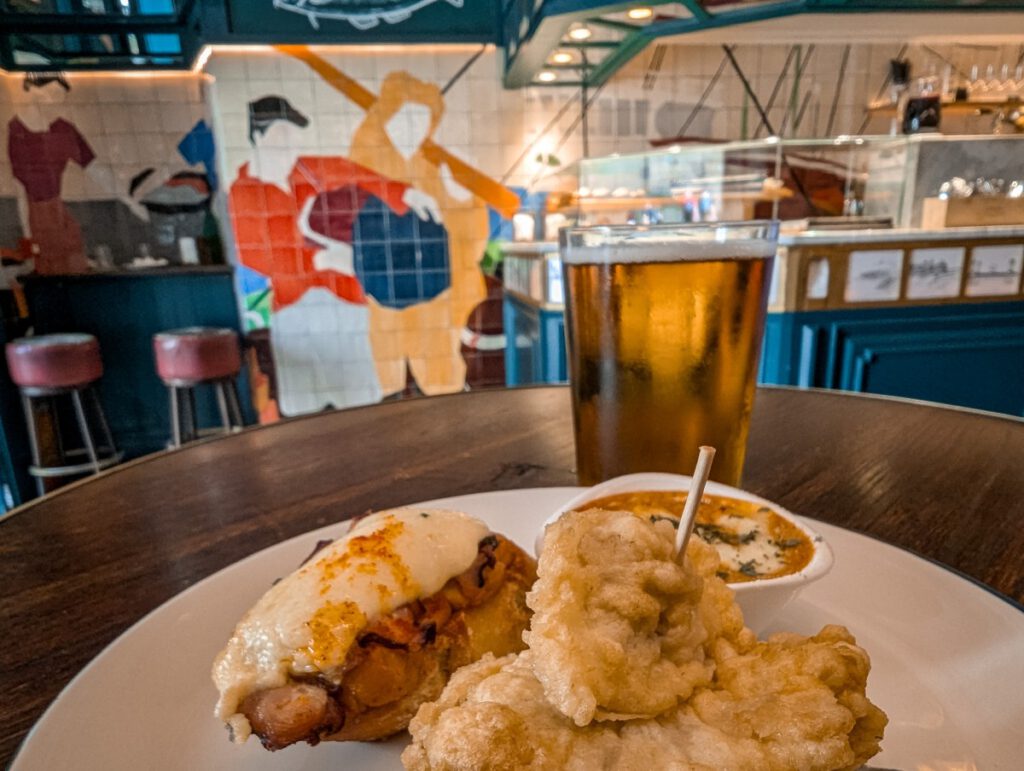
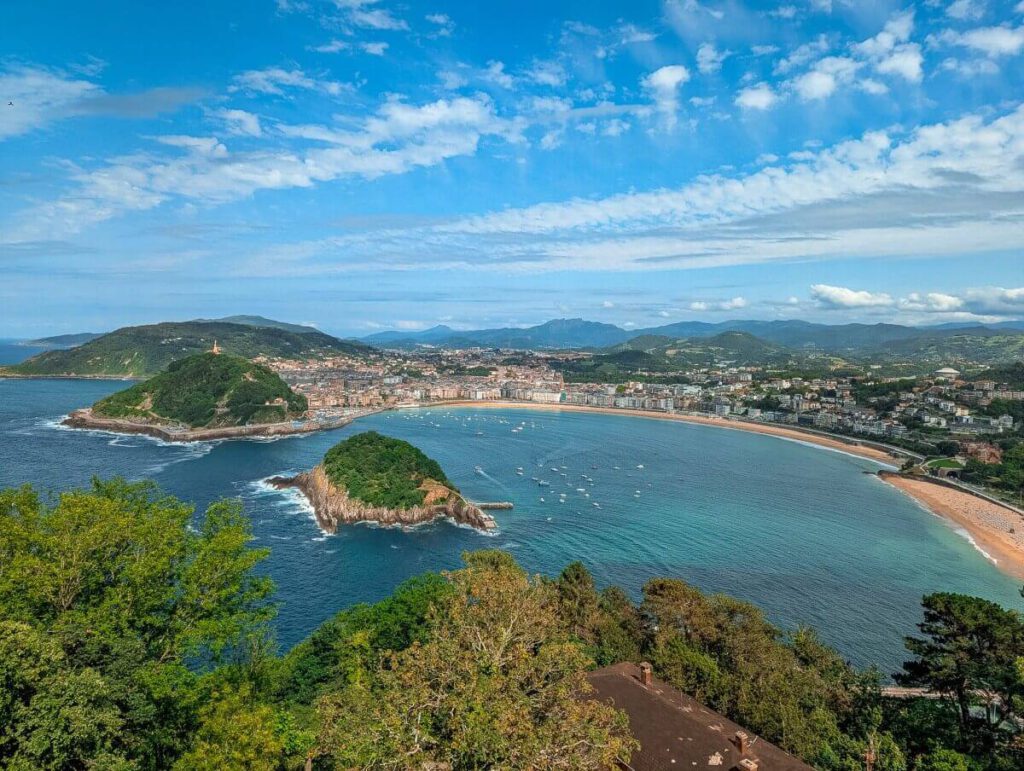
Find out here what there is to do in San Sebastián and get plenty of tips for a city break:
Even though you’re on a road trip, I recommend staying at a hotel. In my opinion, the Hotel Palacio de Aiete is the best option if you’re traveling by car. That’s because it’s very easy to find parking here, yet you’re still not too far out of the city. It takes about 30 minutes to walk to the beach. Plus, the idyllic Aiete Park is right around the corner.
While there are a few campgrounds within the city limits, they are actually quite far from the center.
📢 Don’t miss these highlights in San Sebastián:
Food Tour in San Sebastián: Pintxo Tasting with Wines
4. San Sebastián to Zumaia
- Duration: Day 8 to Day 9 (1 night)
- Hotel Recommendation: Hotel Flysch
- Camping Tip: Camping & Bungalows Zumaia
From San Sebastián, the route continues to the beautiful town of Zumaia. This coastal route is simply stunning. You’ll pass by great beach towns like Zarauz and Getaria, which are worth a stop. And in Zumaia, you can explore the world-famous flysch rock formations and Game of Thrones filming locations.
Zarautz
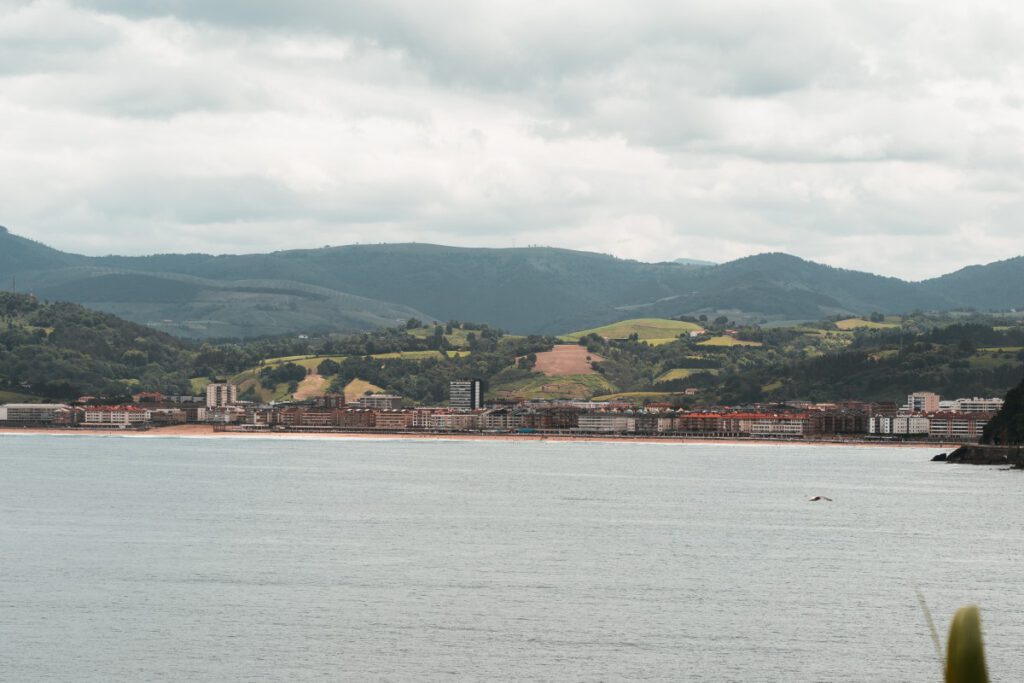
Zarautz has the longest beach in the Basque Country. It is about 3 km long and very popular with swimmers. In front of it is a lively beach promenade lined with bars and restaurants. Many surfers also come to this beach to ride the waves. There are also several surf schools where you can learn to surf.
Getaria
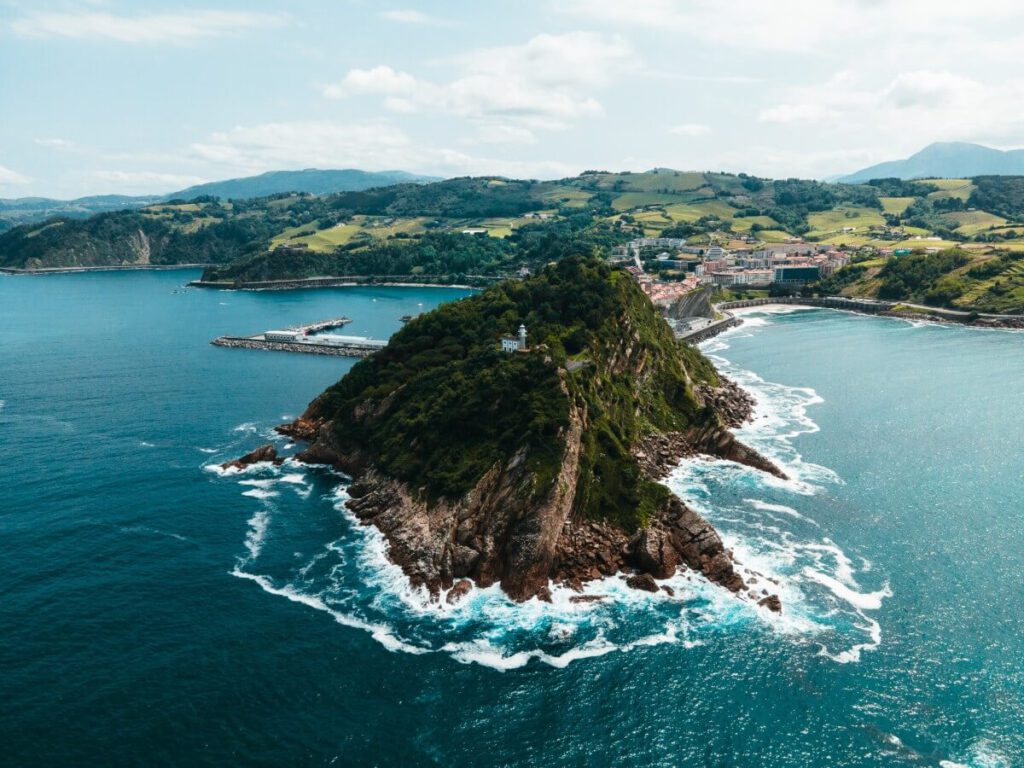
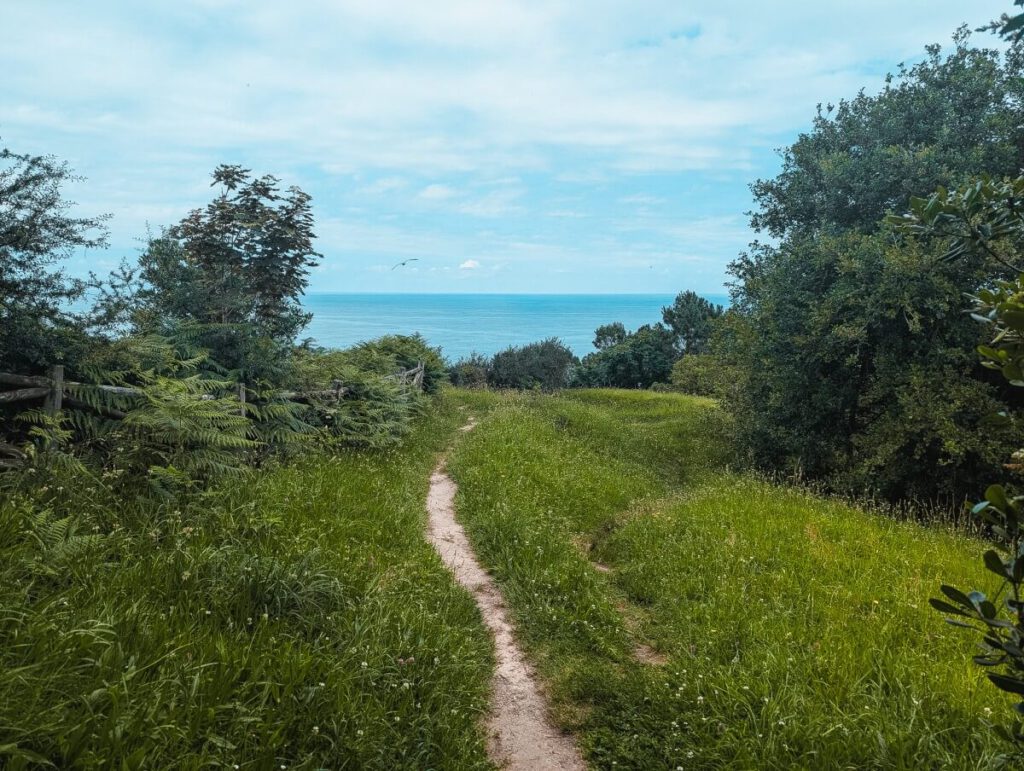
Getaria is a small, unassuming town on the coast, but it has some special sights to offer. You should definitely set aside 3–4 hours to explore them. First, there’s the mountain on the forested San Anton peninsula, which rises majestically into the sea. A hiking trail leads all the way to the top to a “lost place” where you can enjoy amazing panoramic views.
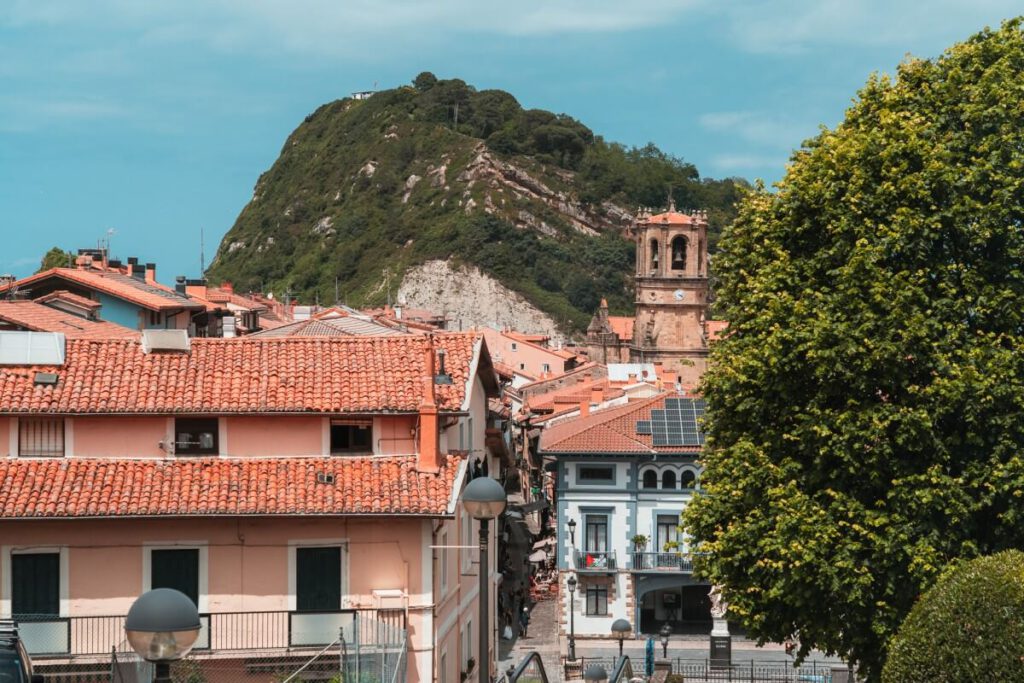
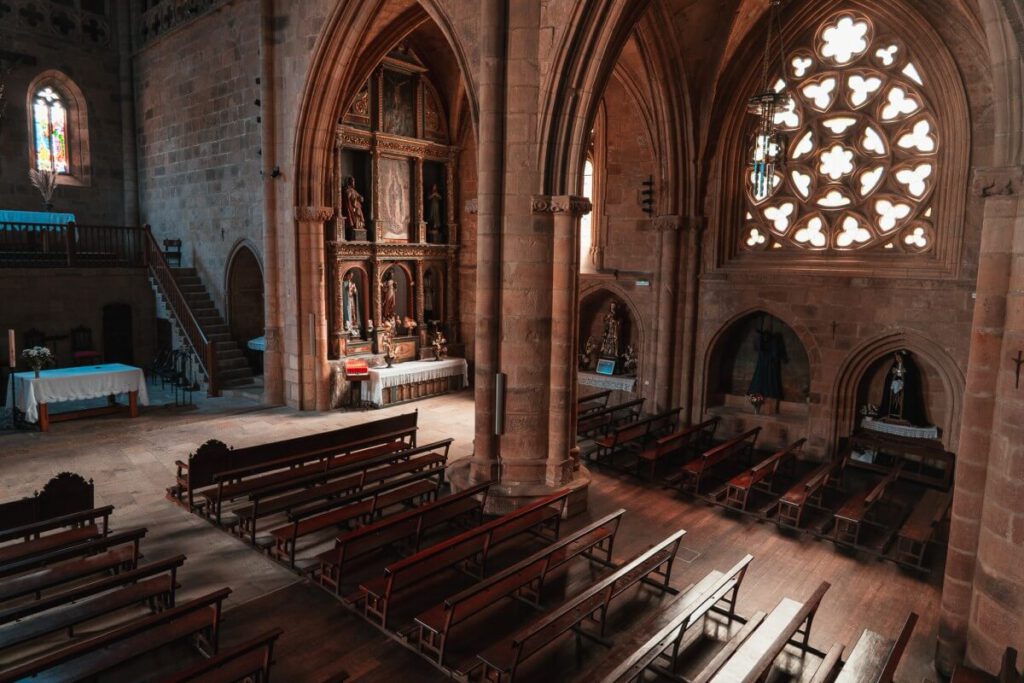
The Church of Salvatore Deunaren Eliza is also worth a visit. The builders took a particularly creative approach here by adapting the structure to the natural contours of the terrain. The highlight is the sloping floor that rises toward the altar, a result of the steep slope. Due to this same slope, there is even a covered passageway running beneath the church.
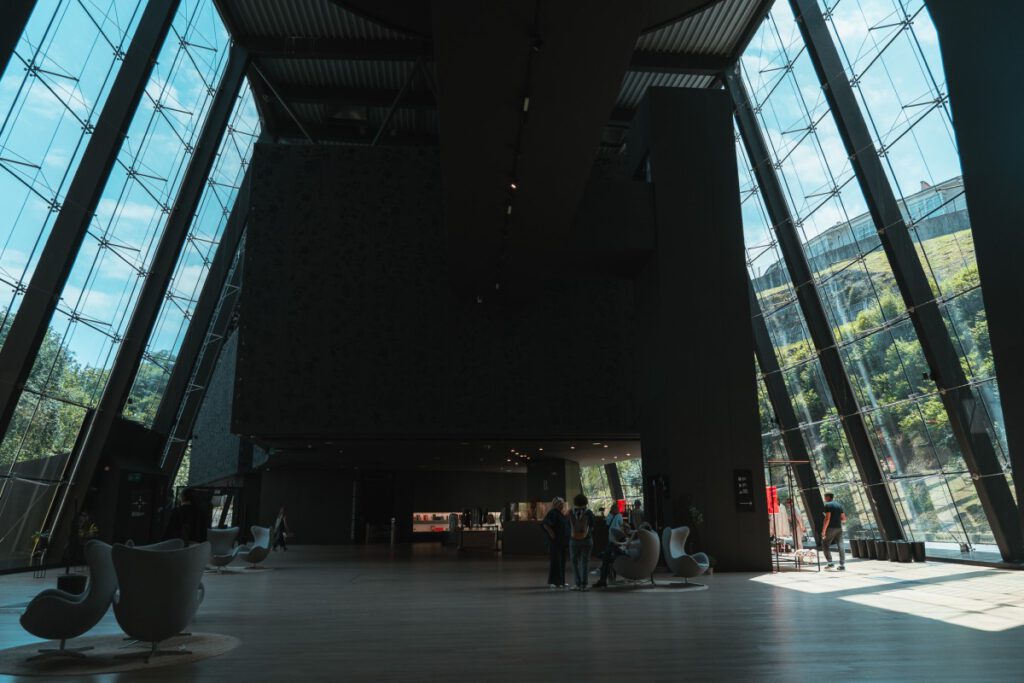
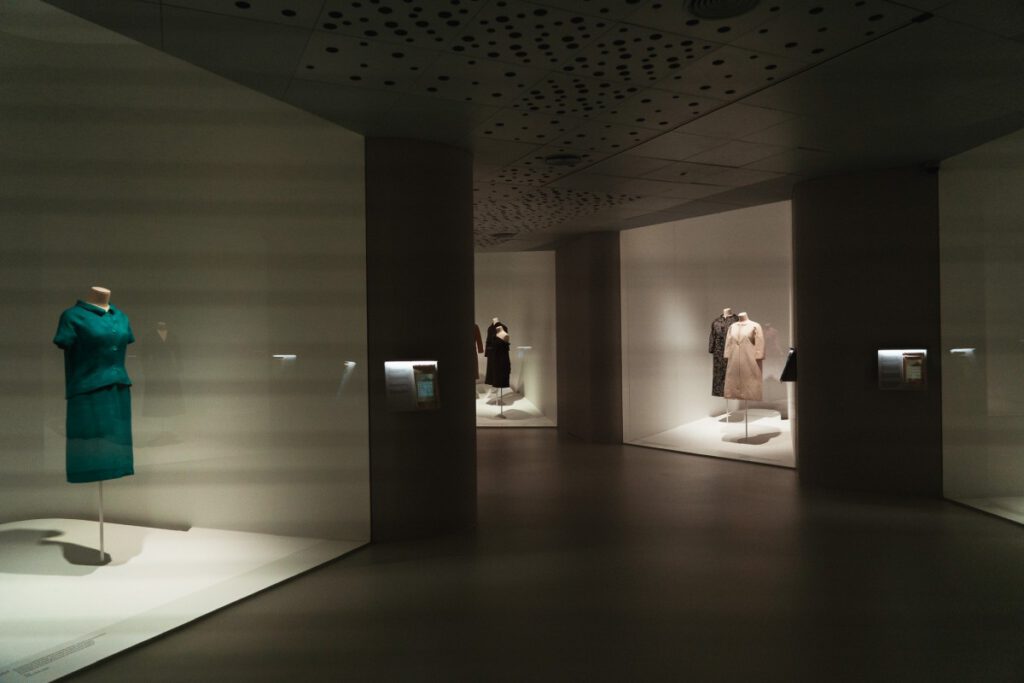
Getaria is also the birthplace of fashion icon Cristóbal Balenciaga. A modern museum has been built in his honor. If you’re not a fashion fan, you can save yourself the rather expensive ticket (€14) and instead just take a look at the impressive entrance hall, which is accessible without an admission fee.

Zumaia
The town of Zumaia itself is actually quite unspectacular. But that’s exactly why you shouldn’t skip it. The coastline here, in particular, is truly one-of-a-kind. When I arrived here in the evening during my own road trip and explored the paths along the coast, I sensed a very special atmosphere:
The clouds hang low on the horizon today, which is why it’s hard to get a good shot of the sunset. I’m going to try anyway. A few seagulls circle overhead above the beach, where children are drawing lines in the sand with their feet and playing soccer long after the blue hour has passed. The waves crash loudly against the flysch, those ancient, folded rock layers that the sea has exposed and smoothed over millions of years. I’ve already walked along the coast here today and taken my time looking at everything closely. Most tourists gather at the cliff famous from Instagram. I stand there all alone in shorts and notice from my goosebumps that I’m already getting a little chilly. My sunset photos didn’t turn out quite as well as I’d hoped, either. And yet this evening on the northern Spanish coast of the Bay of Biscay is one of the most beautiful moments of my trip. Maybe precisely because not everything was so perfect. I stand there for another hour and watch the lighthouses light up. The children are still playing. I wonder how they can even see the ball anymore, and head back to the hotel.
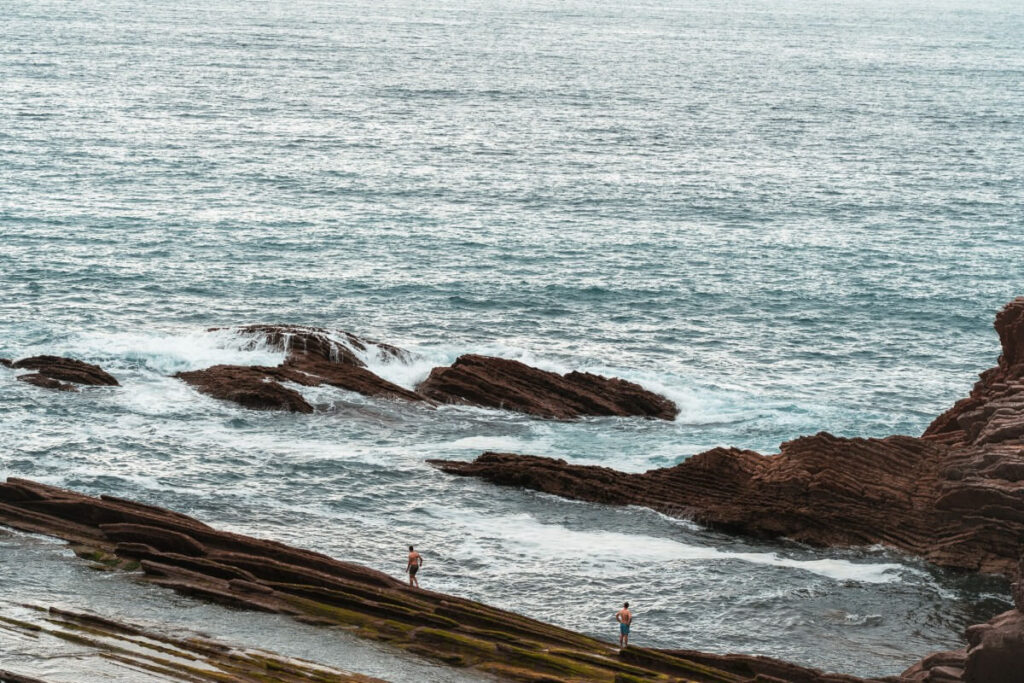
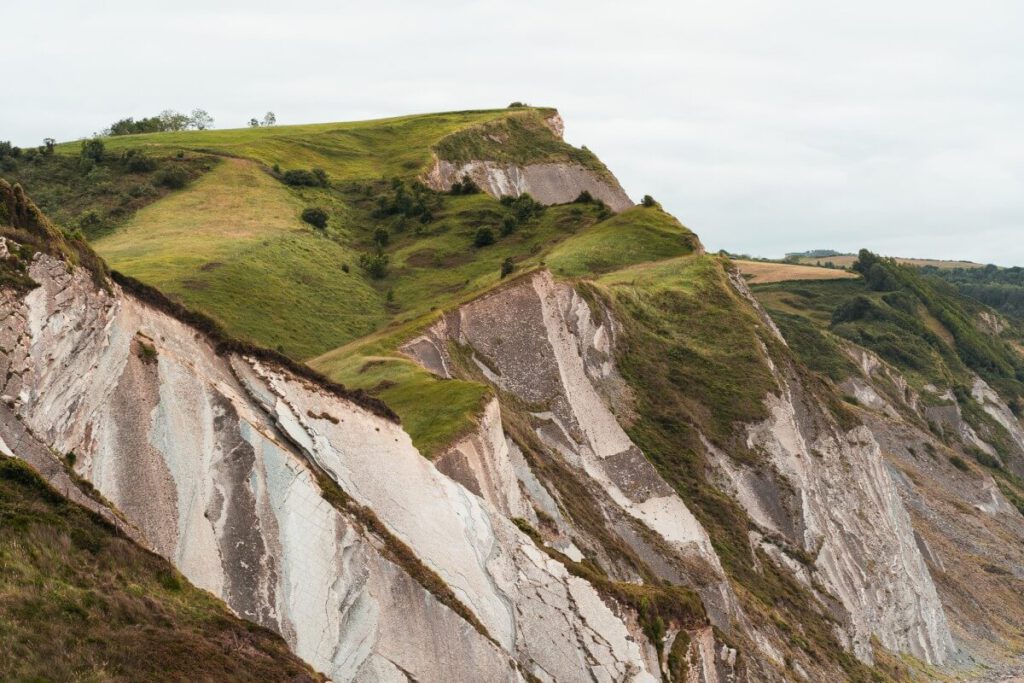
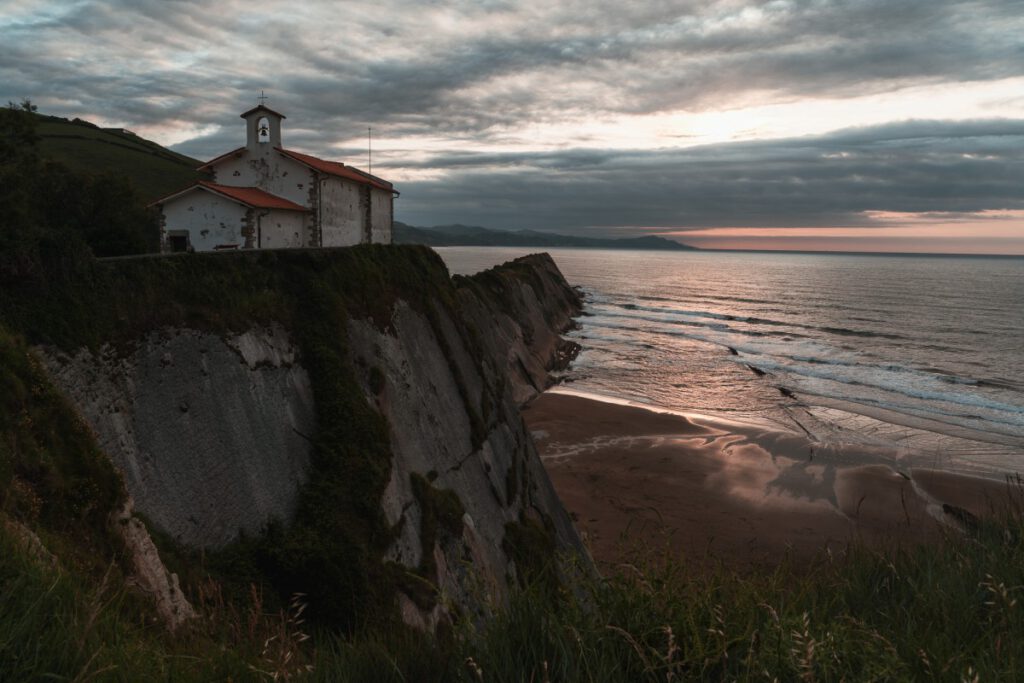
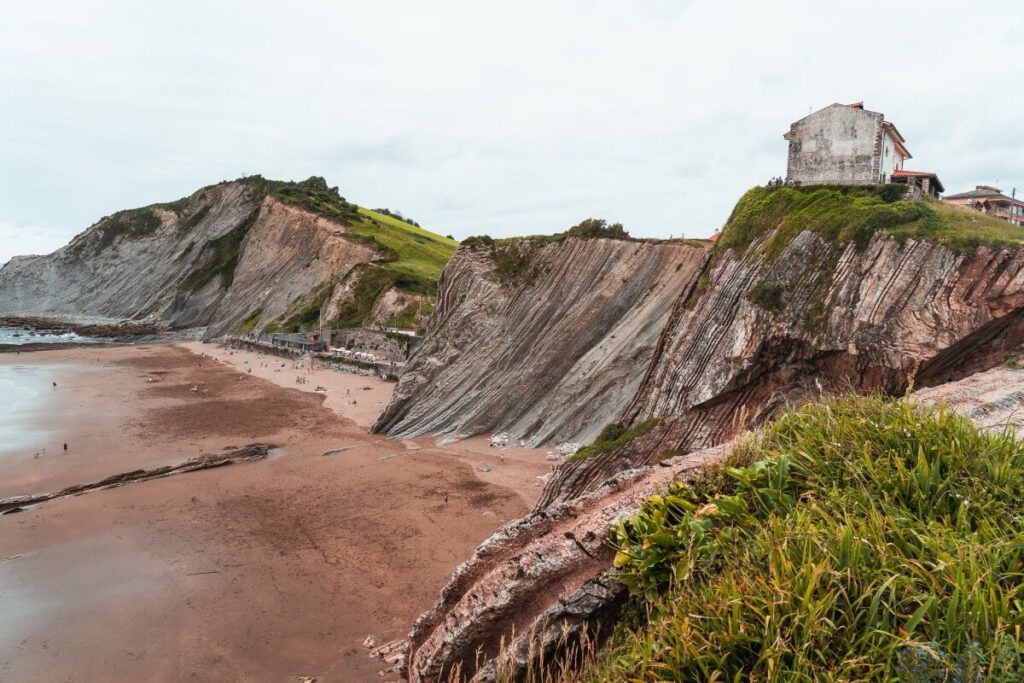
Located between Zumaia and Deba, the Basque Coast Geopark features impressive cliffs and the famous flysch rock formation. It is designated as a UNESCO Global Geopark. This flysch formation is most spectacular in Zumaia. You’ll have a magnificent view, especially from the small San Telmo Chapel. It was also the filming location for the wedding scene in the Spanish comedy “Ocho Apellidos Vascos,” and Zumaia’s Itzurun Beach even served as the backdrop for Dragonstone in the series Game of Thrones.
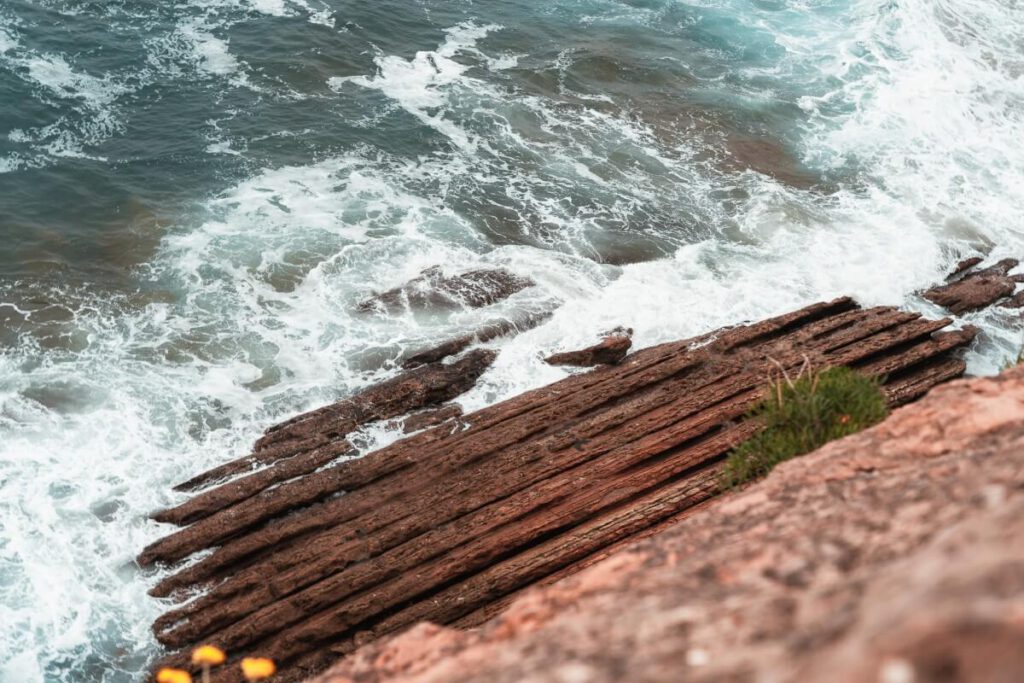
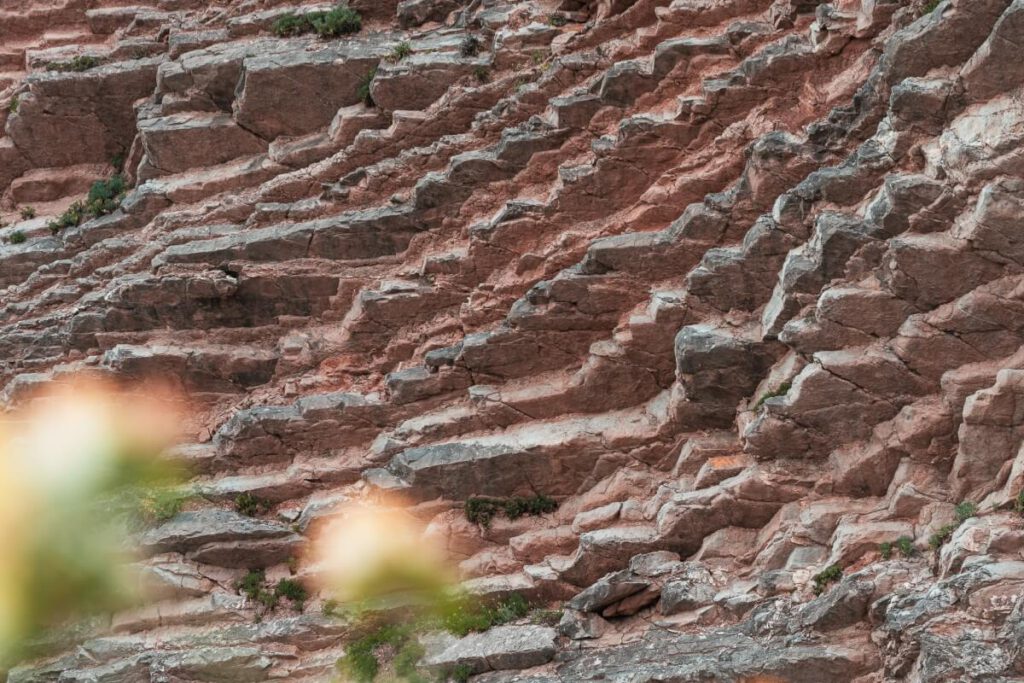
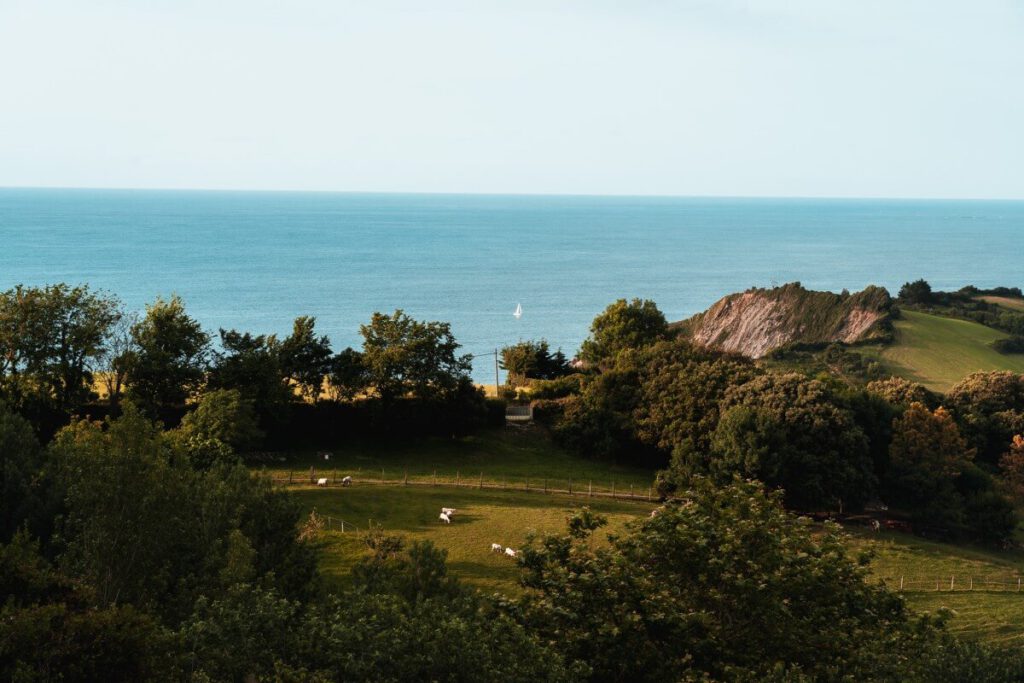
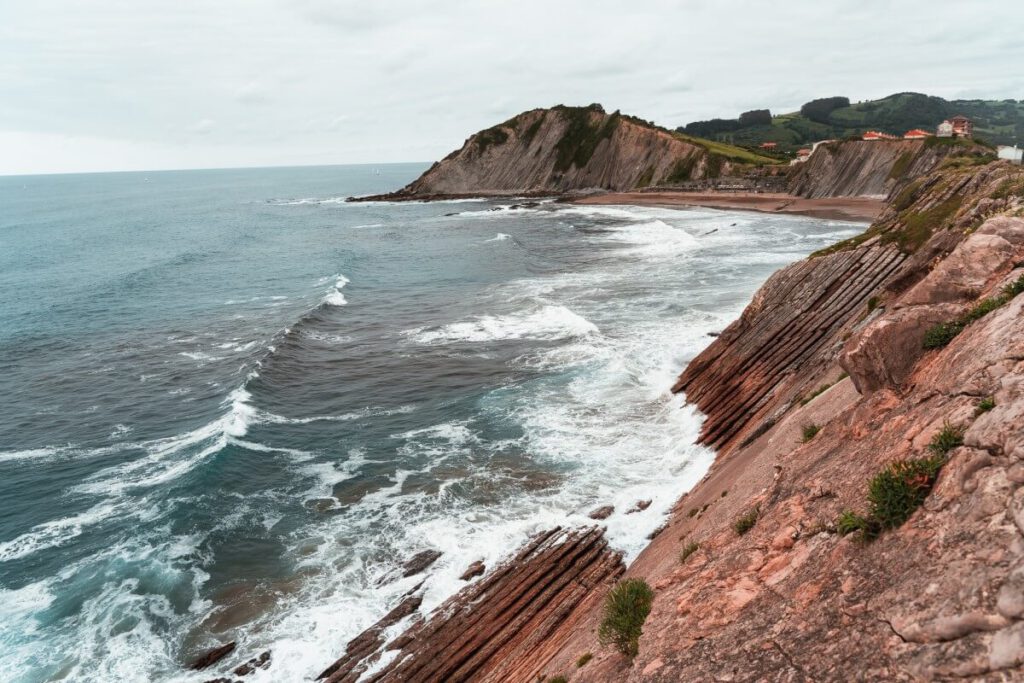
Be sure to set aside at least two hours to hike part of the Flysch Trail. Start at the San Telmo Chapel and follow the coastline all the way to the Algorri Lookout (Algorriko Begiralekua). On the way back, you can head a bit further inland through the small villages and farms. You can find the area on OpenStreetMap here.
I really liked the informational signs along the trail that explain how the rock layers were formed. Later on this road trip, you’ll also have the chance to explore other sections of this gorgeous hiking trail.
5. Basque Coast Geopark
- Duration: Day 9 to Day 11 (2 nights, 1 full day)
- Hotel Recommendation: Hiru Uhinak in Deba
- Camping Tip: Camping & Bungalows Itxaspe ❤️
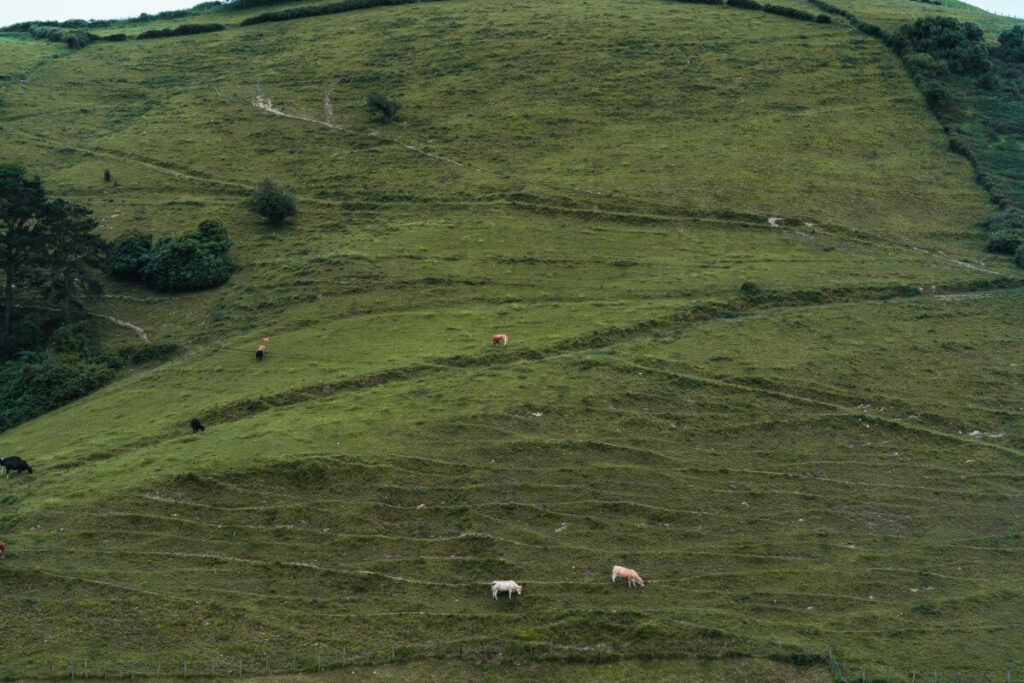
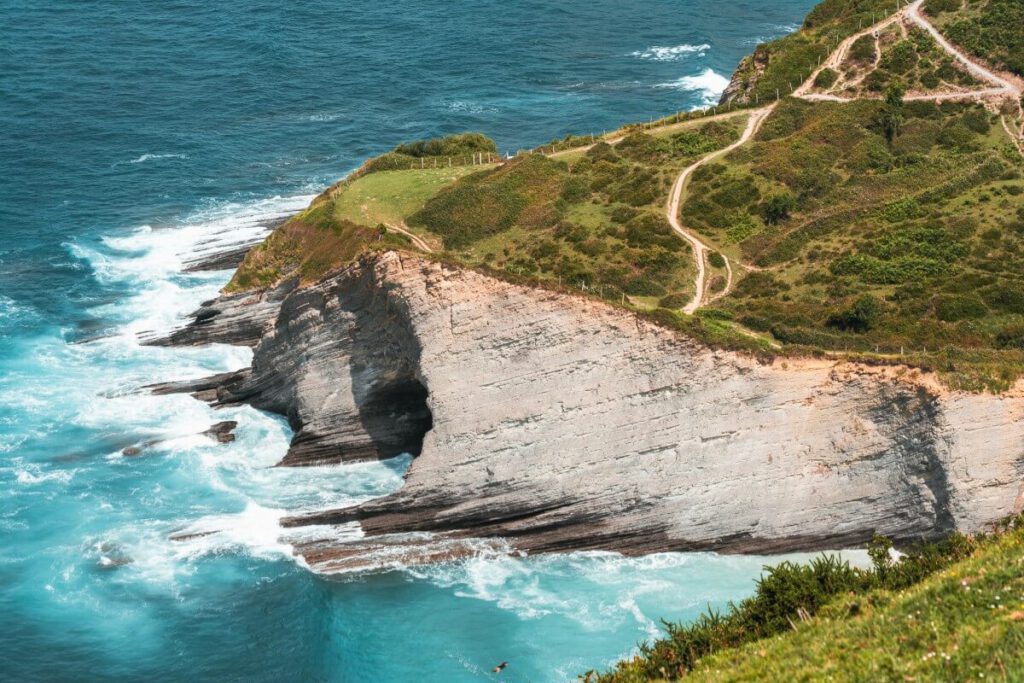
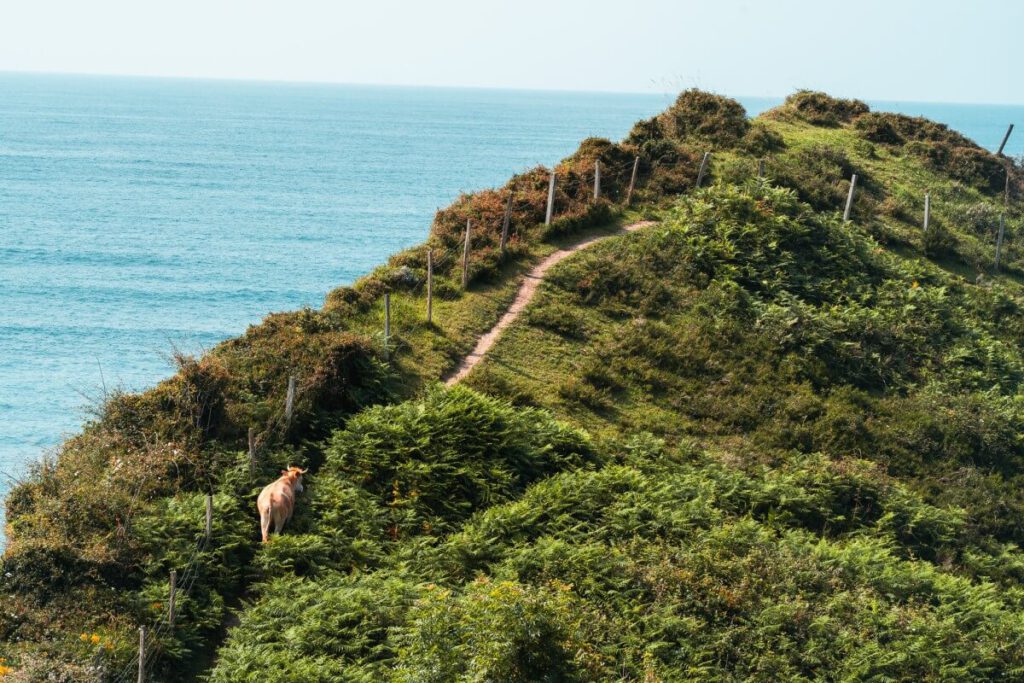
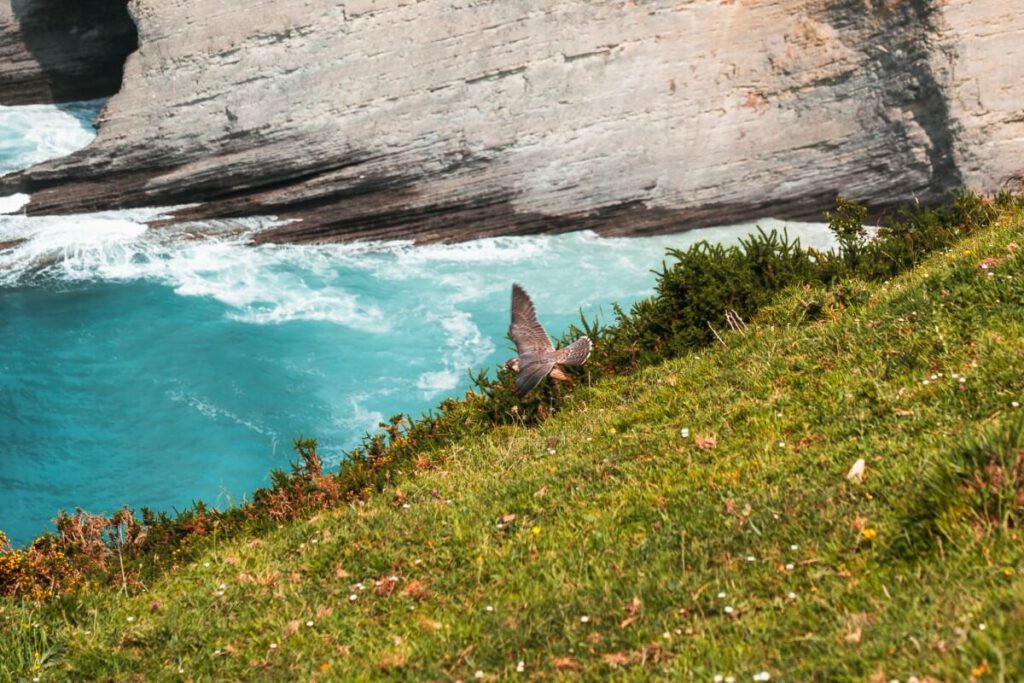
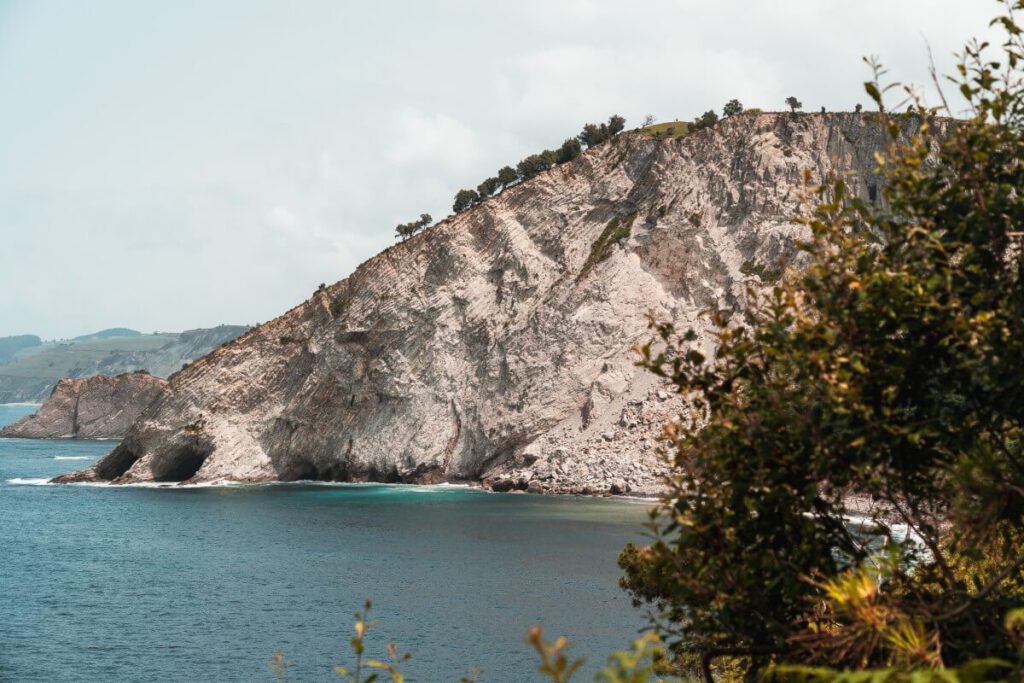
This natural phenomenon was my absolute favorite part of the entire road trip. The Basque Coast Geopark spans the three municipalities of Zumaia, Deba, and Mutriku and is one of Europe’s most significant geological regions. It is famous for the flysch formations along the cliffs – millions of years of Earth’s history etched into the rock. Behind them, gentle green hills, forests, and meadows await, where trusting sheep, goats, and cows graze.
It’s difficult to explore this region by car. That’s why I recommend finding a place to stay in one of the towns and then setting out on hiking excursions from there. My starting point was by far the best campground of my trip, in Itxaspe. But if you can’t find anything there, you could also stay at a hotel in Deba, for example.
Itxaspe
This small village is home to Camping & Bungalows Itxaspe, a truly wonderful campground that offers not only campsites with ocean views but also vacation rentals, as well as a shop and an infinity pool.
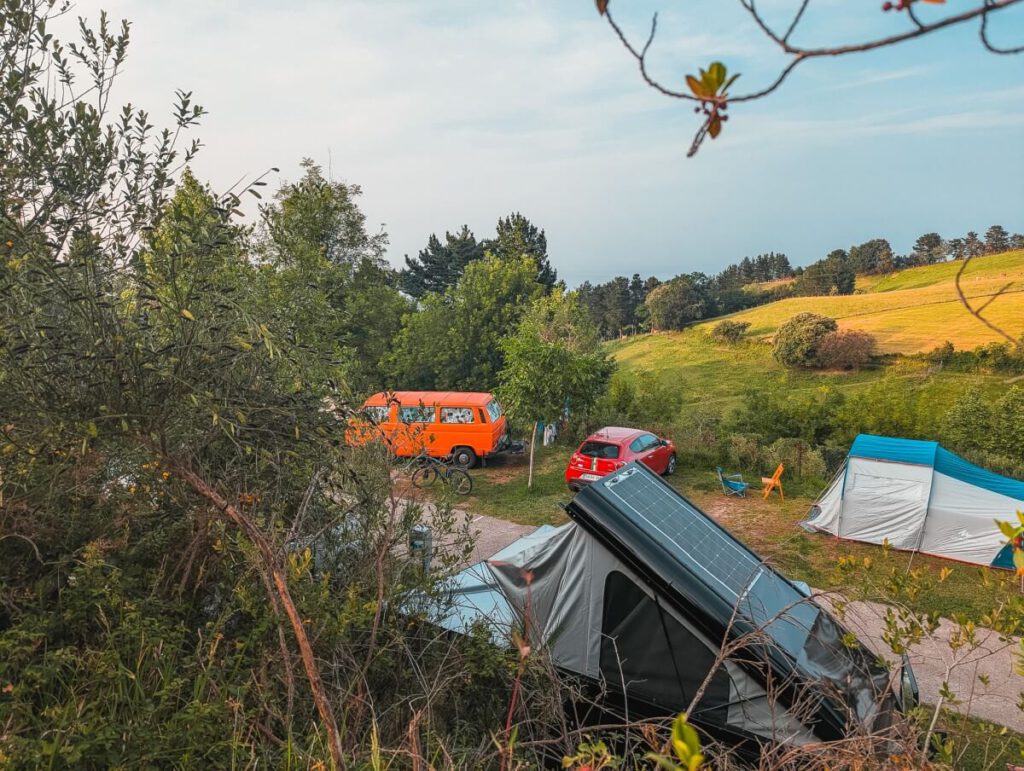
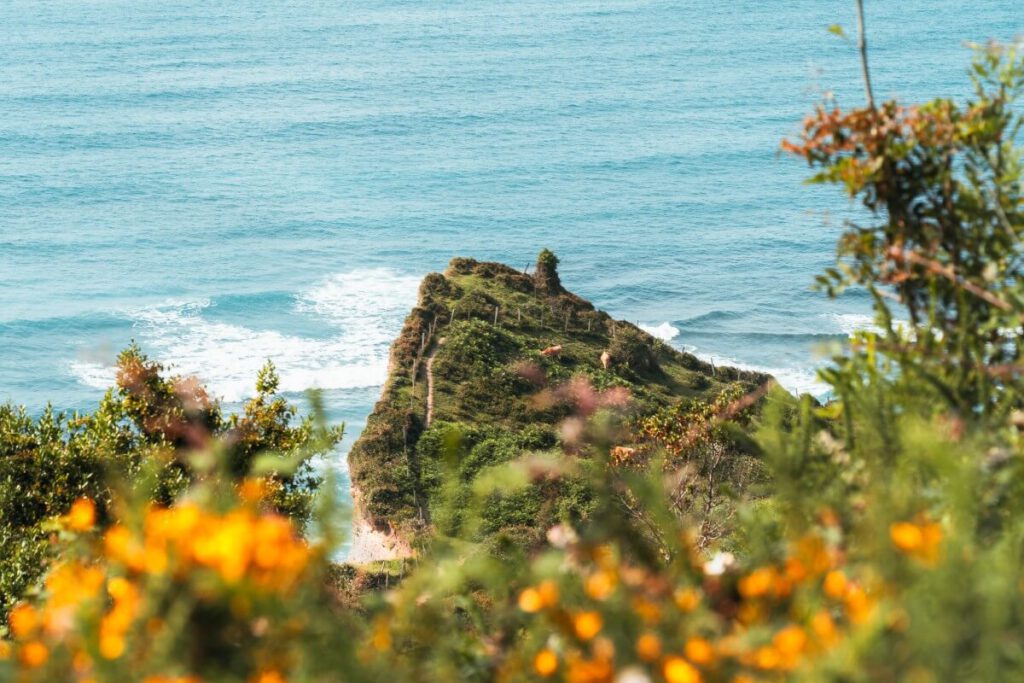
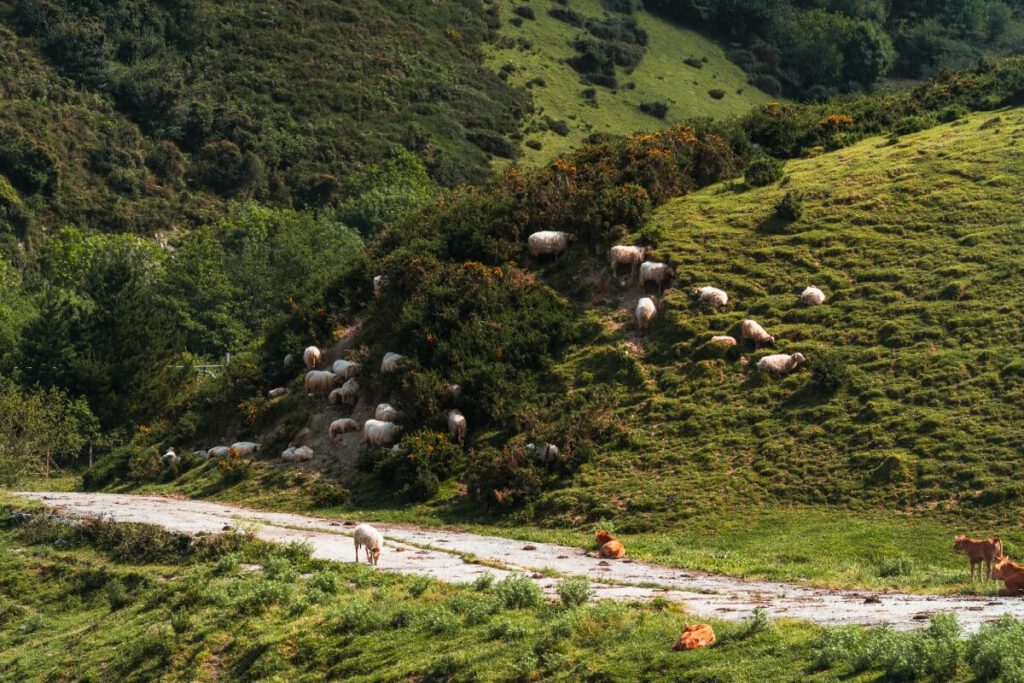
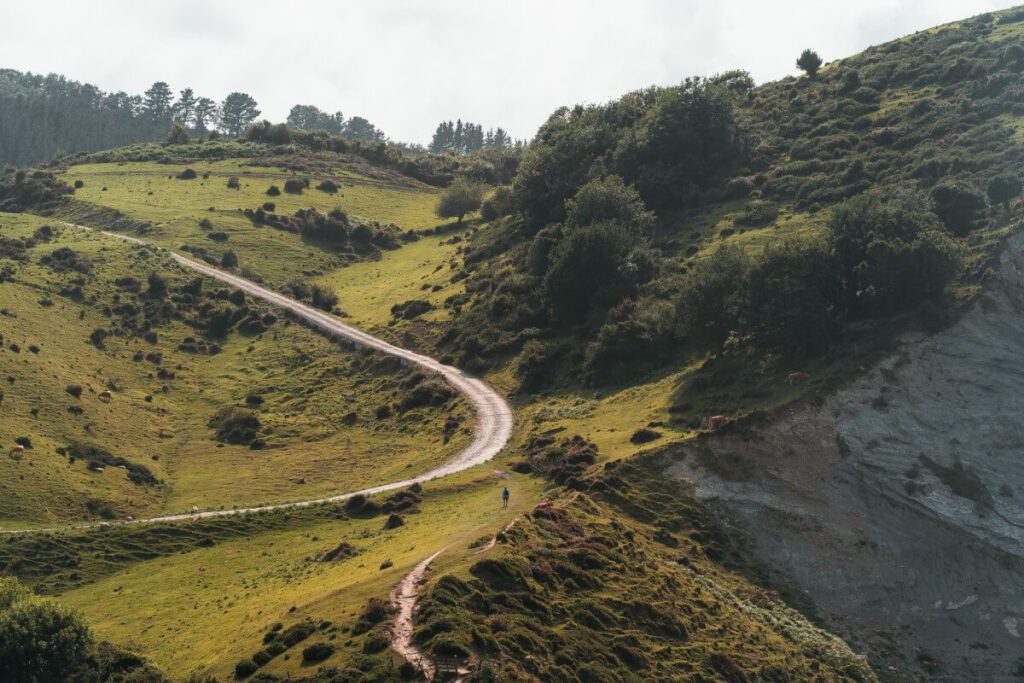
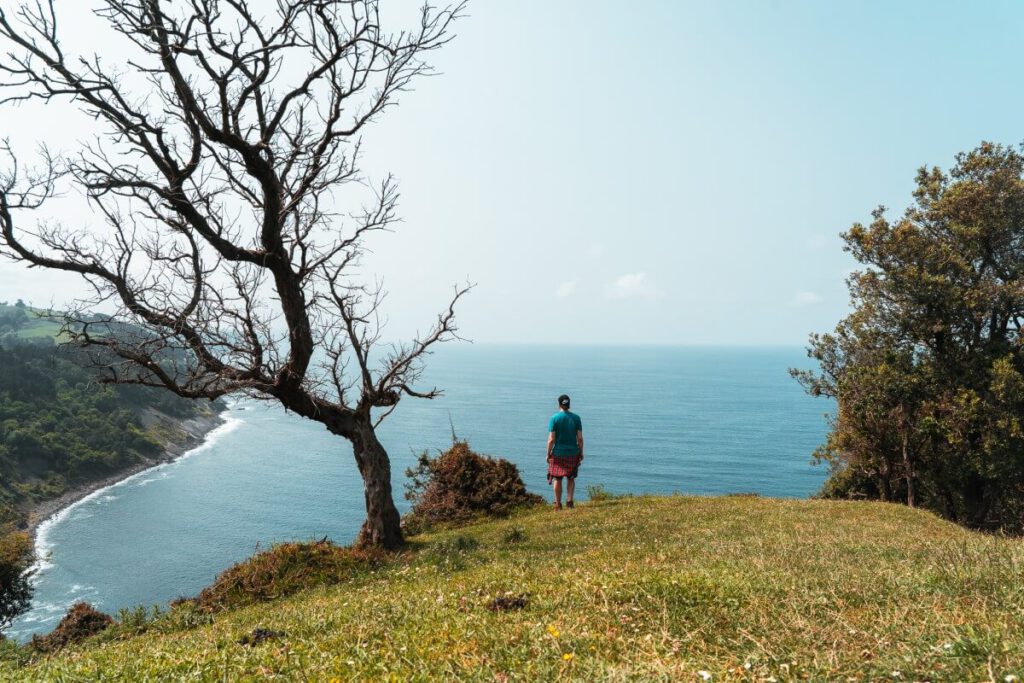
You can use the campground as a base for hikes in the region, especially along the Flysch Trail mentioned earlier. I went on two hikes from the campground myself, and both were absolutely fantastic:
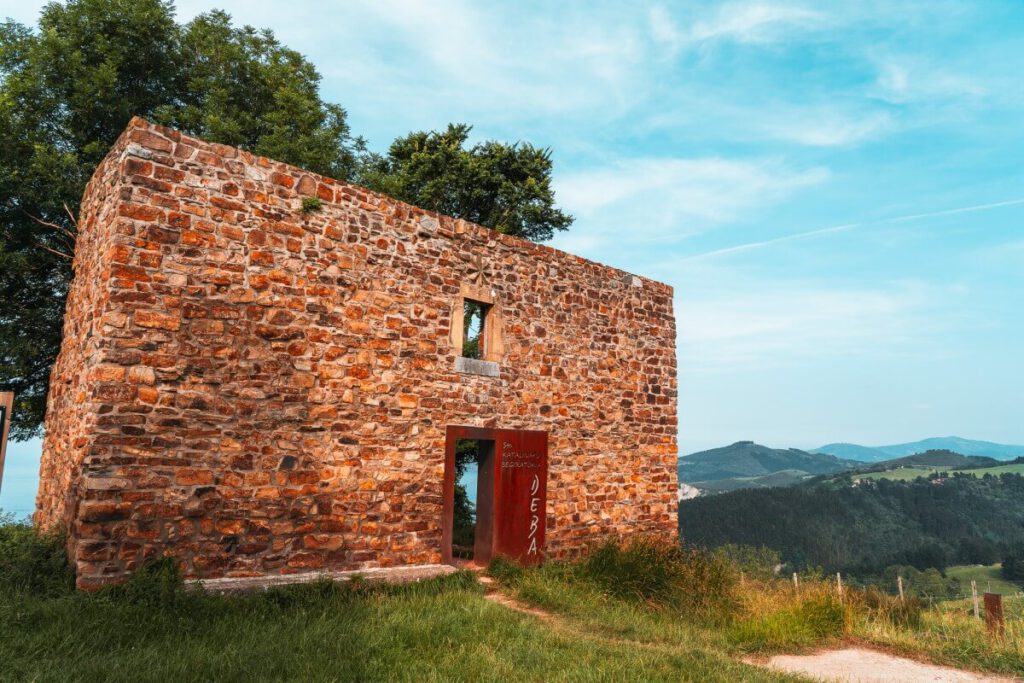
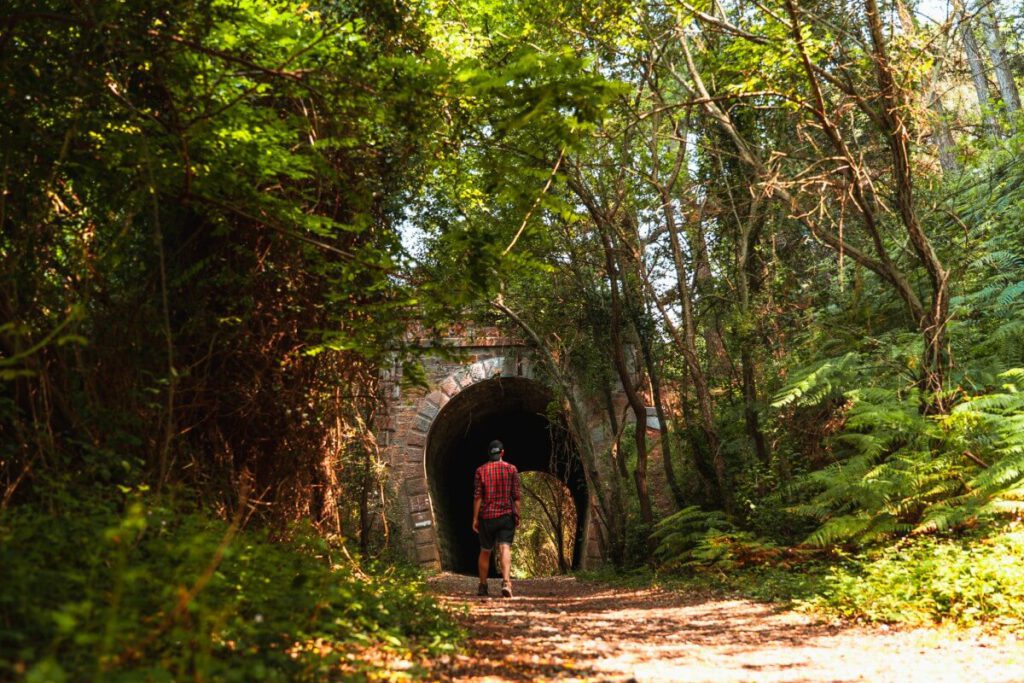
- Head east toward the 130-meter-high Aitzurri cliff and a little further. You’ll walk through dense forest, across lush green meadows dotted with cows and sheep, and along the old railroad tracks. You can only still recognize them by the tunnels, some of which you’ll also walk through.
- Head west past the hydroelectric power plant, through the Mirador de la Virgen de Itziar and the Chapel of Santa Catalina Baseliza, all the way to Deba
However, there are many other trails throughout the region.
Deba
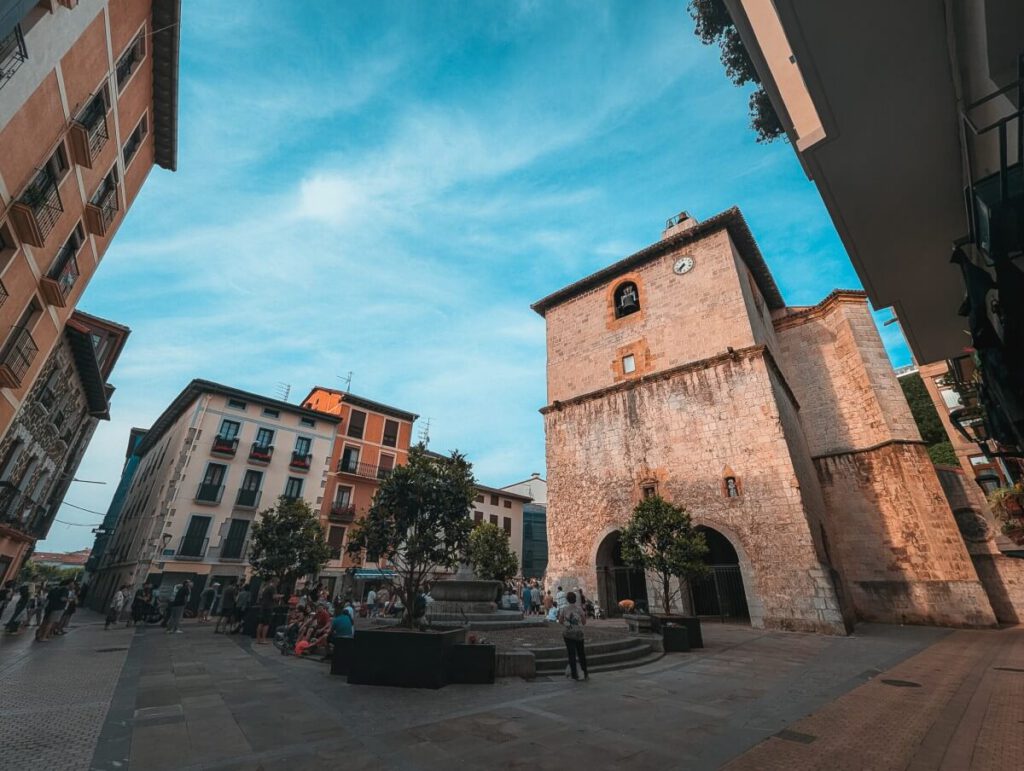
Deba is a small town located at the mouth of the river of the same name and is often overlooked in travel guides. With Playa de Santiago, it boasts one of the few beaches along the rocky coastline of the Geopark. The highlight of the town center is the Church of Santa María la Real, with its often bustling church square.
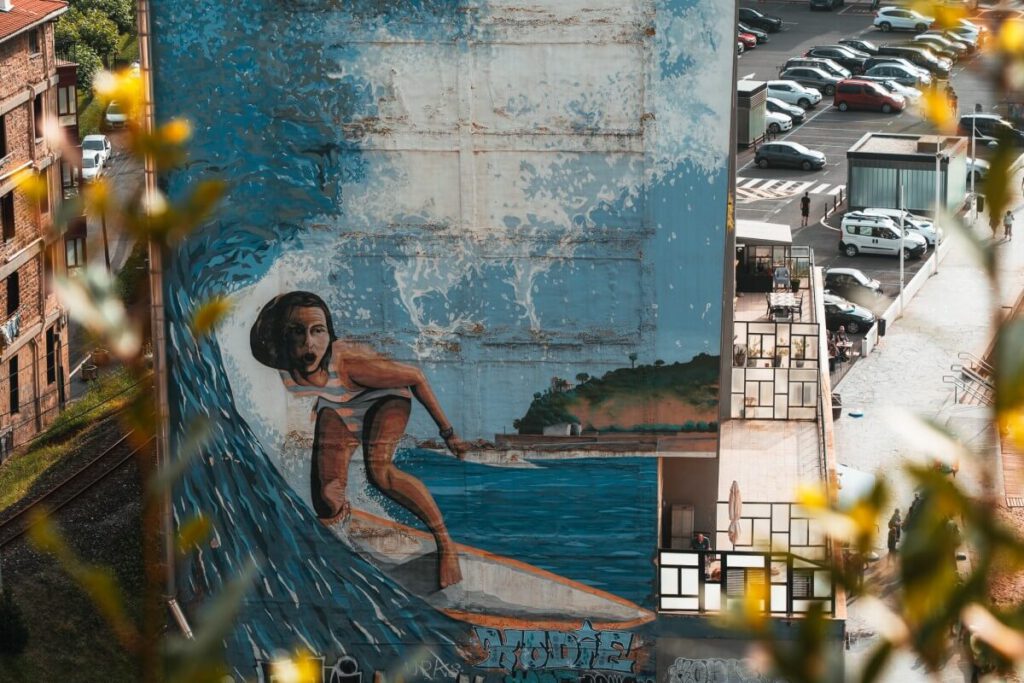
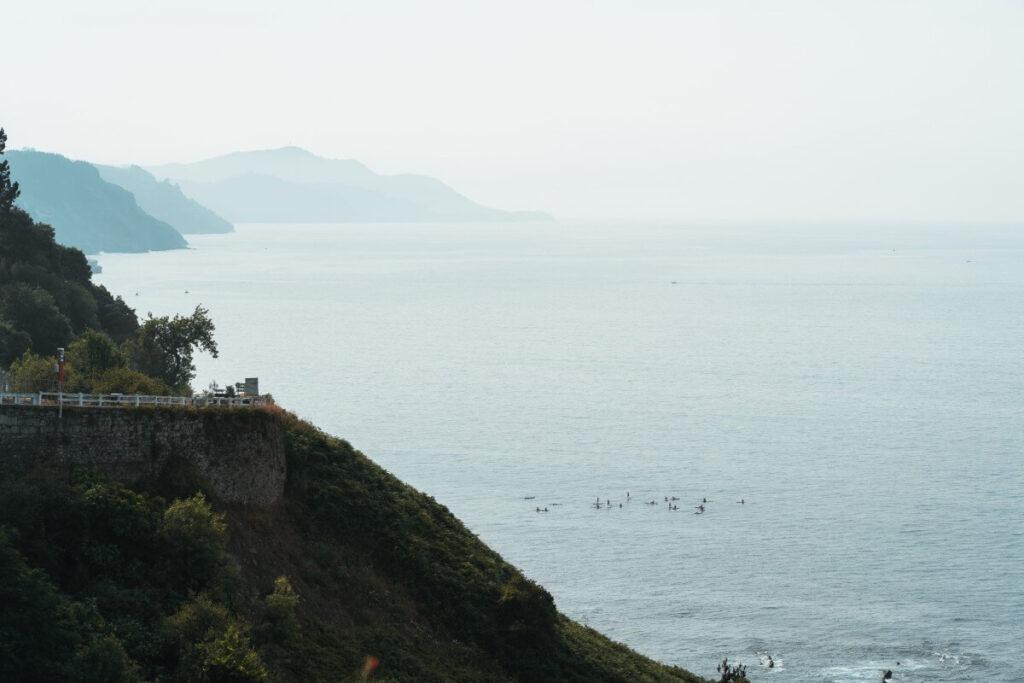
6. Basque Coast Geopark to Lekeitio
- Duration: Day 11 to Day 12 (1 night)
- Hotel Recommendation: Hotel Zubieta
- Camping Tip: Leagi Campground & Bungalows
Go ahead and grab your swimsuit or bikini. The next leg of your trip will be a “beach day.“ The route to Lekeitio is quite short, so you’ll have plenty of time to spend the whole day at one of the most beautiful beaches in the Basque Country. You can also stop off at Ondarroa Beach.
Saturrarán Beach near Ondarroa
Ondarroa has its own city beach, Arrigorri hondartza. But I actually liked Saturrarán, located directly across from it, even better. It consists of about 300 meters of golden sand, and at low tide, the beach gets much larger. There are also swimmers who swim back and forth between the two beaches. But you should only do that if you’re fit enough.
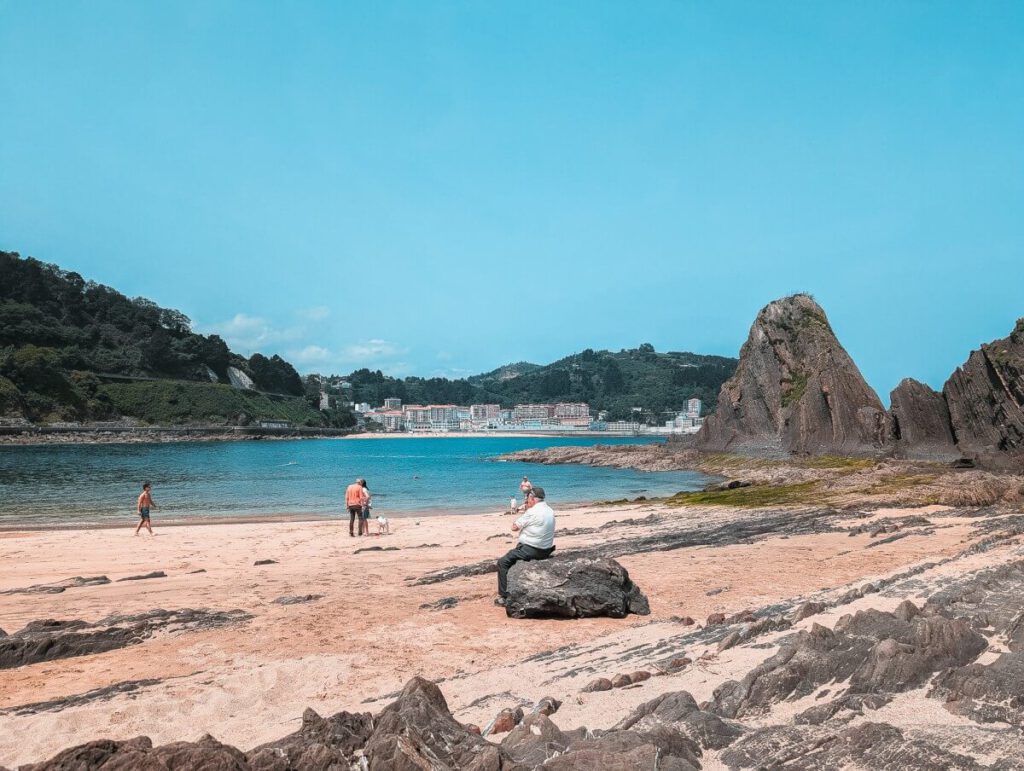
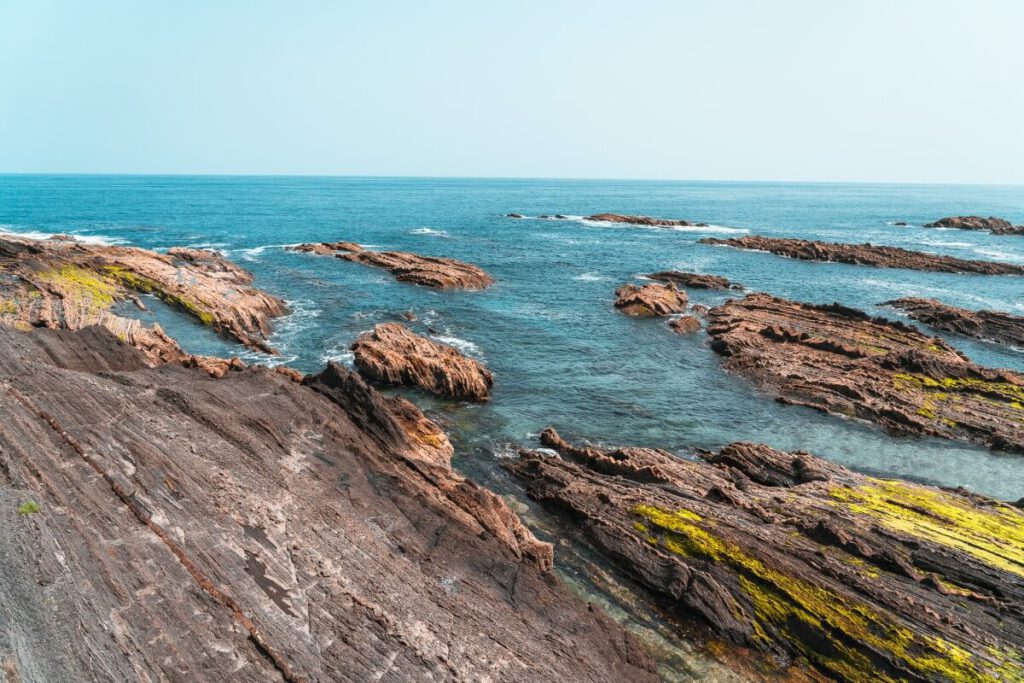
You can also see the rarer black flysch on the beach. At the end of the beach, two rock towers stand in the sand: According to local legend, these are the petrified bodies of two lovers, Satur and Aran. A little way off from the main area, nudists will also find an unobserved section all to themselves.
Lekeitio
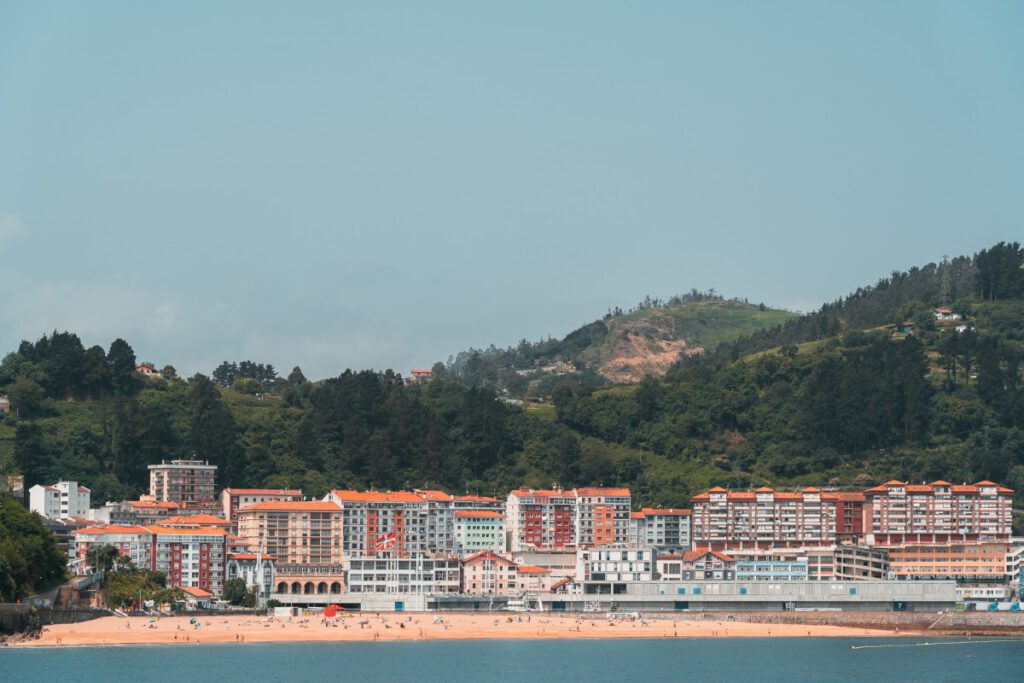
Lekeitio is one of the most laid-back coastal towns in the Basque Country. I particularly enjoyed the two beaches, Karraspio and Isuntza, at the mouth of the Lea River, where there are several other small beach areas along the banks.
Just off Karraspio lies the uninhabited island of Garraitz, which beachgoers often swim out to. Of course, you should never underestimate the currents if you plan to do the same. Another cool thing: at low tide, you can even walk out there.
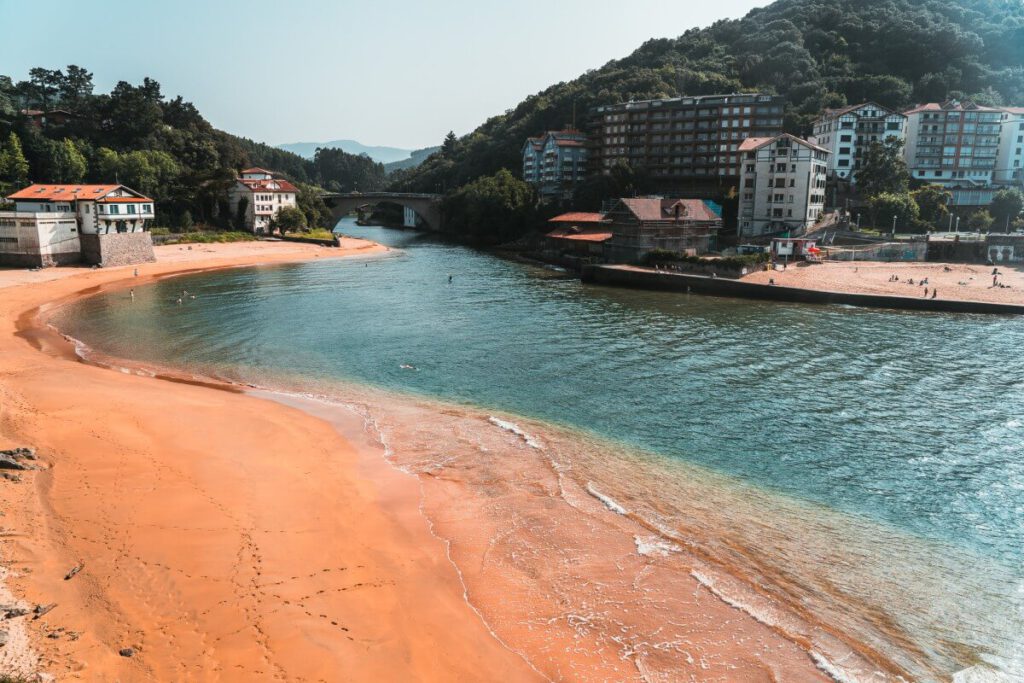
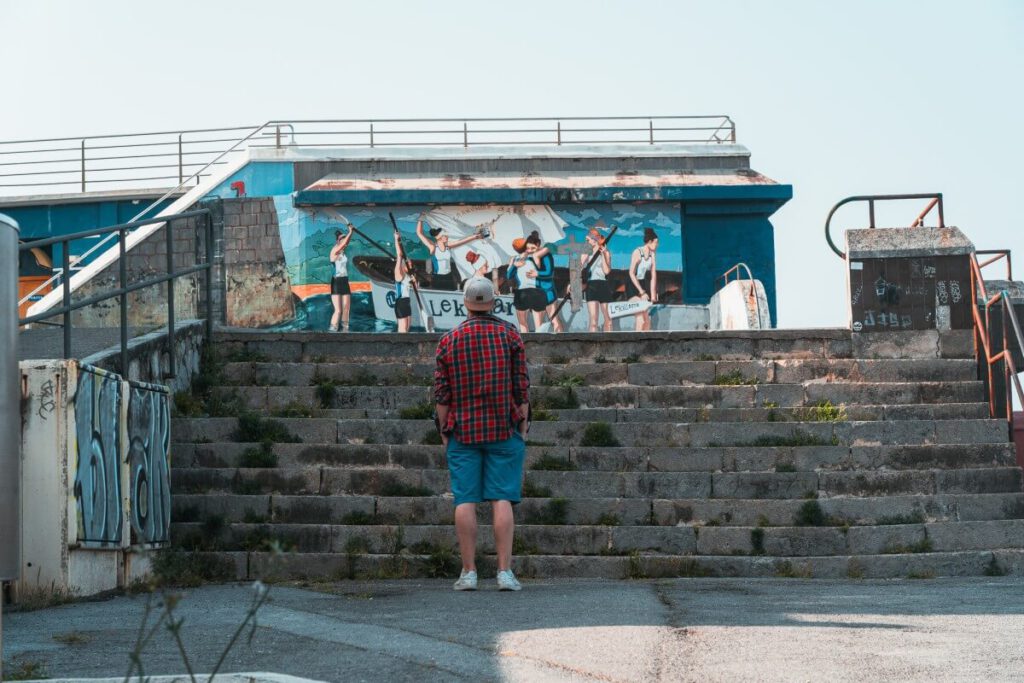
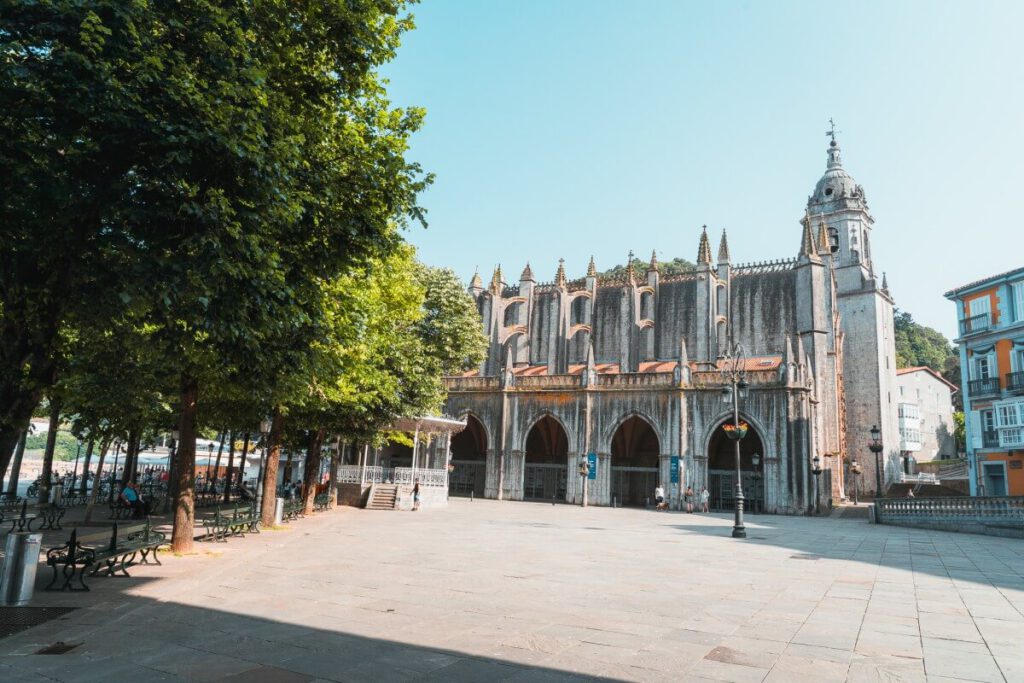
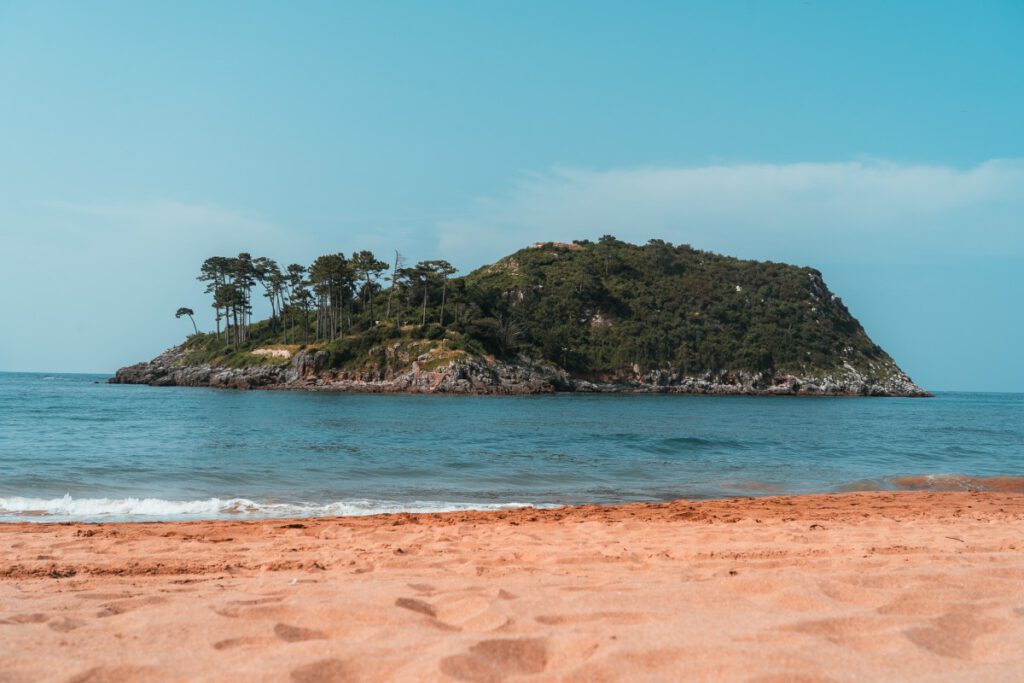
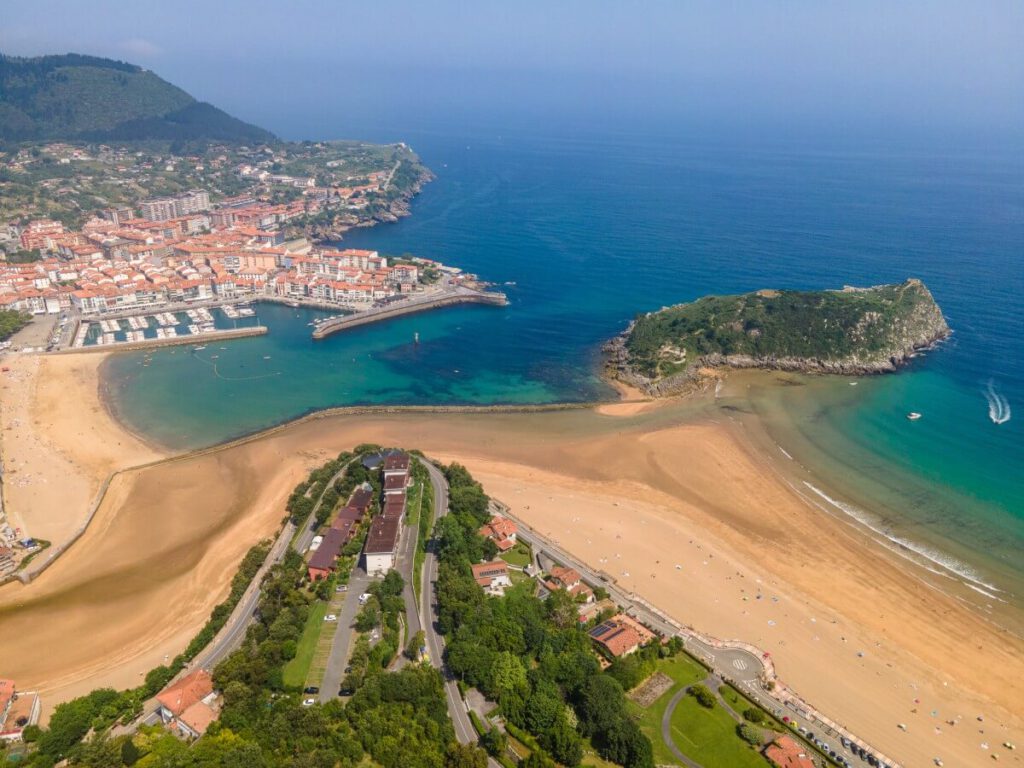
The town center is also worth a visit: the old fishing district, the harbor with its terraces, and the Gothic Basilica of Santa María de la Asunción, which stands idyllically on the main square, with a bandstand and the town hall across from it. Take a seat on one of the shaded benches and watch the world go by.
Leagi Campground & Bungalows
This campground, with its 26% incline, isn’t for the faint of heart (I barely made it up the hill in my ’88 T3), but you’ll be rewarded with an absolutely stunning view of the Lekeitio coastline and the surrounding countryside. On top of that, the campground itself is also very relaxed and idyllic.
7. From Lekeitio to Gernika
- Duration: Day 12 to Day 13 (1 night)
- Hotel Recommendation: Hotel Gernika – Adults Only
- Camping Tip: Camping Arketa
The next section combines nature and culture. Depending on your interests, you can ride along the coast or head further inland – always through the impressive Urdaibai Biosphere Reserve – to the historic heart of the Basque Country: Gernika (Guernica).
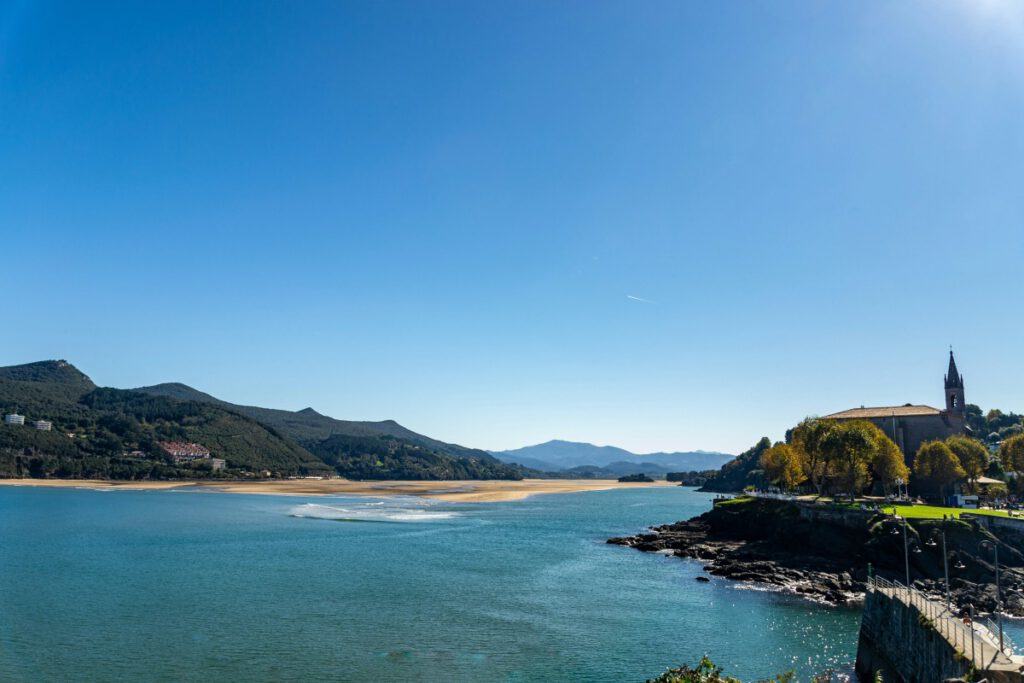
Laga and Laida Beaches
If you’re still in the mood for a day at the beach after yesterday’s beach outing, stop by the wild and unspoiled Laga Beach. It’s spectacularly nestled between the cliffs, and you can dive right into the ocean waves here. There are also a few bars and a barbecue restaurant.
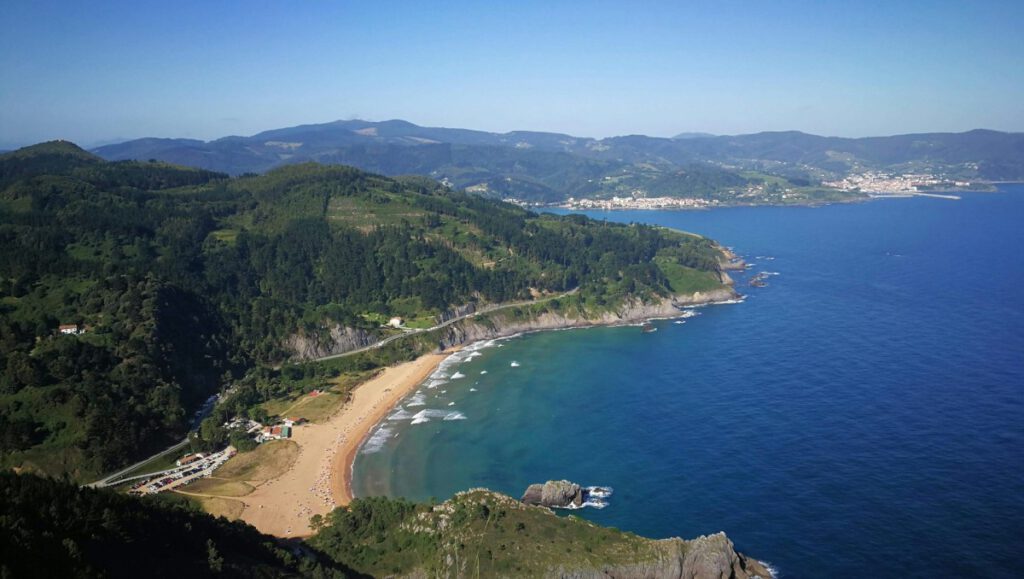
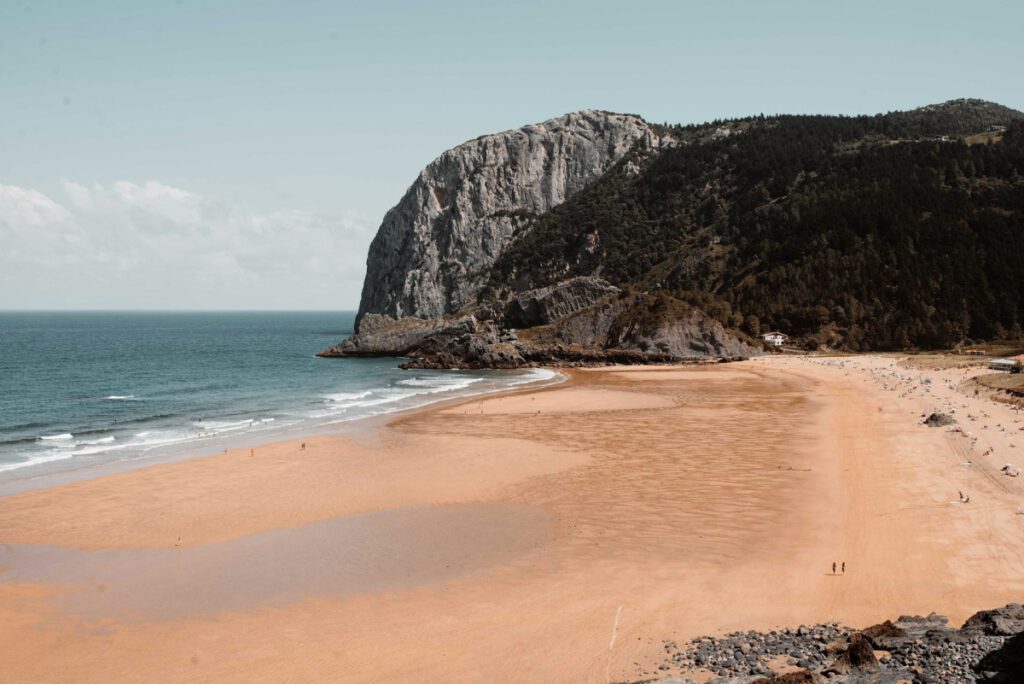
If you continue south along the road by the river mouth, you’ll also pass Laida Beach, known as the “Chameleon Beach.” It’s famous for constantly changing its shape and size depending on the tides and currents. At low tide, it’s a vast expanse of sand; at high tide, it shrinks significantly. Since it’s not directly on the ocean, it’s better suited for families with children, especially at low tide.
Urdaibai Bird Center
Even if you’re not a die-hard birdwatcher, you shouldn’t miss the Urdaibai Bird Center. I’m anything but an ornithologist myself, and yet I still found it really fascinating. Urdaibai is one of the most important stopover sites for migratory birds on their way to Africa, and that’s exactly what makes the place special: Instead of looking at display cases, you peer through fixed binoculars directly out into the wetland and observe the animals without disturbing them. Along the way, you’ll learn a lot about bird migration and the region.
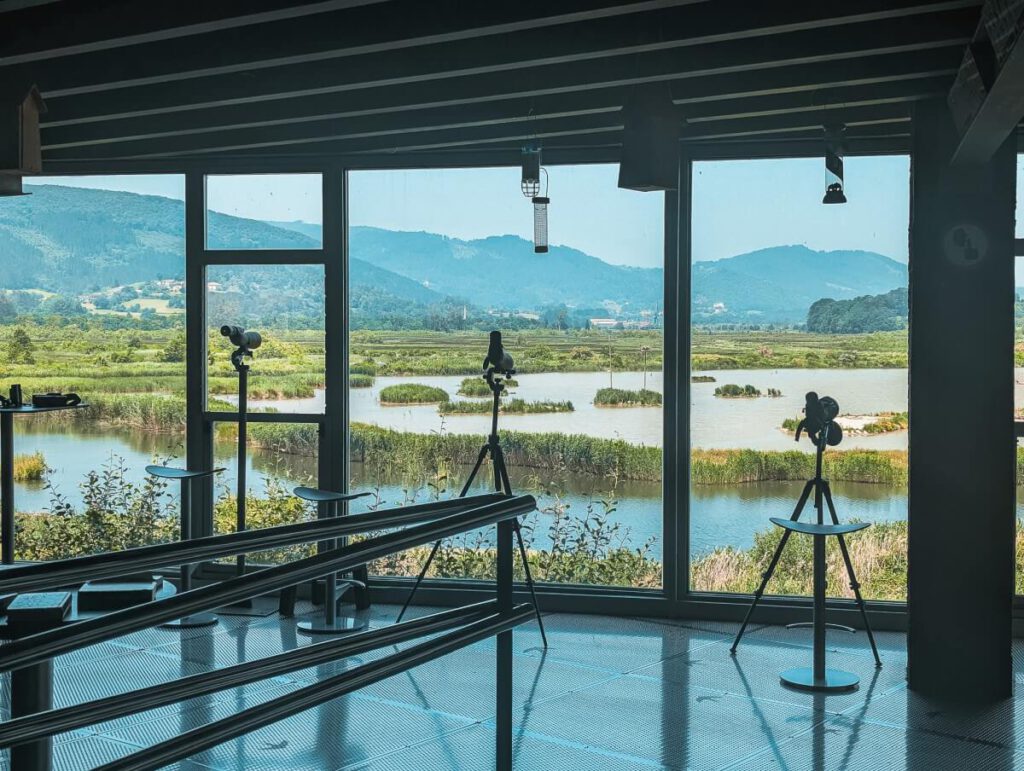
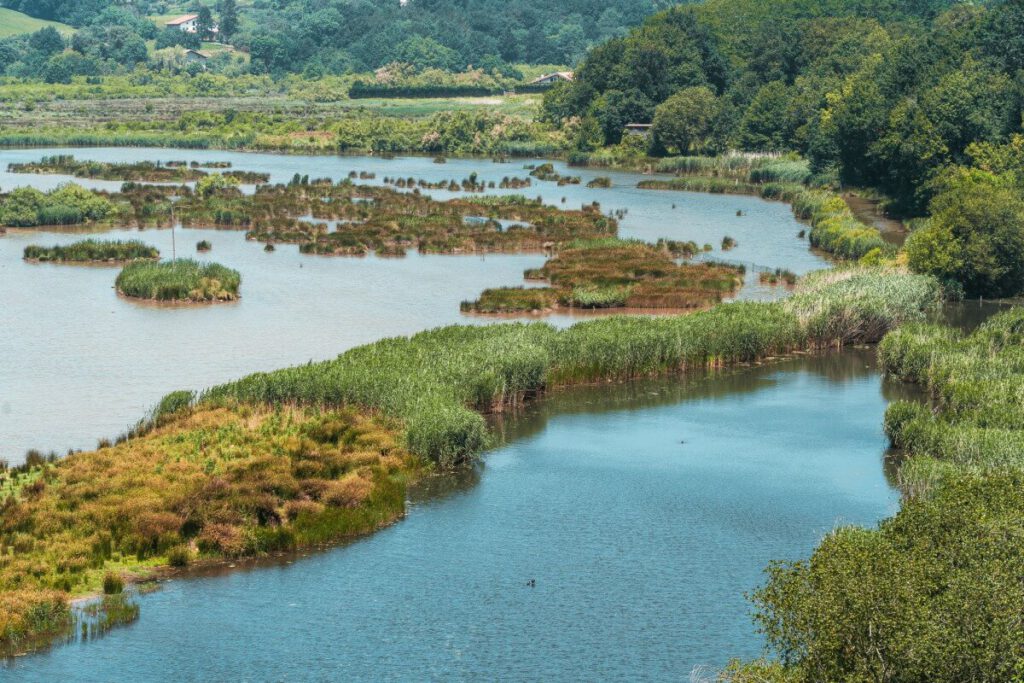
Admission costs €8. You can walk to the lookout points outside the grounds for free – but a visit to the center is well worth it, especially because of the powerful binoculars at the observation stations and the information you’ll take away from your visit.
Gernika (Guernica)
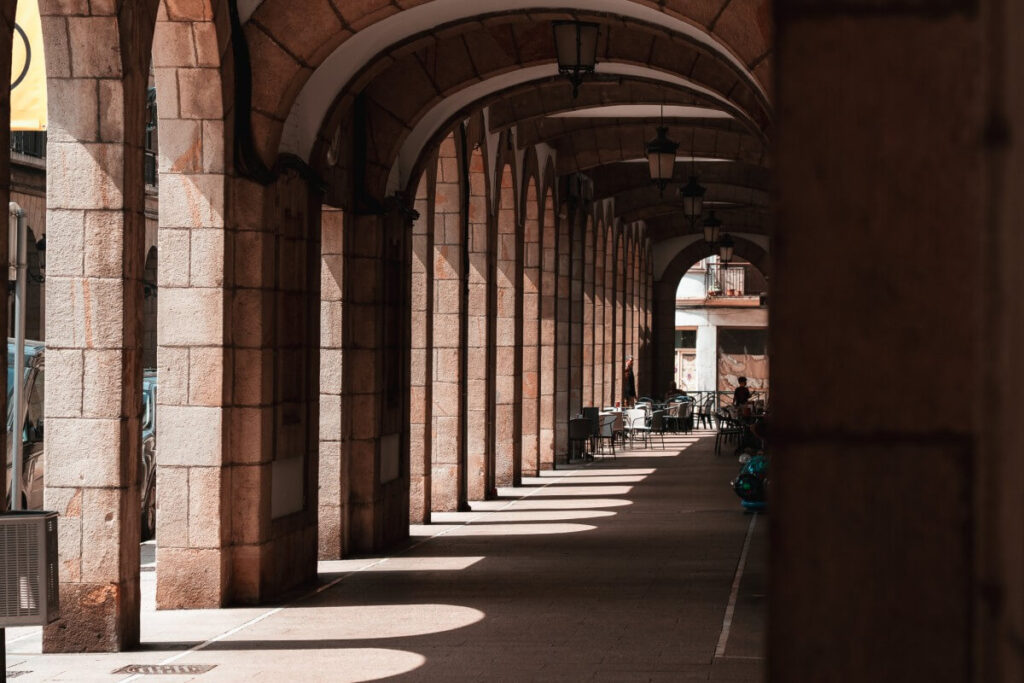
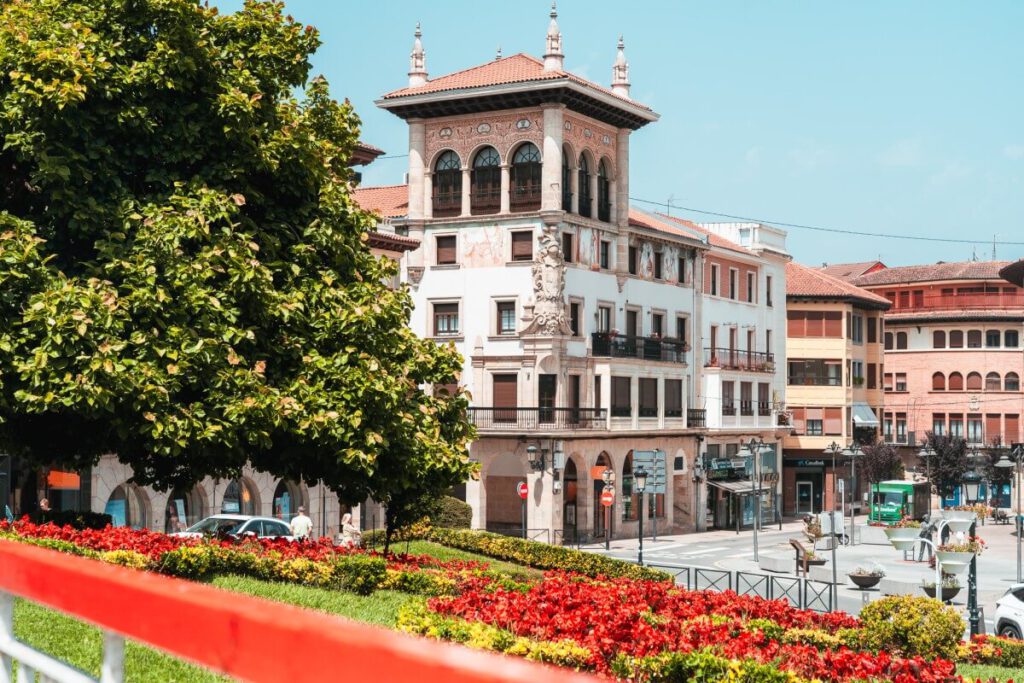
If there is one symbol of the Basque Country, it is Gernika. It is the “sacred” city of the Basques and holds great historical significance. As you stroll through the narrow streets, you can’t help but sense the special atmosphere that this place exudes.
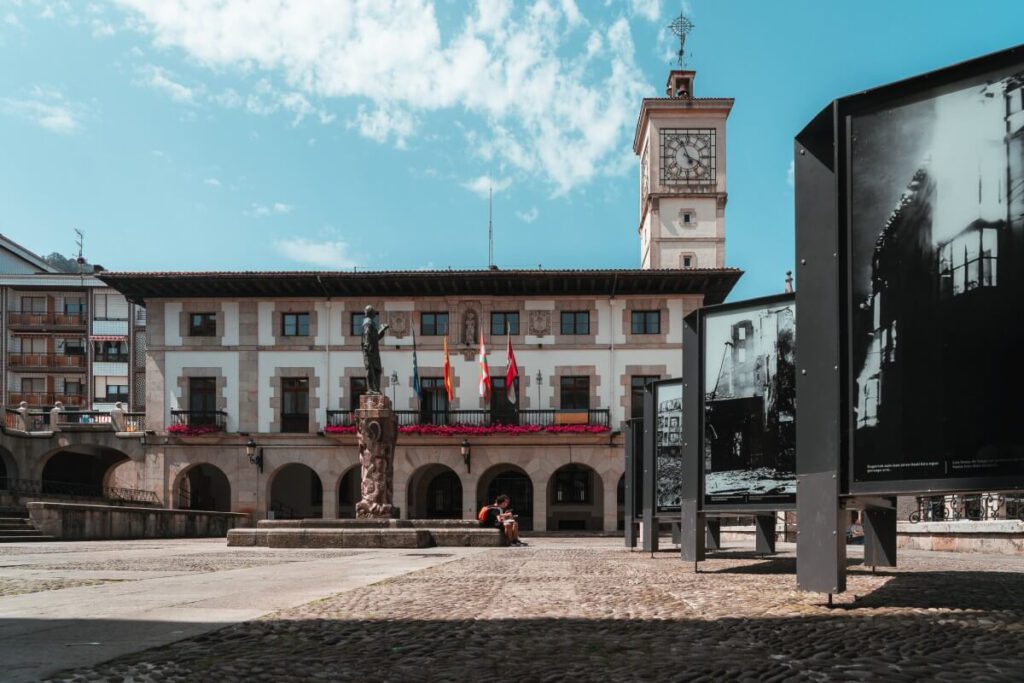
ℹ️ In 1937, during the Spanish Civil War, Guernica was almost completely destroyed by German and Italian bombers. This was a deliberate attack on Basque identity and an act of terror against the civilian population, intended to break the will to resist the Franco regime. However, it did not succeed. Even though the Basque Country is now part of Spain, it has preserved its identity, and Guernica was rebuilt. This chapter of the city’s history is explored in particular at the Peace Museum (Museo de la Paz).
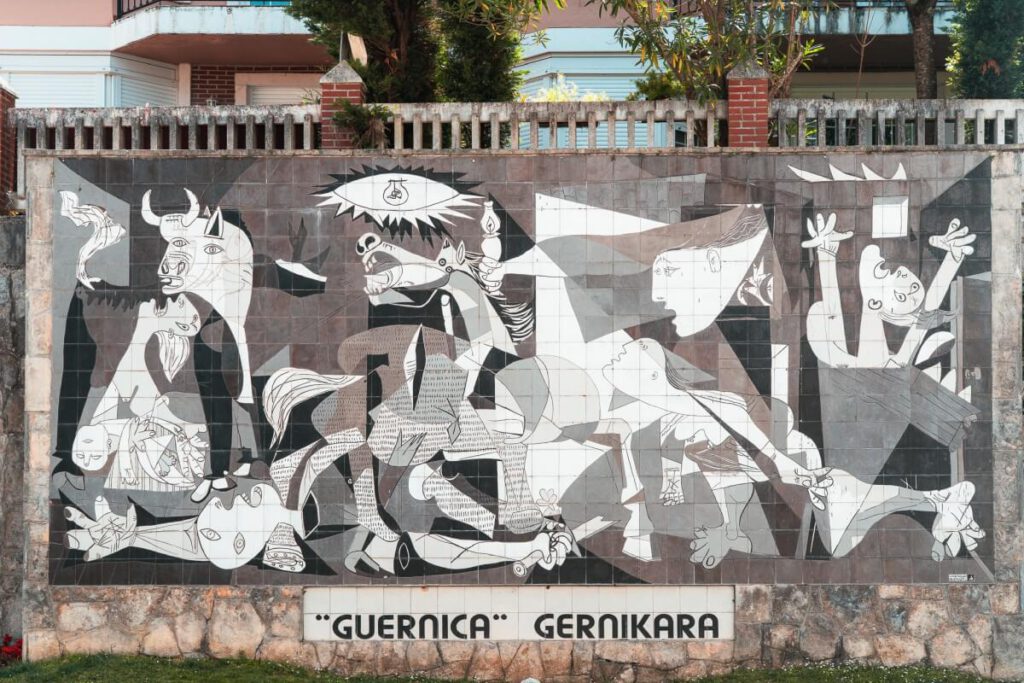
“Guernica” is also well known for the painting of the same name by Pablo Picasso, which is perhaps the most famous anti-war painting in art history. You can find a replica of this painting on a wall next to the street (Picassoren “Gernika” horma-irudia).
You should definitely visit the Gernikako Batzarretxea. It is Gernika’s assembly hall, and it’s no exaggeration to say that it represents the institutional and symbolic heart of Basque democracy. The building is the seat of the highest political body in the province of Bizkaia (Juntas Generales de Bizkaia), where the plenary assembly still meets to this day. I was particularly impressed by the huge, colorful stained-glass window in the room next to the assembly hall. Right next to the Assembly Hall stands the famous oak tree, the quintessential symbol of Basque freedom and self-determination. The tree standing there today is a descendant of the original oak. In ancient times, meetings were held around this oak tree.
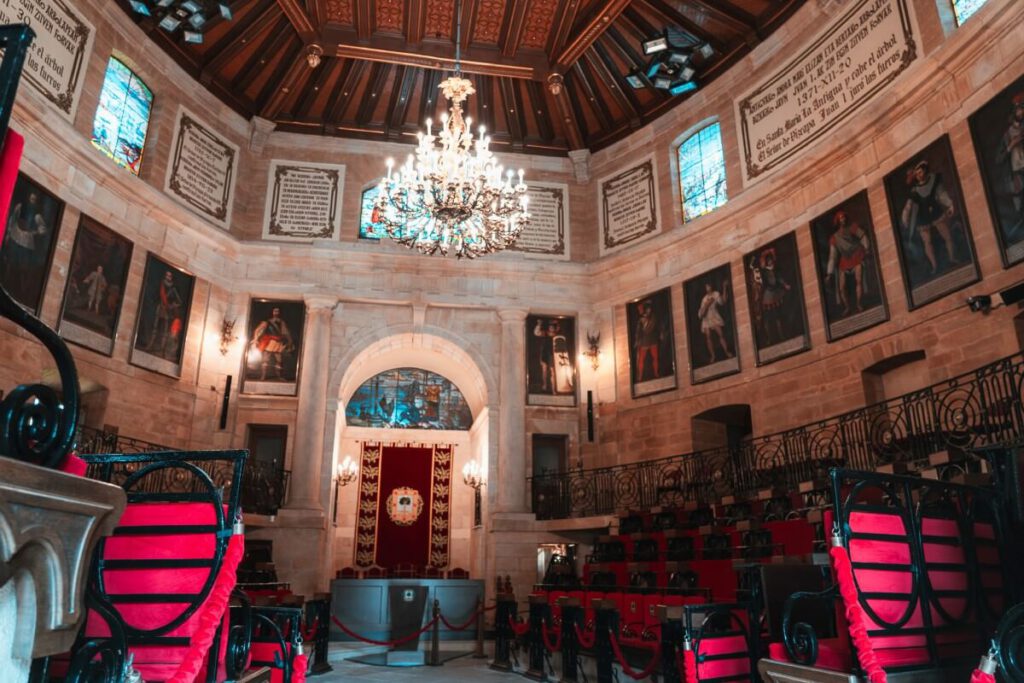
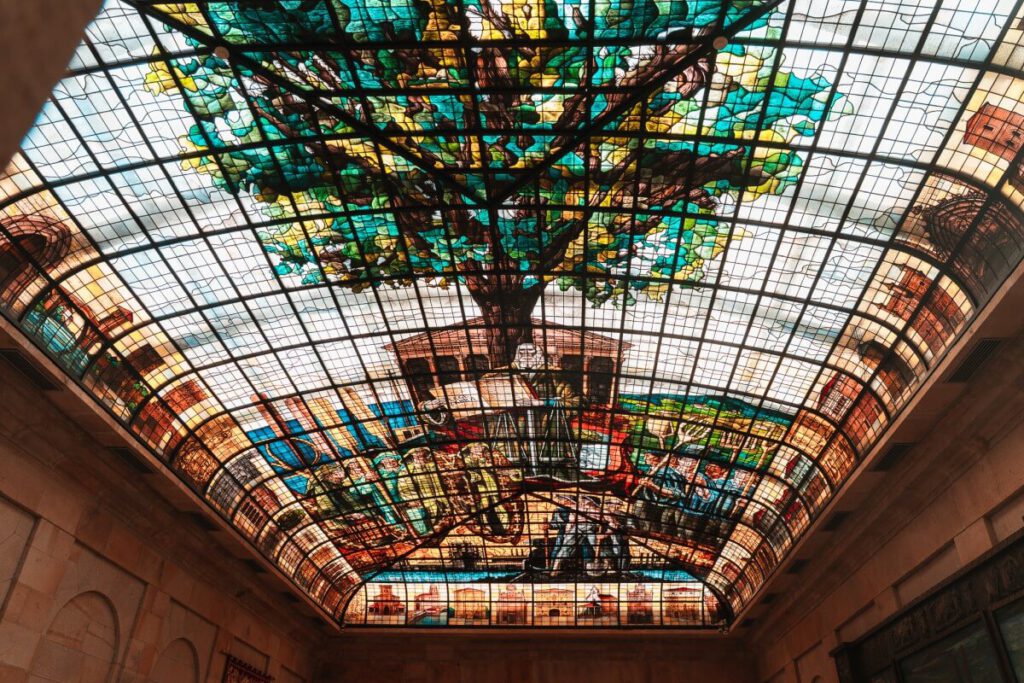
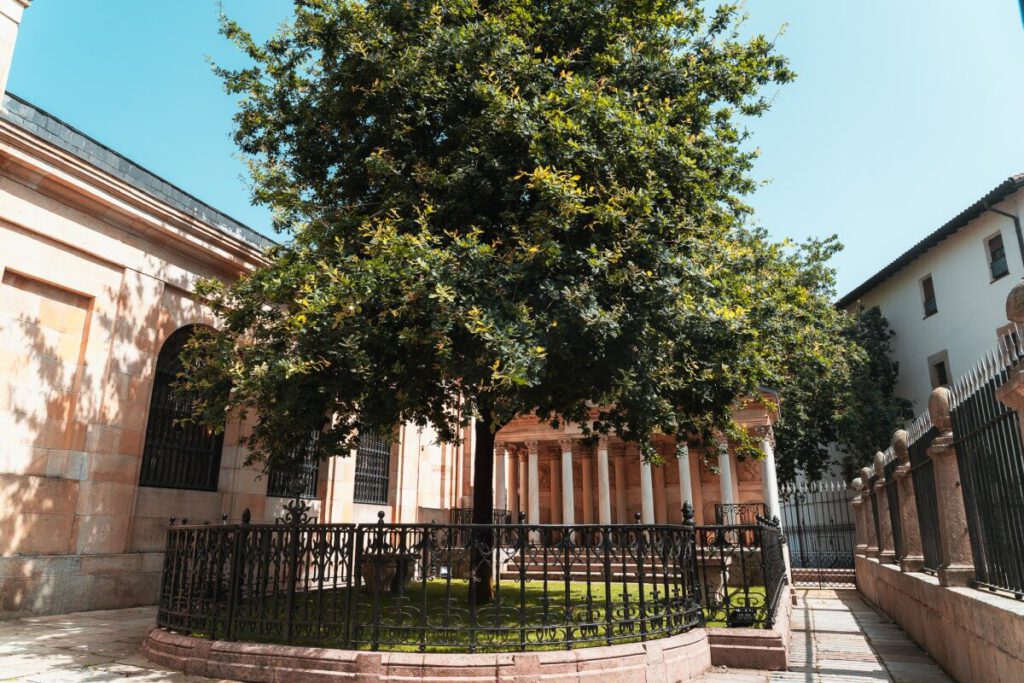
Admission is free, but it is recommended that you reserve a time slot online in advance. However, if it isn’t too busy, tourists are allowed in even without a reservation.
I also really enjoyed the Euskal Herria Museoa, a museum dedicated to Basque history. On the first floor, there’s a fascinating room filled with historical maps. The second floor focuses on Basque culture, traditions, games, and music.
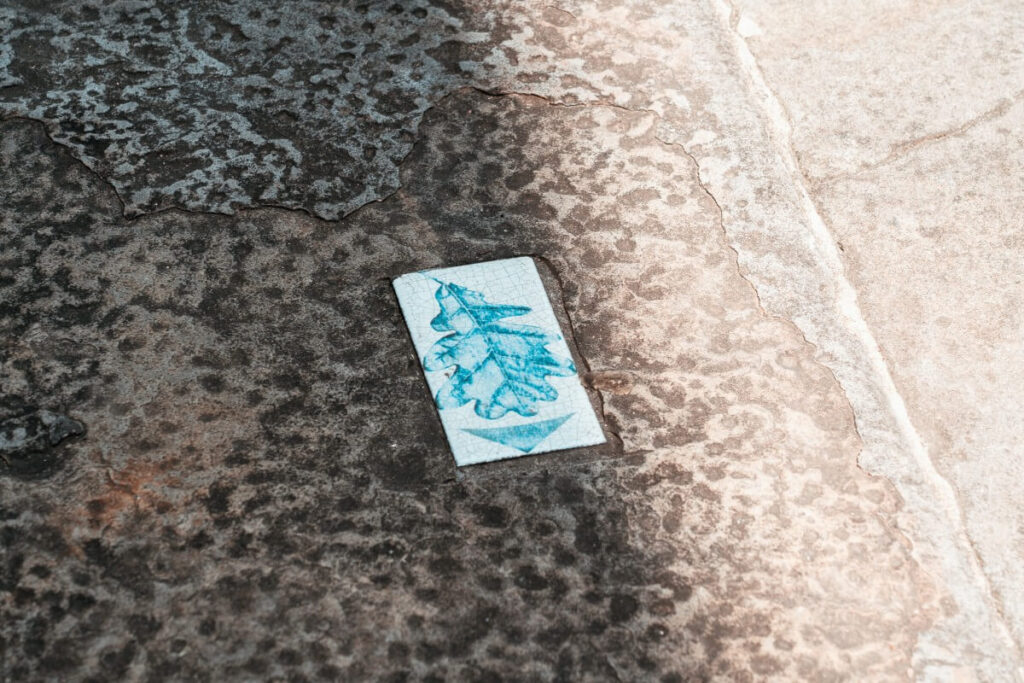
Want to explore all the must-see spots in Gernika? Then keep an eye out for the acorn-shaped tiles with arrows on the ground. They’ll show you the way to the hotspots.
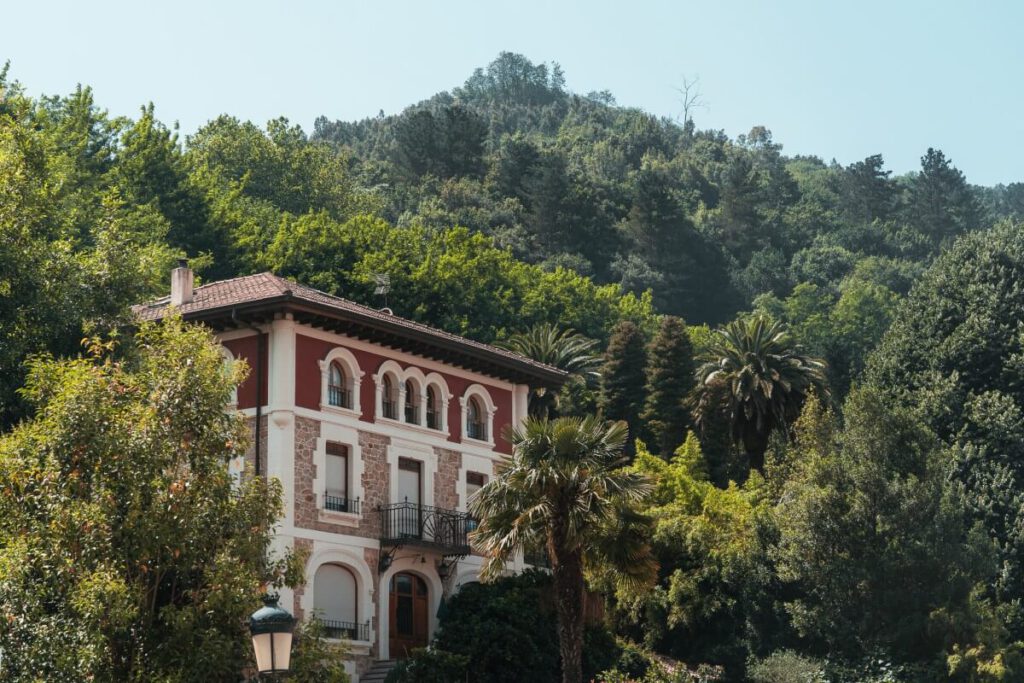
📢 Don’t miss this in Gernika
Gernika Walking Tour: War and Peace
8. From Gernika to Gaztelugatxe
- Duration: Day 13 to Day 14 (1 night)
- Hotel Recommendation: Apartamentos Turísticos Rurales Ureta
Next, we head to one of the most amazing sights in the entire Basque Country. A spectacular place, also known from Game of Thrones, which is why it’s often very crowded. But it’s still possible to enjoy this highlight with almost no other tourists and soak up the magical atmosphere in peace. Bermeo is also worth a stop.
Bermeo
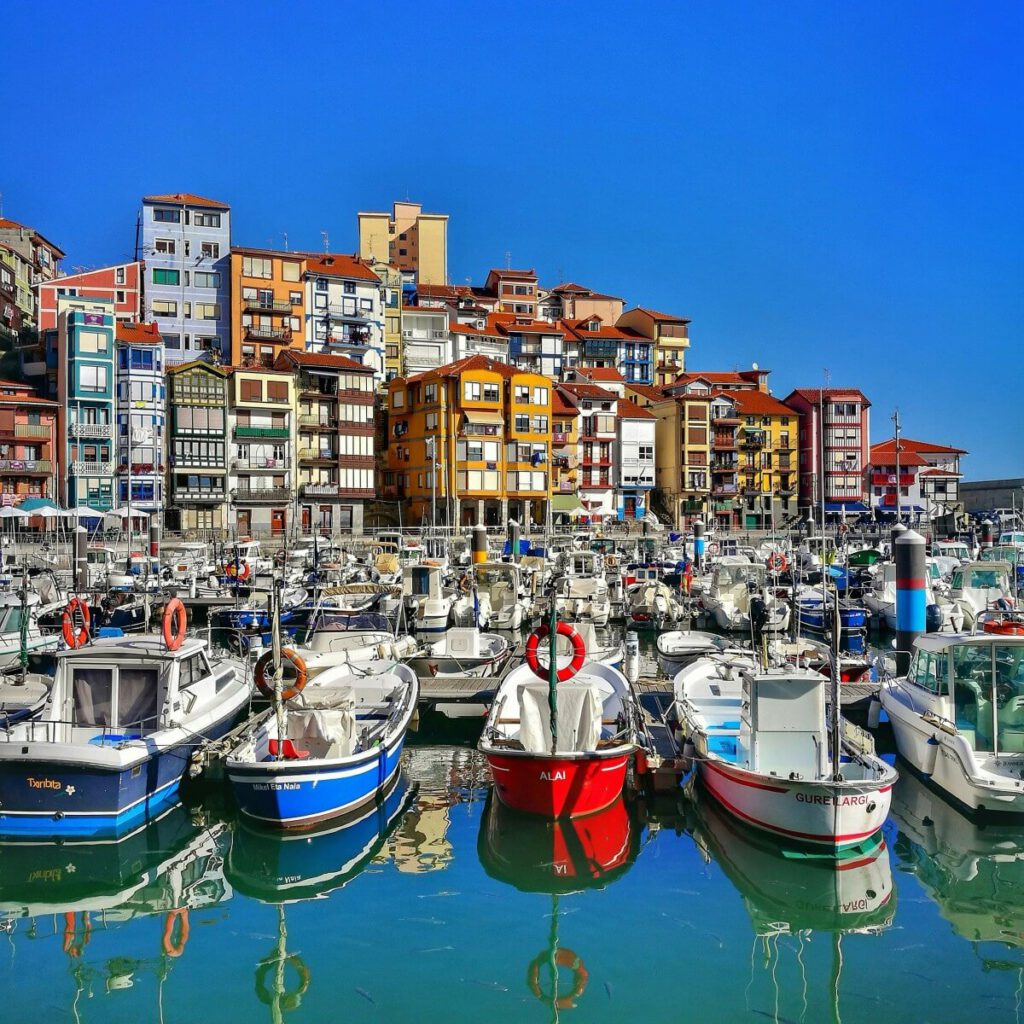
Bermeo is a traditional fishing village with a long seafaring history. That is why the Old Harbor (Puerto Viejo), with its colorful fishermen’s houses and the boats moored in front of them, is the heart of the town.
Gaztelugatxe
This place, whose name sounds like a tongue twister (pronounced: Gas-te-lu-ga-tsche), is one of the absolute highlights of your road trip.
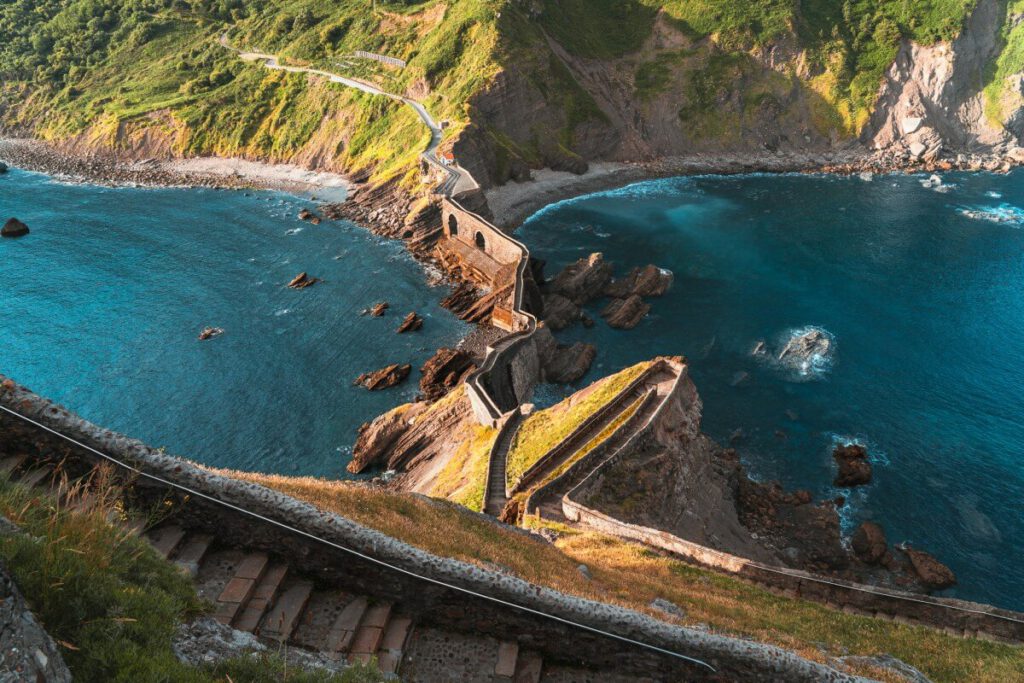
ℹ️ Gaztelugatxe is a small, rocky island—or rather, a peninsula—off the coast of Bizkaia. Perched at its tip is a hermitage dedicated to Saint John the Baptist. There is evidence that a chapel has stood here since the Middle Ages (around the 10th/11th century)
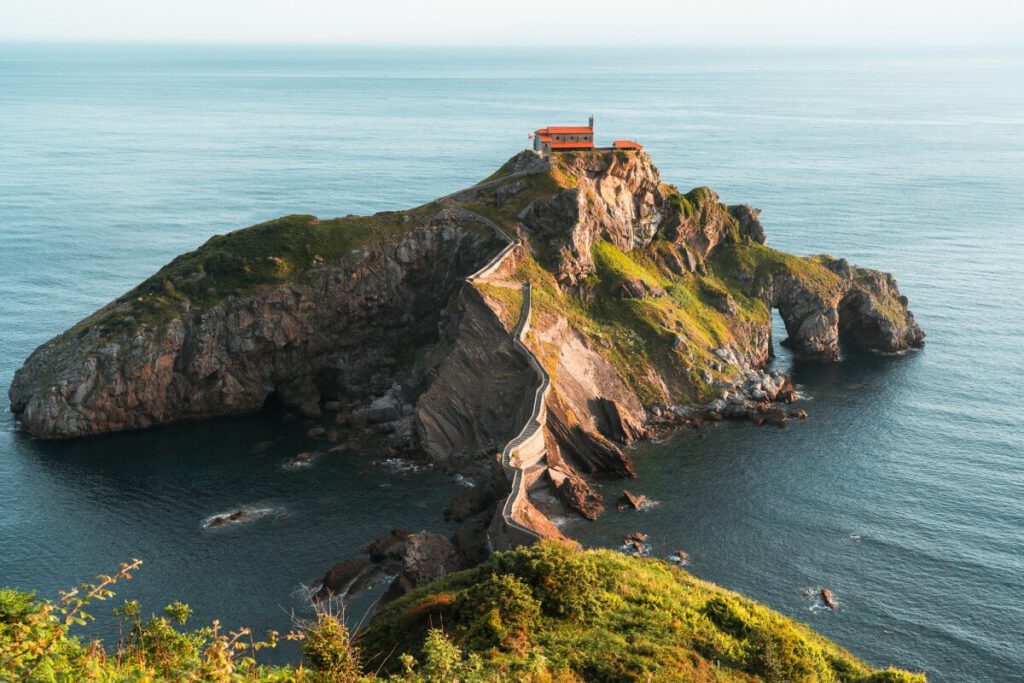
Gaztelugatxe has always been a popular tourist attraction, but since it became a filming location for *Game of Thrones*, the crowds have literally exploded. That’s why you should plan your visit here a bit in advance. You have to book tickets to walk across this fantastic stone bridge. They’re free, but if you don’t book them, you might not be allowed to hike up to the rock. That’s exactly what happened to me when I arrived on a day with restricted access. I only realized once I got there that I should have gotten tickets through the official website. This is especially difficult on weekends, holidays, or during peak season in general, as there’s often a daily limit of 1,462 people.
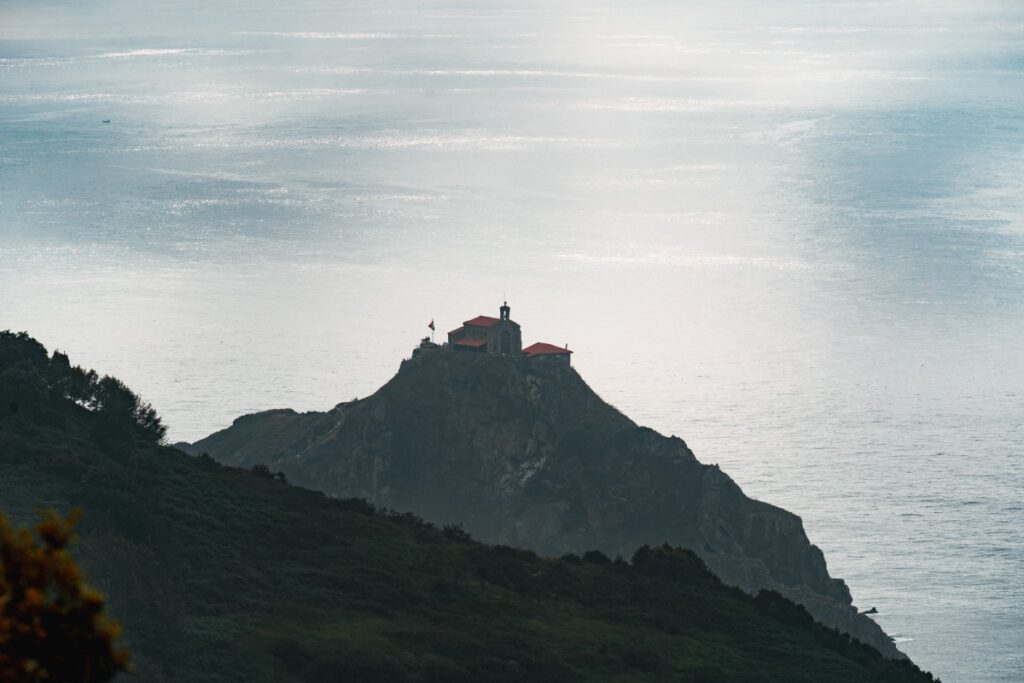
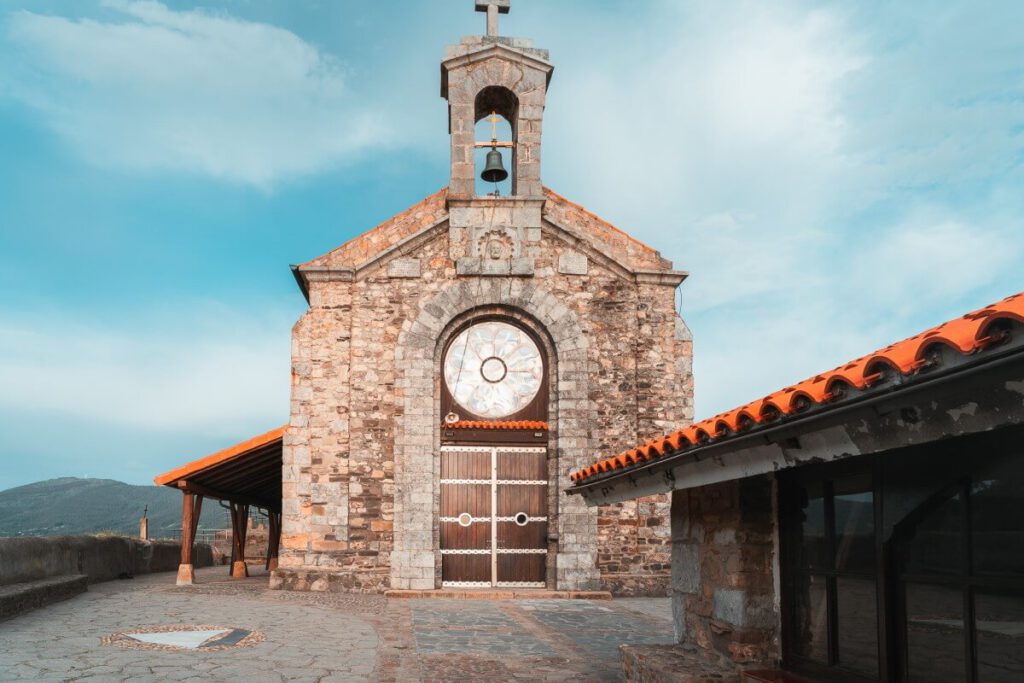
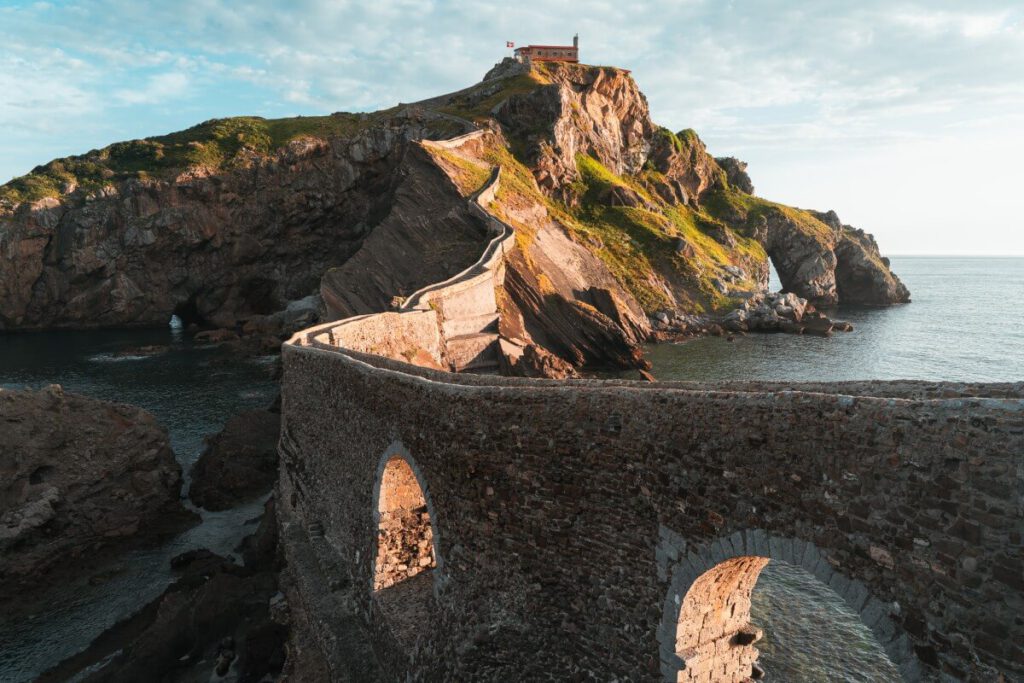
However, there is another option: getting up very early, before the official opening hours and before all the visitors arrive. This is usually around 9:00 a.m. To do this, though, you should ideally stay somewhere that isn’t too far away so you can get there early enough.
⚠️ Don’t underestimate the walk from the parking lot up to the cliffs. First, the path is quite steep as it winds past all the cows and restaurants down to the coast. And from there, you’ll have to climb another 243 steps up to the chapel. The round trip takes 30 to 60 minutes, depending on your fitness level.
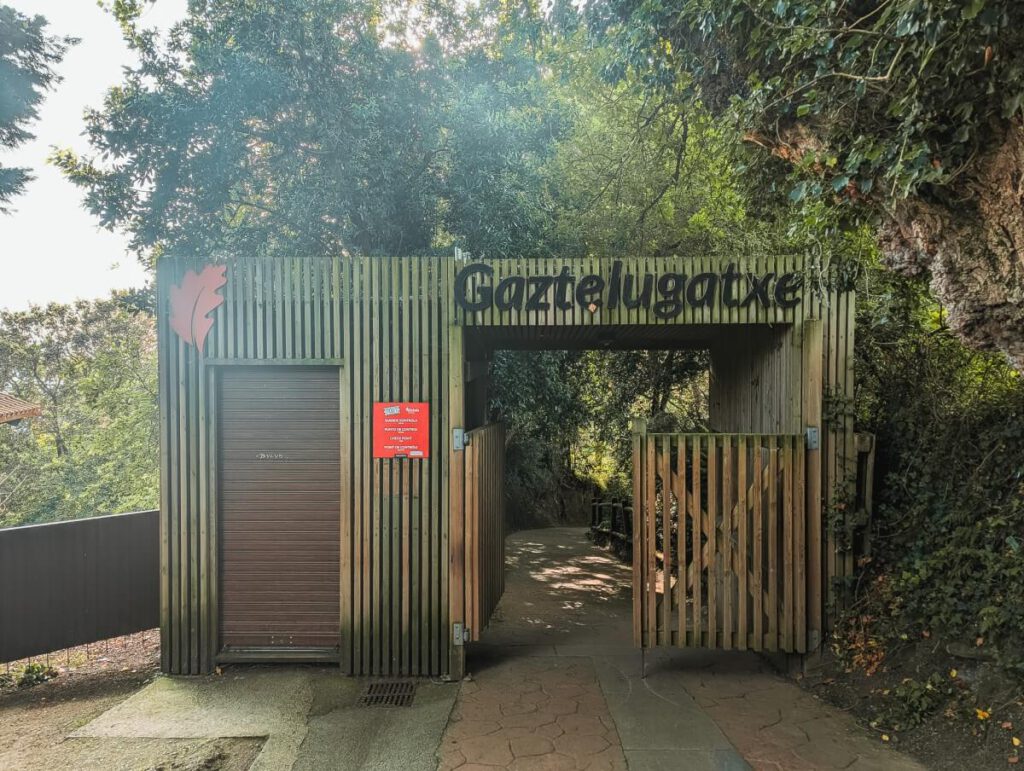
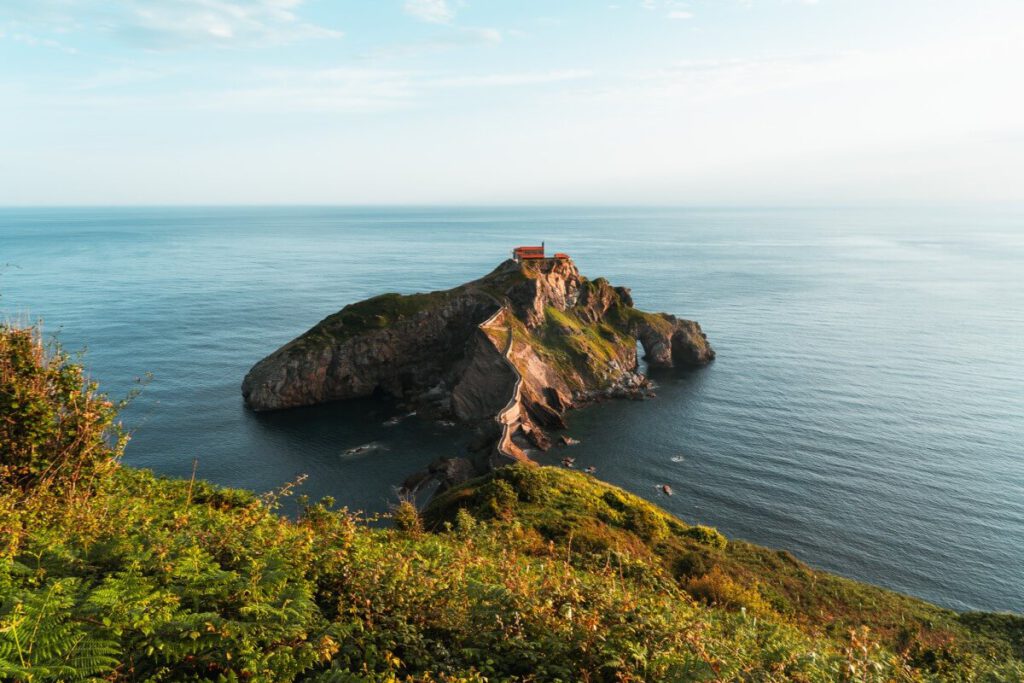
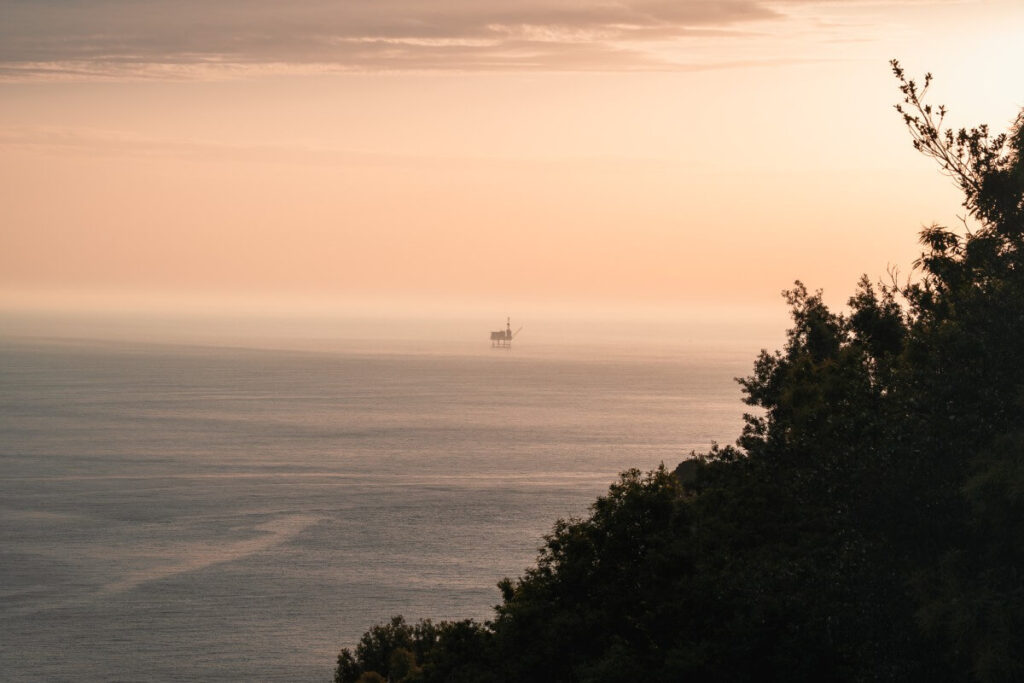
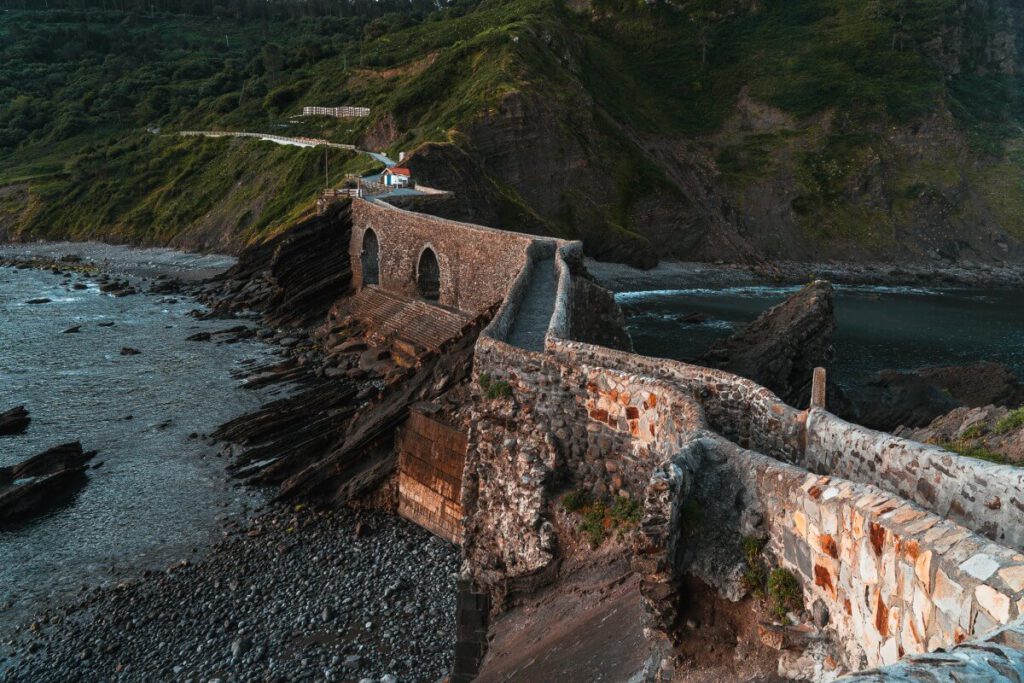
Unfortunately, there are no campgrounds in the immediate vicinity of Gaztelugatxe. However, I highly recommend the Hotel Apartamentos Turísticos Rurales Ureta. From there, it’s only about a 10-minute drive to the parking lot at the attraction. By bike, it will probably take you about 20–30 minutes because the climb is quite steep. The hotel itself has great, spacious rooms and is idyllically situated on a cool mountain ridge.
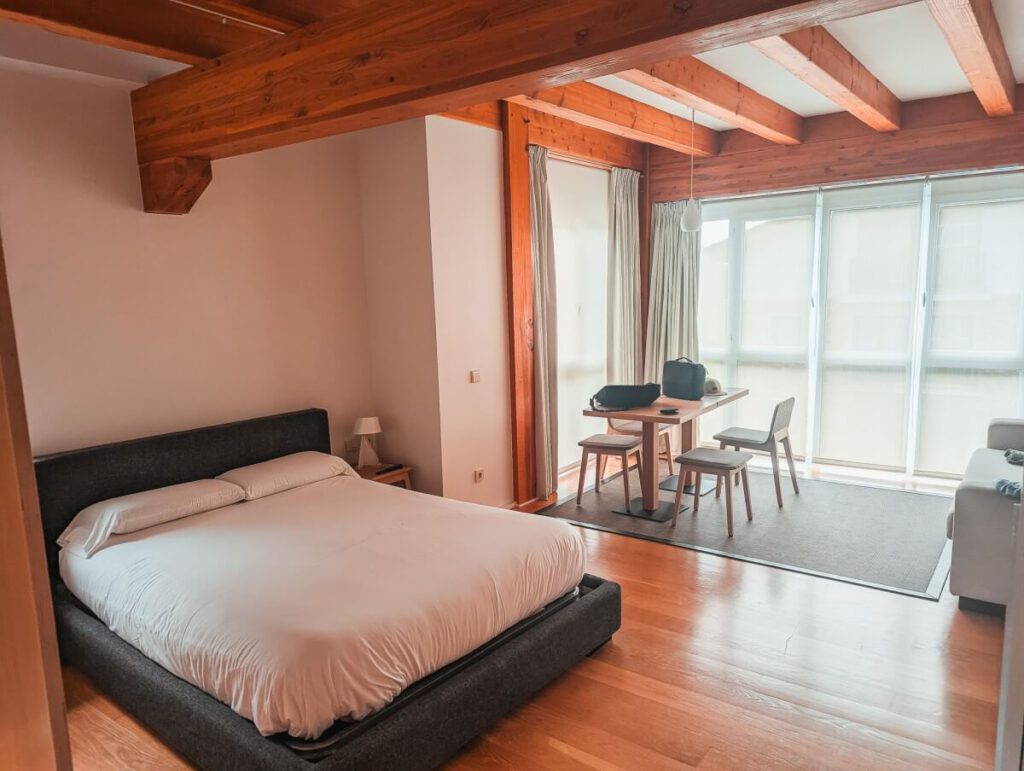
If that’s not an option for you, you can also book a tour through one of the tour operators. It does cost a bit, but in return you’ll often get a guide who can provide you with lots of background information. These tours depart from the larger cities of Bilbao and San Sebastián:
- From Bilbao: Tour to Gaztelugatxe, Mundaka, and Guernica (8 hours)
- From Bilbao: San Juan de Gaztelugatxe and a walk along the Basque coast (3.5 hours)
- From San Sebastián: Gaztelugatxe & Gernika
9. Gaztelugatxe to Bilbao
- Duration: Day 14 to Day 16 (2 nights)
- Hotel Recommendation: The Artist Grand Hotel of Art
The final leg of the trip takes you to Bilbao, the largest city in the Basque Country. You should set aside at least a full day for this. On the way there, it’s worth stopping at Bakioko Beach.
Bakioko Beach
There isn’t much to do in the sleepy coastal town of Bakio, except chill out on the beautiful Bakioko Beach – but that’s really all you need.
Bilbao
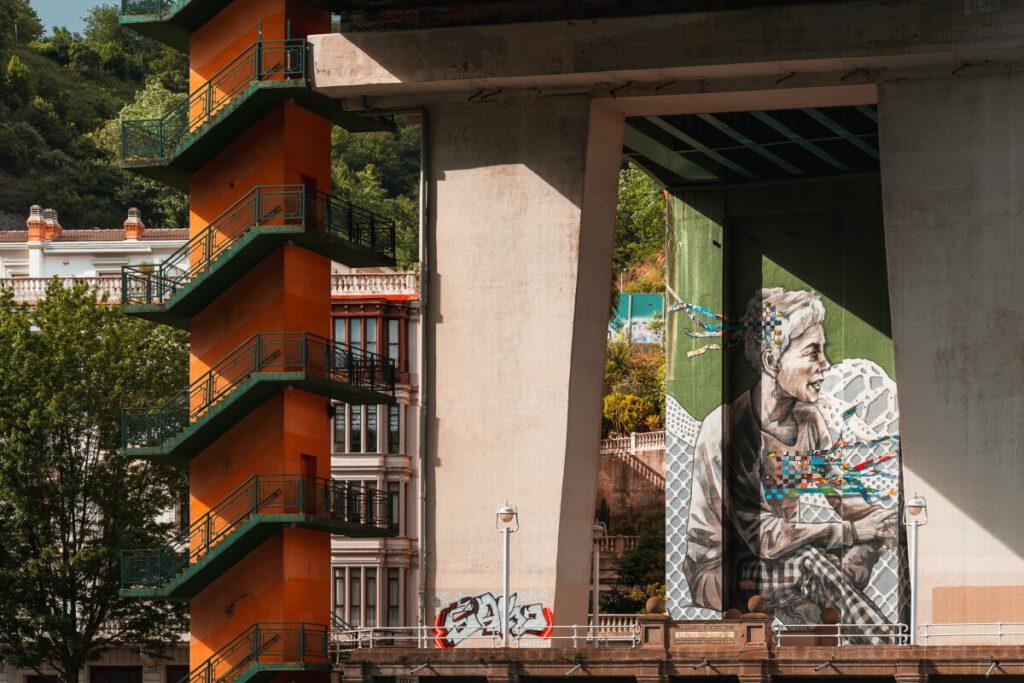
Many travel guides say that Bilbao is an absolute must-see. To be honest, I found the city to be very noisy and overbuilt, and it didn’t really win me over at first.
That was probably because, after visiting San Sebastián, I had very high expectations for Bilbao. Maybe it was also because of the many concrete buildings and bridges that crisscross the city center, or the somewhat gloomy weather during my visit. Bilbao is probably one of those cities you only fall in love with at second glance.
And in the end, after a day of getting my bearings, I did find a few great places that I can still recommend.
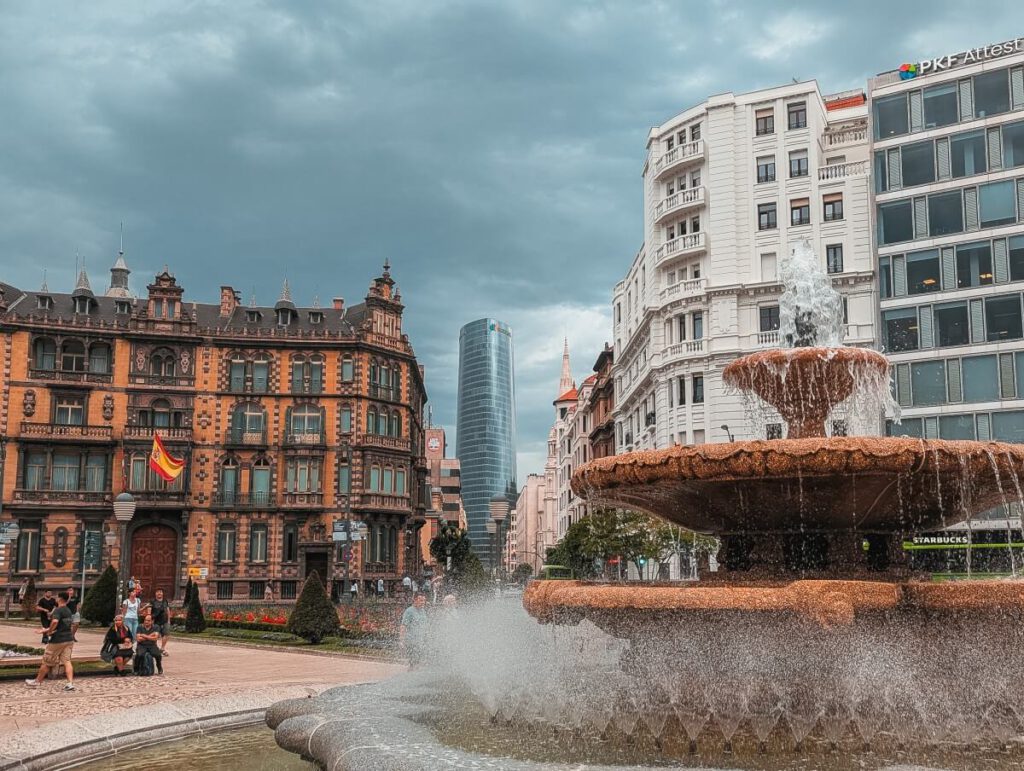
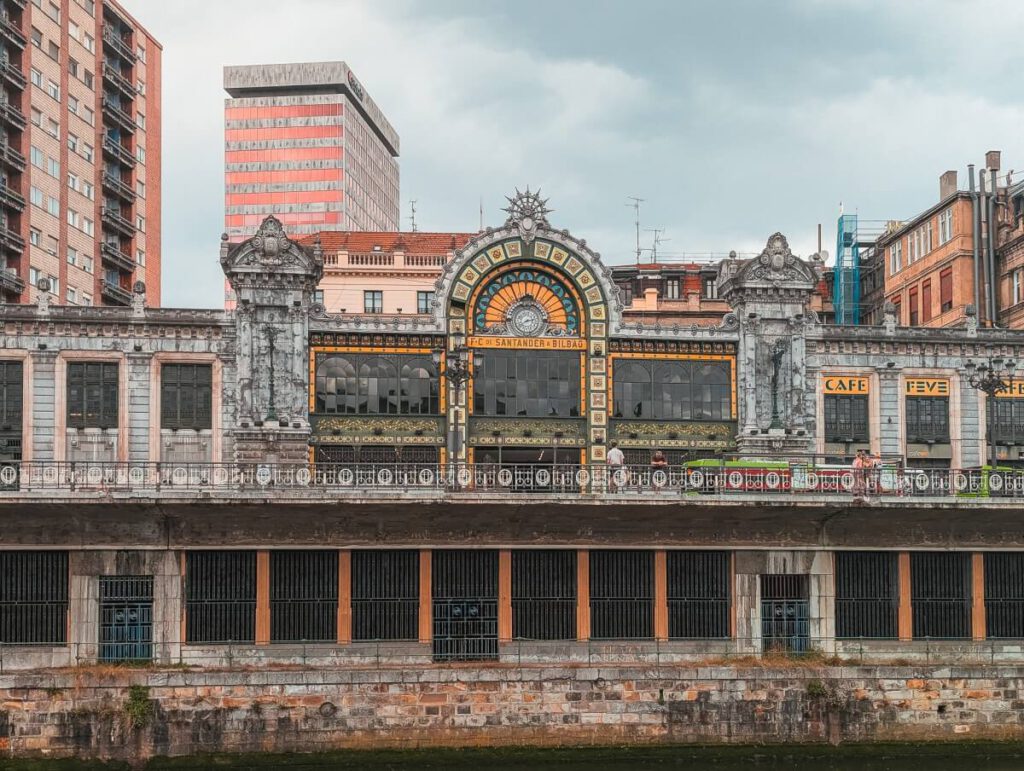
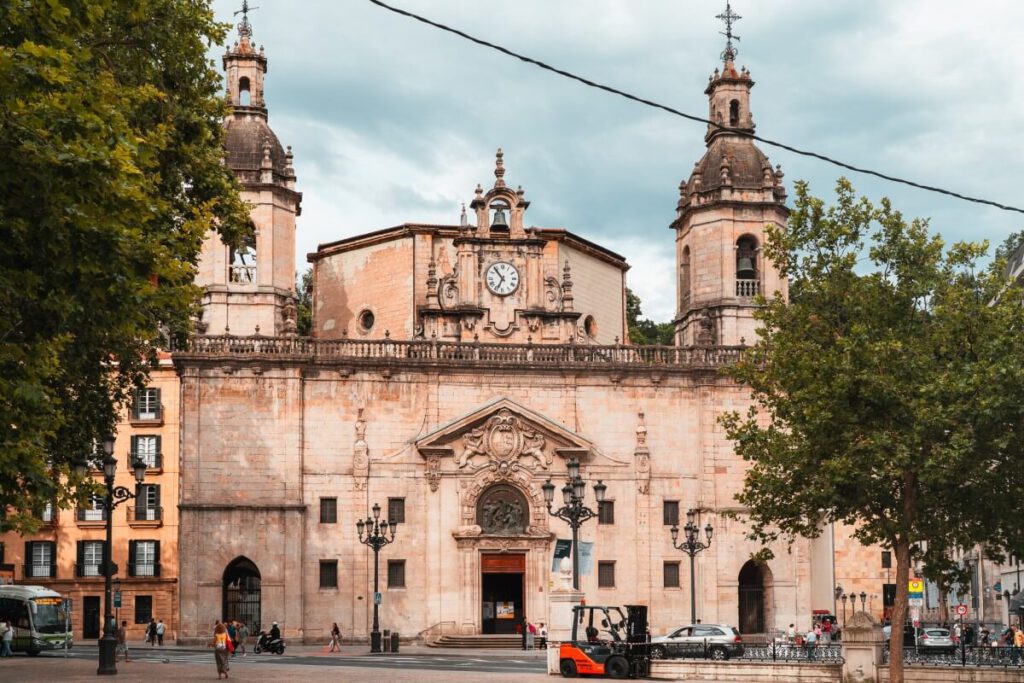
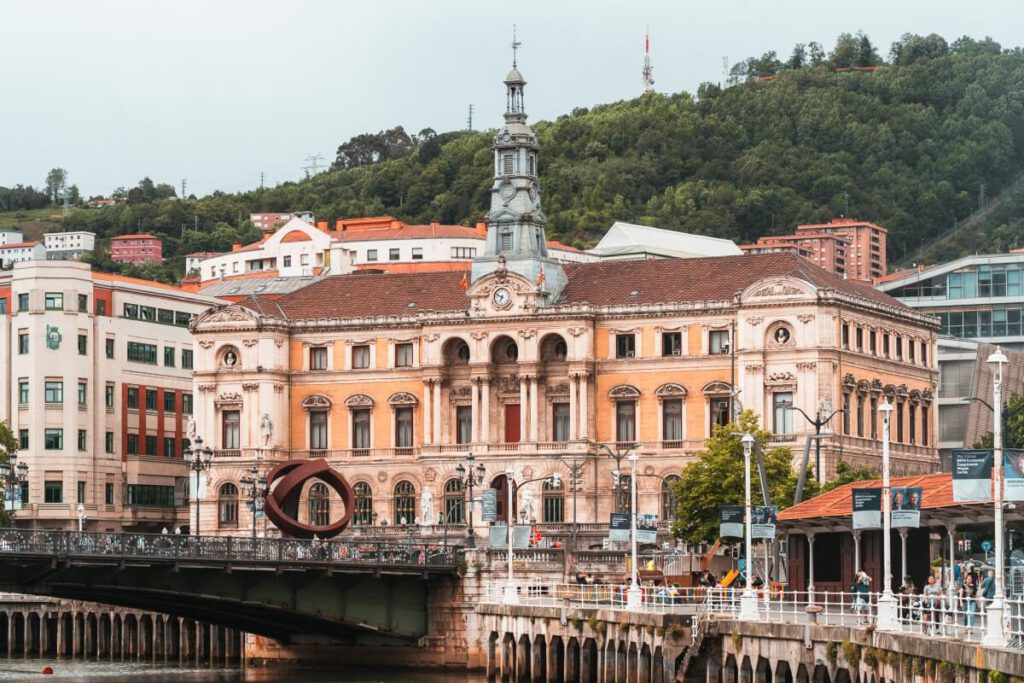
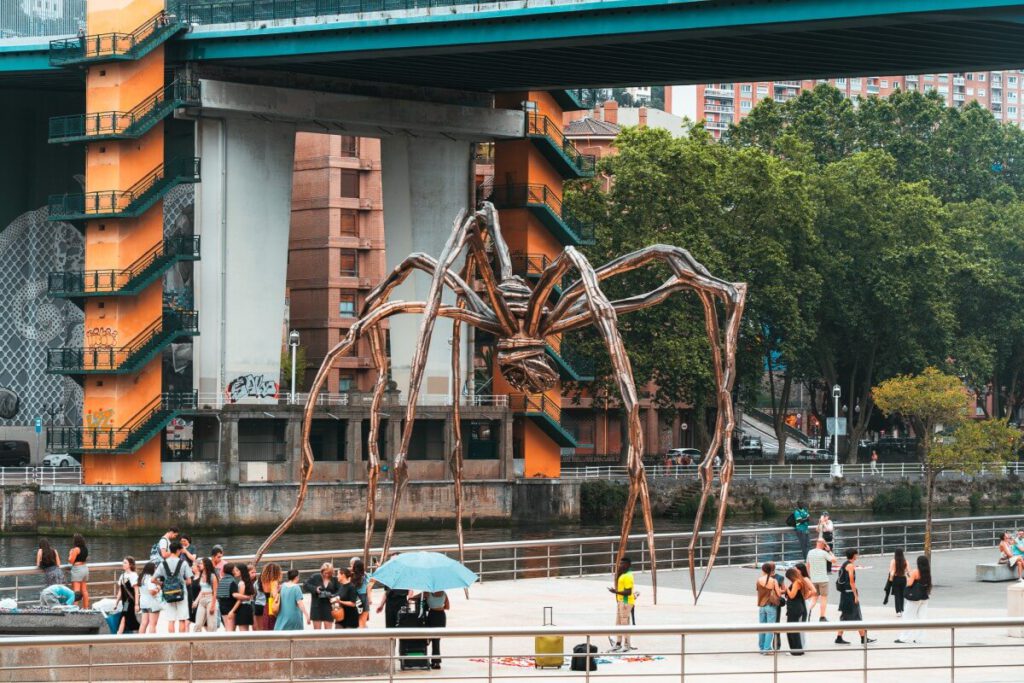
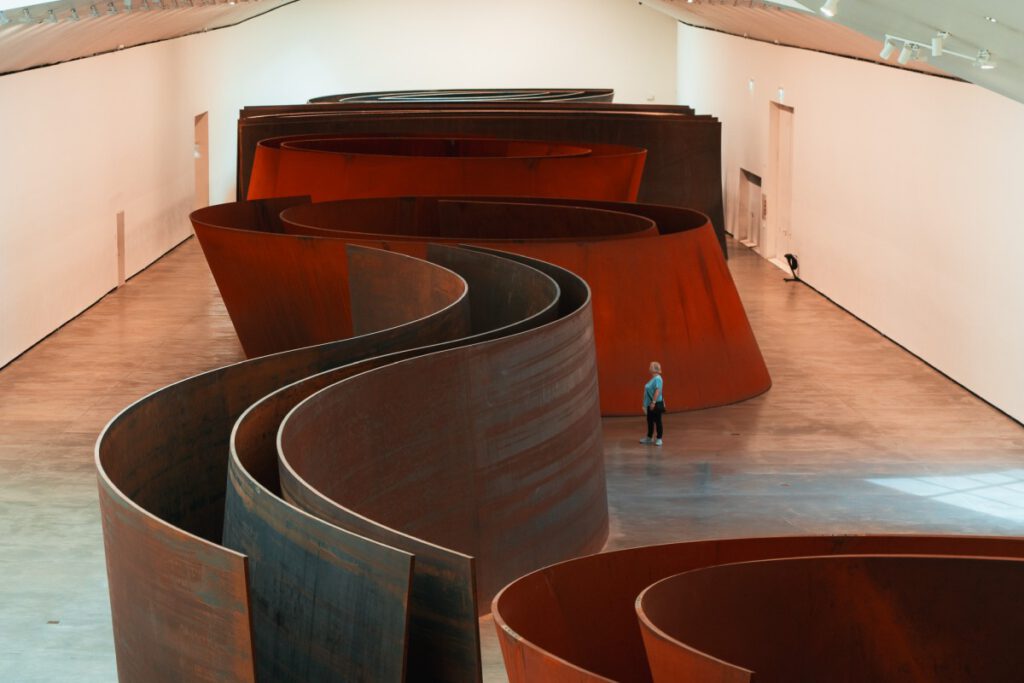
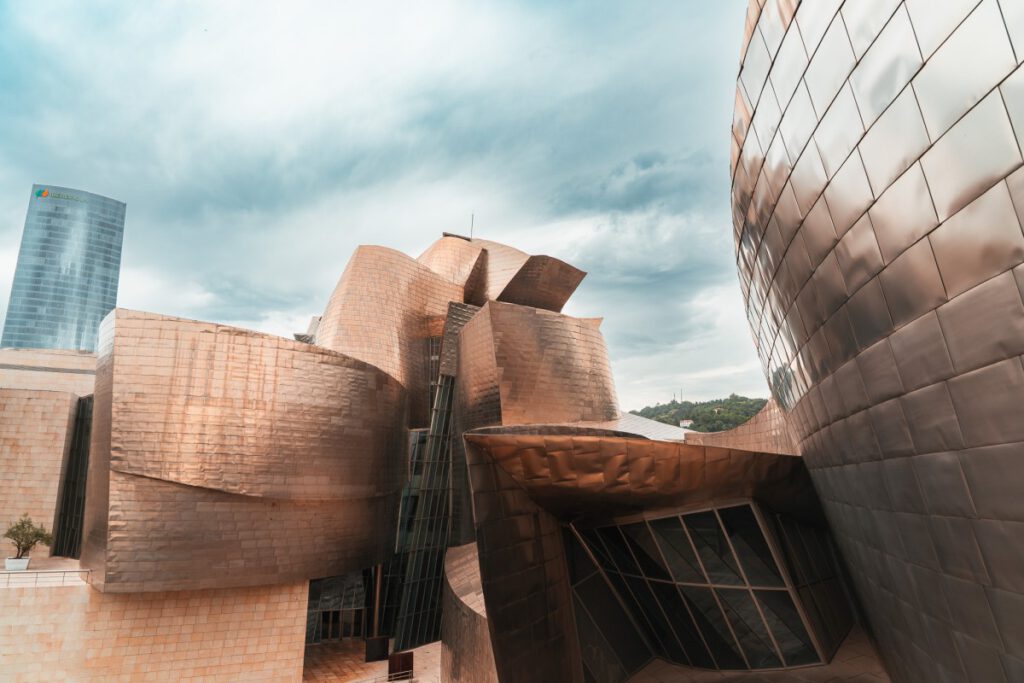
A must-see in Bilbao is the Guggenheim Museum, designed by Frank Gehry – an architectural highlight even from the outside. If you like modern art, then a visit to the museum is, of course, a must. But if you don’t, it’s enough just to look at the building from the outside and walk around it once. While you’re at it, you can also admire a few works for free:
- “Puppy” by Jeff Koons: A giant puppy made of a colorful carpet of flowers.
- “Maman” by Louise Bourgeois: A 9-meter-tall metal spider by the water.

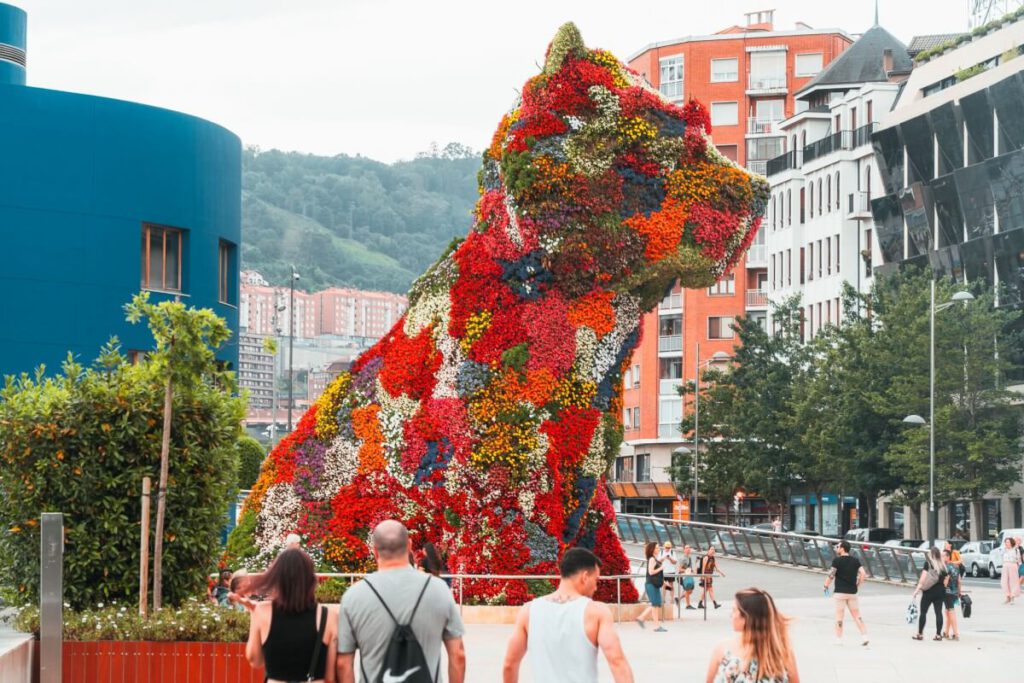
I also really liked Plaza Federico Moyúa, with its fountain right in the middle of a major traffic hub in the city.
It’s also worth taking a walk along the Nervión River. Along the way, you’ll pass many historic buildings, such as City Hall and the old train station (Bilbao La Concordia).
You can find even more hidden gems and must-see spots here in Britt’s article on Bilbao.
📢 Don’t miss this in Bilbao
Tolls in the Basque Country
As is the case throughout Spain, there are toll roads in the Basque Country that require a fee. This applies primarily to the AP-8 (Autopista del Cantábrico). It stretches over 115 km, connecting Bilbao with San Sebastián and continuing on to Irun on the border with France.
AP stands for Autopista, and these roads are usually managed by the government. The AP-8 charges a toll along its entire length. However, not all sections of every AP are necessarily subject to tolls. There is also a special feature in the Bilbao area: here, the AP-8 occasionally merges seamlessly into the A-8. The A8 is free to use. The A stands for Autovia.
Especially in the mountainous regions of the Basque Country, toll roads are worth it to save time. On some routes, you can shave off an hour, because traveling via the coastal roads would simply take much longer than taking the highway with its tunnels and bridges.
As you can see, the Basque Country is a fantastic region for a road trip. I’ve spent several weeks here myself, but I’m still far from having seen everything. If I were to take this trip again, I’d spend more time in the Geopark and less in Bilbao. Would you like to visit here someday? Or have you already been there yourself? Which places are still missing from the list? I look forward to your comment ↓.
Tools & services for your trip*
This is what I use on my own road trips.
Book & Plan
My gear
*Disclosure: All links above are affiliate links. If you book through them, I earn a small commission – at no extra cost to you. That's what keeps Travel-Dude free and ad-free. Thank you!
Thank you so much for sharing points of interest, helpful details and gorgeous photos. I was researching points of interest along the Basque coastline and your account is immensely helpful. I don’t feel I need to research further! Especially your main takeaway – spend more time at Geopark! Absolutely will do. From Brooklyn, NY, thanks so much.
Hi Colleen,
thanks for your feedback. I really appreciate it.
It is easy to provide gorgeous photos, when the landscape is as amazing as in the Basque country ;)
I hope you enjoy your trip in the Geopark as well as in the rest of the region.
Best regards to Brooklyn from Hamburg,
Matthias