

📝 About the Author: Matthias


Germany isn’t just about the Baltic Sea and Bavaria. The heart of our country also has some fantastic travel destinations to offer. For example, a vacation in Thuringia is an often-overlooked option. In this article, I’ll show you a route through the beautiful Thuringian Slate Mountains / Upper Saale Nature Park. This road trip takes you along the Saale River as it winds through the landscape, past medieval castles and Germany’s largest reservoir, as well as through dense forests, wide-open landscapes, and picturesque villages whose houses are covered in the region’s “blue gold.”
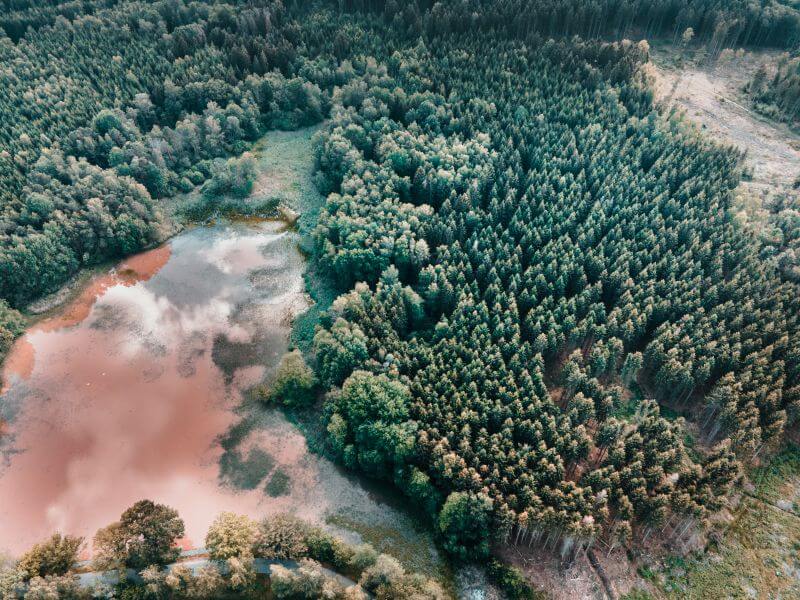
The landscape along the Upper Saale in the Thuringian Slate Mountains has a bit of the same sleepy charm as the Netflix series *Ozark*. It’s no wonder the area is also known as “The Land of 1,000 Ponds” or the “Thuringian Sea.” The Thuringian Slate Mountains is Germany’s largest reservoir region and also one of the largest in Europe. Here, you can really let your mind wander.
On the bright banks of the Saale
, castles stand proud and bold.
Their roofs have crumbled,
and the wind sweeps through their halls, while
clouds drift overhead. Franz Kugler (1830)
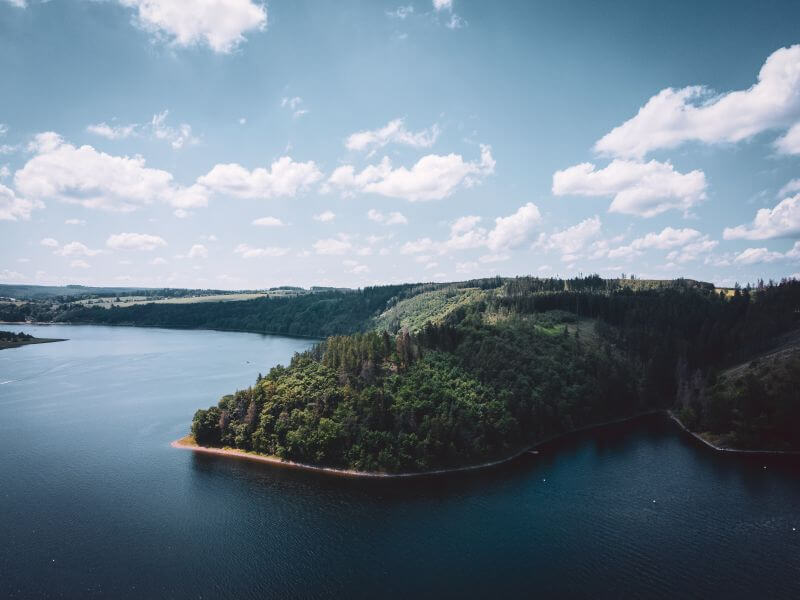
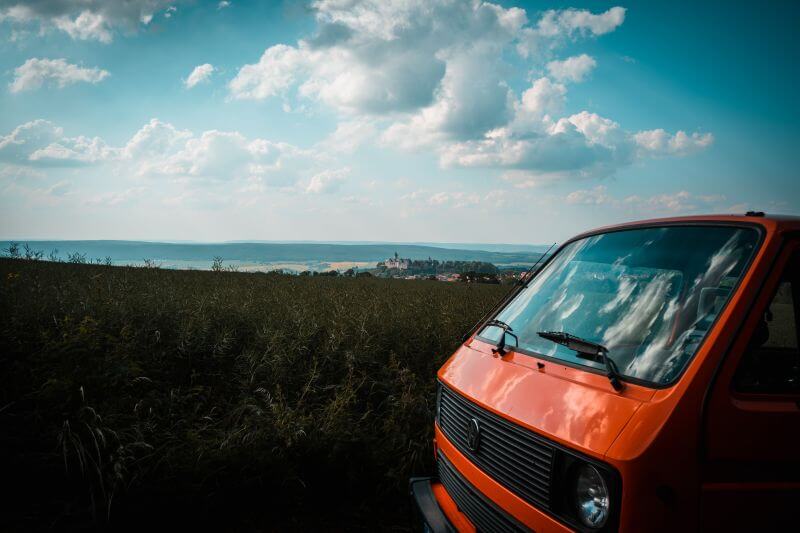
The road trip I describe in this article can be completed in two days. However, it’s better to set aside a few more days, as this will give you more time to explore each stop, go on a hike or canoe trip, and relax a bit along the way. I’ll also give you a few recommendations for accommodations and cool campsites along the route.
You are currently viewing a placeholder content from Google Maps. To access the actual content, click the button below. Please note that doing so will share data with third-party providers.
More Information1. Saalburg/Ebersdorf
Saalburg is a great starting point for a road trip. The town is located right on Germany’s largest reservoir, and it features an enchanted forest and a summer toboggan run, which are especially popular with children. Saalburg is a central hub from which you can embark on boat tours.
But above all, the hiking trails in the region and the opportunity to explore the water yourself using a variety of boats are very popular with tourists.
2. Bleilochtal Dam and Reservoir
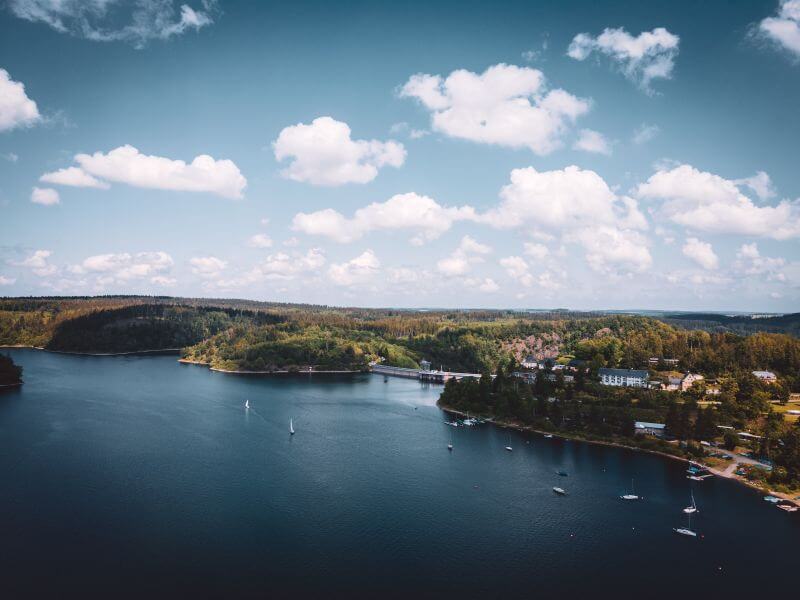
Right next to Saalburg, you’ll find Germany’s largest reservoir by volume – the Bleilochtalsperre. It holds a total of 215 million cubic meters. The largest swimming area is in Kloster, right next to the campground.
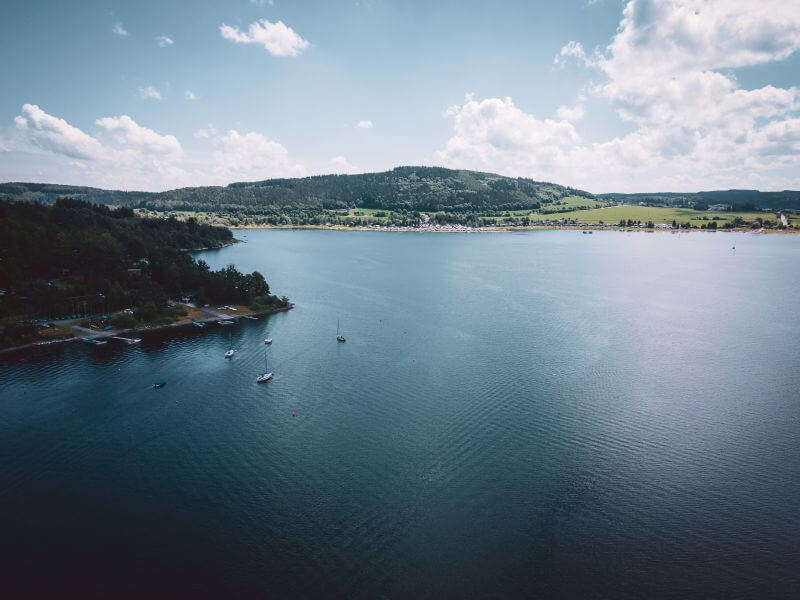
The SonneMondSterne Festival is always held right by the reservoir near Kloster in early August. That means the peace and quiet is over—at least for a long weekend.
3. Burgk Castle
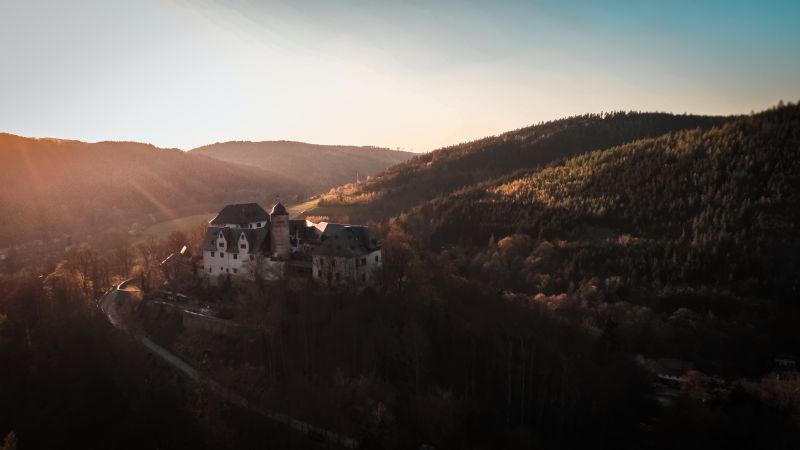
The route continues along the Saale River over the Eisbrücke bridge to Burgk. You can’t drive directly into the town because there aren’t any proper places to turn around. However, a large parking lot has been built at the entrance to the town. Right next to it stands the Saaleturm, from which you have a fantastic 360-degree view of the landscape.
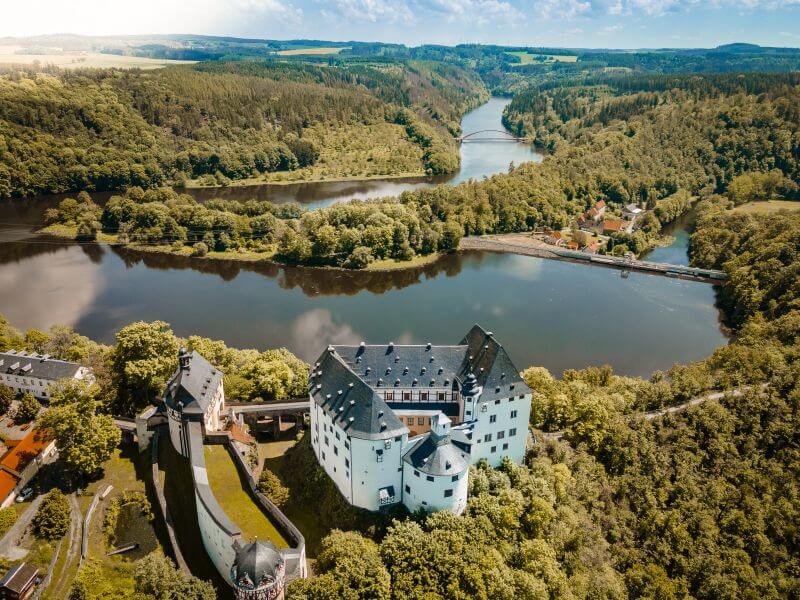
It’s about a 5-minute walk from the parking lot to the castle. There’s also a restaurant there. You can explore the grounds and the castle walls for free. But a visit to the museum for €6 is also well worth it.
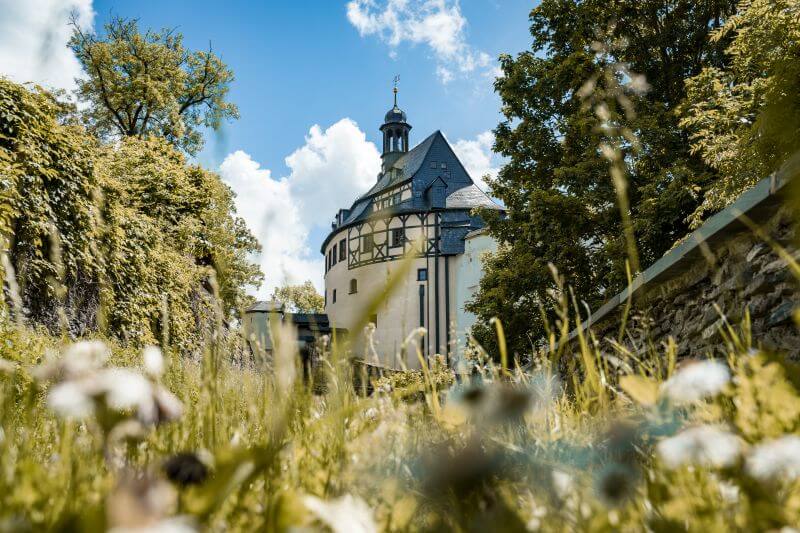
A hiking trail winds around the castle and leads to the palace grounds. It passes a small wooden bridge that crosses the Saale River.
4. Plothen Ponds
If you had enough time, you could explore about 600 ponds in the Plothen area. In the past, there were even more than 1,500. They were created by humans as early as the 11th century for the purpose of fish farming. Today, the ponds serve mainly to preserve nature and as a recreational area. However, you can still fish in the fish-rich ponds with the appropriate permit.
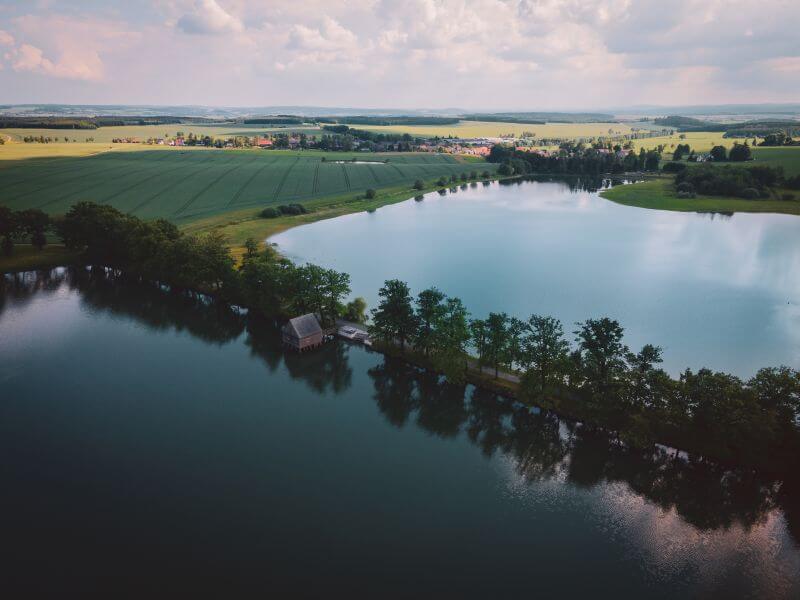
The most famous building in this region is the Plothen Pile House on Hausteich. It was built as early as the 17th century and stands on larch piles. Inside is a small museum.
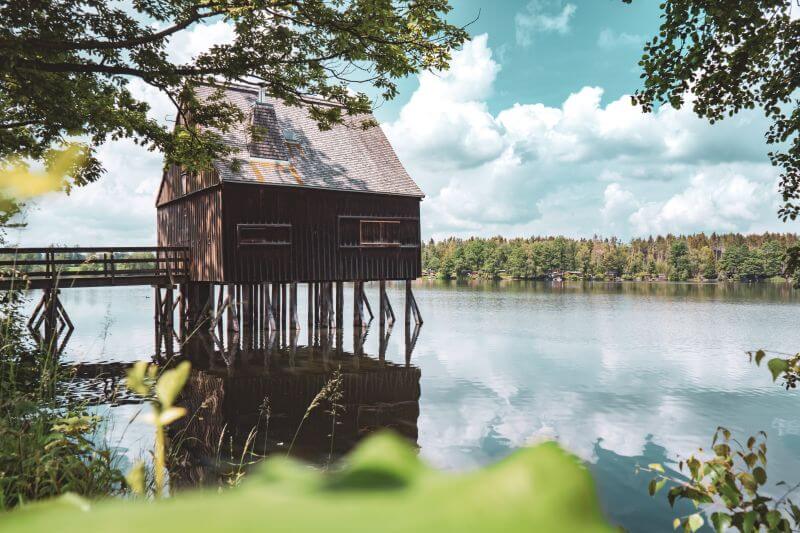
There are many hiking trails along the ponds, such as the 1,000 Ponds Loop Trail, which also offers plenty for children to discover.
5. Ziegenrück
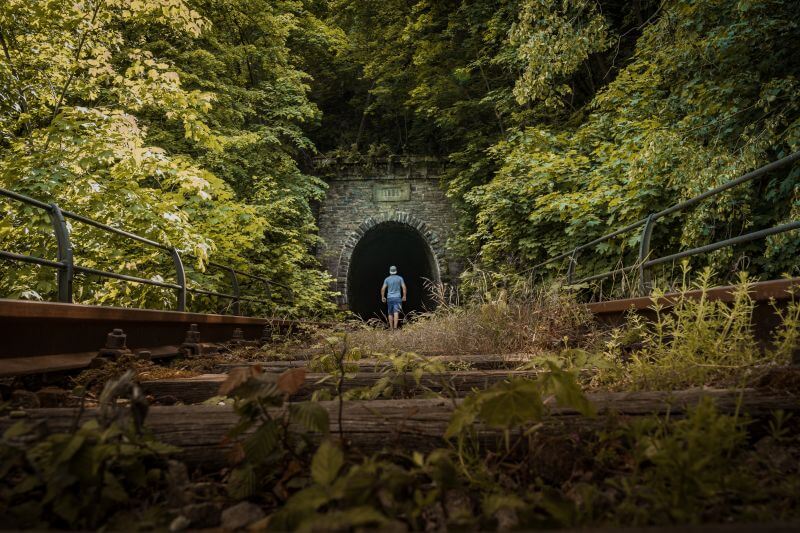
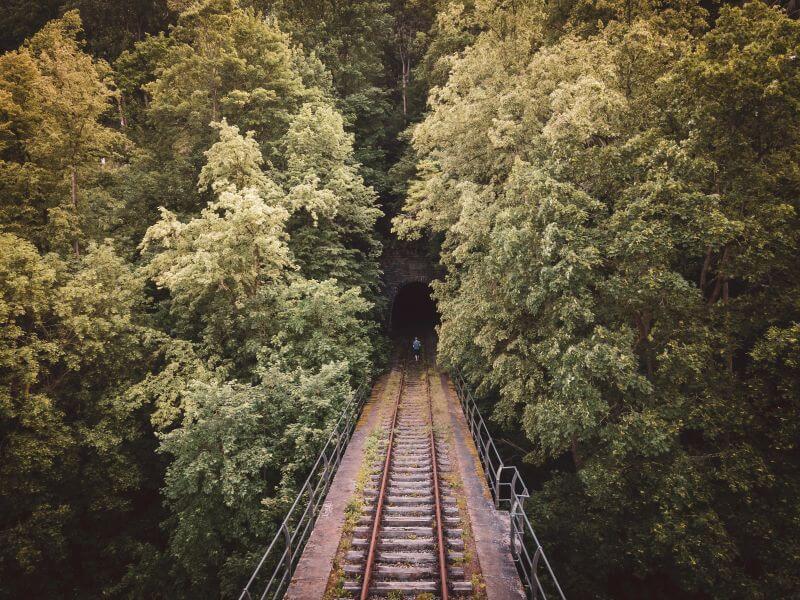
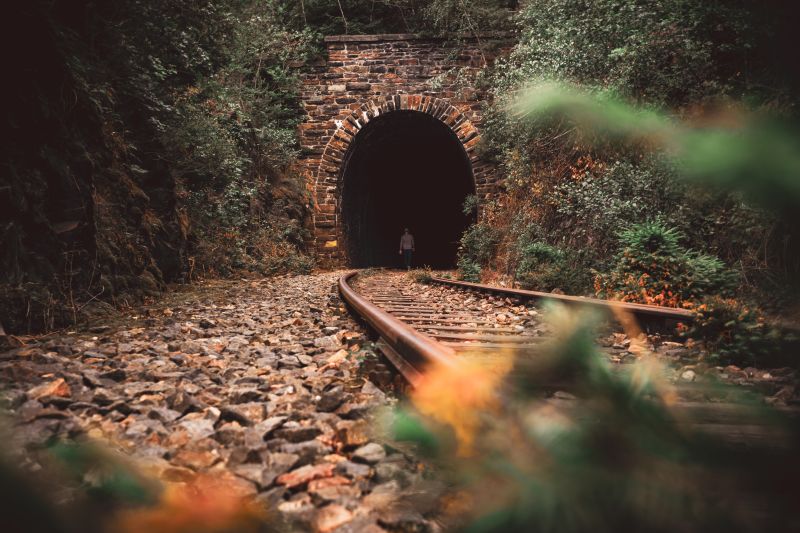
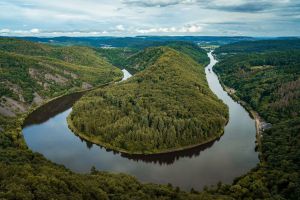
The small town of Ziegenrück is situated right on a meandering bend of the Saale River. The highlights in Ziegenrück are the old town hall, the hydroelectric power museum, and the viaduct that leads into a disused railway tunnel.
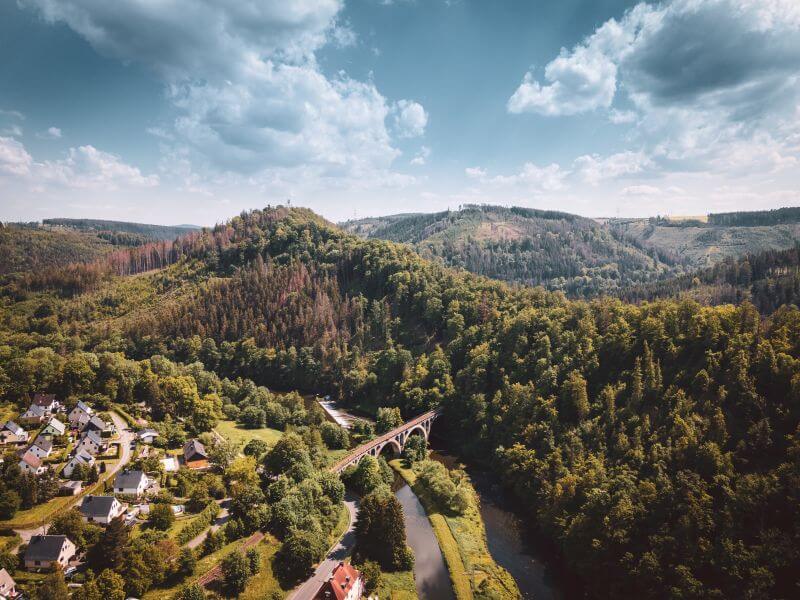
There, you can see how nature is slowly reclaiming the old tracks. The atmosphere is almost eerie.
6. Linkenmühle Campground
One option for lodging in this region is the Linkenmühle Campground. It is located in the woods right on the Saale River and is particularly popular with families with children.
7. Ranis Castle
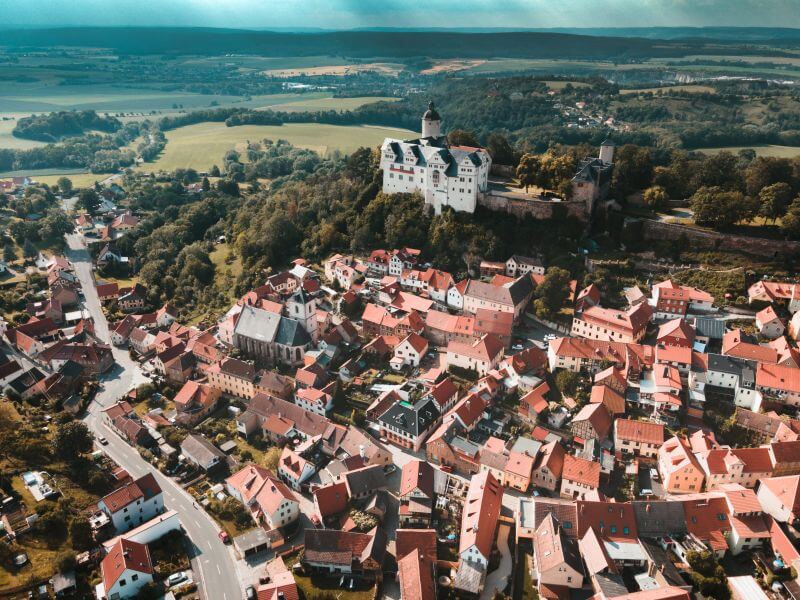
Even from a distance, you can see the castle towering over the town of Ranis, which was built on the steep cliffs of a rock massif as far back as the Middle Ages. The large “Hungerturm” (Hunger Tower) once housed a dungeon. Admission to the castle museum costs €4.50.
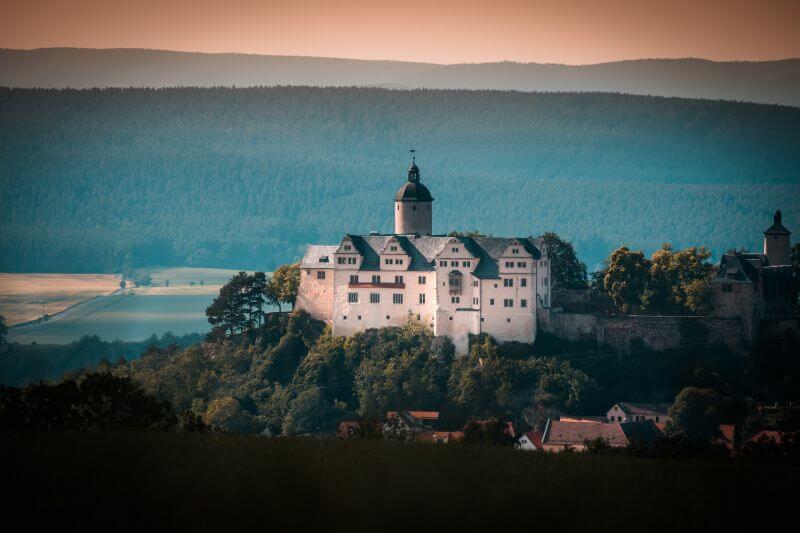
About a 15-minute walk from Ranis Castle stands the Baroque Brandenstein Palace with its blood-red facade. It is open on Sundays and holidays and also houses an antique shop.
8. Fairy Grottoes in Saalfeld
Just on the edge of the Thuringian Slate Mountains / Upper Saale Nature Park, you should definitely visit the Fairy Grottoes in Saalfeld. The colorful stalactites in the former mine are a real highlight, especially for children.
9. Hohenwarte Reservoir
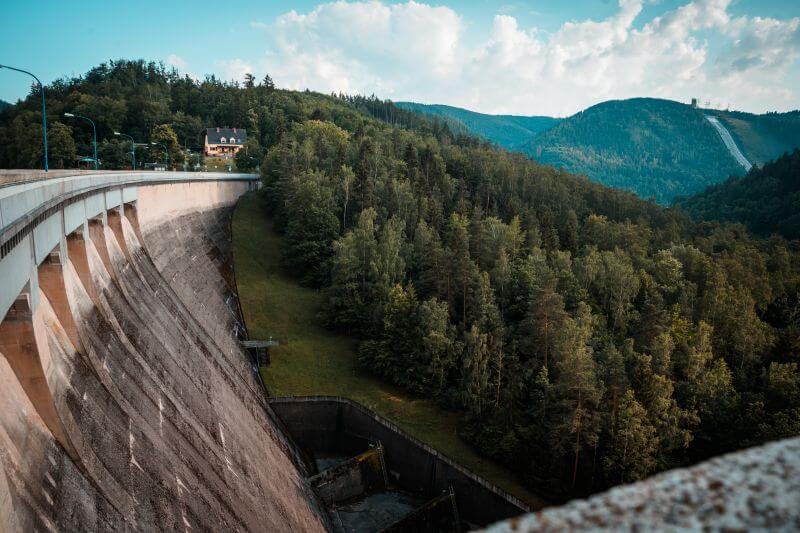
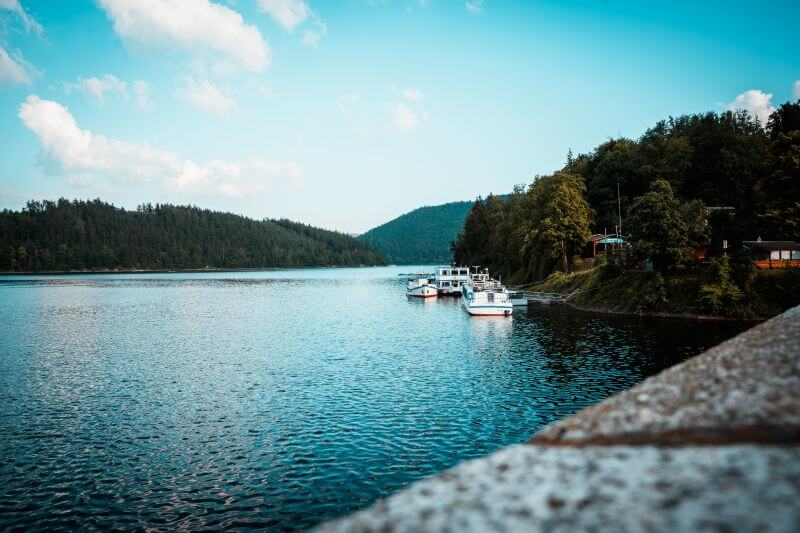
With a capacity of 182 cubic meters, the Hohnwarte Reservoir is the fourth-largest in Germany. The dam is 75 meters high. Here, you can rent motorboats and pedal boats, take a boat tour, or simply enjoy the view of the surrounding landscape.
10. Ziemestal Bridge
Cross the Hohenwarte Dam and continue along the winding road beside the Saale River. You can also stop at a few spots along the way to go for a swim or even try your hand at water skiing at the water ski center in Neidenberga.
Before you head to the next town, you can take a detour to the Ziemestal Bridge in Weißbach—one of Germany’s most famous photo spots, located right in the middle of the forest.

The easiest way to reach this picturesque bridge is to drive from Weißbach toward Wysburg, an old castle ruin. There is a parking lot there; from there, you’ll need to walk about 1 km past the ruins to reach a path that goes under the bridge. On both sides of the bridge, there are overgrown staircases leading up. You should be fit enough to manage this.
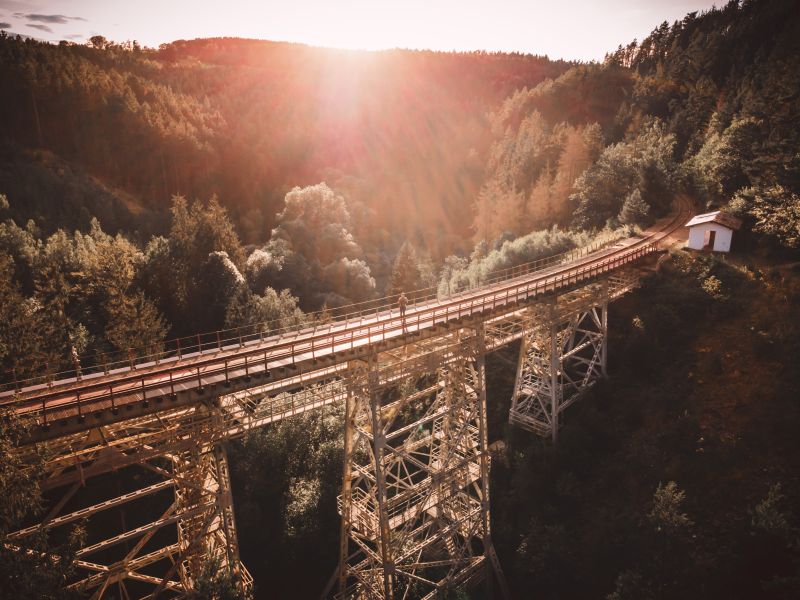
By the way, the paths around the bridge are also great. You can enjoy the peace and quiet of the forest here, and you’re sure to find a few great photo spots as well.
11. Leutenberg
The rest of the route winds through small Thuringian villages and along tree-lined avenues all the way to Leutenberg.
Leutenberg is a state-recognized resort town with a historic town center that has been lovingly restored. The town is surrounded by many forested mountains. That is why Leutenberg is also known as the “Town of the 7 Valleys.”
12. Lehesten
Here in Lehesten, the town of mountains and slate, the “blue gold” of the entire Thuringian Slate Mountains region has its origins. The town takes pride in the fact that in 1872, what is believed to be the largest single slab of slate ever quarried (3.08 m high and 2.53 m wide) was extracted from the “Kießlich” slate quarry.
Lehesten is also home to Germany’s oldest roofing school, where roofers are still trained today.
13. Bad Lobenstein
Bad Lobenstein is a former mud spa town. The town’s landmark is the old tower, but many visitors come here for the Ardesia Thermal Baths. There, you can book wellness treatments featuring natural mud, for example.
Also worth seeing are the old market square with the town hall, the spa gardens, and the new castle.
Hiking Trails in the Thuringian Slate Mountains
Since I can’t list all the hiking trails, here is an overview of many different hiking routes throughout the Thuringian Slate Mountains.
There are many more stops and sights worth seeing along the Upper Saale. Which ones should I definitely mention here? Leave me a comment.
Tools & services for your trip*
This is what I use on my own road trips.
Book & Plan
My gear
*Disclosure: All links above are affiliate links. If you book through them, I earn a small commission – at no extra cost to you. That's what keeps Travel-Dude free and ad-free. Thank you!
Leave a Reply