

📝 About the Author: Matthias


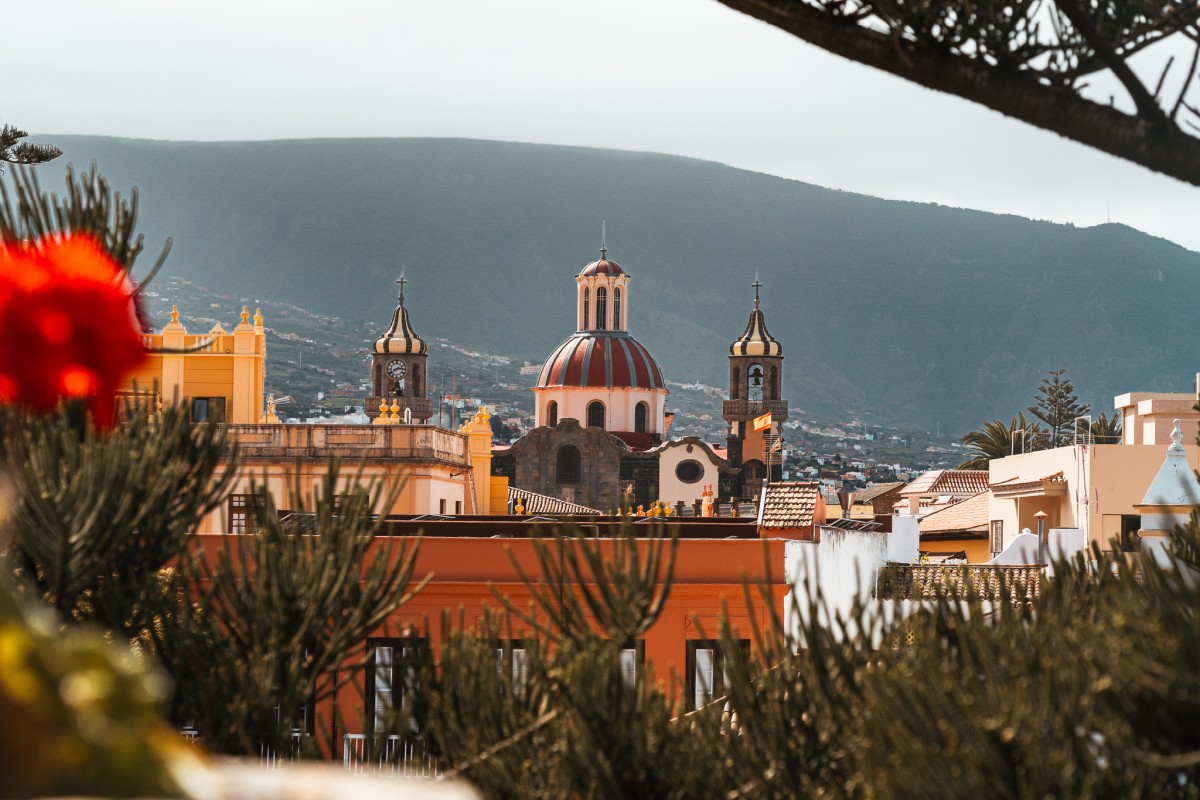
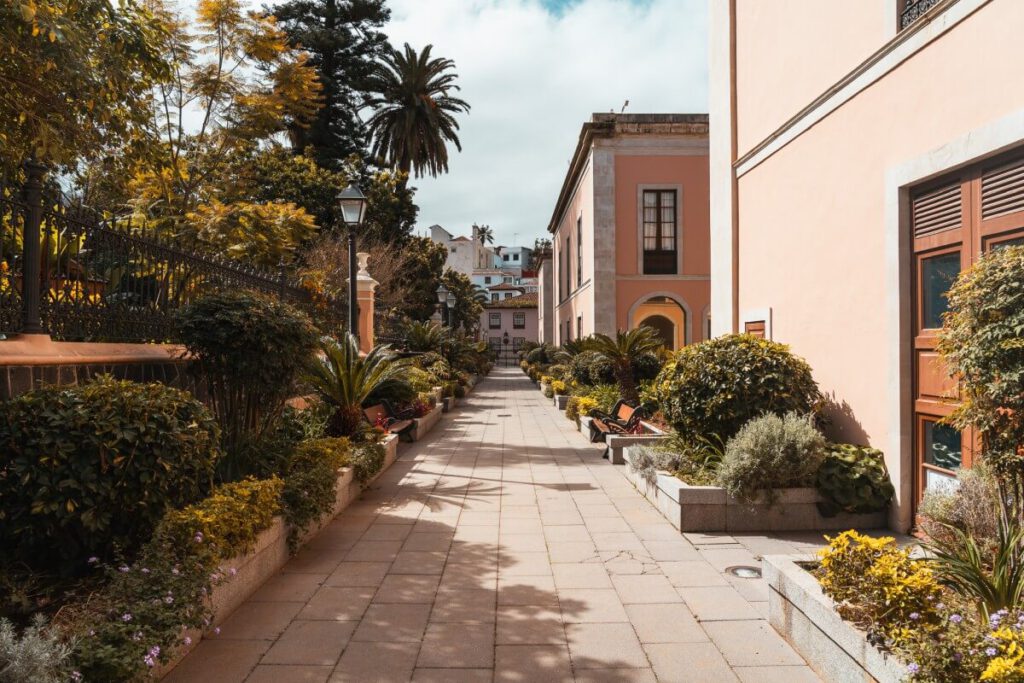
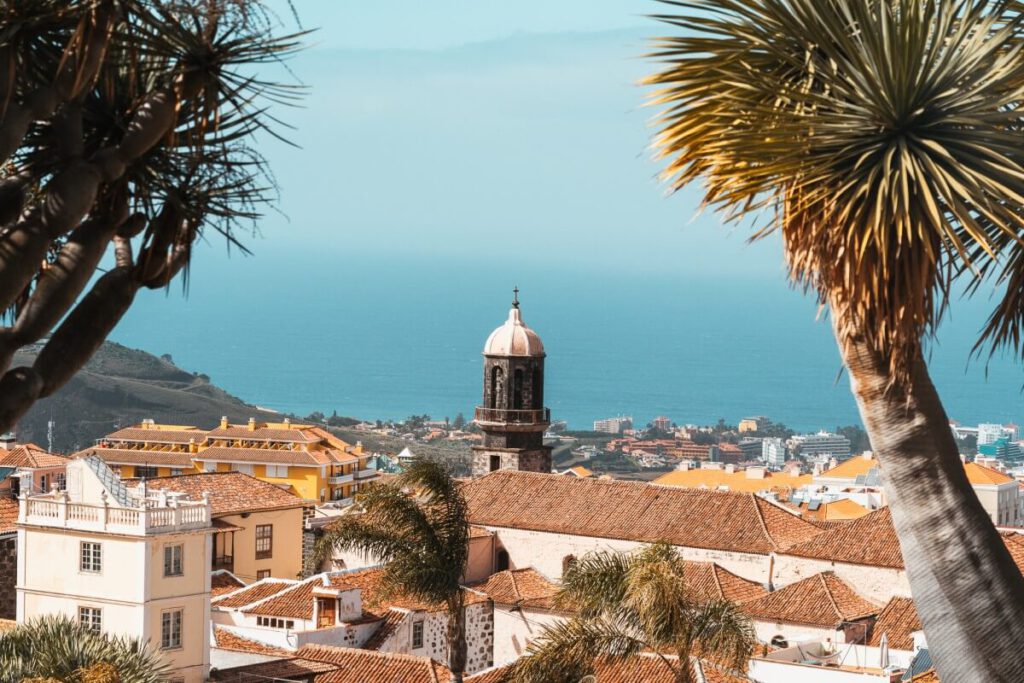
An abandoned Masonic mausoleum overlooking green garden terraces dotted with fountains, a botanical garden with a giant dragon tree right in the heart of the old town, and balconies made of Canary Island pine – for which the entire town is famous. La Orotava packs an astonishing amount into its few hilly streets. I’ll show you which sights you shouldn’t miss – and the best order to visit them in.
La Orotova is just a 10-minute drive from Puerto de la Cruz and is best known for the Casa de los Balcones. But there’s even more to discover in this hilly mountain town. La Orotova is one of the few towns in the Canary Islands with a historic center that’s almost entirely preserved. It has been designated a Conjunto Histórico-Artístico (Historic-Artistic Complex) and protected as a heritage site since 1976. In 2 to 4 hours, you can explore the most beautiful spots in the Casco Histórico on foot, which fits perfectly into a half-day tour.
All the attractions in this article are listed in the order that makes the most sense geographically for visiting them one after another. This way, you won’t have to walk up steep paths twice and can see all the highlights of La Orotava in the shortest amount of time.
Plaza de la Constitución
Start your city tour at the tree-lined Plaza de la Constitución. In the center stands a pavilion that the locals simply call “el quiosco” – which is why the square is usually referred to as “Plaza del Quiosco” in everyday life. Today, it houses a café with outdoor seating.
Events are held here from time to time. When I was there during Carnival season, there were dance performances in the square.
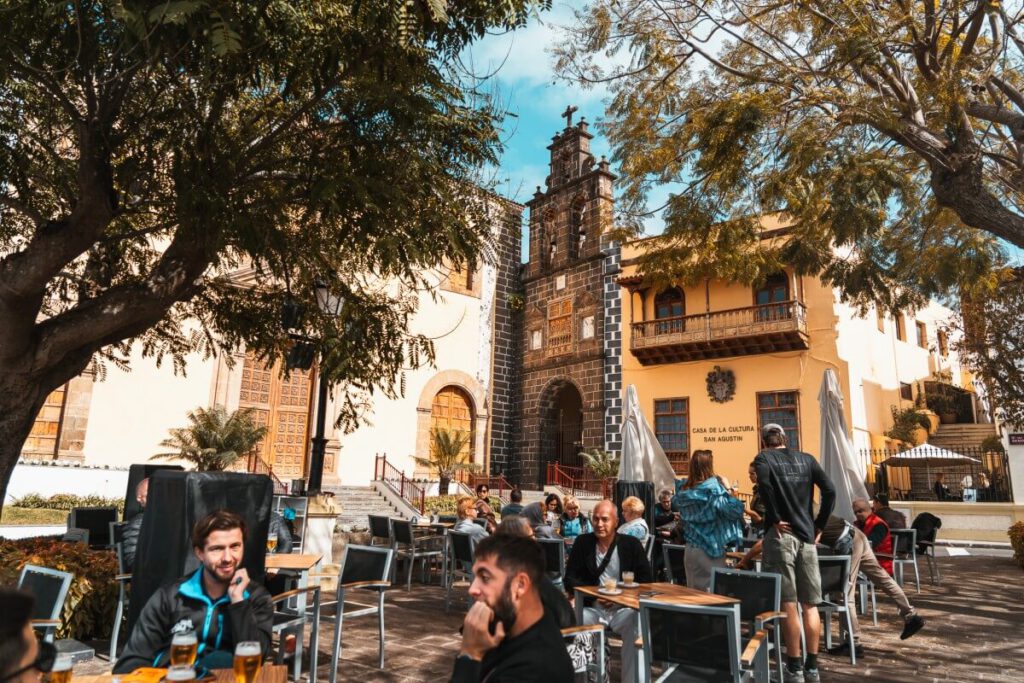
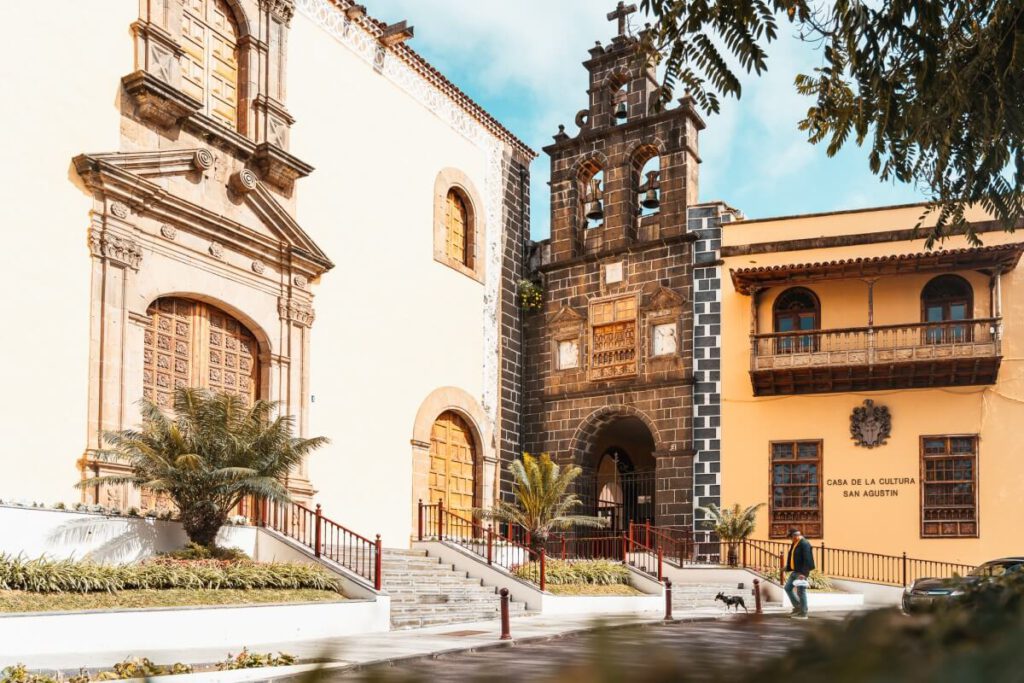
Next to the square stands the Iglesia de San Agustín, which was built here in the 17th century by the Augustinians and, with its corner building, makes for a great photo opportunity.
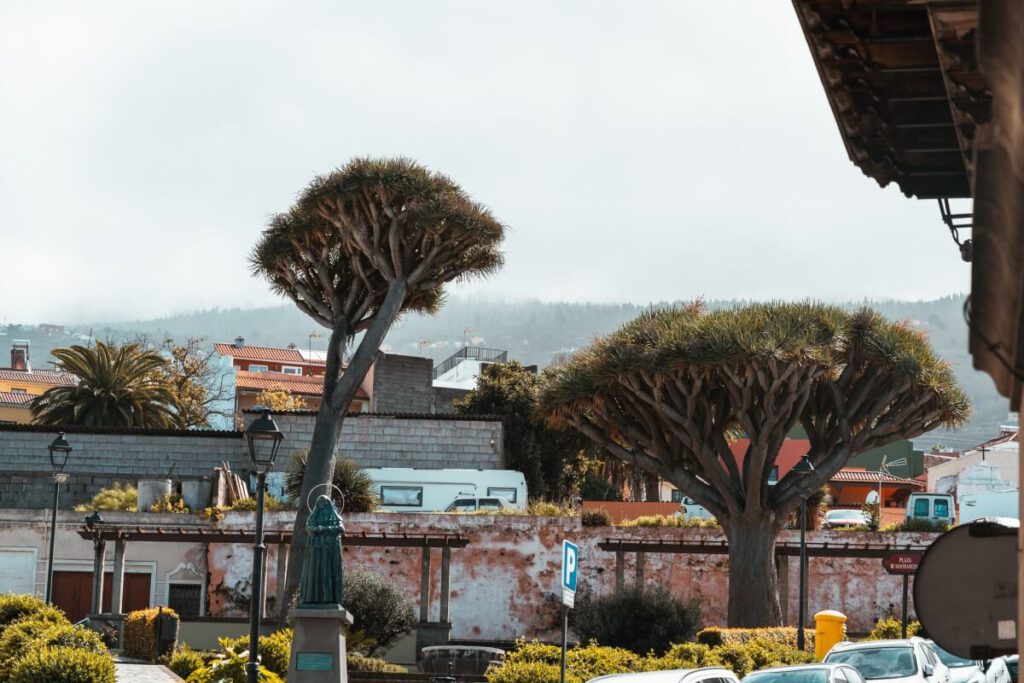
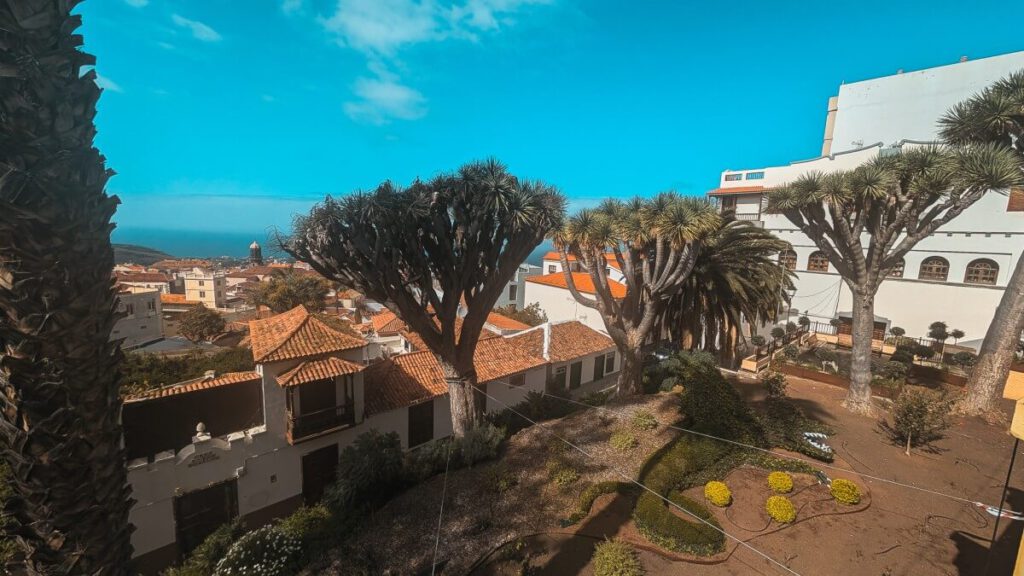
Across the street from the Plaza de la Constitución is a small garden with dragon trees (El Bosquito de Dragos). From here, you have a great view of the coast.
Liceo de Taoro mansion
From the Plaza de la Constitución, it’s just a stone’s throw to the Liceo de Taoro – an imposing, orange-salmon-colored building dating back to 1928. Since 1995, it has been home to a private cultural center (Sociedad Cultural Liceo de Taoro). The building is unusually large for its time and has an almost palatial air about it. You can explore it both inside and out for free.
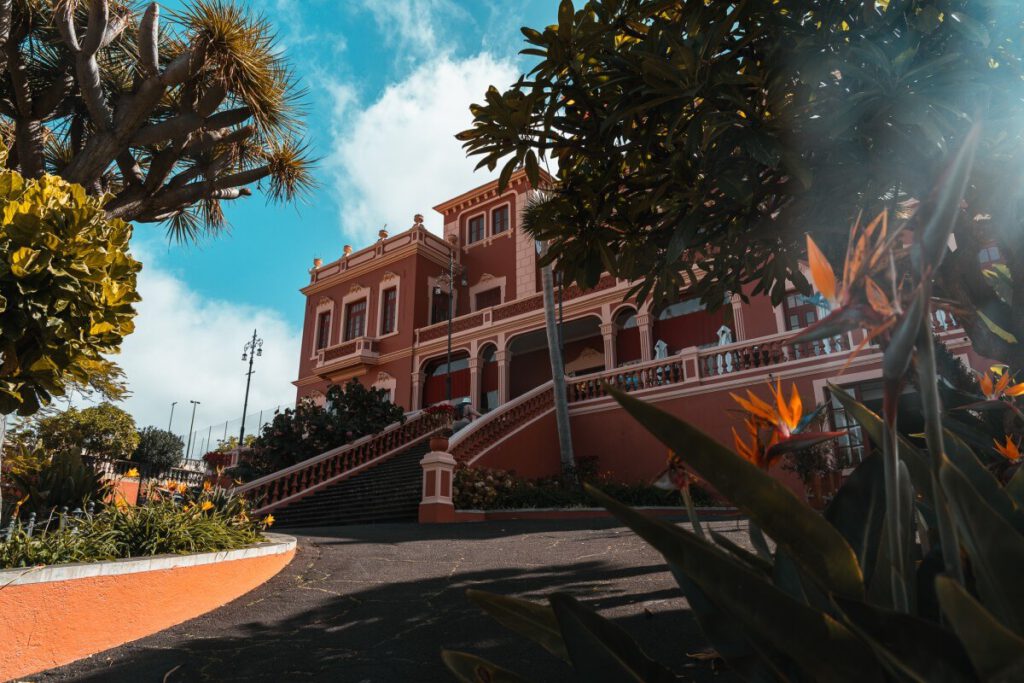
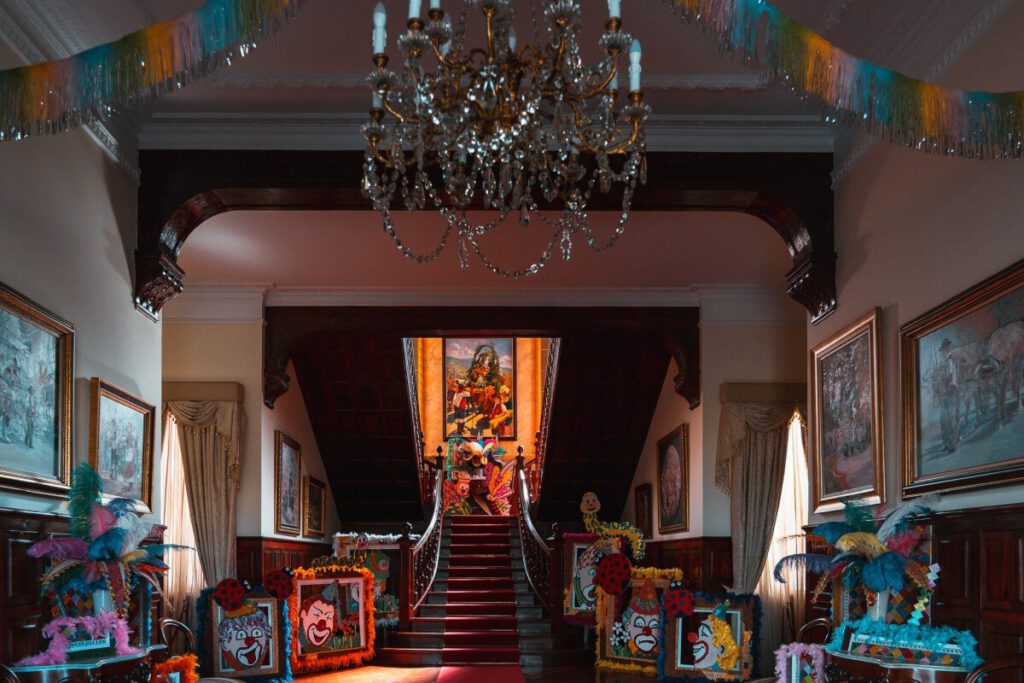
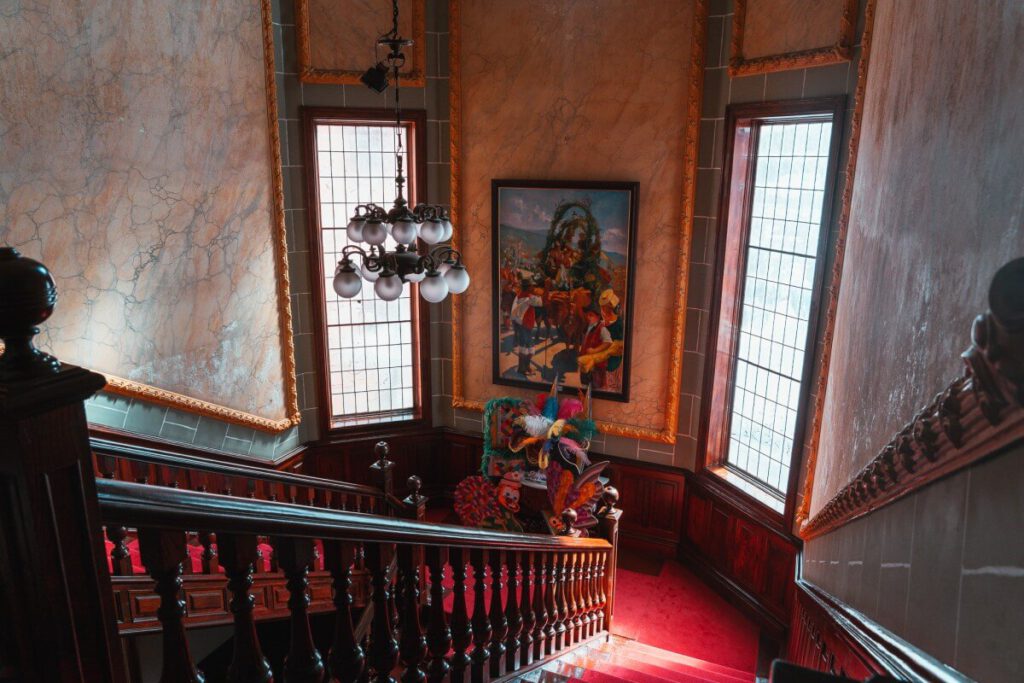
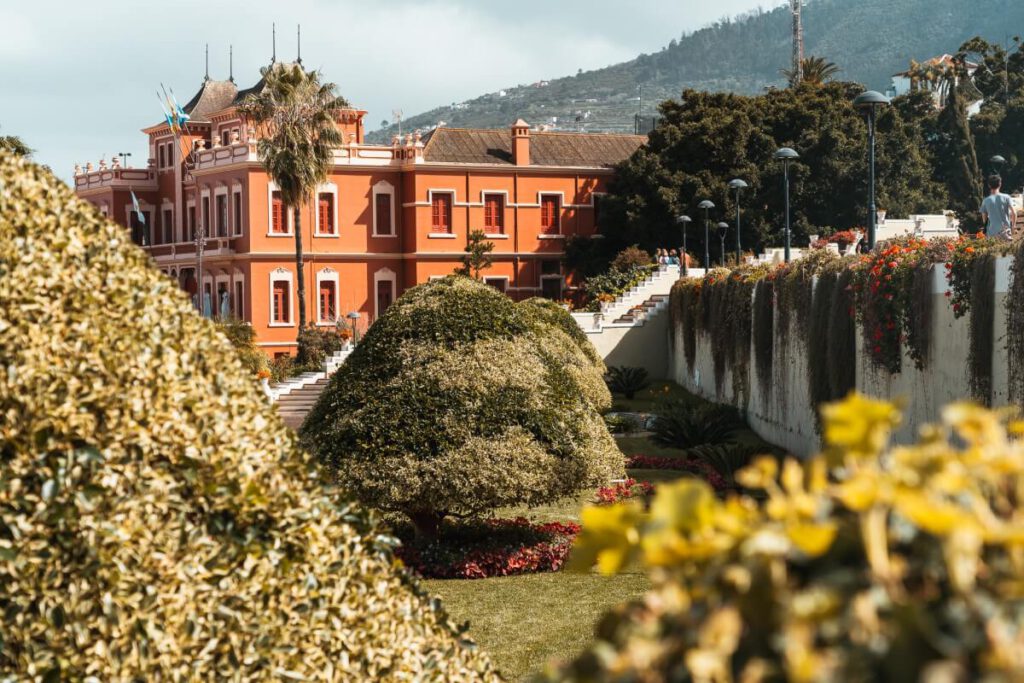
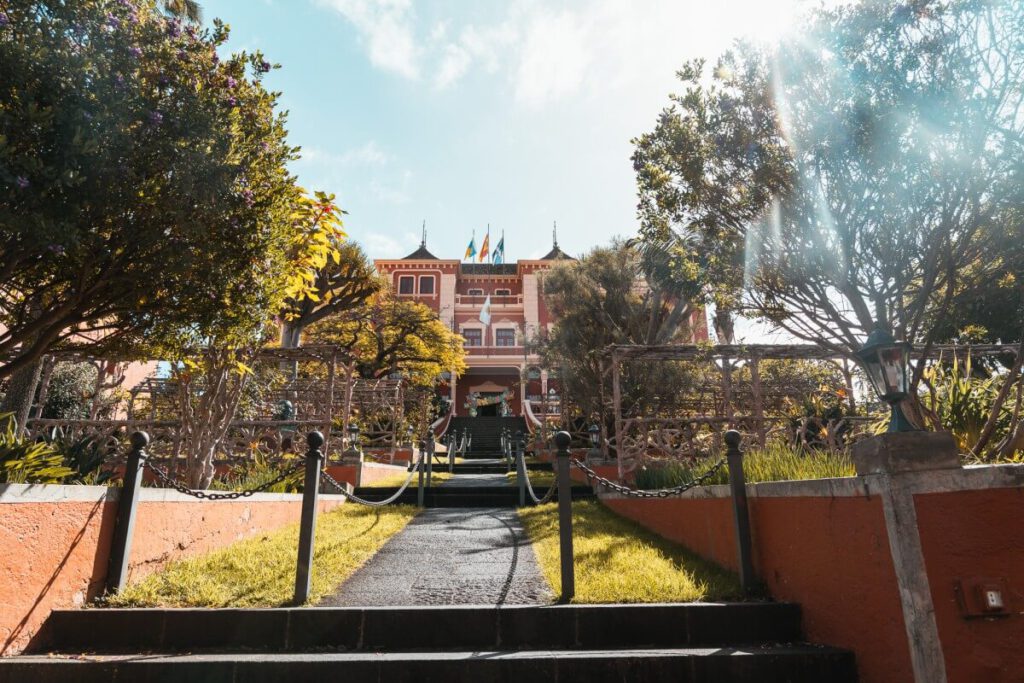
I especially loved the staircase that leads right up to the entrance and is flanked by flower beds and romantic gardens.
Victoria Garden
Right next to the Liceo de Taoro is the Victoria Garden, which is open to the public. It is a terraced garden dotted with fountains, featuring a Masonic mausoleum on the top level.
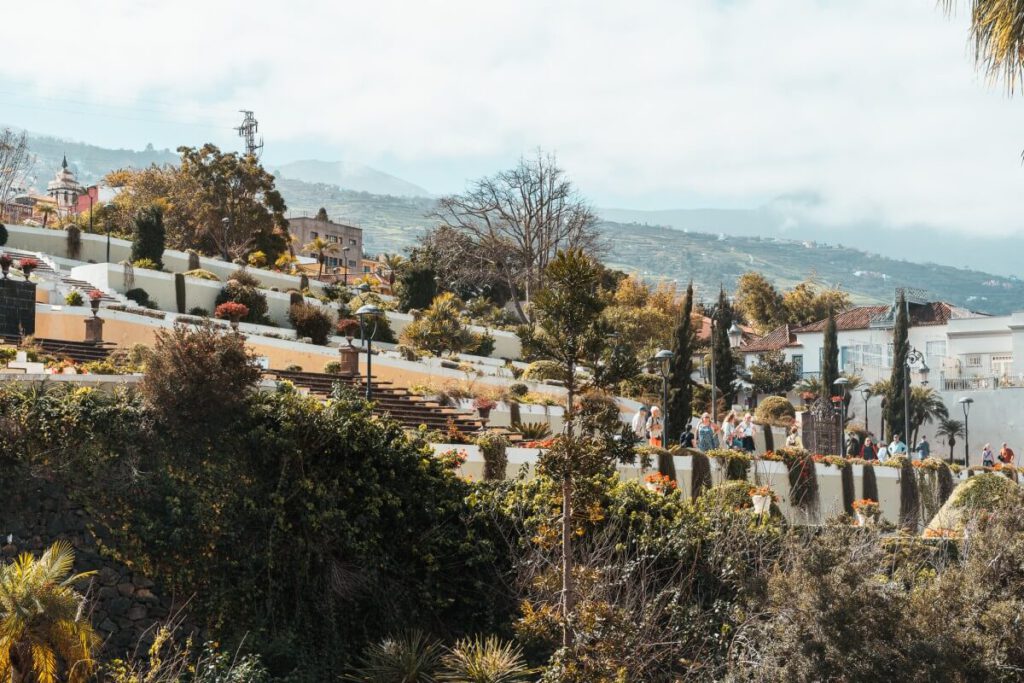
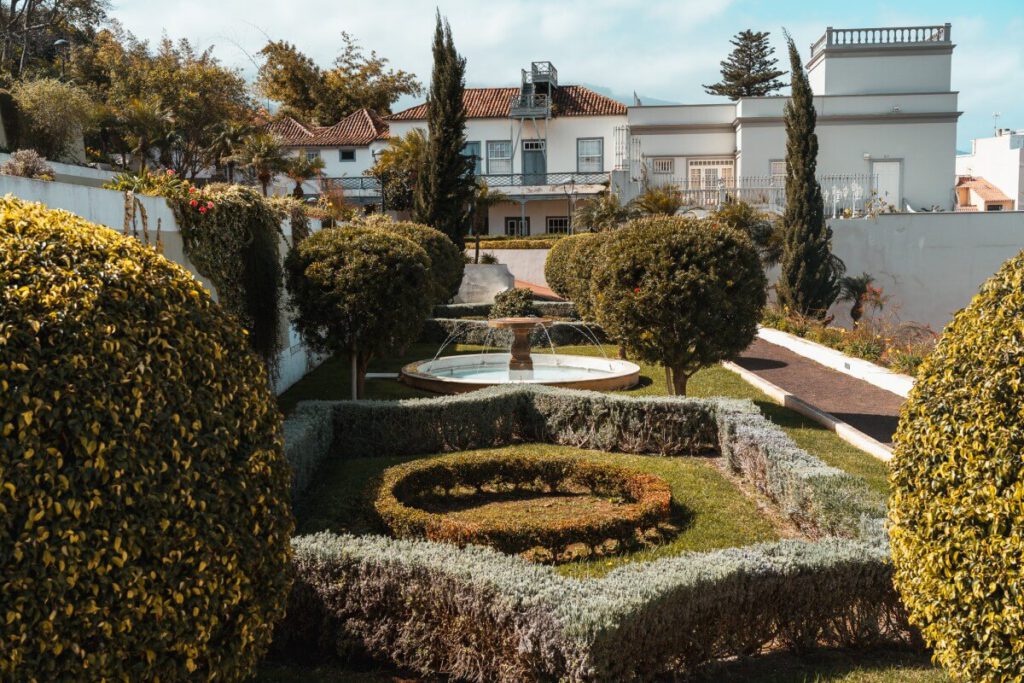
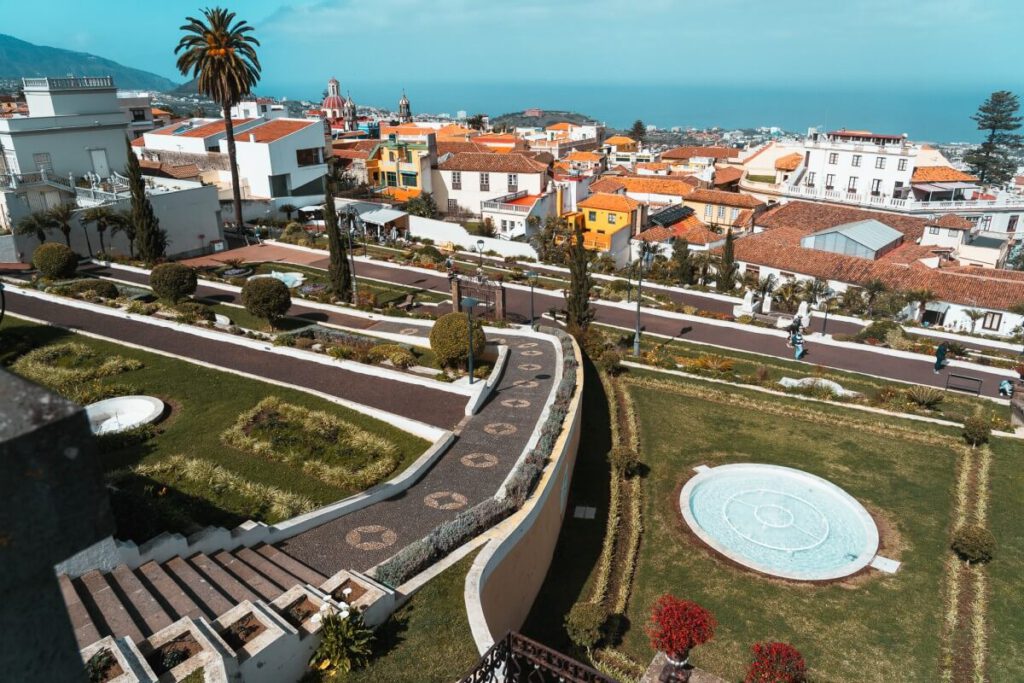
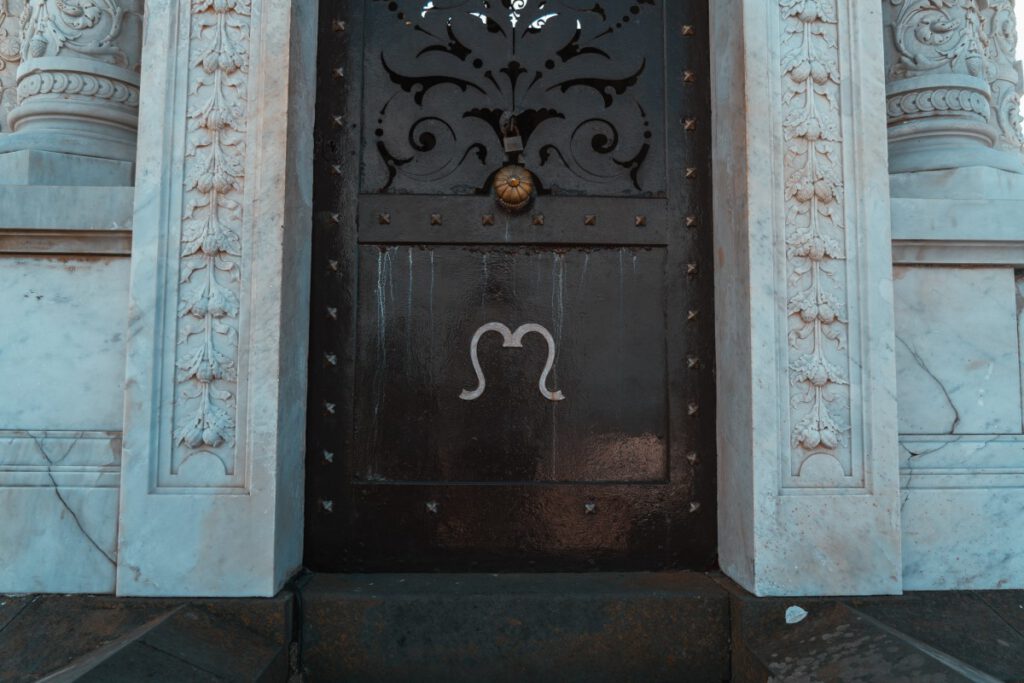
The mausoleum was built for the 8th Marqués de la Quinta Roja – because he was a Freemason, the Church refused to allow him to be buried in the family tomb in 1880. If you look closely, you’ll find plenty of mysterious symbols on the building, such as triangles in the grilles, poppy capsules on the columns, or an omega on the metal door – though to me, it looks more like a mysterious “M.”
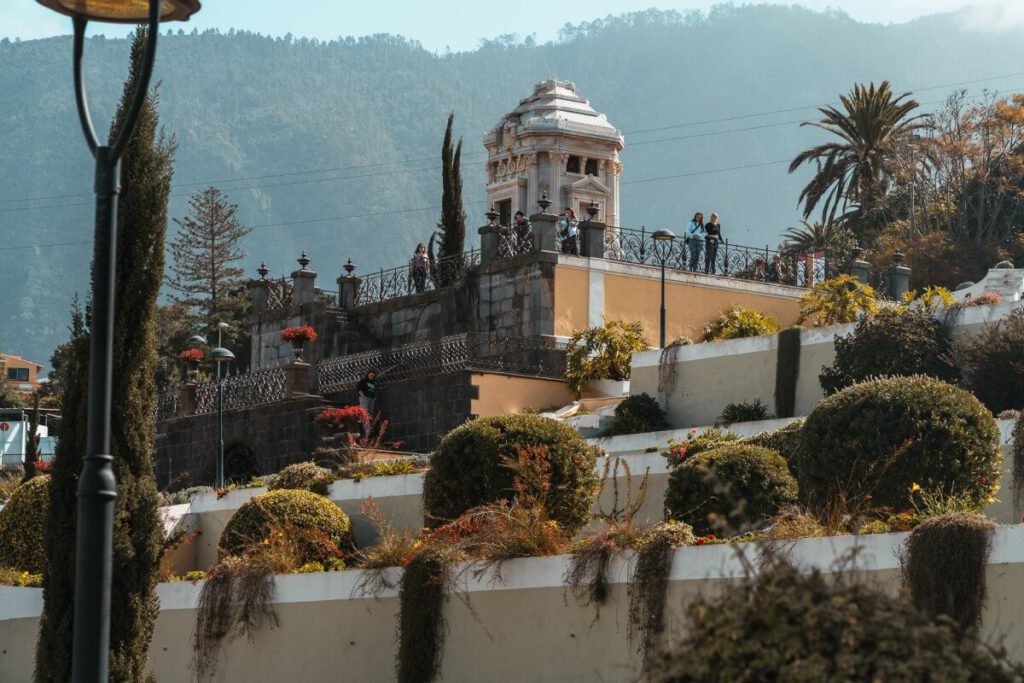
By the way, the tomb was never actually used. But from there, you have a great panoramic view of the city all the way to the sea.
Hijuela del Botánico
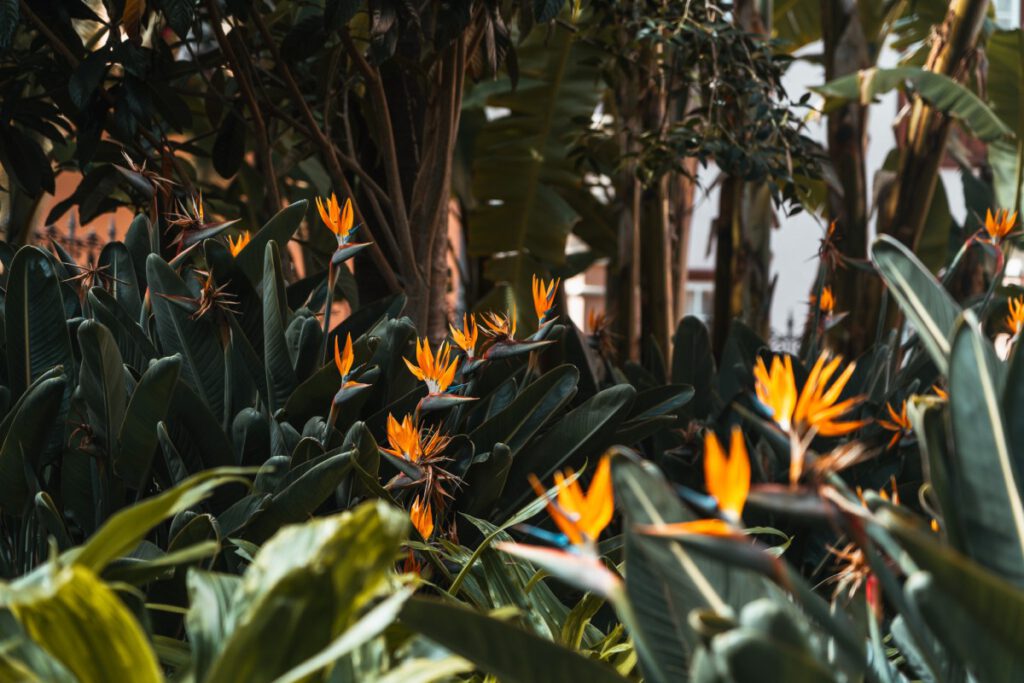
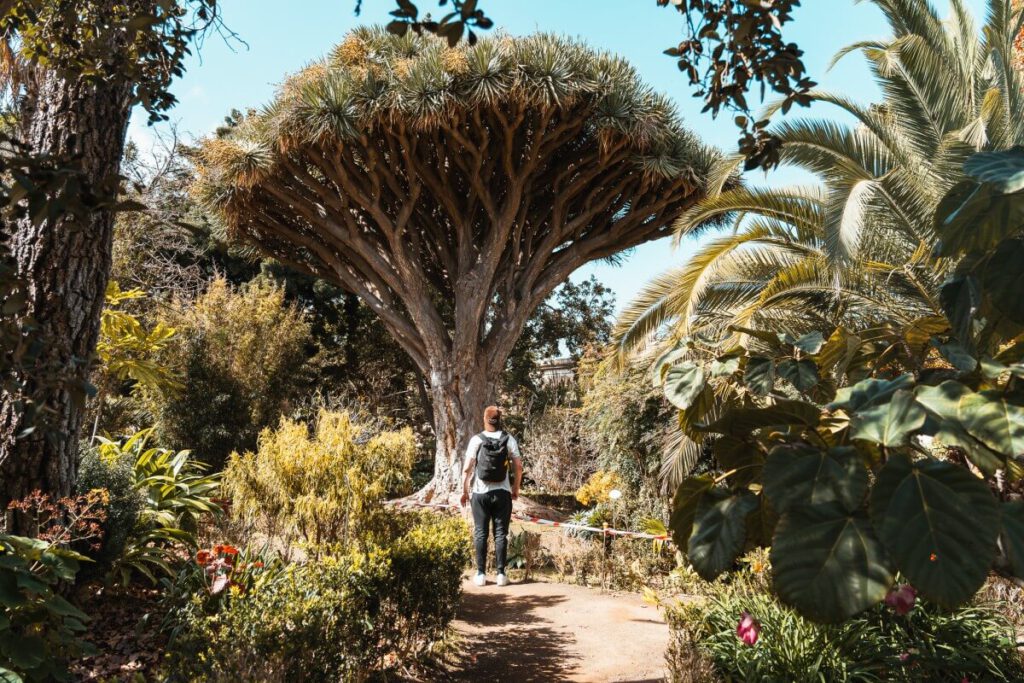
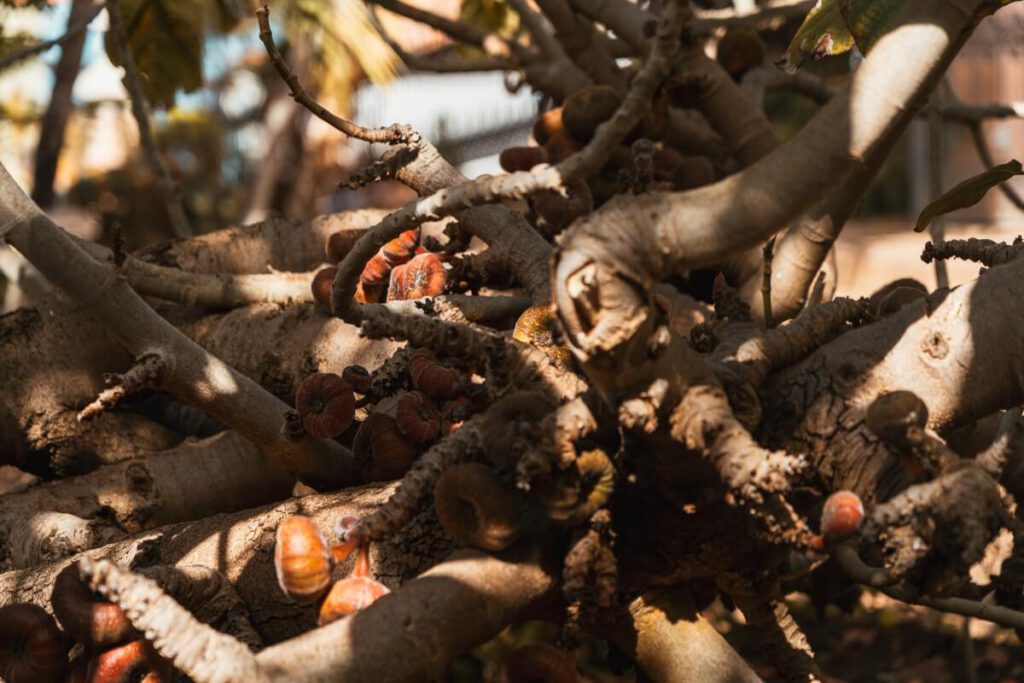
I also really liked the Hijuela del Botánico, a beautifully maintained botanical garden where you can marvel at El Gran Arbol, a giant dragon tree. But you’ll also find all sorts of other exotic and rare plants here, scattered along the winding paths and flower beds.
City Hall Square
We continue past the Plaza del Ayuntamiento, with its pink city hall.
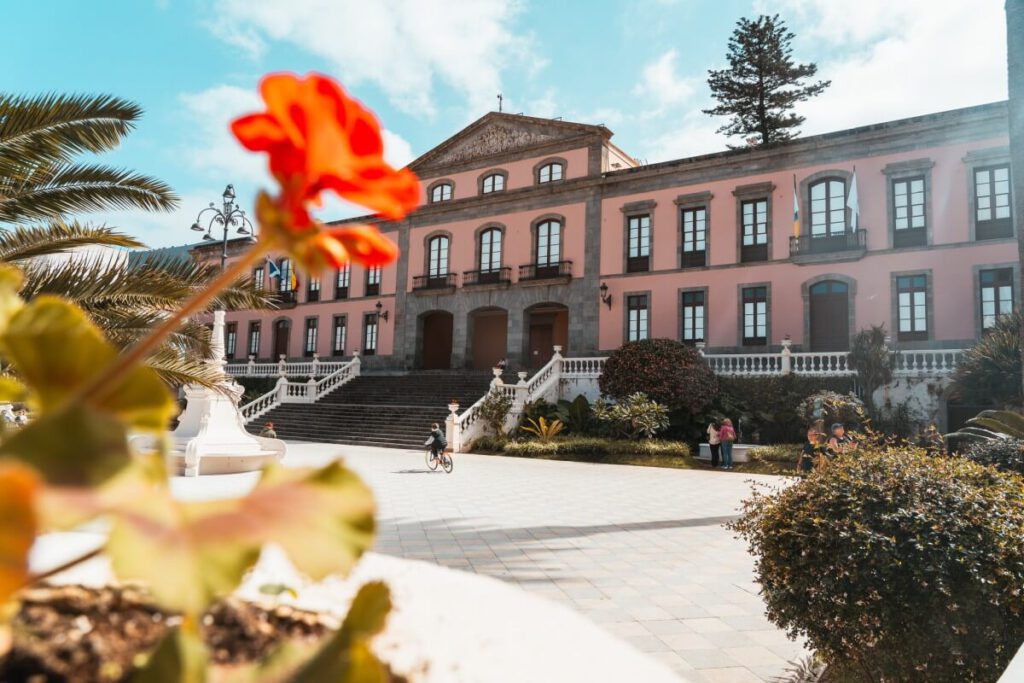
On Corpus Christi, the square is adorned with impressive sand paintings, and at Christmas, it is decorated with nativity scenes. The sand art is essentially a monumental carpet made from soil from Teide National Park. In 2007, the carpet earned a Guinness World Record as the largest carpet made of sand (912 square meters).
Casa de los Balcones
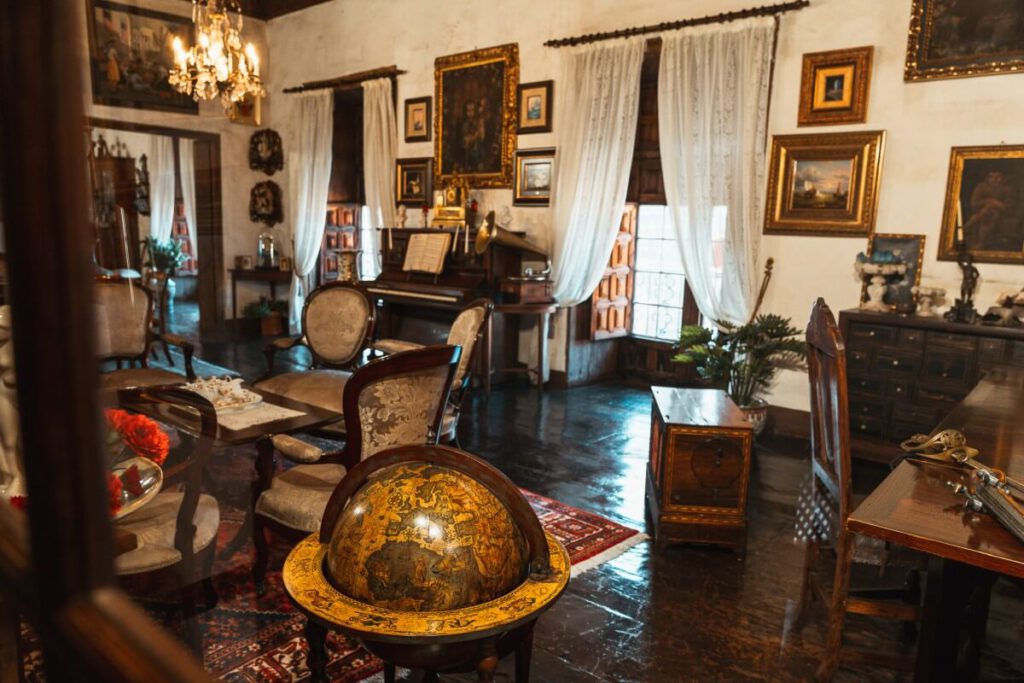
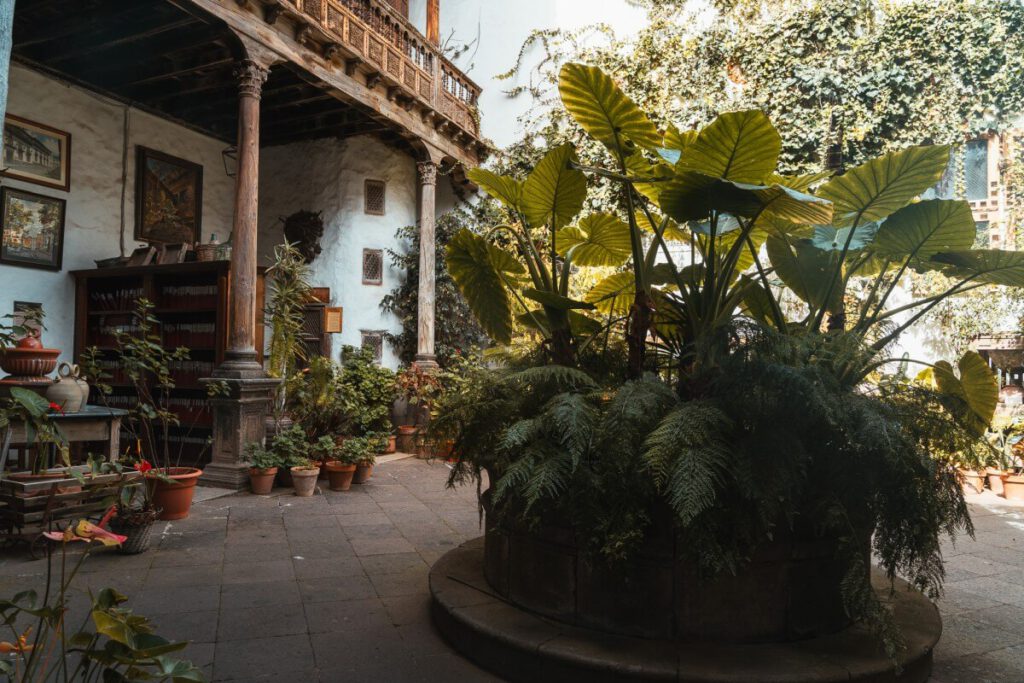
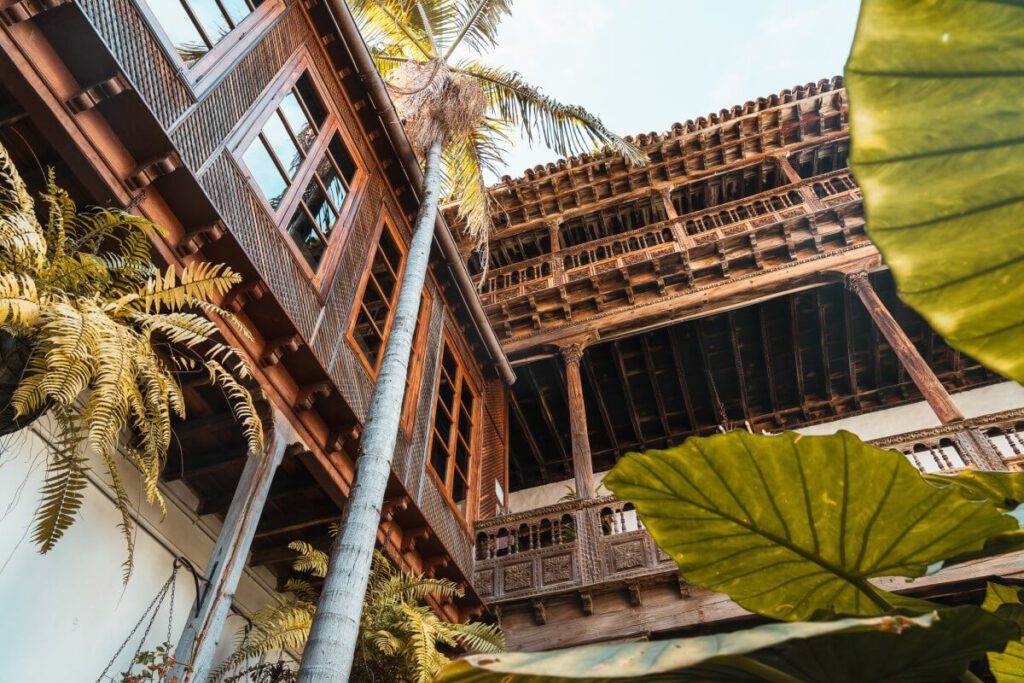
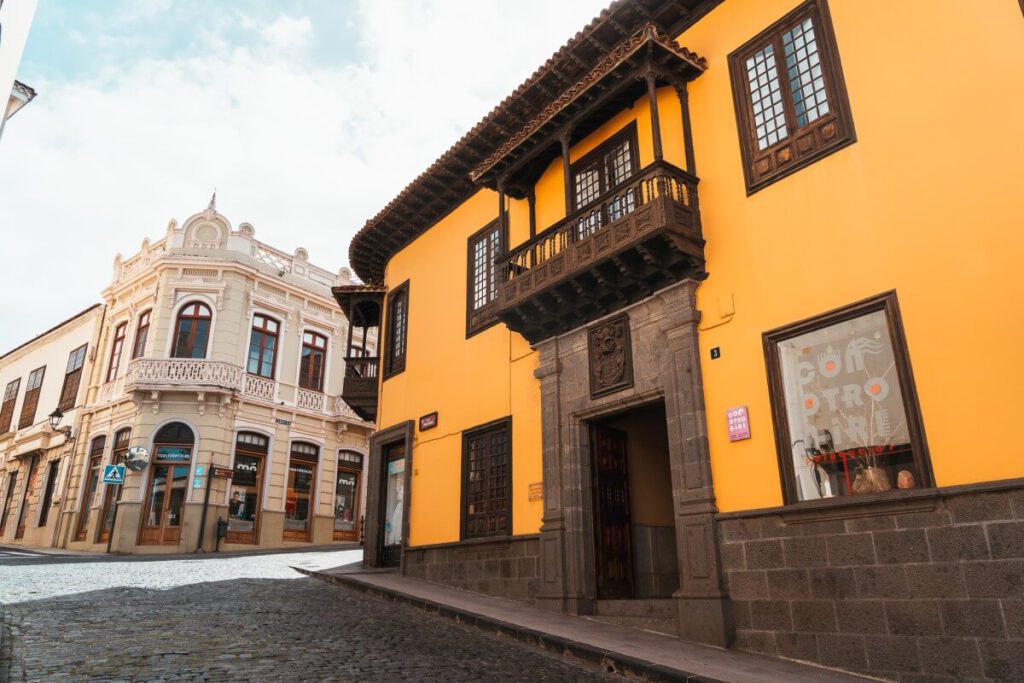
The Casa de los Balcones is a three-story house built in 1632, whose balconies, made of Canarian pine, are adorned with elaborate carvings.
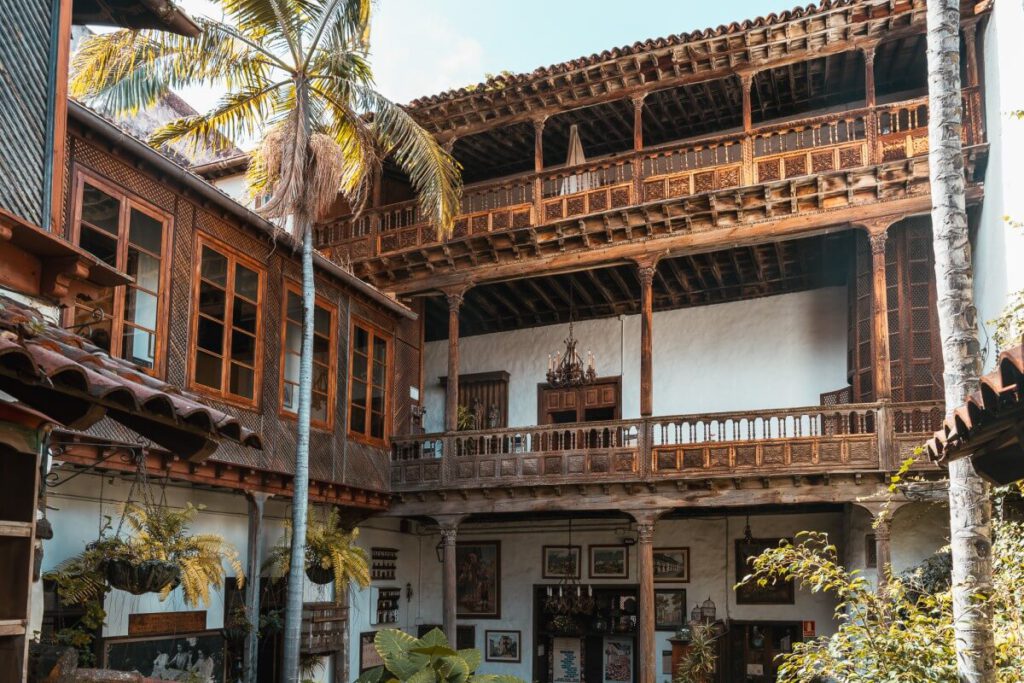
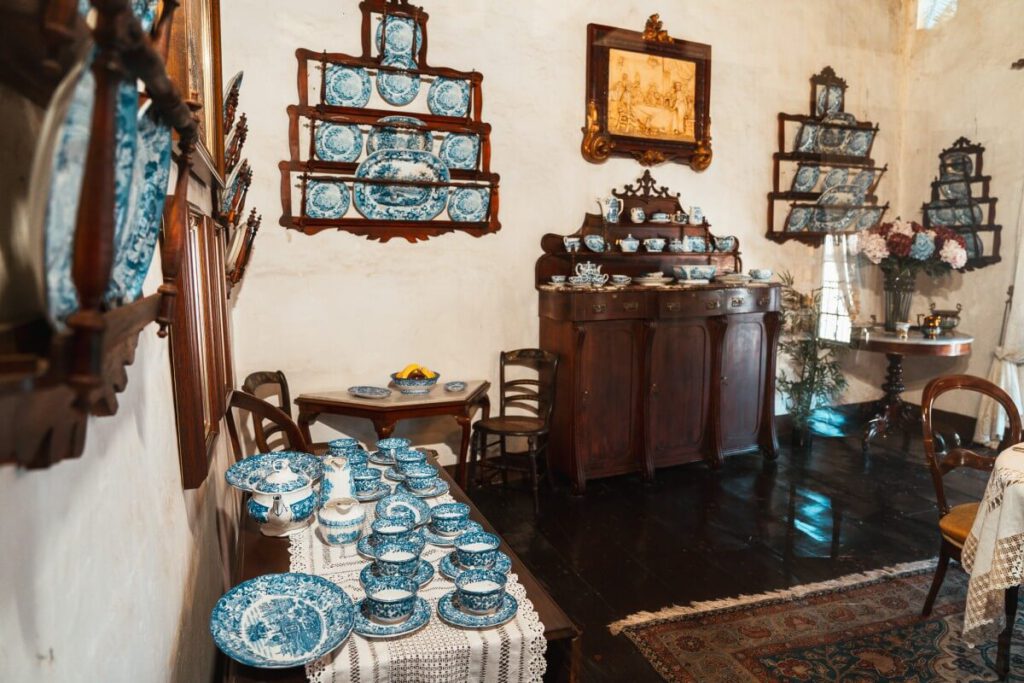
The best place to admire the balconies is from the courtyard. Admission costs €6, which also includes access to the Casa itself, where you can explore the historic rooms, many of which feature original furnishings. Each room also has information signs in Spanish and English.
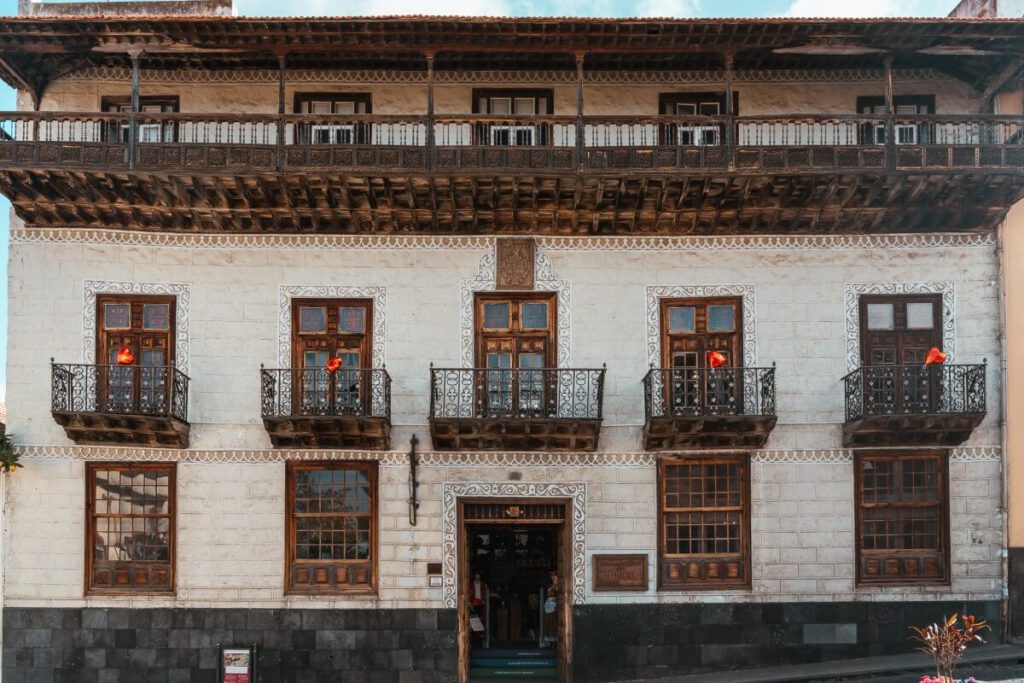
Right next to the Casa de los Balcones is a 17th-century gofio mill. Gofio isn’t Mickey Mouse’s dog – it’s a traditional flour with a nutty, smoky flavor made from roasted grains.
If you’d like to visit both, a combination ticket is a good deal:
La Orotava Municipal Cemetery
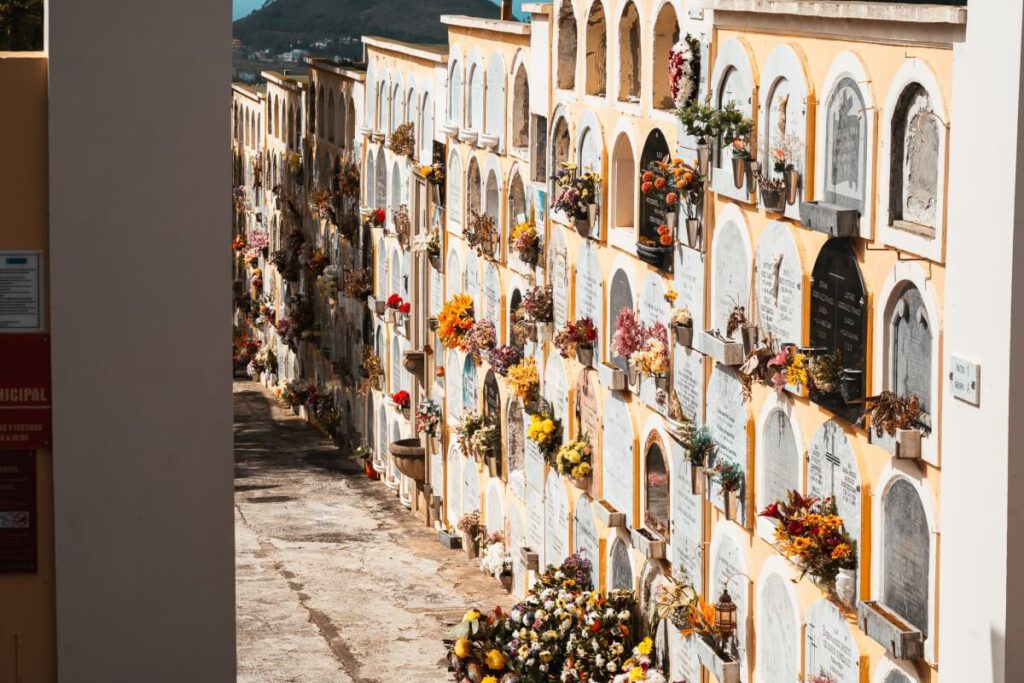
This impressive little cemetery is located near the Casa de los Balcones, at the end of a sloping path. It was designed in the Romantic style, resembling a garden, by the sculptor Fernando Estévez. The most spectacular tombs and sculptures of the city’s most famous residents stand at the edge of the cemetery.
Church of La Concepción
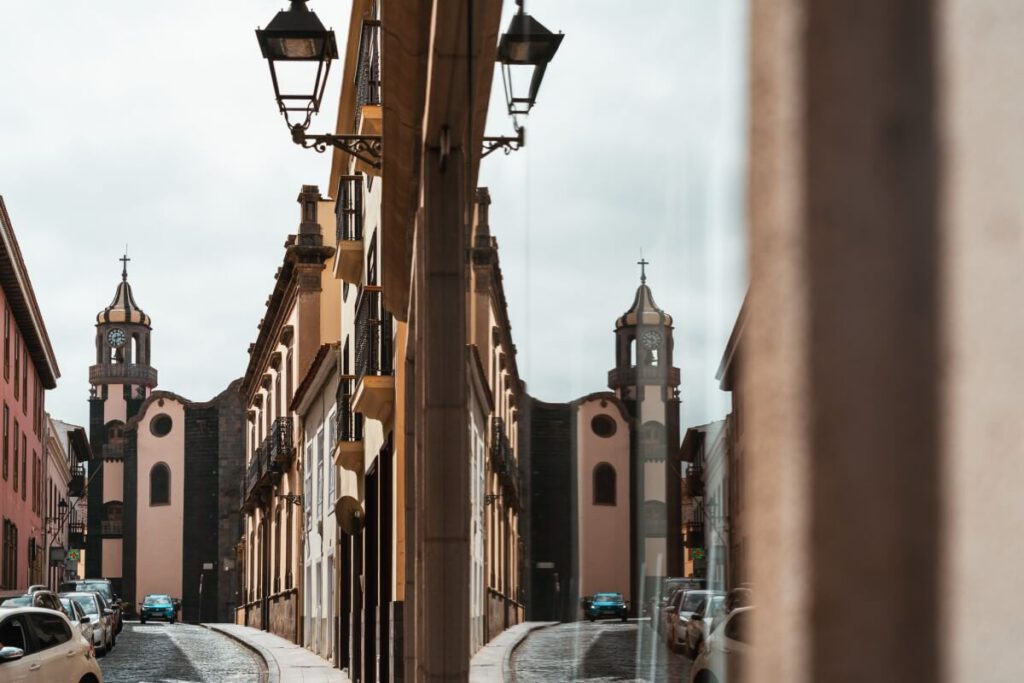
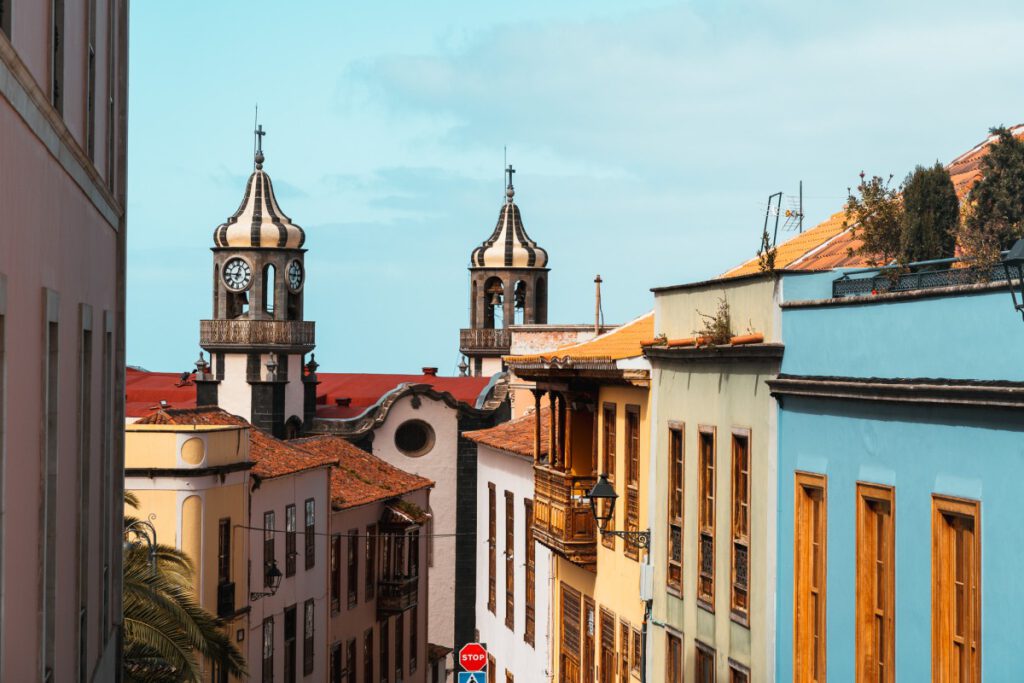
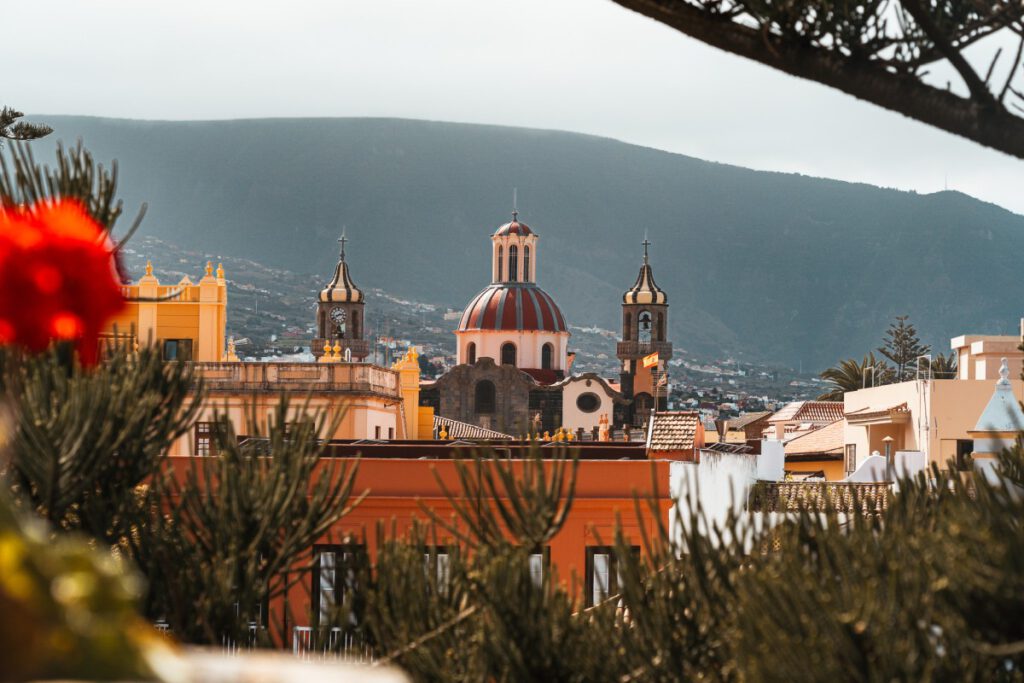
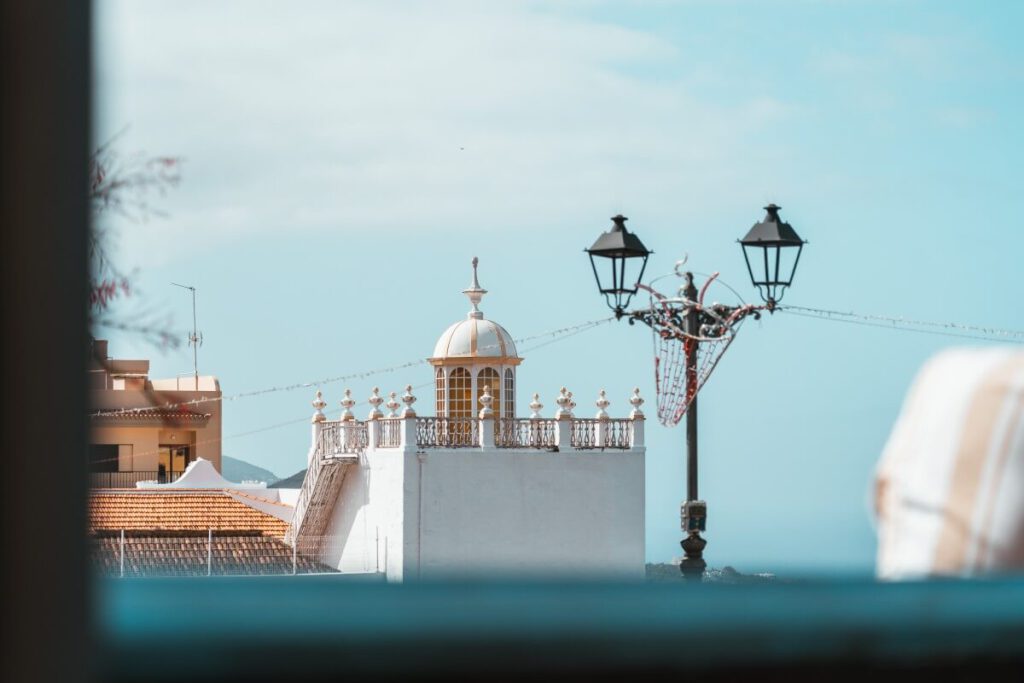
The Iglesia de La Concepción is the city’s main church and is considered the finest example of Baroque architecture in the entire Canary Islands. Its dome, which rests atop a drum-shaped base, and its two 24-meter-high towers are the town’s iconic landmarks.
Historic Buildings in the City
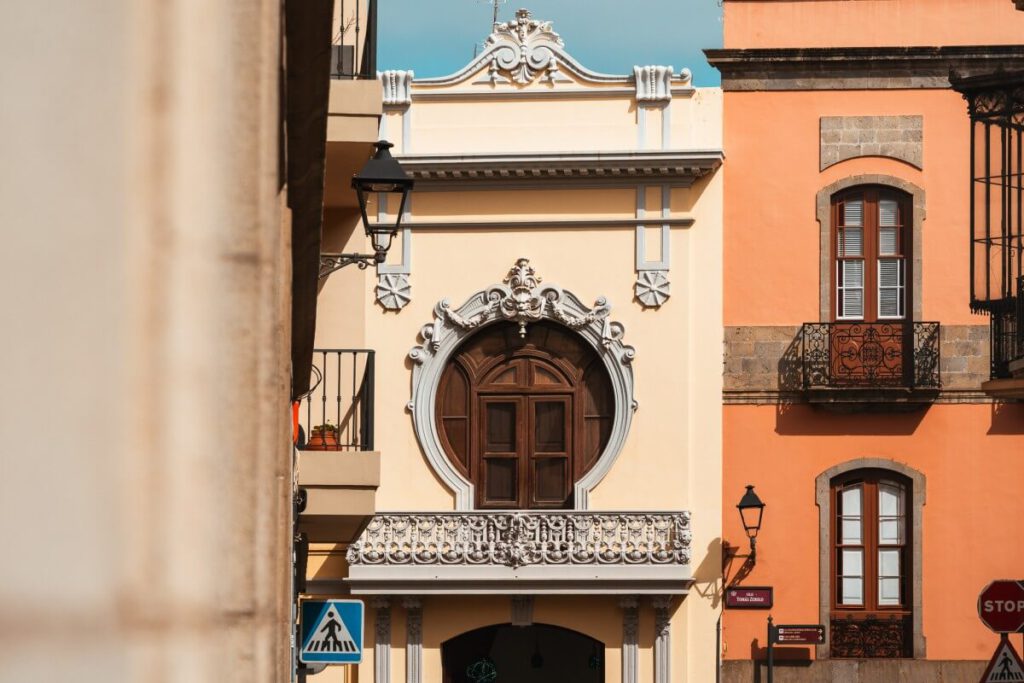
It’s also worth just strolling through the Old Town. It feels like there’s a sign on every other corner explaining something about the historic buildings. These include, for example:
- the 16th-century Casa Molina
- The 17th-century Casa Palacia Lercaro, next to which the Gofio Museum is also located.
- the Casa Benitez de Lugo Viñas, dating from the late 16th century
- the 18th-century Casa Llarena
- the 17th-century Casa Machado
On this map of the town of La Orotava, you’ll find not only the most important casas but also all the other attractions in the town.
La Orotava on Tenerife is a great place full of highlights. Have you been there yourself? What’s missing from the list? I look forward to your comment.
Tools & services for your trip*
This is what I use on my own road trips.
Book & Plan
My gear
*Disclosure: All links above are affiliate links. If you book through them, I earn a small commission – at no extra cost to you. That's what keeps Travel-Dude free and ad-free. Thank you!




Leave a Reply